






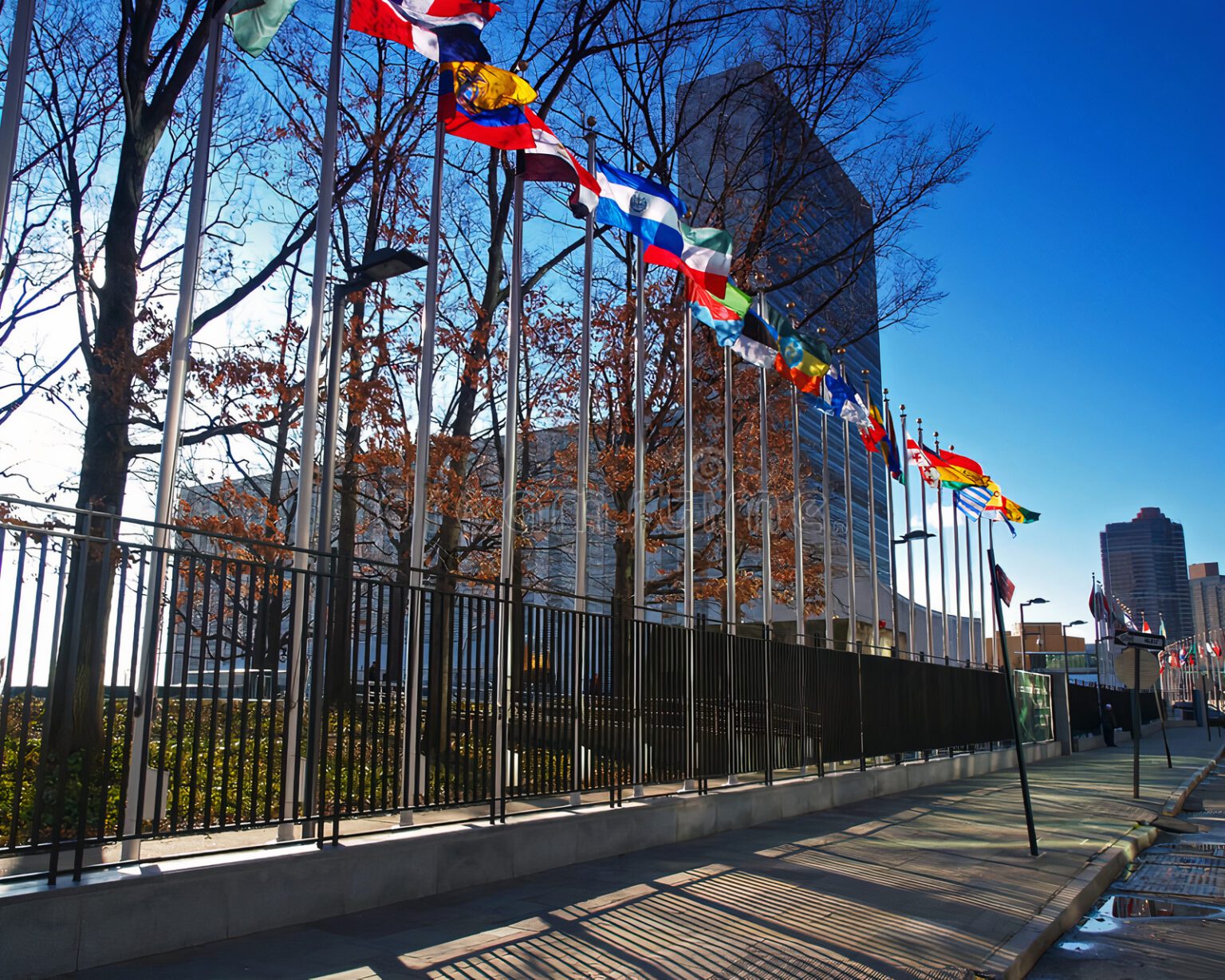
Through its different organs, the United Nations supports member states in their fight against terrorist threats they are exposed to. One obvious form of this support is the UN Security Council Consolidated List (CL), which includes all individuals and entities identified by the United Nations as posing direct threat to global peace and on whom the UN Security Council imposes sanctions, including asset freezing, travel ban, and arms embargo.
The inclusion in the CL opens the door to security and judicial prosecution of individuals and entities included, let alone forms of security and intelligence cooperation that may be introduced and adopted by different countries.
This collaborative effort, which may take place on bilateral or multilateral basis, is undoubtedly the most successful outcome, particularly in view of the complexity of prosecutions and given the ability of members and leaders of these terrorist entities to disguise themselves, work undercover, and move from one country to another, from one region to another, and maybe from one continent to another. Recently, within each terrorist organization, there is a group in charge of securing safe havens in specific countries and regions for the fleeing members and leaders.
This makes the UN reports all the more significant, considering their effectiveness in counter-terrorism operations, allowing access to areas that remained intractably difficult to reach for long periods of time, tracking funds and freezing assets whose revenues are used to support terrorist activities, enabling security services to stop weapon flows to these organizations if there is certainty that a “terrorist entity” would be the end user, even if intermediary elements and entities were involved in the deal. This is certainly reinforced by the availability of intelligence information that set the UN’s mind at ease regarding the inclusion of a specific terrorist organization to the list.
Al-Qaeda, the Islamic State (IS), and the Taliban –along with other branches and entities that are ideologically connected to them– are the three major organizations that held most of the CL’s top spots. In 1999, Security Council Resolution 1267 was issued, imposing an air embargo on the Taliban and freezing its assets, a resolution that later gave rise to what came to be known as the CL. In 2011, two new resolutions divided the list into two sections, one focusing on Al-Qaeda and the other on the Taliban, with two separate bi-annual reports on the global threats posed by each group and its networks prepared. In 2015, the CL was expanded under Resolution 2253 to include the IS. At that time, the UN Monitoring Team widened the scope of its reports on Al-Qaeda to include the threats posed by the IS as the new splinter of Al-Qaeda.
Essentially, the Monitoring Team has two main functions, namely assisting the Sanctions’ Committees in drawing up UN sanction lists and conducting regular assessments of terrorist threats to international peace and security. These assessments are often based on information derived from reports drafted by UN member states that are shared with the Monitoring team. Largely, most of the member states’ reports focus on observations on threat assessment. In this vein, controversy arose over proposals of member states to include specific entities or individuals that their security agencies found play a key role in threatening peace and security, necessitating including them in the CL and exposing them to the Security Council sanctions.
A few days ago, UN Secretary-General Antonio Guterres submitted a report to the Security Council, which included the emerging threats posed by major organizations, in preparation for the next report to be issued in July 2022. Concurrently, the Monitoring Team is reviewing the recent reports issued in May 2022 to identify the terrorist entities that were not included in the Security Council’s CL. Names not included in the CL include 38 individuals and 16 entities. The UN Secretary-General recommends that member states work on collecting more information about these organizations to assist the Monitoring Team in the process of including them on the updated CL, particularly if they fulfill the required criteria, including participating in financing, planning, facilitating, preparing or carrying out works or activities of the three major terrorist organizations, or in their name, on their behalf, or in support of them and selling or supplying them with weapons or related equipment, or transferring weapons to them, or on their account.
Perhaps prominent among individuals to be added to the CL are Sami Jasim Al-Jaburi who is held by the Iraqi security authorities as the first deputy to the caliph of IS; Ugandan Medi Nkalubo, leader of the Allied Democratic Forces rebel group in Congo, a group that has declared its allegiance to IS in all the regions in which it operates; and Khaled Batarfi, leader of Al-Qaeda in the Arabian Peninsula and a Yemeni leader that has been involved in terrorist activity for decades and who made several video statements in which he announces the organizations’ goals and future plans against the West and Israel.
Strangely enough, Taliban’s Supreme leader Hibatullah Akhundzada is still not included in the CL, despite Taliban targeting more than 100 former Afghan officials under his leadership, all of whom were murdered straightway. Recently, he made a public appearance following the Taliban’s takeover. The same goes for Adnan As-Sahrawi, leader of IS in the Great Sahara who is a principal suspect in massacres that took place in Niger, Mali, Mozambique, and Burkina Faso.
Entities that are seemingly on the way to be included on the UN CL include the Egyptian Ansar Beit l-AMaqdis organization operating in North Sinai. Its members are under investigation before the Egyptian judicial authorities, accused of committing terrorist operations proven by evidence, material evidence, and confessions; the Macina Liberation Front of Ansar Dine in Central Mali whose leader is listed on the CL of individuals due to his terrorist activity in the Sahel and Sahara region; and Ahl as-Sunnah wal-Jamaah, aka IS Mozambique, an aggressive organization that uses sweeping armed violence, similar the Boko Haram group in killing, slaughtering, intimidating and kidnapping women and children during raids that completely destroy villages and areas in northern Mozambique.
In short, in the terrorism arena, there are several terrorist entities and individuals but the lack of security or judicial information remains a dilemma, given the vulnerability of the security and state agencies in several countries, as is the case in Yemen and Sahel states. While it may take some time, inclusion in the CL remains an important factor in besieging terrorist threats and prosecuting terrorists.