

By using ECSS site, you agree to the Privacy Policy and Terms of Use.
Accept
ECSS - Egyptian Center for Strategic StudiesECSS - Egyptian Center for Strategic Studies
  • Home
  • International Relations
    International Relations
    Show More
    Top News
    Another obstacle on the Grand Ethiopian Renaissance Dam?
    June 5, 2020
    Varied paths of reform in Africa
    March 22, 2019
    G20 Membership Justified: Africa and the Road to the G20
    June 14, 2020
    Latest News
    2025 Yearender: Flood fallout
    January 20, 2026
    A Strategic reorientation: A critical reading of the 2025 US National Security Strategy
    January 18, 2026
    A diplomatic maneuver: Israel’s recognition of Somaliland
    January 17, 2026
    2025 Yearender: China’s multipolar world
    January 15, 2026
  • Defense & Security
    Defense & Security
    Show More
    Top News
    A Multi-dimensional Affair: Women and Terrorism in Africa
    June 14, 2020
    On deradicalisation: Marc Sageman and the psychology of jihadists
    June 22, 2020
    Assessing Deterrent Measures and the Prospects of War: US Military Movement in the Gulf to Confront Iran
    June 22, 2020
    Latest News
    Israel-Iran War: Does Israel Stand Alone?
    June 18, 2025
    Navigating Security and Diplomacy: What Russia’s Delisting of the Taliban Means for Bilateral Ties
    May 17, 2025
    Lakurawa: Armed Bandit Violence in Nigeria
    May 12, 2025
    Europe amid US–Iran Escalation: Can It Play the Diplomat or Become Entangled in the Crisis?
    April 13, 2025
  • Public Policy
    Public Policy
    Show More
    Top News
    Sinai: A Strategy for Development amid Fighting Terrorism
    June 17, 2020
    Egypt’s Comprehensive Vision for Human Rights
    June 22, 2020
    The Right to Health in Egypt
    June 22, 2020
    Latest News
    Weaponization of Resources: The Role of Rare Earth Metals in the US-China Trade War
    May 25, 2025
    The Carbon Border Adjustment Mechanism: A Catalyst or a Challenge for Egypt’s Export Ambitions?
    May 15, 2025
    The Suez Canal amidst Global Competition (3): National Strides Outpacing Time
    April 29, 2025
    Gaza’s Changing Demographics: The Toll of War and Blockade
    March 9, 2025
  • Analysis
    • Opinion
    • Analysis
    • Situation Assessment
    • Readings
  • Activities
    • Conferences
    • ECSS Agenda
    • Panel Discussion
    • Seminar
    • Workshops
  • ECSS Shop
  • العربية
  • Defense & Security
  • International Relations
  • Public Policy
All Rights Reserved to ECSS © 2022,
Reading: President Al-Sisi’s visit to France: A different perspective
Share
Notification Show More
Latest News
Book Review | The struggle for economic sovereignty: Who owns the instruments of power?
Readings
Displacement from Gaza: Deconstructing the idea, doctrine, and plan
Readings
The Egyptian Center for Strategic Studies participates in the 57th Cairo International Book Fair for the sixth year
Readings
2025 Yearender: Flood fallout
Iranian Studies Palestinian & Israeli Studies
A Strategic reorientation: A critical reading of the 2025 US National Security Strategy
Palestinian & Israeli Studies
Aa
ECSS - Egyptian Center for Strategic StudiesECSS - Egyptian Center for Strategic Studies
Aa
  • اللغة العربية
  • International Relations
  • Defense & Security
  • Special Edition
  • Public Policy
  • Analysis
  • Activities & Events
  • Home
  • اللغة العربية
  • Categories
    • International Relations
    • Defense & Security
    • Public Policy
    • Analysis
    • Special Edition
    • Activities & Events
    • Opinions Articles
  • Bookmarks
Follow US
  • Advertise
All Rights Reserved to ECSS © 2022, Powered by EgyptYo Business Services.
Opinions Articles

President Al-Sisi’s visit to France: A different perspective

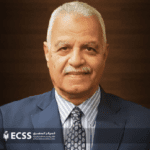
Gen. Mohamed Eldewery
Last updated: 2020/12/14 at 4:24 PM
Gen. Mohamed Eldewery
Share
7 Min Read
SHARE

President Abdel-Fattah Al-Sisi’s visit to France, which took place from 6 to 9 December, bore a host of momentous results. In my opinion, it was a significant visit in the history of Egyptian-French relations and proof of the development of bilateral relations that can be built on to open new horizons for cooperation between the two countries.

The focus here is not the impact of the visit or its emphasis on the genuine partnership and development of bilateral relations. These issues were previously and substantially tackled.

Rather, this article traces the role of the Egyptian political leadership and its ability to take the relationship with France to such strategic levels. President Al-Sisi’s visit to France has invoked a set of questions, such as: 

1. How can the character of the Egyptian president contribute to building a better relationship with France?

2. How can the political leadership receive this large amount of respect and appreciation? This was evident in the warm welcome President Al-Sisi during received during his meetings in Paris. French President Emmanuel Macron decorated President Al-Sisi with the Grand Cross of the Legion of Honour, France’s highest accolade.

3. How can President Al-Sisi clearly translate the words “business visit” into an action plan, and how can his agenda be extremely busy with so many meetings with high-profile figures such as the French President, French ministers, the French Prime Minister, the French Senate President, and the heads of the world’s largest companies?

4. How can the Egyptian political leadership consider so many issues and succeed in reaching consensus with France over issues of mutual concern, especially in the Middle East?

5. How can the Egyptian political leadership convince the French leadership not only of the integrity of the Egyptian position on most of the issues discussed, but also on issues in which they have different views, while not leaving a negative impact on the strategic relations between the two countries?

6. How can the Egyptian leadership demonstrate the Egyptian position smoothly, clearly and persuasively regarding one of the thorniest issues that some countries are trying to use as a tool to pressure Egypt, which is the human rights issue?

7. How can the Egyptian leadership tackle subjects of particular sensitivity and succeed in making the Egyptian position a high profile, especially in the cases of freedom of opinion, freedom of expression, the offensive cartoons and the relationship between religious and human values?

8. How can the political leadership emphasize Egypt’s position at the regional and international levels and attract an influential country such as France and make it keen on developing its relations with Egypt, and even keen on pushing the Egyptian role to contribute effectively to settling and solving the most important crises that the region suffers from?

To answer these questions, it can be easily said that President Al-Sisi has a number of great personal traits that make up his distinguished personality, such as: credibility, frankness, transparency, clarity, spontaneity, faith, truthfulness, and self-confidence.

In this regard, I must pay tribute to what President Al-Sisi stated during the press conference with President Macron in reply to a question from Radio France on the human rights issue. President Al-Sisi said, addressing the French President: “We have nothing to fear or be embarrassed about.”

This reply is very smart as it assures the fact that Egypt’s domestic and foreign policy is based on honourable principles. These principles are clearly stated to the entire world without unnecessary commotion.

It is also necessary to point out that the Egyptian political leadership is a national leadership fit for the grandeur of the Egyptian state. It is a leadership that is close to its citizens, and that feels their demands and needs, that can express the aspirations of the Egyptian people, and that is keen, day after day, to provide better living conditions for the Egyptian citizen. 

The most important feature of President Al-Sisi is his great appreciation of the Egyptian people, and his emphasis on every occasion that this great nation is the biggest supporter of the policies of the leadership. That fact was the main reason for the success of the economic reform program that the world has witnessed its positive results.

Towards the end of the joint press conference in Paris, President Al-Sisi wholeheartedly said, “We are a nation that strives to build the future of its people amid very cruel circumstances in a highly-turbulent region.”

In my opinion, these words expressed the feelings of the president as well as those of the Egyptian people. I believe these words have emphasized the following four points:

  • The main concern of the political leadership is to build a better future for the Egyptian people. Domestic and foreign efforts are directed towards this end, no matter the challenges.
  • Egypt is a peaceful country that does not initiate attacks. It is mainly interested in peace, stability, security, and prosperity with all countries.
  • Egypt is determined to continue its reform process and to rebuild the country, and it will not stop at any desperate attempts by internal or external forces to disrupt the successful path of reform.
  • As Egypt moves toward development, it will not stand idle in the face of attempts that threaten its national security, and it will always be able to firmly and decisively confront any threats. 

Related Posts

Gaza Crisis between Israeli and American Perspectives

The End of Globalization?

Troubled Waters in Jenin Camp

France and the Prospect of Diplomatic Balance between Morocco and Algeria (1)—Ties with Morocco 

TAGGED: Al-Sisi’s visit, France, Vision
Gen. Mohamed Eldewery December 14, 2020
Share this Article
Facebook Twitter Whatsapp Whatsapp LinkedIn Telegram Email Copy Link Print
Gen. Mohamed Eldewery
By Gen. Mohamed Eldewery
Deputy Manager

Stay Connected

Facebook Like
Twitter Follow
Instagram Follow
Youtube Subscribe

Latest Articles

Economy First: Implications of the Russia-Africa Summit
African Studies July 28, 2023
Ukraine’s View of the War: The ECSS’ Observatory Interviews Director of the National Institute for Strategic Studies Subordinated to the Ukrainian Presidency
Analytical article April 3, 2022
Strategic Shift: Iran’s role in Sanaa between Proxy Management and Direct Involvement
Defense & Security November 7, 2020
On the Anniversary of 11 September: Terrorism Proliferates
Opinions Articles September 20, 2022

Latest Tweets

//

The Egyptian Center for Strategic Studies is an independent non-profit think tank providing decision-makers by Policy alternatives, the center was established in 2018 and comprises a group of experts and researchers from different generations and scientific disciplines.

International Relations

  • African Studies
  • American Studies
  • Arab & Regional Studies
  • Asian Studies
  • European Studies
  • Palestinian & Israeli Studies

Defence & Security

  • Armament
  • Cyber Security
  • Extremism
  • Terrorism & Armed Conflict

Public Policies

  • Development & Society
  • Economic & Energy Studies
  • Egypt & World Stats
  • Media Studies
  • Public Opinion
  • Women & Family Studies

Who we are

The Egyptian Center for Strategic Studies (ECSS) is an independent Egyptian think tank established in 2018. The Center adopts a national, scientific perspective in examining strategic issues and challenges at the local, regional, and international levels, particularly those related to Egypt’s national security and core national interests.

The Center’s output is geared toward addressing national priorities, offering anticipatory visions for policy and decision alternatives, and enhancing awareness of various transformations through diverse forms of scientific production and research activities.

All Rights Reserved to Egyptian Center for Strategic Studies - ECSS © 2023

Removed from reading list

Undo
Welcome Back!

Sign in to your account

Lost your password?