




The Al-Aqsa Flood operation not only triggered the Israeli assault on Gaza, which dealt crippling blows to Hamas and wreaked destruction massive enough to render the enclave largely unfit for human habitation. It also put the so-called Axis of Resistance to an unprecedented test, after its members took action to defend Gaza against the Israeli Occupation Forces. During the two years since, that support shifted in tandem with Israeli escalations, leading to direct, full-scale confrontations with profound consequences for these actors. In view of recent turning points, such as the “ceasefire” agreement on Gaza and the UN Security Council’s resolution authorising a so-called international stabilisation force there, it might be interesting to assess the current state of Axis of Resistance members.
For decades, Iran has worked to expand and secure its influence in this strategically vital part of the world. Since the end of its devastating eight-year war with Iraq, which began with a US-backed Iraqi invasion, Tehran has pursued a forward-defence strategy based on supporting armed groups and non-state actors in several countries. Together, these groups became known as the Axis of Resistance, an informal coalition built around a pragmatic relationship that can be summed up as material support in exchange for helping to advance Iran’s national security objectives. This arrangement enabled those groups to build extensive influence within their own states at all levels while serving Iran’s regional interests by bolstering the non-conventional power it could potentially wield against external threats. In essence, these actors constituted an important source of strategic depth for Iran: an essential component of its defence doctrine, which aimed to deter aggression through the expansion of regional influence and the projection of power.
This strategy largely worked. For many years, Iran was able to flex the muscles it had in the form of its regional allies, minimising the risk of direct engagement with its two main adversaries – the United States and Israel – and limiting confrontation to proxy warfare. This changed significantly after Hamas’ single-day incursion into the Gaza envelope. For most of the period after 7 October, the Iran-Israel confrontation was indirect, limited to intelligence operations and tit-for-tat strikes between Iran’s allies and Israel, which were initially calibrated to prevent an escalation spiral that could engulf the entire region. However, Israel changed that calculus in June 2025, when it launched Operation Rising Lion, an attack against Iran that led to a 12-day war. These hostilities ended soon after the US joined the war on the side of Israel and bombed Iran’s nuclear reactor sites in Operation Midnight Hammer.
Iran’s posture and strategy have significantly changed since that confrontation. It appears to have grasped the depth of Israeli intelligence penetration, evident from a collection of targets that were struck with remarkable precision and Israel’s complete control of Iranian airspace throughout the 12 days. This led Iran to the conclusion that Israel had increased its deterrent capability to the extent that it could neutralise any potential threat, whether from Iran or its allies, and that it would hold Iran responsible for the actions attributed to its allies. But developments before this were instrumental in shaping that conviction, most notably the fall of the Bashar Al-Assad regime in Syria and impediments to Iranian influence and the activities of Iranian-affiliated groups in Iraq.
Iran’s relationship with the Palestinian factions – especially Hamas – is unlike that with other allied armed groups. First, Hamas is a Sunni Islamist group whereas the other groups are Shia and therefore more aligned religiously with Iran and the Iranian system built on the doctrine of Vilayat-e Faqih (rule of the jurist). Secondly, the political-ideological convergence between Hamas and Iran does not go far beyond having a shared enemy: Israel. The relationship is not characterised by the type of shared strategic interests that link Iran with other allies. Hamas was not acting on behalf of or in coordination with Iran when it staged the Al-Aqsa Flood Operation. This was rather a response to Israeli schemes to bury the Palestinian cause, seize and Judaise Palestinian land, impose full sovereignty over the Al-Aqsa Mosque and other sacred Muslim sites, and other aggressive expansionist policies by what is widely acknowledged to be the most extremist government in Israel’s history. Hamas clearly did not predict how Israel would take advantage of the situation to launch a full-scale war on Gaza that would last over two years, kill untold numbers of civilians and subject Hamas to intense and sustained pressure.
Militarily, Hamas lost a large number of its first, second, and third tier field commanders and its military capacities suffered heavy attrition. Meanwhile, tens of thousands of civilians were being massacred and permanently maimed, the borders were sealed to prevent the entry of humanitarian aid of any kind, and the blockade tightened so much it lead to famine, and Gaza itself was turned into an uninhabitable sea of devastation. Such conditions have threatened to erode Hamas’ support base. Outside Gaza, Hamas members and other resistance leaders in the West Bank have come under escalating Israeli military assaults targeting their bases of operation. At the same time, Israel assassinated Hamas leaders abroad, such as Saleh Al-Arouri in Lebanon and Ismail Haniyeh in Iran. Most recently, in September, Israel violated Qatari airspace to target members of the political bureau in Doha.
As a result of those developments, Hamas’ manoeuvrability has been severely restricted, forcing it to lower its demands. If the conflict between this Palestinian resistance movement and Israel was asymmetric to begin with, it has tilted further in favour of Israel given Washington’s political and military support, the failure of the international community to restrain Israel and hold it responsible for its war crimes and crimes against humanity and, hence, Israel’s complete freedom to act with impunity. Also working in favour of the occupation is the intra-Palestinian division since Hamas took control of Gaza in 2007 and Israel’s creation of militias loyal to it at five key points in the Strip to help prevent aid from reaching its intended recipients and to fight Hamas. Meanwhile, Israel continues to breach the ceasefire agreement, which remains mired at the first of its 20 points.
Immediately after Israel launched its offensive against Gaza, Hizbullah came to the defence of the Palestinian resistance movement, Hamas, under the banner of “unity of the arenas.” Hizbullah identifies itself as a resistance movement sworn to defend Lebanon against Israeli aggression and to support the Palestinians in their struggle against the Israeli occupation. In the Taif Agreement of 1989, which ended the Lebanese Civil War, all Lebanese militias were required to disarm with one exception: Hizbullah, which was classed not as a militia but a “national resistance movement.” In this capacity, Hizbullah fought – virtually single-handedly – against the Israeli Occupation Forces, ultimately compelling them to withdraw from most of Lebanon in 2000, with the exception of the area known as Shebaa Farms. Since then, the “ministerial statements” issued whenever a new cabinet was formed included versions of what became known as the “tripartite formula”, which effectively recognised the resistance as a pillar of Lebanon’s national defence creed alongside the army and the people. The Nawaf Salam government, sworn in on 8 February 2025, was the first to omit the formula in its ministerial statement.
Even as it entered the war, Hizbullah’s leadership feared the devastating consequences, both for Lebanon and itself. It knew it risked losing everything it had built over the years. Hizbullah’s military strategy against Israel was based on calculated escalation in terms of the type of weapons used and the depth of strikes into Israeli territory. Such decisions were calibrated in accordance with Israeli escalations, both against Gaza and against Lebanon. Its strategic aims were to prevent the depletion of its arsenals while forcing Israel to divide its attention between two fronts and sustaining as much pressure as possible on Israel from the north. The pressure was not solely military. Israel was compelled to evacuate some 70,000 Israeli settlers from the border region, leading to additional economic strains and social pressures on the Netanyahu government.
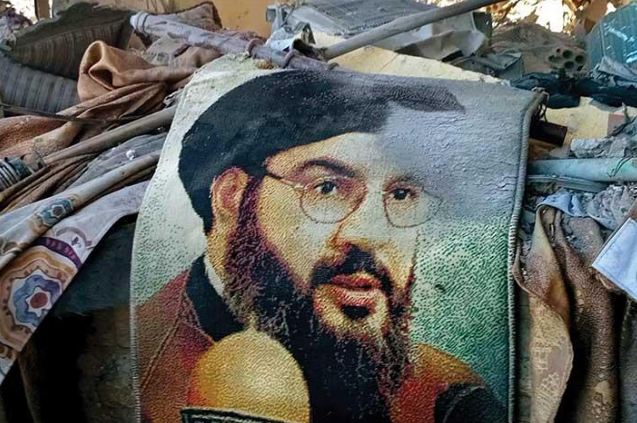
The level of cross-border exchanges remained largely contained for nearly a year. But then Israel escalated, starting with a series of assassination strikes targeting Hizbullah’s military and political leadership. This culminated in the assassination of Hizbullah’s long-serving secretary general Hassan Nasrallah on 27 September 2024. It was preceded by the pager attacks of 17-18 September, in which thousands of compromised devices as well as hundreds of walkie-talkies exploded, killing dozens of Hizbullah members and civilians, and injuring 3,500-4,000 people. Israel also launched intensive strikes against weapons storage sites and rocket launch platforms in Southern Lebanon and against urban areas, including residential blocks in southern Beirut (Dahieh). These actions paved the way for the Israeli ground incursion, which began on 1 October 2024.
The foregoing developments have several implications. First, Israel had begun to prepare for an eventual confrontation with Hizbullah after having been defeated for a second time in the 2006 war. These preparations entailed developing significant intelligence networks that made it possible to execute the series of assassinations against Hizbullah leaders, exposing the extent to which Hizbullah had been compromised. Secondly, Hizbullah had underestimated Israel’s ability to sustain a prolonged war, the extent of domestic support in Israel for war, Israel’s preparedness to escalate, and the levels of US support for Israel regardless of the regional risks. These factors combined with major losses ultimately forced Hizbullah to agree to a ceasefire on 26 November 2024 and to give up on continuing its operations until Israel ceased its war on Gaza.
Hizbullah’s defeat can be inferred from the agreement’s terms, which call for the withdrawal of the resistance movement and the removal of weapons and military infrastructure south of the Litani River. In addition to the attrition the organisation sustained in its military and logistic capacities, command structures, and personnel, it suffered a political setback with the election of President Joseph Aoun and the formation of the Salam government, which – backed by Western and Arab powers – has been pushing for the complete disarmament of Hizbullah. This drive was formalised in August 2025 with the Lebanese government’s endorsement of a US-designed and backed roadmap to disarm Hizbullah by the end of the year. Another indicator of Hizbullah’s military and political degradation is its non-involvement in the Iran-Israel war in June and its inclination to accommodate to official Lebanese government positions on that engagement and other matters. This development, of course, has been shaped by Iran’s weakened position, the severing of supply routes, and Israel’s ceasefire violations, which have steadily escalated without retaliation from Hizbullah.
The Yemeni movement Ansar Allah (Houthi) entered the conflict in November 2023, soon after the Israeli occupation launched the ground invasion of Gaza. Its decision to intervene against Israel was driven by several factors: reaffirming its traditional anti-Israel stance, leveraging the centrality of the Palestinian cause to rally its base and enhance its position in Yemen, and asserting itself as a regional player. The Houthis’ main impact derived from their ability to take advantage of Yemen’s strategic position overlooking the gateway to the Red Sea to target Israel-linked ships and ships bound for Israeli ports. This led to a significant decline in Israeli port activity. The attacks on vessels expanded to include those belonging to Israel’s allies, which joined coalitions such as the Prosperity Guardian. Houthi positions in northern Yemen came under intense bombardment by the US and Britain, as well as by Israel acting on its own. Those operations resulted in hundreds of civilian deaths.
In July 2024, Israel launched Operation Long Arm, targeting port facilities under Houthi control in Hodeidah, Ras Isa, and Al-Salif. These strikes continued until September, which witnessed the largest aerial offensive since the start of the war. Attempts were also made to assassinate Houthi leaders. The great distance between Yemen and Israel limited the effectiveness of Israeli strikes, preventing them from achieving their objectives. This bolstered the Houthi position in negotiations with the US, leading to a truce in which the Houthis agreed to halt attacks on US ships and forces. Undoubtedly, the Houthis have gained through the demonstration of their resilience against the much more powerful US, British, and Israeli forces, in contrast to Iran and its other allies, which were battered by Israel.
Therefore, Hamas and Hizbullah have been significantly degraded militarily and organisationally and can no longer rely on Iranian support in the near future. In the forthcoming period, both resistance organisations will probably focus on regrouping, rallying their support bases, and preserving their core structures and capabilities to every extent possible. Both face a critical challenge: concerted attempts to disarm and dismantle them. To survive, they will need to act quickly to rebuild popular support while pursuing flexible strategies to preserve their political roles and means of influence. Iran, despite its current difficulties, will most likely keep its sights on long-term objectives, such as rebuilding its networks of alliances and exploring alternative means to support them materially. The Houthis, for their part, appear to be in a stronger position. They demonstrated their resolve and resilience throughout the war and successfully preserved their cohesion without having sustained losses comparable to those suffered by Hamas and Hizbullah.
Published in cooperation between the Egyptian Center for Strategic Studies, Al-Ahram Weekly, and the English-language portal Ahram Online.


