


By using ECSS site, you agree to the Privacy Policy and Terms of Use.
Accept
ECSS - Egyptian Center for Strategic StudiesECSS - Egyptian Center for Strategic Studies
  • Home
  • International Relations
    International Relations
    Show More
    Top News
    Another obstacle on the Grand Ethiopian Renaissance Dam?
    June 5, 2020
    Varied paths of reform in Africa
    March 22, 2019
    G20 Membership Justified: Africa and the Road to the G20
    June 14, 2020
    Latest News
    2025 Yearender: Flood fallout
    January 20, 2026
    A Strategic reorientation: A critical reading of the 2025 US National Security Strategy
    January 18, 2026
    A diplomatic maneuver: Israel’s recognition of Somaliland
    January 17, 2026
    2025 Yearender: China’s multipolar world
    January 15, 2026
  • Defense & Security
    Defense & Security
    Show More
    Top News
    A Multi-dimensional Affair: Women and Terrorism in Africa
    June 14, 2020
    On deradicalisation: Marc Sageman and the psychology of jihadists
    June 22, 2020
    Assessing Deterrent Measures and the Prospects of War: US Military Movement in the Gulf to Confront Iran
    June 22, 2020
    Latest News
    Israel-Iran War: Does Israel Stand Alone?
    June 18, 2025
    Navigating Security and Diplomacy: What Russia’s Delisting of the Taliban Means for Bilateral Ties
    May 17, 2025
    Lakurawa: Armed Bandit Violence in Nigeria
    May 12, 2025
    Europe amid US–Iran Escalation: Can It Play the Diplomat or Become Entangled in the Crisis?
    April 13, 2025
  • Public Policy
    Public Policy
    Show More
    Top News
    Sinai: A Strategy for Development amid Fighting Terrorism
    June 17, 2020
    Egypt’s Comprehensive Vision for Human Rights
    June 22, 2020
    The Right to Health in Egypt
    June 22, 2020
    Latest News
    Weaponization of Resources: The Role of Rare Earth Metals in the US-China Trade War
    May 25, 2025
    The Carbon Border Adjustment Mechanism: A Catalyst or a Challenge for Egypt’s Export Ambitions?
    May 15, 2025
    The Suez Canal amidst Global Competition (3): National Strides Outpacing Time
    April 29, 2025
    Gaza’s Changing Demographics: The Toll of War and Blockade
    March 9, 2025
  • Analysis
    • Opinion
    • Analysis
    • Situation Assessment
    • Readings
  • Activities
    • Conferences
    • ECSS Agenda
    • Panel Discussion
    • Seminar
    • Workshops
  • ECSS Shop
  • العربية
  • Defense & Security
  • International Relations
  • Public Policy
All Rights Reserved to ECSS © 2022,
Reading: Cautious Optimism: How Can the Russia-Ukraine Crisis be Contained?
Share
Notification Show More
Latest News
Book Review | The struggle for economic sovereignty: Who owns the instruments of power?
Readings
Displacement from Gaza: Deconstructing the idea, doctrine, and plan
Readings
The Egyptian Center for Strategic Studies participates in the 57th Cairo International Book Fair for the sixth year
Readings
2025 Yearender: Flood fallout
Iranian Studies Palestinian & Israeli Studies
A Strategic reorientation: A critical reading of the 2025 US National Security Strategy
Palestinian & Israeli Studies
Aa
ECSS - Egyptian Center for Strategic StudiesECSS - Egyptian Center for Strategic Studies
Aa
  • اللغة العربية
  • International Relations
  • Defense & Security
  • Special Edition
  • Public Policy
  • Analysis
  • Activities & Events
  • Home
  • اللغة العربية
  • Categories
    • International Relations
    • Defense & Security
    • Public Policy
    • Analysis
    • Special Edition
    • Activities & Events
    • Opinions Articles
  • Bookmarks
Follow US
  • Advertise
All Rights Reserved to ECSS © 2022, Powered by EgyptYo Business Services.
Defense & Security

Cautious Optimism: How Can the Russia-Ukraine Crisis be Contained?

Mr. Ahmed Eleiba
Last updated: 2022/11/02 at 4:37 PM
Mr. Ahmed Eleiba
Share
8 Min Read
Cautious Optimism: How Can the Russia-Ukraine Crisis be Contained?
SHARE

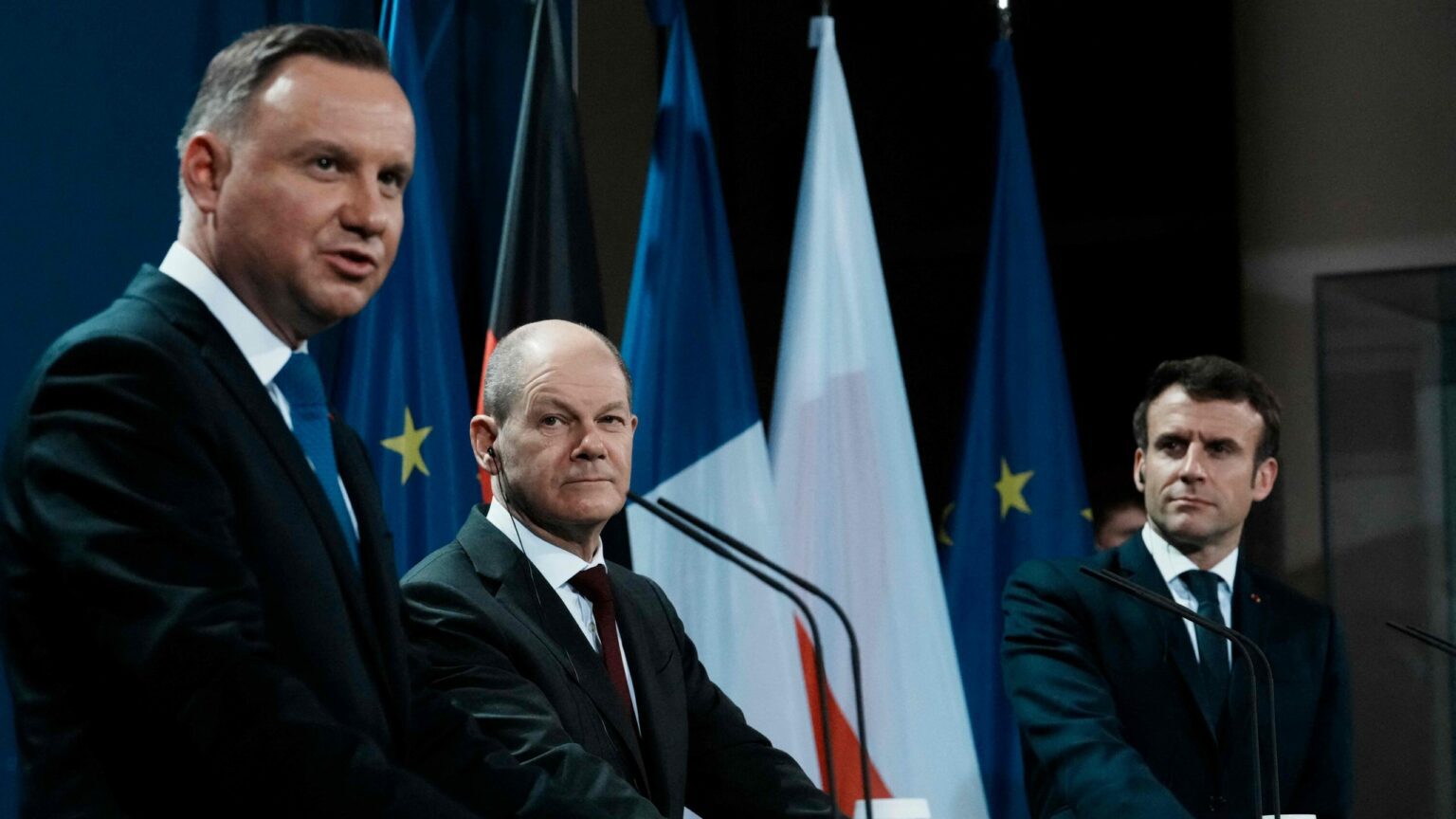
Good omens auguring containment of the Ukrainian crisis started dawning following the visit of German Chancellor Olaf Scholz to Moscow on 15 February and his meeting with Russian President Vladimir Putin, where the two leaders looked into the possibility of containing the crisis through opening up a “serious” opportunity for parties to go back to the negotiating table. As an indication of Moscow’s bona fides, the Russian Ministry of Defense announced, simultaneously with Scholz’s visit, “partial” withdrawal of its forces participating in war maneuvers encircling Ukraine. 

Despite that, full disengagement of the potential containment path from probabilities of re-escalation remains quite difficult, which makes the two scenarios all the more likely to arise.

In effect, Russia’s partial drawdown of up to 130,000 troops of its forces on the Ukrainian border doesn’t mean full withdrawal as was the case last year. Indeed, Russia isn’t likely to step towards withdrawal unless NATO and Ukraine take similar steps. Data published by Maxar Technologies up to the eve of the Russo-German meeting, revealed  Russia’s deployment of multiple battle groups and military equipment, including attack helicopters, fighters, bombers, and ground attack aircraft, miles from the Ukrainian border. Therefore, a possible scenario is that the Russian withdrawal wasn’t more than a mere redeployment of forces, and if true, it is still just a symbolic move taken for considerations pertaining to Russia’s common interests with Germany.

The circumstances of Putin-Schulz’s press conference made it clear that both parties are on track for envisioning a containment strategy, starting from square one. Perhaps there are still doubts about the possibility of initiating containment efforts in a way that enables building confidence between the two parties to go along this path. Schulz, for example, carried no guarantees from the Ukrainian side and seemed skeptical about this step altogether to the extent that he didn’t answer a journalist’s question about whether he has knowledge that Ukraine and Georgia will not join NATO. Further, there are Russia’s demands of strategic guarantees regarding the deployment of the US missile shield within Russia’s vital space (600 km). 

While NATO expressed cautious optimism about the recent drawdown of Russian forces, considering it as a “positive signal”, it is still doubtful about the step and declared that it will “investigate” the matter, convening meetings on 16 and 17 February. There will also be a meeting of defense ministers of Ukraine and Georgia to discuss the situation in the Black Sea. If anything, this reflects the fragile mutual confidence of both sides and supports Russia’s vision of the possibility of NATO continuing escalation, dealing with both countries as if they are NATO members without granting them membership.  

Since Russia started the military build-up on the Ukrainian border, the European position on the crisis seemed inconsistent, particularly with Eastern European countries declaring taking a neutral stance on the crisis for fear of being drawn into the conflict. In many respects, European positions unveiled the fracture in the European security perception, the interest approaches that brought together Germany and Russia, and the nature of interrelationships among NATO members, where Britain seemed more enthusiastic about the US position.

While Washington dug itself into a deeper hole by confirming that war is brewing and even set a date for its outbreak, Russia will continue to follow the US moves, particularly with regard to deployment of its missile shield near the Russian borders.

Seemingly, there is no possibility that the Russian demands regarding implementation of the provisions of the Minsk agreements be met. Basically, Minsk agreements were supposed to serve as a road map for containing the Ukrainian crisis. On the far side, another battlefront was opened with the Duma asking Putin to recognize Luhansk and Donetsk as independent republics, a very likely scenario that could occur which would further aggravate the crisis. In response to the Duma, the Ukrainian Parliament imposed sanctions on members of the Duma.

Trading-Off: The Most Likely Scenario

Any de facto containment of the crisis requires taking a long path that will entail broad security arrangements and mutual moves from both sides. In effect, the balance of power still tilts towards Russia, whom the United States expected to launch the first strike. Yet Russia didn’t give the US that chance and is currently immersed in a psychological warfare with it, taking advantage of its strategic alternatives, e.g. continued deployment of troops and military equipment that would allow it to advance into Ukraine. In return, Washington showed no indications of having qualitative strategic alternatives and it is still unclear whether Washington will see any alternative as a concession made to Russia, particularly since each side views the crisis from their national accounts perspective.    

In the same vein, Russia’s political polarization of Germany does not mean Germany will lead the forthcoming arrangements. Rather, it will just be an additional card in the hands of Moscow, a country that knows well how to play cards without letting the opposing party realize what the next step would be. However, if Moscow goes on promoting its economic interests with Berlin through the Nord Stream project, backing down from this step would be difficult, and over time, this will give Washington a mutual pressure card that could be used in the future to impose sanctions on Moscow.

At large, trading-off seems to be the most likely scenario, i.e. step against step, either forward or backward. As such, if Russia’s bona fides are proved and there has been an influential withdrawal of its forces, Moscow will expect a step backward from Washington and NATO. If this isn’t to happen, good omens that accompanied Putin’s meeting with Schulz would turn over time into a nightmarish chapter of this crisis that took the world’s breath away, to the extent that a third world was anticipated.

Related Posts

Israel-Iran War: Does Israel Stand Alone?

Navigating Security and Diplomacy: What Russia’s Delisting of the Taliban Means for Bilateral Ties

Lakurawa: Armed Bandit Violence in Nigeria

How the Echoes of the Russia-Ukraine War Reshaped the Black Sea Region

TAGGED: crisis, Featured, Russia, Ukraine
Mr. Ahmed Eleiba February 23, 2022
Share this Article
Facebook Twitter Whatsapp Whatsapp LinkedIn Telegram Email Copy Link Print
Mr. Ahmed Eleiba
By Mr. Ahmed Eleiba
Chief of armament unit

Stay Connected

Facebook Like
Twitter Follow
Instagram Follow
Youtube Subscribe

Latest Articles

European Union: Primacy of Interests over Respect of Human Rights
Opinions Articles March 27, 2021
Misusing the Nile
Opinions Articles June 7, 2020
Crossing the Barriers: Serious Moves to Boost Egypt’s Tourism
Public Policy October 15, 2022
The June 30 Revolution between Determinism and Uniqueness
Opinions Articles July 5, 2022

Latest Tweets

//

The Egyptian Center for Strategic Studies is an independent non-profit think tank providing decision-makers by Policy alternatives, the center was established in 2018 and comprises a group of experts and researchers from different generations and scientific disciplines.

International Relations

  • African Studies
  • American Studies
  • Arab & Regional Studies
  • Asian Studies
  • European Studies
  • Palestinian & Israeli Studies

Defence & Security

  • Armament
  • Cyber Security
  • Extremism
  • Terrorism & Armed Conflict

Public Policies

  • Development & Society
  • Economic & Energy Studies
  • Egypt & World Stats
  • Media Studies
  • Public Opinion
  • Women & Family Studies

Who we are

The Egyptian Center for Strategic Studies (ECSS) is an independent Egyptian think tank established in 2018. The Center adopts a national, scientific perspective in examining strategic issues and challenges at the local, regional, and international levels, particularly those related to Egypt’s national security and core national interests.

The Center’s output is geared toward addressing national priorities, offering anticipatory visions for policy and decision alternatives, and enhancing awareness of various transformations through diverse forms of scientific production and research activities.

All Rights Reserved to Egyptian Center for Strategic Studies - ECSS © 2023

Removed from reading list

Undo
Welcome Back!

Sign in to your account

Lost your password?