





The new order is one in which trade is no longer treated as a neutral commercial activity but as a core instrument of national power.
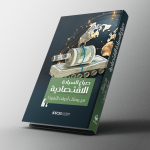
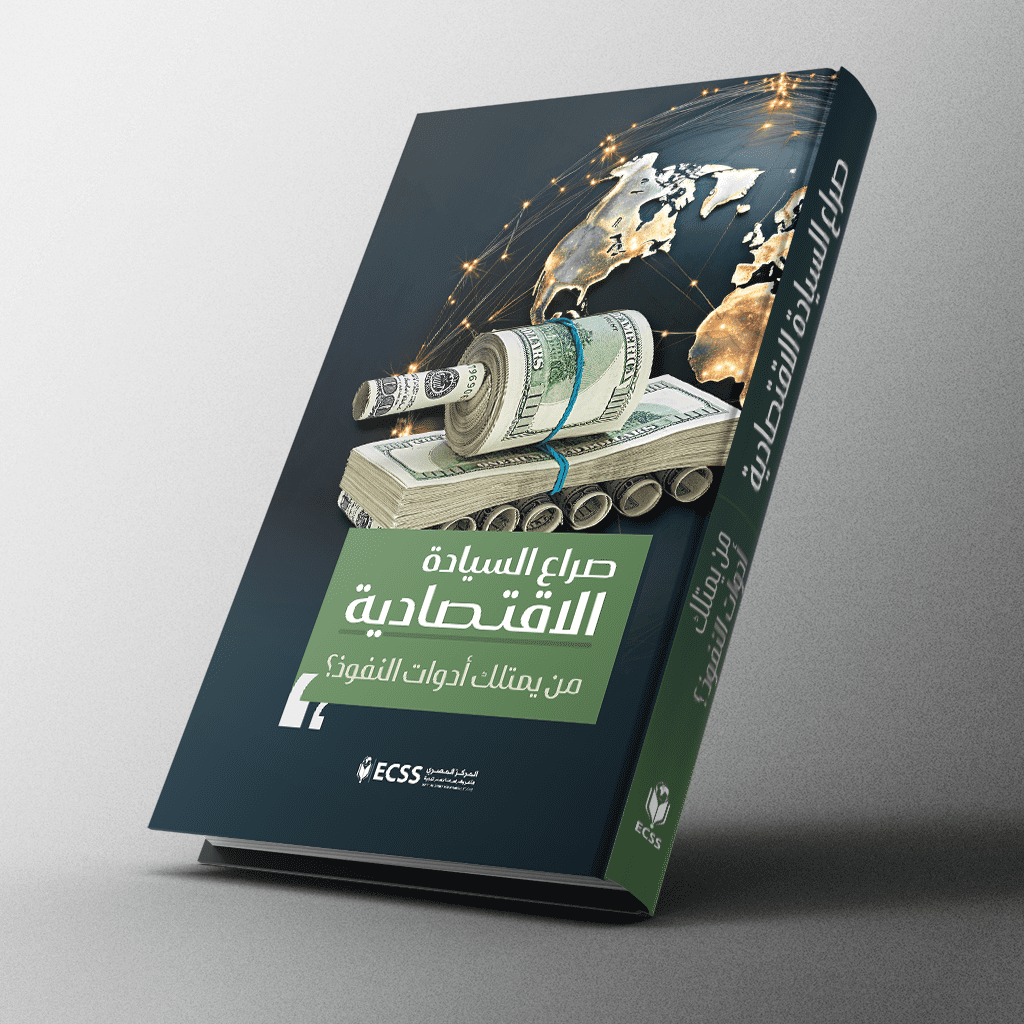
Titled The Struggle for Economic Sovereignty: Who Owns the Instruments of Power?, the book argues that the trade policy overhaul launched by the United States during Donald Trump’s second term was never intended as a narrow technocratic effort to correct trade imbalances.
Instead, it constituted a foundational shock to the architecture of the global economy. From early 2025, Washington signalled that trade would be recast as a pillar of national security, governed by strategic calculation rather than market logic.
Beginning with the presidential memorandum “Trade Policy: America First,” followed by the doctrine of “reciprocal tariffs” and the March policy agenda, the United States moved to redefine the very meaning of trade. Policy expanded beyond tariff schedules and market access toward the active management of standards, rules, and gatekeeping power.
By April 2025, this strategic turn had crystallised into an openly declared economic confrontation. An executive order imposing reciprocal tariffs, justified in the language of unfair practices, deployed statistics less as economic evidence than as prosecutorial exhibits.
The contrast between the United States’ relatively low average tariff rate and the higher rates of major trading partners was paired with an indictment of non-tariff barriers portrayed as systematic tools for eroding American competitiveness.
In this framing, tariffs ceased to function simply as border taxes; they became instruments for redistributing costs and advantages—and a blunt assertion that access to the American market is a conditional privilege rather than an automatic entitlement.
To interpret this moment merely as a “trade war,” however, is to miss its deeper significance. What is unfolding is a struggle over economic sovereignty and global standing. Washington’s actions extend far beyond the commercial sphere, encompassing energy, critical minerals, maritime dominance, transport corridors, supply chains, data governance, advanced technologies, manufacturing ecosystems, and the future of dollar primacy.
The trade deficit thus appears less as a singular cause than as a symptom of a broader historical realignment, one that has unsettled an order long assumed stable since the end of World War II. The rise of China and the steady advance of India have made clear that global hierarchies are contingent rather than permanent.
This realization has produced a governing logic rooted in emergency authority. The activation of the International Emergency Economic Powers Act (IEEPA), the tightening of the Committee on Foreign Investment in the United States (CFIUS), and the mobilization of multiple federal agencies into a unified national effort have transformed the factory into a frontline, intellectual property into a defensive shield, data into a strategic weapon, and critical minerals into geopolitical chokepoints.
The United States no longer seeks leadership alone; it seeks to institutionalize dependence on its technologies and standards, ensuring that it remains the system’s central conductor—even if that requires rewriting rules from within rather than adhering to them from without.
The cumulative outcome is an international system drifting toward fragmentation rather than integration. Washington now relates selectively to multilateral rules—circumventing them when they constrain U.S. freedom of action and invoking them when they reinforce American leverage—while marginalizing traditional consultative diplomacy in favor of pressure-based bargaining.
At the same time, regional forms of multilateralism are accelerating, and parallel institutions are multiplying. The emerging order is therefore more costly, less efficient, and increasingly governed by security imperatives rather than the logic of profit. Any temporary easing in U.S.–China tensions should thus be understood not as a resolution, but as a tactical pause before confrontation
Against this backdrop, the book offers a comprehensive analytical account of the deep transformation reshaping the global economy. It argues that international trade has ceased to function primarily as a mechanism for mutual gain and has become an arena for contestation over sovereignty and economic rank.
By dismantling the conventional trade-war narrative, it shows that today’s conflict is structural in nature—centred on the redistribution of economic power and the redefinition of strength and vulnerability in an increasingly multipolar world.
At the heart of this transformation lies the US–China rivalry. The book traces how both sides have integrated national security considerations into trade, industrial, and technological policy. The United States has moved decisively toward the weaponization of trade, finance, the dollar, and supply chains. China, in parallel, is constructing what amounts to an economic fortress, grounded in technological upgrading, a dual-circulation development model, and ambitions to dominate green industries and advanced manufacturing.
The book also examines the erosion of the multilateral trading system itself, particularly the institutional paralysis of the World Trade Organization. Rising unilateralism and the elevation of national security above rule-based governance have hollowed out mechanisms designed to manage disputes and coordinate openness.
Washington’s growing reliance on bilateral arrangements as tools of geo-economic competition—across Asia, Africa, and Latin America—stands in contrast to China’s expansion through regional initiatives and alternative supply-chain architectures, together reshaping patterns of global commerce and influence.
Beyond these arenas, the book widens the analytical lens to non-traditional dimensions of power. Defence industries, advanced technologies, energy transitions, and environmental policy emerge as new pillars of economic hegemony.
Control over semiconductors, critical minerals, artificial intelligence, and global value chains now functions as a form of economic deterrence comparable in strategic weight to military force. Environmental and technological standards increasingly operate as instruments of soft coercion, quietly reallocating power within the international system.
Looking ahead, the book concludes that the world is moving toward a more fragmented, more expensive, and less efficient trading order—one in which considerations of security and sovereignty consistently override the pursuit of maximum efficiency.
The erosion of hyper-globalization and the rise of competing regional blocs compel states, especially in the developing world, to rethink their trade, industrial, and financial strategies in search of durable positioning within a global economy being reshaped by an intensifying struggle for economic sovereignty.
Published in cooperation between the Egyptian Center for Strategic Studies, Al-Ahram Weekly, and the English-language portal Ahram Online.