



By using ECSS site, you agree to the Privacy Policy and Terms of Use.
Accept
ECSS - Egyptian Center for Strategic StudiesECSS - Egyptian Center for Strategic Studies
  • Home
  • International Relations
    International Relations
    Show More
    Top News
    African Natural Resources: Opportunities and Challenges
    June 14, 2020
    Quartet ends boycott of Qatar
    January 9, 2021
    Talibanistan or Civil War: Scenarios for the Afghanistan Crisis
    August 30, 2021
    Latest News
    Israel’s African gambit
    March 6, 2026
    Geopolitical realism: What does Washington’s return to the African Sahel mean?
    March 5, 2026
    Analysis | Manufacturing opposition: How Israel uses digital platforms to shape Iranian public opinion
    February 14, 2026
    Analysis| Turkey without terrorism: Assessing the trajectory of Turkish–Kurdish reconciliation
    February 12, 2026
  • Defense & Security
    Defense & Security
    Show More
    Top News
    Egypt’s Vision for Combating Terrorism
    June 22, 2020
    Why Did China Deploy the 46th Fleet to the Red Sea?
    March 3, 2024
    Mapping the Path of Terrorism in 2025
    February 23, 2025
    Latest News
    Between two camps: Reading into ISIS discourse on the US-Israeli war on Iran
    April 15, 2026
    Encrypted messages “Roaring Lion”: The hidden messages behind the name of the operation against Iran
    March 11, 2026
    Iran war developments
    March 9, 2026
    Manufacturing the enemy : Reframing terrorism in contemporary Western discourse
    March 7, 2026
  • Public Policy
    Public Policy
    Show More
    Top News
    Human Rights in Egypt: Pragmatic Translation of Political Will
    June 22, 2020
    Lebanon’s economic crunch and fuel shortages
    September 12, 2021
    New Policies to Provide Effective Training for Teachers
    August 24, 2022
    Latest News
    Militarizing water in Middle East wars A strategic analysis of the Iran-US-Israel war
    April 18, 2026
    Reading into attacks on maritime navigation in the Arabian Gulf
    March 17, 2026
    Emerging economies in a world without rules: Between opportunity and predicament
    March 5, 2026
    The end of economic globalization: Reading into the 2025 U.S. National Security Strategy
    February 4, 2026
  • Analysis
    • Opinion
    • Analysis
    • Situation Assessment
    • Readings
  • Activities
    • Conferences
    • ECSS Agenda
    • Panel Discussion
    • Seminar
    • Workshops
  • ECSS Shop
  • العربية
  • Defense & Security
  • International Relations
  • Public Policy
All Rights Reserved to ECSS © 2022,
Reading: The Gaza Events and Telling Facts
Share
Notification Show More
Latest News
Militarizing water in Middle East wars A strategic analysis of the Iran-US-Israel war
Economic & Energy Studies
The future of US-Iran negotiations
Opinion
Between two camps: Reading into ISIS discourse on the US-Israeli war on Iran
Terrorism & Armed Conflict
Russia, China, and the war against Iran
Others
Continental drift
Others
Aa
ECSS - Egyptian Center for Strategic StudiesECSS - Egyptian Center for Strategic Studies
Aa
  • اللغة العربية
  • International Relations
  • Defense & Security
  • Special Edition
  • Public Policy
  • Analysis
  • Activities & Events
  • Home
  • اللغة العربية
  • Categories
    • International Relations
    • Defense & Security
    • Public Policy
    • Analysis
    • Special Edition
    • Activities & Events
    • Opinions Articles
  • Bookmarks
Follow US
  • Advertise
All Rights Reserved to ECSS © 2022, Powered by EgyptYo Business Services.
Opinions Articles

The Gaza Events and Telling Facts

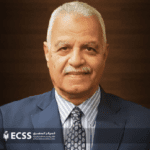
Gen. Mohamed Eldewery
Last updated: 2023/11/14 at 12:27 PM
Gen. Mohamed Eldewery
Share
8 Min Read
SHARE

After more than a month, the rate at which events in Gaza are unfolding continues to pick up momentum. None of the parties involved in the crisis can predict when or how the crisis will end or what the long-term effects will. But those who follow this brutal war pause at a few pivotal developments, the most notable of which is that Israel chose to carry out its ground operation of killing and destruction in defiance of all laws and external reactions in order to achieve the stated objective it set out to achieve: dismantling Hamas’ military structure and ending its rule over the Gaza Strip at a time when the Palestinian resistance is making every effort to thwart these operations.

In their recent war against the Gaza Strip, Israel has shown that no targets are off-limits to them. This includes hospitals, religious institutions, and refugee camps. As such, we should brace ourselves for the worst over the next few days, particularly since efforts to achieve a humanitarian truce that is merely temporary will require extraordinary efforts. 

Despite the ongoing conflict, I believe it is my responsibility to highlight a few key points that could prove useful at present and in the future. In my view, all involved parties must give them serious thought. Among these, the following are the most crucial points:

I. There will be no peace in the region or security for Israel unless and until the Palestinian cause is resolved in a fair and comprehensive manner and a Palestinian state is established. Regardless of the extent, profundity, or scope of Israel’s normalization with Arab countries, it will never bring Israel the security it seeks.

II. Egypt views the Palestinian cause as a matter of national security. As such, it has taken action from the outset to not only contain the situation, mediate a ceasefire, and augment aid, but also to underscore the principles it upholds, which include the renunciation of collective punishment, forced displacement, and the murder of civilians.

III. The proposition to resettle Palestinians in Sinai is not merely the product of Israeli think tanks or unofficial and official statements; it is an integral component of initiatives that may be executed if Egypt does not resolutely oppose them. Furthermore, Egypt undoubtedly possesses the capacity to confront any threats to its national security.

IV. Israel is largely held accountable for undermining the Palestinian Authority and its institutions.

V. The continued vulnerability of Arab national security to regional threats will persist so long as the Arab stance fails to address the perils confronting it with the necessary seriousness.

VI. Subsequent Israeli governments that neglected the peace process will have to bear the consequences of their actions, but more significantly, they will need to draw lessons from the Gaza crisis, which has shown that relying solely on the security factor is not sufficient.

VII. One of the main factors that contributed to the Palestinian situation generally reaching this worsening state was the catastrophe of the Palestinian division between the West Bank and the Gaza Strip, which took place more than 15 years ago.

VIII. The United States, which we had hoped would be, as it had been, a full partner in the peace process, has, by its unwavering alignment with Israel, turned into a collaborator in the downfall of the peace process as a whole and even a collaborator in the events in Gaza.

IX. European and global organizations that are content with denunciations and appeals cannot be relied upon to take a stand. In fact, a number of countries in Western Europe have stated that they support the Israeli operations.

Perhaps one significant ramification of this war is that some countries and international think tanks have started to engage in lengthy discussions about what will happen to the Gaza Strip and who will rule there once hostilities cease. It is as though the world community has forgotten that the Gaza Strip and the West Bank constitute the two halves of the Palestinian state and cannot be divided in any settlement.

When it comes to handling the current state of affairs, the Egyptian leadership appears to be navigating a minefield. Egypt refused to allow the Palestinian cause to devolve into a humanitarian one. Driven by its historical responsibility, it hurriedly organized the October 21 Cairo Peace Summit, where President Abdel-Fattah Al-Sisi was eager to distill an integrated road map out of the entire crisis, which included the resumption of political negotiations that would lead to a two-state solution and the introduction of aid through pacification and a ceasefire.

Notwithstanding the magnitude of the catastrophe unfolding in Gaza, the international community continues to observe its progression from a spectator’s standpoint, expressing merely disapproval of the deliberate, daily slaughter of the defenseless Palestinian populace. The United States and the international community must accept their responsibilities and abandon the double standards policy to accomplish the following three objectives:

1. Putting pressure on Israel to halt the daily massacres of civilians who are paying the price for defending their land, whether through a humanitarian truce or an immediate ceasefire.

2. Stepping up humanitarian aid delivery until it reaches every area of the Strip, with an emphasis on assisting hospitals that are able to reopen and putting an end to forced displacement.

3. Reviving the Palestinian cause as soon as the situation stabilizes by resuming talks and implementing the two-state solution in order to avoid another tragedy of this magnitude in the West Bank or Gaza Strip.

Related Posts

Gaza Crisis between Israeli and American Perspectives

The End of Globalization?

Troubled Waters in Jenin Camp

Is It Time for the Arab Deal of the Century?

Gen. Mohamed Eldewery November 14, 2023
Share this Article
Facebook Twitter Whatsapp Whatsapp LinkedIn Telegram Email Copy Link Print
Gen. Mohamed Eldewery
By Gen. Mohamed Eldewery
Deputy Manager

Stay Connected

Facebook Like
Twitter Follow
Instagram Follow
Youtube Subscribe

Latest Articles

Parliamentary elections 2020: Boosting stability and a launching point
Public Policy May 27, 2021
Facts about the Philadelphi Corridor, Rafah Crossing, and Peace Treaty
Opinion June 2, 2024
Israel’s Cyber ​​Dome: Hallmarks and Motives
Defense & Security August 15, 2022
Why Are UN Missions in Libya Facing Persistent Challenges?
Situation Assessment June 23, 2024

Latest Tweets

//

The Egyptian Center for Strategic Studies is an independent non-profit think tank providing decision-makers by Policy alternatives, the center was established in 2018 and comprises a group of experts and researchers from different generations and scientific disciplines.

International Relations

  • African Studies
  • American Studies
  • Arab & Regional Studies
  • Asian Studies
  • European Studies
  • Palestinian & Israeli Studies

Defence & Security

  • Armament
  • Cyber Security
  • Extremism
  • Terrorism & Armed Conflict

Public Policies

  • Development & Society
  • Economic & Energy Studies
  • Egypt & World Stats
  • Media Studies
  • Public Opinion
  • Women & Family Studies

Who we are

The Egyptian Center for Strategic Studies (ECSS) is an independent Egyptian think tank established in 2018. The Center adopts a national, scientific perspective in examining strategic issues and challenges at the local, regional, and international levels, particularly those related to Egypt’s national security and core national interests.

The Center’s output is geared toward addressing national priorities, offering anticipatory visions for policy and decision alternatives, and enhancing awareness of various transformations through diverse forms of scientific production and research activities.

All Rights Reserved to Egyptian Center for Strategic Studies - ECSS © 2023

Removed from reading list

Undo
Welcome Back!

Sign in to your account

Lost your password?