








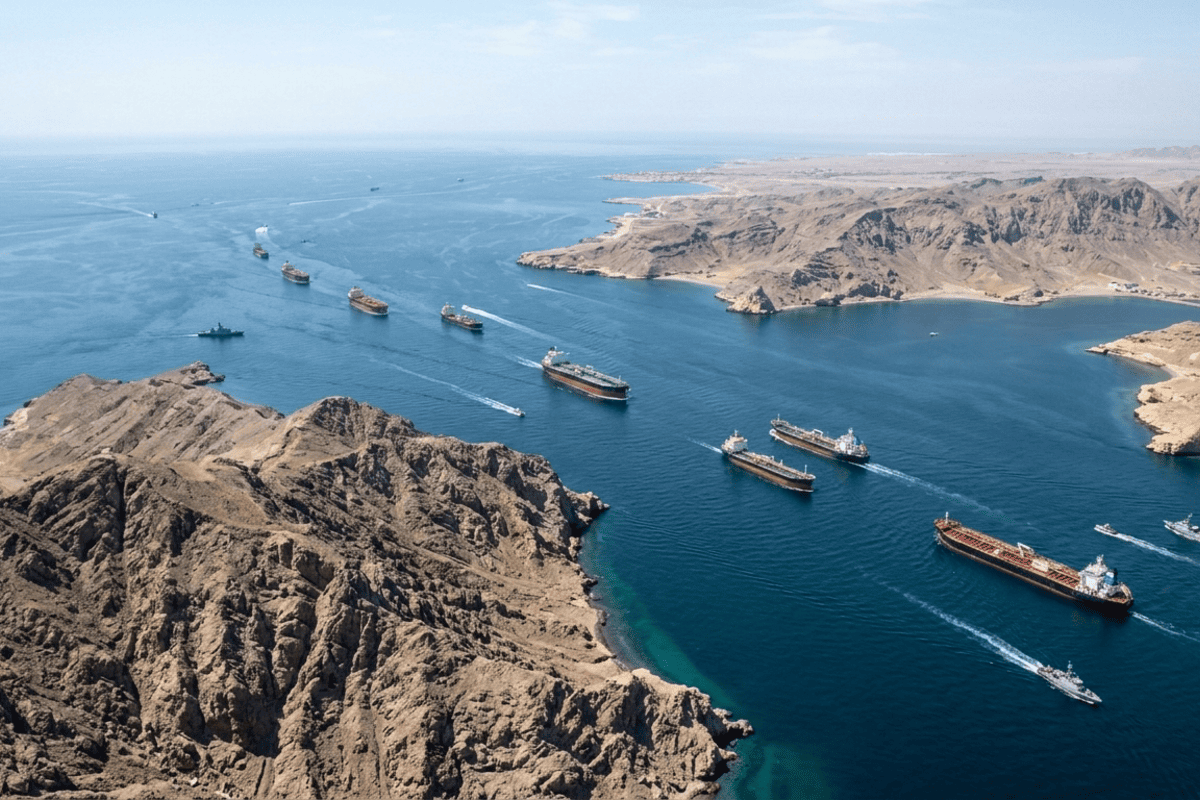
Maritime corridors are one of the principal instruments of pressure employed by states as a political tool in conflicts. These corridors have evolved into arenas of geopolitical competition and mechanisms for exerting pressure on various countries. This has been reflected across multiple regional and international contexts, most notably the Russian-Ukrainian war, which underscored the strategic importance of the Black Sea as a vital route for exporting energy and grain, alongside Russia’s blockade of Ukrainian ports on the Black Sea. Similar dynamics have emerged in the utilization of the Red Sea during the war on Gaza, as well as the Strait of Hormuz—one of the world’s most critical energy corridors—during the US-Israeli war against Iran.
These international conflicts have disrupted some of the world’s most important maritime passages, adversely affecting supply chains and national economies, particularly given that global trade relies heavily on maritime transport for the movement of both energy resources and goods. Nearly 90 percent of global commodities are transported by sea. Consequently, such conflicts underscore the imperative of safeguarding freedom of navigation through straits and maritime corridors, especially amid a transformation in the nature of wars and international conflicts, where these waterways are increasingly leveraged to control energy routes, supply chains, and global trade pathways. This has reinforced the notion that controlling or disrupting a maritime corridor can generate instability and threaten the safety of maritime transit, thereby driving up oil prices and compelling states and companies alike to reassess trade routes and the level of risks to which they are exposed.
First: The Use of Maritime Corridors in Warfare
Maritime corridors have been utilized in several conflicts, generating significant repercussions for a number of states. This can be illustrated as follows:
• The Use of the Black Sea:
During the war with Ukraine, Russia sought to leverage the Black Sea as a strategic pressure card, declaring commercial vessels bound for Ukrainian ports on the Black Sea to be legitimate military targets. Ukraine, in turn, adopted a similar position toward commercial vessels heading to Russian ports on the Black Sea. Both countries targeted ports and energy infrastructure. Each side recognizes the strategic importance of the Black Sea, as it constitutes a principal route for grain shipments from southern regions, with nearly 86 percent of grain exports passing through the ports of the Azov Basin. Ukraine is among the world’s leading grain exporters to North Africa and Southeast Asia, making the Black Sea of critical economic importance to Kyiv. The continuation of tensions in the Black Sea has adversely affected global food supply chains, given its role as a major transit route for grain and agricultural products, thereby harming countries situated along the Black Sea coast.[1]
• The Use of the Red Sea:
The Houthis employed the Red Sea as one of their principal tools of pressure against Israel in an effort to compel a halt to the war on Gaza in 2023. Through repeated attacks, they targeted commercial vessels bound for Israel and effectively imposed a maritime blockade in the Red Sea. They also generated a significant security threat through their possession of missiles and drones capable of reaching Israel from Yemen. Numerous drones were intercepted by the US destroyer Carney, which Washington deployed to the region.
The Houthi attacks led to the establishment of a multinational maritime security force on 18 December 2023 under US leadership, known as Operation Prosperity Guardian. The operation succeeded in carrying out strikes against Houthi targets in Yemen. In addition, on 19 February 2024, the European Union launched the “EUNAVFOR Aspides” mission to protect maritime security and ensure freedom of navigation—particularly for commercial vessels—in the Red Sea, the Gulf of Aden, the Arabian Sea, the Gulf of Oman, and the Strait of Hormuz, through escort operations and protection against potential maritime attacks.
The Houthis targeted international vessels in the Red Sea and the Gulf of Aden through both remote attacks and ship hijackings, carrying out nearly 50 attacks against cargo ships. They subsequently expanded the scope of their operations to include the Indian Ocean. These attacks disrupted nearly 90 percent of maritime traffic in the Red Sea during 2024, while cargo volumes transiting the Suez Canal declined by more than 50 percent. Iran also launched attacks against Israeli-linked vessels in the Indian Ocean. A container ship belonging to Singapore-based company Eastern Pacific Shipping was struck by an Iranian Shahed-136 drone while sailing approximately 200 nautical miles southwest of India.[2]
The maritime blockade in the Red Sea inflicted significant damage on the Port of Eilat, which is primarily responsible for automobile imports and the export of potash fertilizers to the Asia-Pacific region. Israeli economic losses resulting from the blockade were estimated at approximately $3 billion. Israeli maritime trade was consequently rerouted through the ports of Haifa and Ashdod on the Mediterranean Sea. At the same time, major shipping companies avoided transiting the Red Sea and the Suez Canal, opting instead to sail around Africa, thereby extending voyages by nearly 8,000 nautical miles.
The use of the Red Sea as a pressure instrument also triggered a broader crisis affecting maritime corridors such as the Suez Canal. Major global shipping companies, including A.P. Moller – Maersk, avoided the Gulf of Aden and the southern Red Sea, redirecting vessels through the Cape of Good Hope route. This alternative route adds roughly 3,500 nautical miles to voyages and extends shipping times between Asia and Europe or the Americas by between 10 and 14 days. In addition, the additional fuel costs alone are estimated at approximately $1 million per voyage.[3]
• The Use of the Strait of Hormuz:
Iran employed the Strait of Hormuz as a pressure instrument in the context of the US-Israeli war against it, in response to American and Israeli strikes on Tehran. It leveraged this vital maritime corridor, which connects the waters of the Gulf to the Indian Ocean, fully aware that the strait constitutes a critical tool in the balance of power. Any actor capable of disrupting or threatening this strategic artery possesses influence that extends beyond direct military confrontation, affecting financial markets and global supply chains alike. With the shift toward negotiations, the strait increasingly became both a bargaining chip and a deterrence instrument in Iran’s hands. Consequently, efforts to end the war and manage the conflict with Iran became closely linked to issues of maritime security and guarantees for the safety of navigation.[4]
Tehran moved to disrupt international trade flows in an effort to pressure the United States and negotiate over a range of issues. In response, Washington sought to restrict maritime transit and prevent vessels from reaching Iran. As a result, the competing strategies pursued by the parties to the conflict adversely affected a number of countries dependent on the strait for their oil exports. Iran attempted to suspend navigation and maritime traffic through the Strait of Hormuz, targeting commercial vessels and employing drones and naval mines. The crisis surrounding the strait particularly harmed countries such as Iraq, Kuwait, Qatar, and Bahrain, which lack alternative export routes bypassing Hormuz. Meanwhile, the alternative routes available to Saudi Arabia and the UAE were capable of handling only between 3.5 and 5.5 million barrels per day.[5]
Accordingly, control over the Strait of Hormuz effectively amounted to imposing a southern blockade on the Gulf. The Strait of Hormuz represents the eastern gateway for Gulf energy exports, while Bab el-Mandeb serves as a principal outlet for these exports toward European markets via the Suez Canal. Disruptions to the Strait of Hormuz and Bab el-Mandeb affect nearly $10 billion in global trade, obstruct around 30 percent of global container shipping traffic, nearly 20 percent of global oil supplies, and roughly one-third of the world’s maritime fertilizer trade transported through Hormuz. In addition, Bab el-Mandeb accounts for approximately 10–12 percent of total global maritime trade, one-third of European imports, around one-fifth of global aluminum trade, 13 percent of automobile trade, nearly 40 percent of vacuum cleaner trade, 25 percent of microwave oven trade, and 22 percent of washing machine trade.[6]
Tehran succeeded during its conflict with Israel in exerting direct pressure on the Strait of Hormuz and indirect pressure on Bab el-Mandeb through the Houthis, thereby placing significant strain on Gulf energy export terminals and outlets. This also disrupted supply chains, undermined market confidence, and depleted the resources of Gulf states without requiring direct military confrontation. In this context, maritime corridors emerged as instruments of pressure affecting all states, as any disruption in these waterways has immediate repercussions for the global economy.
• The Strait of Malacca:
The Strait of Malacca is regarded as one of the world’s most strategically important maritime corridors, linking the Indian Ocean to the Pacific Ocean through the South China Sea. It is bordered by the Malay Peninsula to the east and the Indonesian island of Sumatra to the west. Historically, it represented a focal point of rivalry among Portugal, the Netherlands, and Britain. Approximately 25 percent of global trade passes through the strait, which serves as a major conduit for oil, liquefied natural gas, and goods destined for Southeast and East Asia[7]. However, the growing prevalence of piracy and armed robbery has threatened maritime security in the area, with 38 piracy incidents recorded during the first half of 2023. The strait is also highly vulnerable to tensions in the South China Sea, where confrontations among disputing states can disrupt the flow of goods and global supply chains. East and Southeast Asian countries depend heavily on the strait as a vital link in maritime trade routes, with nearly 90,000 vessels transiting it annually.
Second: Lessons Learned
A number of international experiences have demonstrated the effectiveness of multilateral maritime security cooperation in confronting shared threats such as piracy and threats to freedom of navigation, particularly through coordinated patrols and intelligence-sharing mechanisms. Piracy off the coast of Somalia intensified as a result of economic and social conflicts beginning in the mid-1990s. In response, states developed anti-piracy strategies centered on the use of organized transit corridors and the convoy escort of commercial vessels.
In 2008, the European Union launched Operation Atalanta to combat piracy in waters off the Horn of Africa. The mission involved the deployment of warships from several European countries to protect maritime corridors, deliver humanitarian assistance, and support capacity-building efforts for regional naval forces. Participating states succeeded in enhancing the security of vessels transiting high-risk areas, thereby contributing to the restoration of confidence in maritime operations.[8]
In January 2009, Combined Task Force 151 (CTF-151) was established with the objective of combating piracy. Under United Nations Security Council Resolution 2608 (2021), the force was mandated to contribute to safeguarding the flow of international trade. CTF-151 is a multinational task force whose leadership rotates among participating countries every three to six months. States that have commanded the force include Bahrain, Brazil, Denmark, Japan, Jordan, Kuwait, Pakistan, the Philippines, New Zealand, the Republic of Korea, Singapore, Thailand, Turkey, the United Kingdom, and the United States. Participating countries contribute naval vessels, aircraft, and personnel to support the force’s operations.[9]
The experience of maritime transit through the Gulf of Aden also demonstrated the effectiveness of organizing vessels according to their speed and grouping them into monitored convoys, thereby reducing their exposure to danger through naval protection[10]. Likewise, the experience of the Strait of Malacca offers a valuable model for protecting maritime corridors from piracy, as security patrols were conducted by the littoral states themselves—Indonesia, Malaysia, Singapore, and Thailand—rather than relying on foreign naval forces. The Malacca Strait Patrols succeeded in securing maritime navigation in the region, demonstrating the effectiveness of a regional security framework based on cooperation among the bordering states without any single state exploiting control over the maritime corridor.
The Malacca Strait Patrols were launched in 2004 to strengthen security in the Strait of Malacca. Participating naval forces conducted coordinated maritime patrols and developed mechanisms for information-sharing between vessels and maritime operations centers. Following the success of these patrols, the Lloyd’s Joint War Committee removed the Strait of Malacca from its list of war-risk areas in 2006. In addition, Indonesia, Singapore, and Malaysia established the Traffic Separation Scheme (TSS) and the STRAITREP reporting system in the Strait of Malacca to enhance navigational safety[11]. The International Maritime Organization also adopted a mandatory ship reporting system for the Straits of Malacca and Singapore, which entered into force in 1998 with the aim of enhancing navigational safety, protecting the marine environment, facilitating vessel movement, and supporting search and rescue operations.
In a related context, Turkey succeeded in applying the 1936 Montreux Convention Regarding the Regime of the Straits as a legal framework preventing the exploitation of the Bosporus and Dardanelles straits in armed conflicts. The convention enabled Turkey to close the Turkish Straits to warships during the Russian-Ukrainian war in 2022, pursuant to the convention’s provisions. This contributed to protecting the maritime corridor, ensuring the continued passage of commercial vessels, and preventing the straits from becoming a theater of war, while at the same time respecting the interests of the Black Sea littoral states.[12]
Accordingly, the increasing use of maritime corridors as instruments in regional and international conflicts compels affected states to reassess mechanisms for safeguarding their security within these waterways. This includes the formation of alliances dedicated to securing maritime corridors through the establishment of vessel-monitoring groups, mine-clearing operations, and maritime domain surveillance systems.
In addition, dedicated maritime monitoring mechanisms could be introduced for oil tankers, alongside the establishment of rapid-response forces to ensure the protection of navigation during emergencies. Scheduled transit windows could also be implemented to reduce risks and enable vessels to move according to predictable patterns, thereby facilitating their defense and protection.
Within this framework, Gulf naval forces could participate in a regional coalition aimed at protecting maritime corridors, particularly as Gulf states are among the countries most directly affected by disruptions in these waterways. Such an arrangement would require agreement on a clear structure for regional command and leadership. Confidence-building measures could also be adopted among rival states to ensure the stability of maritime corridors essential to their trade. In the case of the Strait of Hormuz, for example, Tehran could become a party to any agreement concerning the strait and could participate in its joint management, particularly given Iran’s dependence on oil exports and the import of industrial and food commodities through the waterway. Closing the strait would directly affect Iranian revenue flows and weaken its maritime logistics sector.
Any maritime convoys established to escort vessels through the strait could also include Iran, especially since the concept of joint transit could serve as a deterrent against future Iranian attacks, while simultaneously ensuring the continued passage of Iranian exports through the strait. A transit verification mechanism could likewise be implemented through multilateral management arrangements or in cooperation with states capable of providing security guarantees. Oman is reportedly considering a similar partnership with Iran regarding the strait, and such cooperation could be expanded to include additional regional states.
Gulf states could also strengthen collective cooperation in the field of maritime information-sharing, thereby enhancing rapid-response capabilities to maritime threats, establishing mine-clearing task forces, and developing dedicated maritime surveillance systems for the strait. It is also important to take into consideration that Iran is not a party to the United Nations Convention on the Law of the Sea, while the UAE, Bahrain, and Iran are not signatories to the 1979 International Convention on Maritime Search and Rescue. Consequently, there is a need to establish coordinated search and rescue zones, navigation traffic management plans, and regional mechanisms for information-sharing and cooperation.
Within the same context, states could diversify their strategic approaches in order to reduce dependence on a single maritime corridor by expanding alternative options, such as alternative oil pipeline networks. Following the disruption of the Strait of Hormuz, Saudi Arabia increased oil shipments through the Red Sea, with approximately 77 percent of its crude oil exports loaded through the Port of Yanbu. The port is connected to the oil-producing Eastern Province through the 1,200-kilometer East-West Pipeline (“Petroline”), which extends from the Abqaiq oil processing center in the Eastern Province. The East-West Pipeline has a carrying capacity of approximately 7 million barrels per day.
States could also invest in ports located outside strategic straits, such as the Port of Duqm in Oman and the Port of Fujairah in the UAE, as storage and export hubs despite both having been targeted by Iran. In parallel, maritime corridors could be further secured through multinational naval alliances, the deployment of advanced surveillance technologies, and the escorting of commercial vessels.[13]
Additional measures could include expanding oil and gas storage capacities for importing countries in order to meet domestic consumption needs in the event of supply disruptions. States could also diversify energy sources and accelerate the transition toward nuclear and renewable energy, thereby reducing dependence on fossil fuels transported across seas. Locally generated electricity is less vulnerable to disruptions caused by the closure of strategic chokepoints such as the Strait of Hormuz or the Strait of Malacca. Moreover, reliance on liquefaction technologies could provide greater flexibility in determining export destinations compared to fixed pipeline networks, facilitating the rerouting of shipments from unaffected regions.
Furthermore, diplomatic and legal solutions could be formulated through agreements on burden-sharing among states to secure maritime corridors, alongside the activation of the United Nations Convention on the Law of the Sea to guarantee the right of transit passage for vessels through international straits and prevent littoral states from imposing restrictions on navigation.
In conclusion, maritime corridors have become one of the most prominent instruments of pressure on national economies. Previous conflicts have demonstrated the serious risks associated with disrupting or controlling these waterways, stressing the need to formulate alternative strategies for addressing threats to maritime security. Such strategies require strengthened regional and international cooperation, the activation of binding legal agreements, and the diversification of alternative maritime routes.
References:
[1] Contemporary Wars and Their Impact on International and Regional Maritime Routes, European Center for Counterterrorism and Intelligence Studies, March 31, 2026. https://2u.pw/69M7TG
[2] Moshe Terdiman, Israel in the Red Sea during the War in Gaza: Strategic insights, Middle East Institute, 10 May 2024. https://2u.pw/HJlz5U
[3] Martijn van Gils, When the World’s Most Critical Chokepoint Closes: The Strait of Hormuz, Global Supply Chains, and the Case for Network Design, ICRON Customer Centric Supply Chain Planning, 4 March 2026. https://2u.pw/E6AMoO
[4] Battle for the Straits: Reconfiguring the Strategic Geography of Conflict, Middle East Council on Global Affairs, 5 April 2026. https://2u.pw/5GWQJ7
[5] Parth Adhikari, Lessons from the Strait of Hormuz crisis, Blavatnik School of Government, 8 April 2026. https://2u.pw/1bO6pG
[6] Samriddhi Vij, Double Chokepoint: Impact of a Hormuz and Bab al-Mandeb Closure, The Observer Research Foundation Middle East, 23 April 2026. https://2u.pw/eGSNRv
[7] Adam Leong, From Gallipoli to the Strait of Malacca: Why maritime choke points still decide the fate of nations, Lowy Institute, 4 July 2025. https://2u.pw/tNGSzH
[8] Racha Helwa and Perrihan Al-Riffai, A lifeline under threat: Why the Suez Canal’s security matters for the world, Atlantic Council, 20 March 2025. https://2u.pw/y2ZbQt
[9] CTF 151: Counter-piracy, Combined Maritime Forces, https://2u.pw/Lk1AYB
[10] Nitya Labh, A naval coalition in the Strait of Hormuz should learn these lessons, Chatham House, 1 May 2026. https://2u.pw/fPEnJa
[11] Nitya Labh, How to keep the Strait of Hormuz open in the long term, Chatham House, 14 April 2026. https://2u.pw/jGfDMd
[12] Ziyi Wang, How to manage a geopolitical chokepoint, Engelsberg Ideas, 2 April 2026. https://2u.pw/UBYaFr
[13] Kristian Coates, Jim Krane, Maritime Chokepoints and Risks to Global Shipping and Energy Security, Baker Institute for public policy,16 March 2026. https://2u.pw/khhxMQ


