





It appears that the preliminary assessments made by American and Israeli military strategic circles regarding the outcomes of the ongoing military operations have required revision in light of the following considerations:
First, NATO has managed to accommodate the reservations of certain member states regarding participation, particularly Spain. President Donald Trump’s praise of the alliance’s Secretary-General appears to signal that NATO has ultimately decided to take part in the operations. This is reflected in the deployment of French, British, and Spanish naval vessels to the region, in addition to the presence of Australian military assets. Such developments suggest that efforts are underway to assemble a broader international coalition aimed at striking Iran.
Second, despite repeated assurances from senior American and Israeli officials that their missile stockpiles remain sufficient and have not been depleted, the persistent US appeals for support from other countries indicate concern that these reserves could be exhausted before the Iranian regime collapses.
Third, it is now evident that Iran is confronting this coalition largely on its own. France and Britain have become visibly engaged. Although their involvement is described as defensive, the interception of missiles directed toward Israel or other countries in the region effectively constitutes direct participation in the conflict.
Fourth, the US president has conducted communications with Kurdish leaders, including the head of the Patriotic Union of Kurdistan, which controls Sulaymaniyah in northern Iraq, and the leader of the Kurdistan Democratic Party, which dominates the remainder of the Kurdistan region of northern Iraq. Contact was also made with one of the leaders of Iranian Kurdish opposition factions based in northern Iraq. Initially, the US sought to persuade the Peshmerga forces affiliated with the two principal Kurdish parties to take part in a ground operation against Iran. These leaders, however, rejected the request. The reasons are numerous and relate primarily to the complex political environment in Iraq, the stance of the Popular Mobilization Forces toward any such move, and the concern that the gains achieved by the Kurdish parties could be jeopardized.
Consequently, American and Israeli attention has shifted toward Iranian Kurdish opposition groups. Israel, since discussions first emerged about striking Iran, has reportedly succeeded in bringing together five of these factions. It is noteworthy that the relationship between Israel—particularly the Israeli Mossad—and various Kurdish actors across different levels is longstanding and historically rooted.
There is growing discussion about the possibility that these Iranian Kurdish factions could begin moving toward the border areas and enter Kurdish-majority provinces, attempting to seize control of them. The objective would be to encourage—or at least promote—the prospect that other opposition forces, Iraqi or otherwise, might also attempt to take control of the areas in which they operate or maintain influence.
In reality, however, this scenario reflects a limited understanding within US strategic circles of the dynamics on the ground and the capacity of Iranian Kurdish groups to achieve such objectives. A significant proportion of the population of Kermanshah Province consists of Feyli Shiite Kurds, who adhere to Twelver Shiism and maintain loyalty to the doctrine of Velayat-e Faqih (Guardianship of the Islamic Jurist).
The second, and most significant, factor is that Turkey will not allow the establishment of a Kurdish entity in this region that could inspire or expand into the adjacent Kurdish areas within Turkey itself. Ankara has firmly rejected such a prospect. Moreover, the most prominent of these Kurdish factions, affiliated with the Kurdistan Workers’ Party (PKK), has already been designated by the United States as a terrorist organization.
Any success of such an American-Israeli strategy centered on leveraging Kurdish forces would also undermine the approach Washington has pursued in Syria, where it has moved toward abandoning Kurdish autonomy and integrating Kurdish forces into broader political and security structures. If Iranian Kurdish factions were to succeed—an outcome I consider impossible—it would nonetheless complicate the integration process that the United States is currently sponsoring in Syria by encouraging the Kurdish Autonomous Administration there to adhere more firmly to its demands.
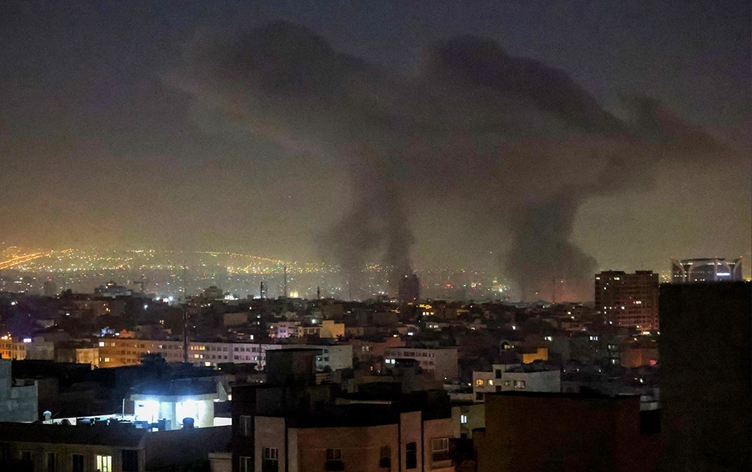
Iran’s internal opposition, which has grown more active in recent years and has faced increasingly harsh measures from the regime, represents another dimension of the crisis. At the outset of the military operations, the Iranian authorities adopted particularly stringent policies that arguably ran counter to the need to consolidate domestic support during such a crisis. The regime arrested numerous moderate figures who had initially stood by it following the first wave of strikes. This development appears to have encouraged American and Israeli calculations that these internal divisions could be exploited. The targeting of police stations, security depots, and related military camps may have been intended to open the door for opposition groups to obtain weapons and confront the regime from within.
However, such assumptions overlook the role of the Basij, which is widely deployed throughout the country’s neighborhoods, cities, and villages and functions as a principal internal security apparatus.
In my assessment, the war will likely continue longer than the initially anticipated four weeks and could extend for several months.
This raises a fundamental question: will Iran withstand these pressures, or could the successive strikes alter the dynamics of the conflict and the objectives pursued, potentially opening the door to scenarios that were not previously contemplated?
A change in Iran’s leadership, including the selection of a new Supreme Leader, could represent a significant turning point and send an important signal to the outside world. Should the choice fall on a figure characterized by a less rigid approach—though not necessarily moderate, as the Iranian political system and its actors are inherently hardline—but one who is relatively more pragmatic and cognizant of the evolving challenges confronting the regime, the trajectory of events could shift in a different direction.
In this context, I am reminded of a phrase frequently repeated by our professor of international relations, Dr Ibrahim Saqr, at the Faculty of Economics and Political Science. When explaining crises in international relations, he would often say that politics is the art of the possible—the utmost possible.
Building on this idea, and taking into account the prevailing balance of power, one may argue that if preserving the Iranian state and regime represents the attainable objective, then the utmost possible course of action for the Iranian leadership would be to recognize that it cannot defeat either the United States or Israel militarily. Instead, it could adopt political positions that acknowledge this reality, particularly given that President Donald Trump seeks to claim some form of victory; otherwise, the fighting will continue and the losses will mount.
The question, therefore, is whether the new Iranian leadership will be able to rise above its grievances and internal challenges and resort once again to the principle of taqiyya that has been invoked in the past—recalling Ayatollah Khomeini’s famous remark when he accepted the ceasefire: “I drink the poison now.”
The new Iranian leadership should therefore act at this level and accept the mediation initiatives currently on the table. The nuclear program has been severely damaged and could be set aside, particularly given that Iran retains the technical capacity to revive it at any time, having already approached the nuclear threshold. The missile program has also sustained significant blows, and if the fighting continues it may be eliminated altogether. Under these circumstances, Iran could preserve what remains of its capabilities and agree to negotiations that would halt the fighting, with a ceasefire synchronized with the lifting of sanctions.
Iranian strikes against Gulf states have altered the broader regional dynamic in the Gulf. Targeting civilian sites and inflicting losses in these countries will inevitably reshape Gulf attitudes toward Iran in the years ahead. Gulf states that previously maintained food and other exports to Iran—often circumventing the sanctions imposed upon it and providing an important economic and social outlet—are now likely to halt such exchanges.
In the coming years, Gulf countries will move to strengthen their military capabilities. Air defense systems in these states—particularly in the United Arab Emirates—have demonstrated considerable effectiveness, reportedly intercepting more than 90 percent of the missiles launched against them. As a result, the region is likely to witness a comprehensive restructuring of its air defense architecture, and of defense cooperation more broadly, including the possible establishment of a joint force and deeper military coordination than in previous years.
Israel, which spearheaded the war effort and persuaded President Donald Trump to undertake military operations, will seek to sustain these operations in order to achieve its strategic objectives. The question, therefore, is whether the Iranian leadership will allow this opportunity to pass without adjusting its course. The coming days will determine the answer.
In conclusion, the war is likely to drag on for several weeks to come. The next phase may witness strikes not only on military targets but also on economic infrastructure in an attempt to pressure public opinion and encourage popular forces to turn against the regime. At the same time, Iranian attacks on Gulf states are expected to decline significantly in the coming days, as Tehran becomes increasingly aware of the negative consequences such strikes have produced.


