




It is now widely recognized that the international order that existed prior to 7 October 2023 has undergone a profound transformation. This realization became even more deeply entrenched as the latest rounds of confrontation intensified between Iran on one side and the United States and Israel on the other, accompanied by escalating arenas of conflict across Syria, Lebanon, the Gaza Strip, Yemen, Sudan, Ukraine, Venezuela, and the Arab Gulf. A growing conviction has therefore emerged that the world is entering a fundamentally new and different phase.
The Middle East remains the historical epicenter of protracted conflict, directly shaping the interests not only of the states of the region but also of the wider international community. Today, the region is experiencing a pivotal moment that is redefining balances of power, not merely at the regional level, but within the very structure of the international system itself. The ongoing war—with its direct and indirect escalation among regional and international powers—has evolved beyond the framework of a conventional military confrontation into an arena for redistributing influence, testing political will, and redefining strategic roles.
Therefore, it becomes imperative to examine how international and regional influence is likely to be reengineered amid what has become an evident absence—and deliberate sidelining—of leadership at the level of states, political elites, and international actors within the global order. Equally important is an exploration of the trends and scenarios that may shape the future contours of the Middle East in the years ahead.
The Leadership Crisis and the Absence of an Effective System
The succession of international and regional crises over the past decade has revealed what is academically described as a “leadership crisis” even before a figure such as Donald Trump entered the White House and the global political stage, further deepening the crisis as well as the erosion and marginalization of the role of the international system and international humanitarian and public law.
As a result, research centers, political elites, and scholars of international relations around the world increasingly view the emerging international order not merely as a dysfunction of political leaders or governing elites, but rather as an expression of profound structural transformations in the nature of power, legitimacy, and the mechanisms governing the international system. This crisis can be deconstructed through three interconnected dimensions: manifestations (how the crisis appears), causes (why it emerged), and consequences (where it is heading).
First: Dimensions of the Leadership Crisis in the Existing International Order
- The Erosion of Unipolar Leadership
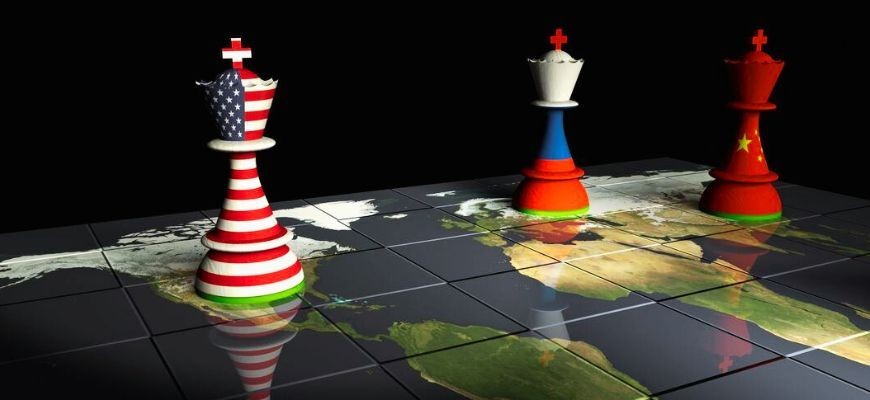
Since the end of the Cold War, the United States has dominated the international system. Today, however, this dominance faces mounting challenges from competing powers, creating a condition akin to a “leadership vacuum,” in which no single power is capable of imposing the rules of the international order, while no stable alternative mechanism has yet emerged.
In academic discourse, the concept of the “erosion of unipolar leadership” in international relations refers to the declining capacity of a single state to monopolize leadership of the international system politically, economically, militarily, and culturally, alongside the emergence of a more pluralistic and fragmented distribution of global power centers. The term is most commonly used to describe the relative decline of American hegemony that took shape following the end of the Cold War, particularly since the beginning of the twenty-first century.
For an extended period, the concept of unipolar leadership prevailed, referring to the United States as the dominant power possessing global military superiority, control over international economic and financial institutions, extensive political and diplomatic influence, technological, media, and cultural dominance, and the capacity to impose the rules of the international order. The United States emerged as the sole superpower following the collapse of the Soviet Union in 1991. However, signs of the erosion of unipolar leadership gradually became apparent through the rise of international powers challenging American influence, most notably: China economically and technologically; Russia militarily and geopolitically; and emerging regional powers such as India, Turkey, Iran, and Brazil. These powers have increasingly rejected full submission to the American vision of the international order.
At the same time, military interventions failed to achieve decisive outcomes and instead contributed to the financial, military, and political exhaustion of American power, undermining the image of the “invincible power.” In parallel, the effectiveness of Western-led international institutions declined as organizations such as North Atlantic Treaty Organization, the Group of Seven, and the United Nations faced mounting challenges stemming from international divisions, the use of veto power, and conflicting interests.
This was followed by a shift toward a multicentered global economy. The global economy is no longer entirely concentrated in the West, particularly with the expansion of the BRICS grouping and the growing use of local currencies, alongside the relative decline of the US dollar’s monopoly over certain international transactions. Concurrently, the technological revolution dismantled the monopoly over knowledge, leading to the distribution of technological capabilities among multiple powers: China in artificial intelligence and manufacturing; India in software development; Europe in green technology; and emerging powers in cybersecurity and drone technologies.
The absence of a dominant power capable of regulating the international order has contributed to the escalation of regional wars, proxy conflicts, economic crises, and disputes over resources and energy. Medium-sized states have consequently pursued more independent policies, particularly in the Middle East, Asia, and Africa. This has also produced what has become known as the “crisis of international legitimacy,” as many states increasingly question Western double standards, the legitimacy of military interventions, and the nature of the existing international order.
Nevertheless, the “erosion of unipolar leadership” does not signify the complete collapse of American dominance. Rather, it reflects a transition from a world dominated by a single power to a more complex international landscape in which power is distributed among major states, regional powers, and non-state actors amid an ongoing struggle to shape a new international order. This transformation represents one of the defining features of the transitional phase currently experienced by the global system.
- The Rise of Incomplete Multipolarity
The world is moving toward multipolarity; however, by conventional standards, this multipolarity can be described as “fragile” for several key reasons. First, the absence of consensus among the major powers. Second, the clash between differing models of governance, namely democratic and authoritarian systems. Third, the difficulty of establishing a shared normative framework. This environment has produced an international order without a “coordinating leader,” but rather one characterized by “competing rivals.”
The concept of the “rise of incomplete multipolarity” refers to a transitional condition within the international system in which the unipolar dominance exercised by the United States after the end of the Cold War is gradually receding, while no single power or coalition of powers has yet succeeded in establishing a fully developed and stable multipolar order. In other words, the world is currently experiencing a phase “between two systems”: unipolarity is no longer capable of independently imposing its rules, while a clearly defined multipolar order, with established institutions and stable balances of power, has yet to fully emerge.
Following the collapse of the Soviet Union in 1991, the world entered a phase of unipolarity led by the United States, as Washington possessed overwhelming military, economic, and technological superiority, alongside control over international financial institutions and extensive cultural and media influence. However, since the beginning of the twenty-first century, a series of transformations have gradually weakened this singular dominance, most notably the economic and military rise of China, the return of Russia as a strategic actor, and the growing influence of regional powers such as India, Turkey, and Iran. This trend has been further reinforced by the declining ability of the West to manage international crises unilaterally due to structural challenges within the West itself, including populism, political polarization, and recurring economic and energy crises.
Despite these developments, the international system has not yet evolved into a fully fledged multipolar order. Although rival powers have emerged, the United States continues to maintain relative superiority, possessing the world’s most powerful military, continued dominance over the international financial system and the US dollar, an extensive network of alliances, and, most importantly, leadership in technology, artificial intelligence, and multinational corporations. Accordingly, unipolarity has eroded but has not entirely collapsed, primarily because the emerging competing powers continue to face significant constraints. China is an enormous economic power, yet it still confronts major demographic and geopolitical challenges; Russia remains more of a military power than an economic one; and India, despite its rise, has not yet attained comprehensive global influence.
These limitations and constraints reinforce the absence of stable rules governing the emerging international order and postpone the realization of full multipolarity, which requires clear balances of power, stable deterrence frameworks, and institutions capable of managing competition. This condition has contributed to the spread of hybrid warfare, escalating economic and technological conflicts, and intensified competition over supply chains, energy resources, and maritime corridors. It has also encouraged shifting partnerships shaped by balance-of-power policies. A state, for example, may cooperate with the United States on security matters, engage economically with China, and coordinate with Russia on energy-related issues, all within the context of a prolonged crisis of international legitimacy.
At the same time, the resurgence of geopolitics has forcefully reasserted itself amid ongoing conflicts, as maritime corridors, spheres of influence, food security, energy, and control over supply chains have once again become central strategic concerns. These developments have had clear repercussions for the Middle East, placing the region at the center of geopolitical competition and debates over influence and the redistribution of roles. This has been further encouraged by the weakening image of the dominant power, the expanding role of regional actors, and the increasingly explicit discussion of axes and alliances, alongside the growing room for maneuver and opportunities available to all parties within what is often described as balance-oriented policies rather than full alignment.
The current landscape can also be understood through a historical lens, which suggests that transitional periods between international orders are often the most turbulent, as established powers resist decline while rising powers seek to expand their influence, leaving the rules of the game unclear and unsettled. Consequently, incomplete multipolarity is associated with heightened risks of regional wars, the expansion of proxy conflicts, global economic crises, the erosion of the effectiveness of international institutions, and the intensification of arms and technological races.
The “rise of incomplete multipolarity” reflects a historical transitional crisis within the international system, in which the dominant power is gradually losing its ability to exercise unilateral leadership, while emerging powers have not yet succeeded in establishing a cohesive alternative order. As a result, the world is experiencing a state of fluidity and uncertainty in which geopolitical competition increasingly intersects with economics, technology, and security, making the current phase one of the most complex periods in international relations since the end of the Cold War.
- Crisis of International Legitimacy
International institutions such as the United Nations and the United Nations Security Council are facing structural and functional shortcomings that have weakened their effectiveness. These include an inability to make decisive decisions, growing politicization, declining confidence among developing countries, double standards, the dominance of major powers over the international system, diminishing respect for international law, the rise of non-state actors, the erosion of the concept of national sovereignty, prolonged humanitarian crises and wars, declining trust in international economic institutions, and escalating conflicts over media and informational narratives. Together, these developments indicate that global institutional leadership is in decline.
The crisis of international legitimacy refers to the state of erosion and weakening affecting the rules, institutions, and principles upon which the international order is based, resulting in declining confidence in the system’s ability to achieve justice, enforce international law, and regulate the behavior of both major and minor powers alike. This situation has opened the door to growing demands for reforming international institutions and redefining a more equitable and effective concept of international legitimacy.
- The Fragmentation of Leadership Within Major Powers
The crisis is not merely external but also deeply internal, manifested in the sharp political polarization within the West, accompanied by the rise of populism among political elites and within political and media discourse. This has led to declining trust in governing elites and their alternatives, thereby relatively limiting the ability of major powers to maintain a consistent leadership role.
Observers of the rise of populism in recent decades across the West note that it has become one of the most significant political and intellectual transformations reshaping political life in both Europe and the United States. Populism is no longer merely a marginal protest movement; rather, it has evolved into an electoral force capable of attaining power or exerting profound influence over governments and public policies. It has also propelled figures who contributed to what can be described as the crisis of leadership, such as Donald Trump.
The growing influence of populism has been reflected in the decline of traditional political parties, increasing difficulty in building national consensus, and the transformation of elections into existential confrontations between competing political camps. Political elites have often become incapable of producing a unifying vision or a long-term national project.
The fragmentation of leadership within major powers represents one of the defining characteristics of the transitional phase currently facing the world. The crisis no longer lies solely in the balance of power, but also in the ability of elites and institutions to formulate a stable vision and manage rapid internal and external transformations. With polarization and international competition continuing to intensify, the world appears to be moving toward a more fluid and turbulent phase in which centralized leadership is receding in favor of more complex and interconnected balances of power.
The digital revolution and the emergence of new media have significantly contributed to this fragmentation, as social media platforms weakened the state’s monopoly over information, facilitated the spread of misinformation, accelerated polarization, intensified cultural and identity-based conflicts, and generated a highly volatile and emotionally reactive public opinion. Consequently, political leadership has come to operate under constant, immediate, and direct pressure.
As a result, the international system’s capacity to manage crises and conflicts, contain wars, impose settlements, regulate the global economy, and, by extension, preserve international institutions has declined. This has contributed to the rise of disorder, as the principles governing international relations suggest that the weaker leadership becomes within major powers, the greater the likelihood of regional conflicts, proxy wars, prolonged crises, and competition over influence. Such dynamics are driving the world toward a condition often described as “organized chaos” or “strategic uncertainty.”
- The Rise of Non-State Actors
The concept of the rise of non-state actors refers to the growing influence of forces and entities that are not sovereign states, yet increasingly possess the ability to shape international politics, economics, security, media, and even global public opinion. This transformation represents one of the defining features of the contemporary international system, particularly amid the decline of the state’s monopoly over force, information, and economic power.
Non-state actors are entities or groups operating outside the formal framework of the state but exerting direct or indirect influence on international relations. The most prominent among them include international and regional organizations, multinational corporations, armed groups and transnational organizations, non-governmental organizations, media outlets and digital platforms, global financial institutions, transnational religious and ethnic groups, as well as individuals with global influence in technology, media, and economics.
Major corporations such as Google and Tesla, along with transnational organizations, have at times acquired influence surpassing that of certain states, enabling them to exert growing impact on international politics, economics, and security. Several factors have contributed to the rise of transnational organizations, foremost among them globalization, advances in communications and the internet, the ease of movement of capital and people, the weakness or collapse of certain states, the rise of religious or ideological identities that transcend the nation-state, and the digital revolution alongside new media. Collectively, these factors have complicated the very concept of “leadership” as traditionally understood within academic discourse, international relations theory, and the practical dynamics of the international system.
The rise of non-state actors represents a fundamental transformation in the nature of contemporary international relations. Power is no longer confined to states and armies, but has become distributed among economic entities, armed organizations, digital platforms, and transnational institutions. This transformation reflects a structural crisis within the traditional international order and opens the door to a more complex world in which formal authority increasingly intersects with informal influence in unprecedented ways.
Second: Features and Causes of the Global Leadership Crisis
- Shift in the Distribution of Power
The center of gravity in global power has gradually shifted from the West toward Asia, accompanied by the economic and military rise of new powers and the relative decline of Western influence. This transformation has created a widening gap between “power” and “order.” - Failure of Traditional Leadership Models
The liberal model led by the United States after the 1990s has been shaken by a series of crises, including financial crises such as the 2008 global financial crisis, prolonged and inconclusive wars, and persistent double standards in international politics. - Intensified Geopolitical Competition
The rivalry between the United States and China is no longer confined to economics, but has expanded into technological, military, and ideological competition centered on differing models of governance. This has prevented the emergence of a consensual form of global leadership. - The Revolution in Technology and Information
The rapid flow of information has undermined the monopoly of states over decision-making and contributed to the spread of “informational chaos,” making leadership more complex and less centralized. - Transnational Crises
Challenges such as climate change, pandemics, including the COVID-19 pandemic, and terrorism require collective leadership and coordinated international responses. However, the current international system has proven incapable of providing such leadership. - Decline of Shared Values
There is no longer a universal consensus regarding democracy, human rights, or the rules governing the international economy, reflecting the absence of a common moral foundation for global leadership.
Accordingly, the features of the emerging crisis within the future international order can be summarized as follows:
- Distributed Leadership
There will no longer be a single dominant leader; instead, leadership will increasingly take the form of regional powers, flexible alliances, and interconnected networks of influence. - Competition Between Leadership Models
The international system is witnessing competition among multiple models of leadership, including a Western liberal model, a Chinese model based on centralized state authority, and hybrid regional models. - Growing Uncertainty
The absence of clear leadership is likely to result in more crises, prolonged conflicts, and increasingly unpredictable decision-making. - The Return of Power Politics
In the absence of organized leadership, the international system may increasingly revert to traditional dynamics based on balances of power, deterrence, and zero-sum conflicts.
This reality reveals that the global leadership crisis is not merely a temporary phase, but rather a transitional period between two international orders:
- An old order led by a single dominant power, which has effectively come to an end.
- A new order whose rules and structures have yet to fully emerge.
The world is therefore facing what may be described as a “leadership gap” or “leadership vacuum” that could persist for years, perhaps even decades, until balances of power stabilize, new and more representative institutions are established, or a particular power succeeds in imposing its model either through force or consensus.
Since the end of the Cold War, the international system has operated under a considerable degree of near-absolute American dominance, particularly in the Middle East. However, the current war has exposed the limits of this dominance, as the United States is no longer fully capable of imposing stable arrangements or completely preventing regional escalation. In contrast, powers such as Russia and China have strengthened their presence, whether through supporting regional actors or through diplomatic and economic engagement. China, for example, is no longer merely an economic actor, but has entered the political and security spheres as well, as demonstrated by its sponsorship of regional agreements. Russia, meanwhile, views the relative disorder as an opportunity to reassert its influence despite being preoccupied with other fronts. These developments point to a gradual transition toward a multipolar international order in which international influence in the Middle East overlaps and intersects rather than being monopolized by a single power.
Third: The Repositioning of Regional Powers
The current war has compelled several regional powers to reassess their strategies. For example:
Iran is seeking to maximize its influence through networks of allies and proxies, benefiting from the state of exhaustion experienced by certain countries. It is working to transform its influence from “indirect influence” into “institutionalized influence” within some states, while simultaneously expanding geopolitical influence capable of controlling maritime corridors extending from the Arabian Gulf through the Strait of Hormuz, the Arabian Sea, the Bab Al-Mandeb Strait, and the Red Sea.
Israel, despite its military superiority, faces strategic challenges related to the erosion of traditional deterrence and mounting international pressure. This may push it toward reformulating its security doctrine and redefining alliances, as well as the limits of power and influence.
Turkey is attempting to capitalize on geopolitical vacuums in order to strengthen its role as an independent regional power through a combination of military capability, flexible diplomacy, and openness toward both major and traditional central powers within the region. Turkey also benefits from its membership in the North Atlantic Treaty Organization, despite the alliance’s ongoing internal challenges.
Saudi Arabia is pursuing a policy of delicate balancing that combines de-escalation with openness to multiple powers, while prioritizing domestic stability and economic development.
Non-state actors constitute one of the most prominent features of the current conflict, particularly militias and armed groups. These entities are no longer merely instruments used by states, but have become influential actors within the balance-of-power equation. Amid the weakness or preoccupation of certain states, such groups have succeeded in imposing new realities on the ground and have become integral to calculations of deterrence and strategic balance. This development significantly complicates any attempt to reorganize the region, as negotiations are no longer confined solely to states.
This divergence in strategies reflects the region’s transition from “rigid axes” to “flexible alliances” that shift according to interests and changing circumstances. Consequently, a new definition of regional security must be based on several key realities:
- The war has demonstrated that the concept of security in the Middle East is no longer limited to traditional military threats. It has become far more comprehensive, encompassing energy security, supply chain security, cybersecurity, economic security, and the internal stability of states. This broader understanding of security creates momentum toward the establishment of a new regional system that may, in principle, resemble models such as the North Atlantic Treaty Organization, but in a distinctly Middle Eastern framework that takes into account the region’s unique characteristics.
- The war has reshaped maps of geopolitical influence and altered patterns of influence not only between states, but also within states themselves. Certain areas may partially slip from the control of central governments or evolve into zones of influence dominated by external or local powers.
- The conflict has reaffirmed that strategic corridors, such as maritime chokepoints and energy routes, have become increasingly vulnerable to competition, thereby reinforcing the importance of geography in determining balances of power. The concluding phase of the war, particularly the crisis surrounding the closure of the Strait of Hormuz, highlighted the symbolic and strategic significance of such corridors in the calculations of any future conflict.
Fourth: Post-War Scenarios
Several scenarios can be envisioned regarding the restructuring of influence in the post-war phase:
First: The Fragile Balance Scenario
Under this scenario, a condition of “neither peace nor war” persists, sustained by delicate balances that prevent a comprehensive explosion of conflict. In the terminology of international relations, this scenario refers to a state of temporary and unstable stability in which international or regional powers succeed in preventing large-scale war or total collapse, while simultaneously failing to establish a stable and lasting framework for conflict resolution. In other words, a balance exists, but it remains highly vulnerable to disruption by any sudden crisis or shift in the balance of power.
Historically, this concept has frequently been associated with analyses of the Middle East throughout its modern and contemporary history, and has also been widely applied to describe relations among major powers such as the United States, China, and Russia.
The principal features of this classical scenario include the absence of decisive resolution, as no single power possesses the ability to impose full control, while weaker actors are likewise unable to overturn the existing order. The scenario is also characterized by the continuation of low-intensity conflicts, including proxy wars and limited confrontations, accompanied by economic pressures, sanctions, and intermittent security tensions.
The scenario further rests upon the existence of mutual deterrence, whereby each party possesses instruments capable of preventing the other from escalating toward comprehensive confrontation, while recognizing its own inability to achieve a final victory. Nevertheless, this scenario carries significant risks because its very structure and dynamics render it highly susceptible to rapid escalation. A limited incident, such as the targeting of strategic facilities or the assassination of senior leaders, could quickly evolve into a broad regional or international crisis.
The interactions of regional and international powers in the Middle East have consistently reinforced this scenario throughout the region’s history, and its prominence has increased in recent years with the noticeable decline of unipolar American dominance, which has not been compensated for by the assertiveness and impulsive policies of Donald Trump and his often unpredictable actions. This dynamic has been further intensified by the rise of competing regional and international powers, the growing interconnectedness of the global economy, and the widespread proliferation of advanced military technologies, particularly in the fields of drones, missile systems, and stealth technologies. At the same time, complex strategic calculations underscore the difficulty of conducting comprehensive wars given their enormous economic and political costs, especially in prolonged conflicts.
Second: The Reassertion of Hegemony Scenario
This scenario envisions an attempt by a major international power—most likely the United States—to regain the initiative through the establishment of new security arrangements. It is considered one of the most prominent scenarios in international relations literature concerning the future of both the global and regional orders, particularly amid the strategic fluidity that has characterized the international system since the outbreak of the Russo-Ukrainian War, the intensifying American-Chinese rivalry, instability in the Middle East, and recurring crises related to the global economy, energy, and technology.
Those who favor this scenario generally associate it with the success of a major international power—or a limited international coalition—in restoring the ability to lead the international system and impose its political, economic, and security rules following a period of decline, multipolarity, or relative disorder. Most often, this scenario is linked to attempts by the United States to restore its global dominance and reaffirm its influence in regions such as the Middle East. However, it may also be associated with the rise of an alternative power such as China.
The prospects for this scenario tend to grow stronger whenever the effectiveness of international institutions declines in parallel with the escalation of wars and regional conflicts, the rise of competing international powers such as China and Russia, the expanding influence of non-state actors, and especially during periods of severe global economic crises affecting virtually all countries. Under such conditions, arms races intensify and the relative failure of the concept of “liberal globalization” becomes increasingly apparent.
This failure has prompted certain Western decision-making circles to consider the necessity of “resetting the global order” through the restoration of Western centrality—particularly that of the West itself—and the neutralization of internal divisions among the components of Western power, even if this requires moving beyond Donald Trump and everything he represents in terms of challenges to Western cohesion and the importance of preserving Western unity, effectiveness, and influence.
The implications of this scenario for the Middle East appear almost inevitable, producing direct consequences such as heightened regional polarization, intensified arms races, expanded security alliances, and increased maximum-pressure policies targeting smaller states. In turn, this contributes to the redrawing of influence maps and the imposition of new economic and security arrangements. At the same time, however, the scenario may offer certain states opportunities to secure security guarantees, attract foreign investment, and assume larger regional roles.
While some analysts argue that the United States remains capable of restoring hegemony due to its military, technological, and economic superiority, another school of thought contends that both the world and the region have already moved beyond the era of unipolar dominance, and that multipolarity has become either a permanent or an inevitable reality. Between these two perspectives lies a centrist view suggesting that the future will likely witness a form of “flexible hegemony” or “selective leadership,” in which Washington remains the leading power but without absolute control. The lessons of the current war appear to lend greater support to this middle-ground interpretation.
Third: The Protracted Chaos Scenario
This scenario envisions the continuation of intermittent conflicts alongside the erosion of states and the rise of non-state actors. It reflects the inability of both the international and regional systems to impose stability or produce lasting settlements, thereby leading to the persistence of crises, wars, and conflicts across the region in a fragmented and open-ended manner without reaching comprehensive resolution or establishing a clear alternative order. As such, it is considered one of the most plausible scenarios for the future of both the global system and the Middle East over the coming decade.
To clarify, “protracted chaos” does not imply the complete collapse of states or of the international system, as the term might initially suggest. Rather, it points to several interrelated realities, foremost among them the declining capacity of major powers to manage the world in a stable manner; the continuation of low- and medium-intensity conflicts; escalating crises related to the economy, energy, food security, and migration; the weakening and declining effectiveness of international institutions; the spread of non-state actors such as militias, armed organizations, and transnational private security companies; and the absence of stable rules governing international relations.
Under such conditions, the world moves closer to a state of “chronic uncertainty,” in which there is neither a comprehensive global war nor a stable and enduring peace.
The implications of this scenario for the Middle East appear increasingly evident through the region’s successive crises and the absence of a stable regional order. There is no agreed-upon regional security framework among Iran, Turkey, Israel, and the major Arab states. Instead, the region is characterized by shifting alliance networks and overlapping struggles for influence.
In addition, proxy warfare has become widespread, as regional powers increasingly rely on local groups to achieve strategic objectives without engaging in direct confrontation, as seen in Yemen, Syria, Iraq, and Lebanon. Several states also suffer from structural fragility stemming from severe economic crises, weak institutions, sectarian or tribal divisions, and crises of political legitimacy, making them particularly vulnerable to regional and international shocks.
Collectively, these dynamics have contributed to the militarization of the region. The Middle East is witnessing an intensifying arms race, the proliferation of foreign military bases, the growth of domestic military industries, and the increasing use of drones and missile systems, all of which ensure that the possibility of escalation remains ever present.
Fourth: The Grand Settlement Scenario
In this scenario, regional and international powers reach broad understandings that comprehensively redefine the rules of the game. In international relations, the “grand settlement scenario” refers to the possibility of achieving a comprehensive agreement or set of understandings among major and regional powers aimed at ending prolonged conflict and instability through the redistribution of influence and the establishment of new rules governing international and regional balances.
This scenario typically emerges after prolonged wars or periods of mutual exhaustion, when competing parties recognize that the costs of continued confrontation have become greater than the potential gains. It is also understood as a transition from a phase of open confrontation to one of “managed balances” through wide-ranging political, security, and economic agreements addressing interconnected issues simultaneously, including regional security, geopolitical influence, energy resources and maritime corridors, nuclear programs, the future of military alliances, reconstruction and economic recovery, as well as the Palestinian issue and broader Middle Eastern arrangements.
The “grand settlement scenario” does not imply the complete end of conflict, but rather the transition from open warfare to the “management of competition” according to newly established rules. It is a scenario driven by the imperatives of mutual exhaustion, balances of power, and fears of comprehensive escalation. Nevertheless, its realization remains contingent upon the willingness of the various parties to make reciprocal concessions and to formulate a more balanced and stable regional and international order.
The “fragile balance” scenario remains the one most closely aligned with the nature of Middle Eastern dynamics and the risks surrounding them. It represents neither a stable peace nor a comprehensive war, but rather an intermediate condition based on mutual deterrence and the management of conflict instead of its resolution. It is the most likely scenario within both the current and emerging regional and international order, particularly in light of the ongoing shifts in regional and global balances of power.
Closely following it in probability is the “protracted chaos” scenario, especially over the coming decade, given the continuing failure to reach comprehensive settlements for the region’s major issues. Yet all of these scenarios continue to cast their shadows over various dimensions of the region’s enduring conflicts, reinforcing the lasting image and perception of the Middle East throughout history as a “breeding ground for conflict.”
The “protracted chaos” scenario reflects a turbulent global transitional phase in which the old order is receding without the emergence of a stable new one. In the Middle East in particular, this may result in the continuation of conflicts and the simultaneous gradual and violent reshaping of balances of power. Consequently, the real challenge facing states is not merely avoiding collapse, but developing the capacity to adapt to a world characterized by growing strategic fluidity and the decline of traditional certainties.
Meanwhile, the “grand settlement” scenario remains the least likely, despite the perception of Donald Trump as a figure inclined toward major deals and large-scale settlements, particularly in light of the continued leadership of Benjamin Netanyahu in Israel.
Conclusion
The world is experiencing a profound crisis of leadership at the level of the organizations, bodies, and institutions that constitute the existing international order, as well as at the level of states, leaders, and political symbols themselves. The war currently unfolding in the region is not merely a passing event or another episode in the long history of Middle Eastern conflicts; rather, it represents a turning point in the history of both the Middle East and the wider world. It is reshaping maps of influence, revealing new balances of power, and imposing a different reality upon all actors involved.
Within this context of transformation, influence in the region will no longer be monopolized by a single power. Instead, it will emerge from a complex interaction among international and regional powers, states, and non-state actors alike. Ultimately, the final outcome will depend on the trajectory of the war, the nature of its concluding phase, and the ability of the various parties to manage or contain the conflict. What remains certain, however, is that the Middle East emerging from this war will not resemble the Middle East that existed before it.