






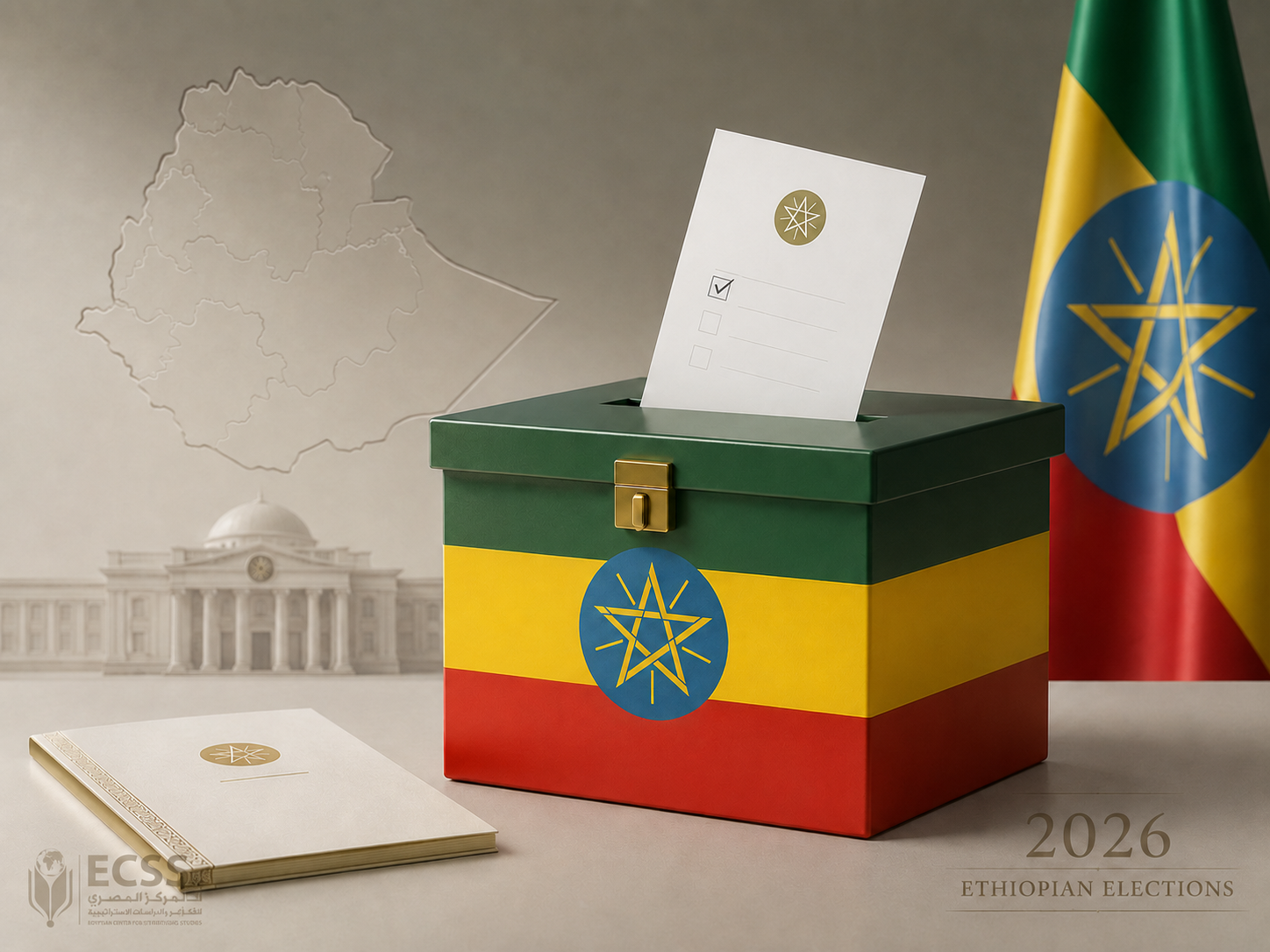
The seventh general elections held in Ethiopia on June 1, 2026, constituted an important test of the country’s political transformation trajectory since Prime Minister Abiy Ahmed assumed office. The elections took place following years of internal conflict and escalating armed confrontations that have reshaped Ethiopia’s political and security landscape. Amid continuing debate over the future of ethnic federalism and the widening divide between the central government and several political and armed actors since the outbreak of the Tigray War in 2020, the elections transcended their role as a routine constitutional exercise. Instead, they became a test of the state’s capacity to manage political competition, preserve institutional cohesion, and reinforce its legitimacy within an environment marked by polarization and division.
Preliminary results from Ethiopia’s seventh general elections indicated the anticipated advancement of the ruling Prosperity Party, led by Prime Minister Abiy Ahmed, reinforcing expectations that it will continue to dominate the political and parliamentary landscape over the next five years. According to preliminary data released by the National Election Board of Ethiopia (NEBE), the party’s candidates secured an overwhelming majority of the constituencies for which results have been announced. Opposition parties, by contrast, achieved only a highly limited presence, with their most notable gains confined to a small number of seats, including victories by the National Movement of Amhara in several constituencies within the Amhara Region. These results are particularly significant given the political and security challenges surrounding the electoral process, which prevented voting from taking place in certain areas, including parts of the Amhara and Oromia regions, while the security and political situation in the Tigray Region remained complex. Although final results for all parliamentary seats have yet to be announced, preliminary indicators suggest a reproduction of the pattern of parliamentary dominance established in the 2021 elections, when the Prosperity Party won approximately 85 percent of the contested seats.
Despite efforts by the National Election Board of Ethiopia to improve the electoral process through modernization initiatives, voter database updates, and expanded oversight mechanisms, these efforts encountered challenges stemming from the security situation, developmental disparities among regions, and difficulties associated with voter registration. They also unfolded amid continuing debate regarding the extent to which competing political actors enjoyed a level playing field. Consequently, the significance of the 2026 elections extends beyond electoral outcomes and partisan balances of power to encompass an assessment of the institutional and political environment in which they were conducted, the inclusiveness of participation, and the impact of the security context on the nature of electoral competition. Against this backdrop, this paper examines three principal dimensions: the modernization of the electoral system and the challenges of voter registration; electoral administration and the limits of geographic and political representation; and the implications of political and security fragmentation for the legitimacy of the electoral process and its outcomes.
First: Electoral System Modernization and Challenges of Voter Registration
Ethiopia’s seventh parliamentary and regional general elections were held within an exceptionally complex political and security environment characterized by the intersection of structural transformations within the federal state and the persistence of armed conflicts, alongside the narrowing of political space. These dynamics directly affected perceptions of electoral legitimacy and the state’s ability to administer a comprehensive and nationally unified voting process.
The elections were conducted to select 547 members of the House of Peoples’ Representatives through direct voting, in addition to 112 members of the House of Federation through indirect mechanisms representing the country’s twelve federal regions, as well as the cities of Addis Ababa and Dire Dawa. This institutional framework reflects the multilayered federal nature of Ethiopia’s political system, which is based on the distribution of authority between the federal center and the regions. Within this structure, the House of Federation occupies a pivotal position in managing federal balances and regulating relations among different levels of government, particularly with regard to resource allocation and the provision of public services.
Against this backdrop, the National Election Board of Ethiopia (NEBE) assumed a central role in administering the electoral process, not merely as a regulatory body but also as an institutional actor tasked with restructuring and modernizing the country’s electoral architecture amid an unstable security environment. During this electoral cycle, the Board expanded its reliance on digital systems for voter registration and electoral data management, as part of a broader effort to modernize the administrative framework of the electoral process, improve identity verification procedures, and standardize databases across the regions.
However, this digital modernization encountered a range of structural challenges, most notably disparities in digital infrastructure among regions, weak network connectivity in conflict-affected areas, and the limited preparedness of some local administrations to operate the new electronic system. The registration process was also linked, in several cases, to the adoption of the national digital identity system as a prerequisite for voter enrollment, generating additional concerns regarding accessibility, particularly in rural, remote, and conflict-affected areas. As a result, a number of eligible voters were unable to complete registration procedures due to the absence of required documentation or technical difficulties associated with the new system.
With regard to the electoral rolls, official data indicated that approximately 54 million voters were registered out of a total population estimated at around 136 million. The voter registration process encountered a range of operational and administrative challenges, including inadequate technological infrastructure at a number of registration centers, communications disruptions in certain conflict-affected areas, and difficulties associated with integrating local databases into the centralized system. The National Election Board of Ethiopia noted that the electronic data modernization process remains under development and is being implemented gradually in accordance with variations in institutional capacity across regions. This resulted in noticeable disparities in the accuracy and scale of electoral rolls from one region to another.
In terms of financing, the National Election Board relied on a combination of domestic funding and international support. Parliament approved an official budget of approximately 10.5 billion Ethiopian birr to cover the costs of the electoral process, supplemented by around $7 million in international assistance provided by a group of countries under the auspices of the United Nations, including Ireland, Spain, Denmark, Japan, and the United Kingdom. Additional support was also provided by the United Nations Development Programme (UNDP) and Japan for early warning systems. Despite this funding, Board officials acknowledged the existence of financial constraints that affected the operational capacity of certain polling centers, particularly in peripheral regions.
More than 10,438 candidates representing approximately 42 registered political parties contested the elections. However, this numerical plurality does not necessarily translate into genuine electoral competitiveness, given the structural imbalances in the distribution of financial resources, organizational capacities, and geographic reach, which render political competition institutionally unequal. The party landscape also reveals a practical concentration of competitive capacity in the Prosperity Party and the Ethiopian Citizens for Social Justice Party (EZEMA), in contrast to the evident fragmentation of the opposition, which continues to suffer from organizational weakness, internal divisions, and limited ability to establish a nationwide presence. Consequently, the elections largely reproduced a structural imbalance in the distribution of power within Ethiopia’s party system.
Second: Electoral Administration and Challenges of Geographic Representation
The 2026 elections in Ethiopia were administered under highly complex conditions by the National Election Board of Ethiopia (NEBE), which adopted a series of regulatory measures aimed at accommodating the geographic and security disparities across the federal state. In this context, the Board designated June 9, 2026, as a special voting day for groups unable to participate on the general election day, most notably internally displaced persons (IDPs) and members of the armed forces, within what may be described as an “exceptional electoral arrangement.”
This measure covered approximately 28,632 internally displaced persons, in addition to 126,498 members of the armed forces, reflecting the growing number of citizens unable to participate within the conventional electoral timetable due to the repercussions of armed conflicts and the deterioration of security conditions in several regions. The postponement raised concerns regarding delays in the announcement of preliminary results, given the overlap between the special voting process and the counting and tabulation stages. Nevertheless, the Board maintained that vote-counting operations were proceeding in an orderly manner and that preliminary results would be finalized during the week following the election.
In terms of the geographic scope of the electoral process, voting was not completed in a number of constituencies. The authorities postponed polling in eight electoral districts in the Amhara Region, in addition to other areas where voting could not be conducted because of continuing security instability. Meanwhile, the Tigray Region remained entirely excluded from the electoral process for the second consecutive election cycle. This geographic exclusion effectively reduced the number of federal parliamentary seats actually contested from 547 to 501, underscoring the erosion of the principle of nationwide electoral inclusiveness and the increasingly selective nature of political participation.
At the oversight level, approximately 170 civil society organizations participated in election monitoring, including 114 organizations funded by the National Election Board, alongside 55 domestic observer groups, more than 60 media outlets, and 1,814 journalists. Monitoring missions from the African Union and the Intergovernmental Authority on Development (IGAD) were also present. By contrast, the absence of both the European Union and the United Nations reflected the limited diversity of international observation mechanisms and the contraction of traditional external oversight of the electoral process.
Third: Security and Political Polarization and the Reproduction of the Legitimacy Crisis
The elections did not take place within a stable political environment conducive to normal electoral competition. Rather, they unfolded against a backdrop of intense political and security polarization characterized by the persistence of armed conflicts, a widening divide between the state and opposition forces, and declining confidence in the ability of the electoral process to represent the country’s diverse political and ethnic constituencies. The elections evolved from a mechanism for renewing political legitimacy into a new arena of contestation over the legitimacy of the political system itself and the future of Ethiopia’s federal state.
In the Amhara and Oromia regions, which constitute the country’s principal demographic and political centers of gravity, armed confrontations continued both in the period leading up to the elections and during the voting process itself, directly affecting the conduct of the polls. The National Election Board acknowledged that security conditions prevented the opening of 143 polling stations. Other polling centers were disrupted after voting had commenced due to armed attacks and localized unrest. In addition, electoral materials were destroyed, election personnel were threatened, and some registered voters were prevented from casting their ballots.
These developments coincided with the rejection of the electoral process by the country’s most prominent armed opposition movements. On May 29, 2026, the Oromo Liberation Army (OLA) announced its complete rejection of the elections, describing them as a “prearranged process” conducted amid ongoing conflict and in the absence of meaningful participation by major political actors. The movement also imposed a comprehensive ban on transportation and movement throughout the Oromia Region until June 4, 2026, arguing that the elections lacked the minimum conditions required to be regarded as a credible democratic process.
Similarly, the Amhara Fano National Movement (AFNM) adopted a comparable position. On April 6, 2026, the movement declared its rejection of the elections and warned political parties, religious institutions, civil society organizations, and media outlets against participating in them. It maintained that the electoral process was incapable of addressing the country’s underlying political and security dysfunctions. The movement also imposed restrictions on vehicular movement across the Amhara Region between May 29 and June 2, 2026, while exempting ambulances and emergency services, highlighting the extent of the security tensions surrounding the electoral process.
Criticism was not confined to armed groups but also extended to opposition parties, which argued that the political environment was not conducive to genuine electoral competition. Several parties asserted that the continuation of conflict in Amhara and Oromia had undermined their ability to conduct election campaigns and engage with voters. Some political actors reported that they were unable to operate beyond the capital, Addis Ababa. Other opposition forces called for the inclusion of armed groups in the political process, arguing that such participation constitutes a prerequisite for achieving sustainable peace.
The position adopted by the Oromo Federalist Congress (OFC) is among the clearest indicators of the crisis of confidence surrounding the electoral process. The party chose to limit its participation to symbolic candidacies in Addis Ababa, Dire Dawa, and Harar, citing the continued violence across large parts of the Oromia Region. The OFC declared that it would “not practice politics over the graves of its people,” a direct expression of its opposition to holding elections under the prevailing security conditions.
Other parties likewise faced a range of political and administrative constraints. The Oromo Liberation Front (OLF) announced that its chairman, Dawud Ibsa, had withdrawn from the electoral race because of security threats in the Horo Guduru area. The party also accused the authorities of shutting down most of its offices, stating that only its Addis Ababa headquarters remained operational out of a network of 230 offices. The Peace for Ethiopia Coalition alleged that security agencies had detained and harassed some of its candidates and deprived them of salaries and public-sector employment. Meanwhile, the Wolaita People’s Liberation Movement reported the removal of thousands of its campaign posters. The Kucha People’s Democratic Party also stated that security forces had prevented it from conducting electoral campaigns in certain areas on the grounds that its members were wearing ethnic attire deemed “not constitutionally recognized.”
These developments reinforce the perception that electoral competition took place within an uneven political environment, particularly in light of the extensive organizational dominance of the ruling Prosperity Party. Although more than 40 political parties and approximately 10,438 candidates participated in the elections, substantial disparities in campaign expenditures, geographic reach, and organizational capabilities significantly constrained effective competition, reflecting the shrinking space available for meaningful political contestation.
A sharp disagreement also emerged regarding the security situation and its suitability for holding elections. In January 2026, government institutions, security agencies, and regional administrations conducted a security assessment that concluded that the majority of electoral constituencies were suitable for voting. By contrast, the so-called “Group of Nine,” comprising representatives of opposition parties and civil society organizations, concluded after field visits that approximately 97 percent of the areas included in the assessment lacked the conditions necessary for free and secure elections. The National Election Board rejected this conclusion, arguing that the group’s findings were based on limited and unrepresentative samples.
For its part, the government sought to portray the elections as evidence of state stability and its ability to continue the political reform process. The Prime Minister’s Office accused both the Oromo Liberation Army (OLA) and the Fano movement of attempting to undermine the electoral process through road closures, armed attacks, and the disruption of transportation networks and public life. The government also linked a number of attacks in areas of East Arsi to efforts aimed at sabotaging the elections and weakening their legitimacy.
At the international level, the election observation missions of the African Union and the Intergovernmental Authority on Development (IGAD) issued preliminary assessments describing the elections as having been conducted in a largely peaceful manner, while commending the noticeable improvements in the technical and organizational aspects of electoral administration and voting procedures. At the same time, however, both missions acknowledged that security conditions had prevented voting from taking place in 38 electoral constituencies in the Tigray Region and eight constituencies in the Amhara Region. They also highlighted the persistence of challenges related to political inclusiveness and equitable participation. The Amhara Fano National Movement (AFNM) rejected these assessments, arguing that they focused primarily on election-day procedures while overlooking the broader political and security environment in which the elections were conducted.
In light of these developments, the substantial gains anticipated for the Prosperity Party, as reflected in the preliminary results, point to a clear trajectory toward the party retaining a comfortable parliamentary majority that would enable it to form the next government and continue leading the state without meaningful competition. Consequently, the 2026 elections appear closer to an effort to renew the legal legitimacy of existing institutions than to a political process capable of generating broad-based national legitimacy. Procedural success in conducting the vote does not negate the persistence of deep and acute political and security divisions. Likewise, electoral victory achieved amid the full or partial exclusion of several regions from the voting process does not necessarily provide a foundation for sustainable national consensus.


