







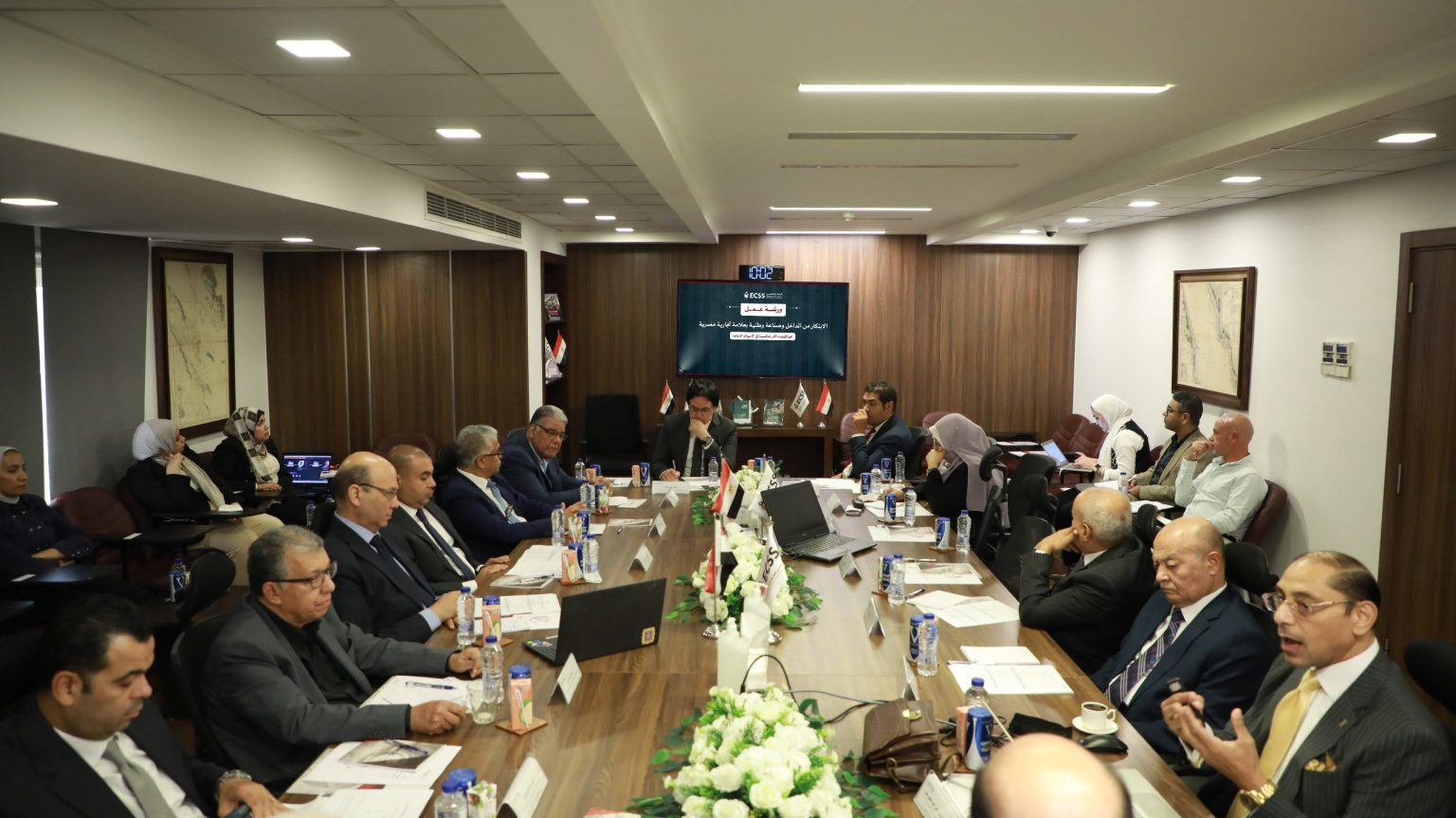
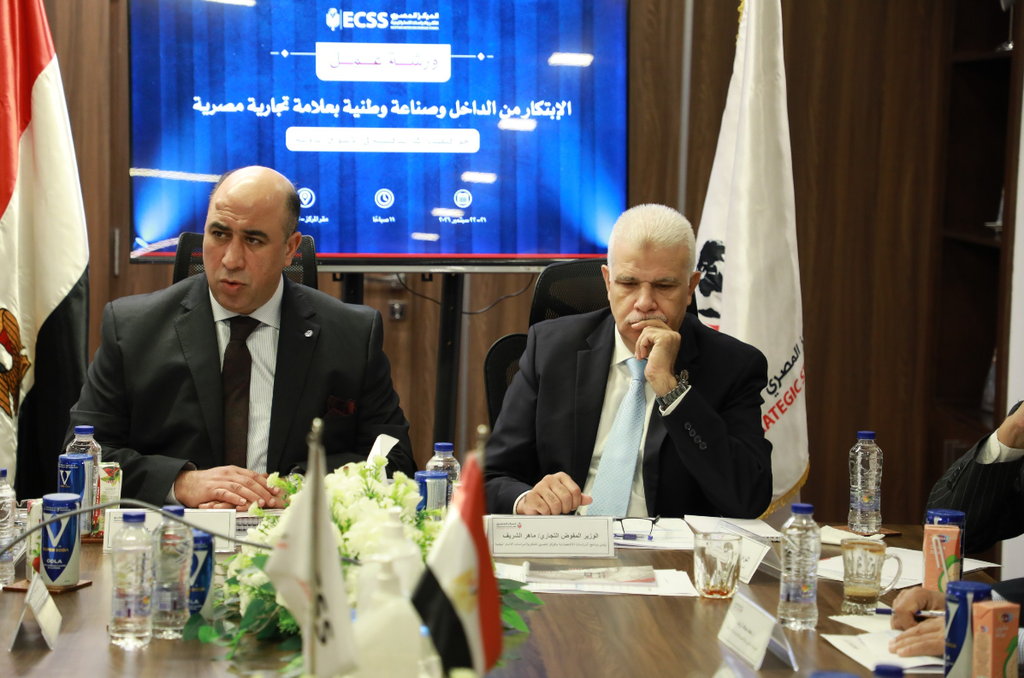
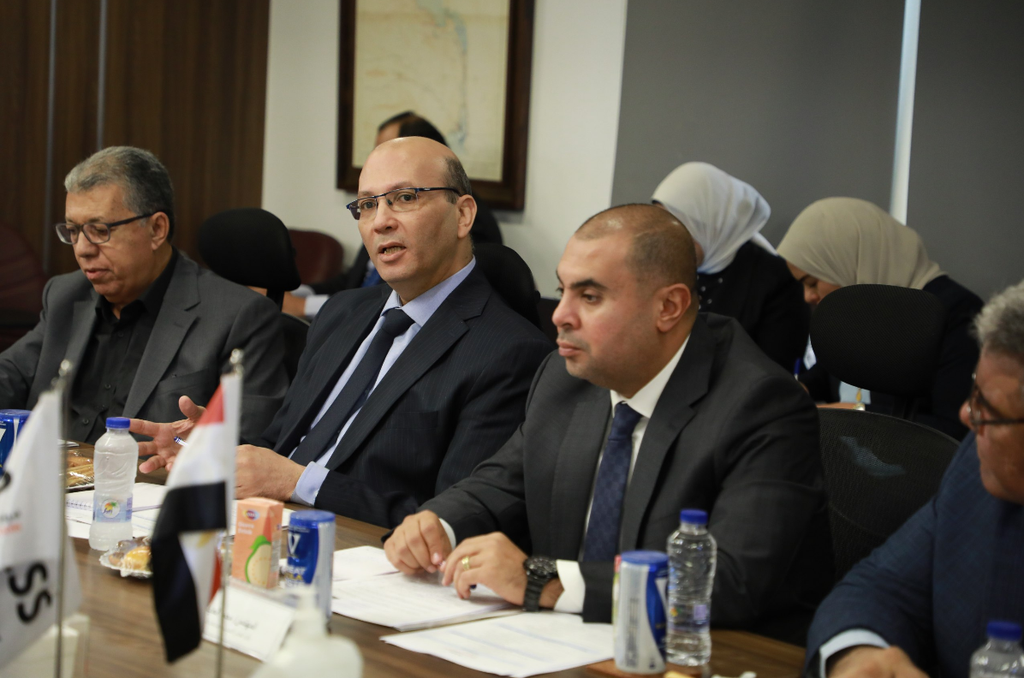
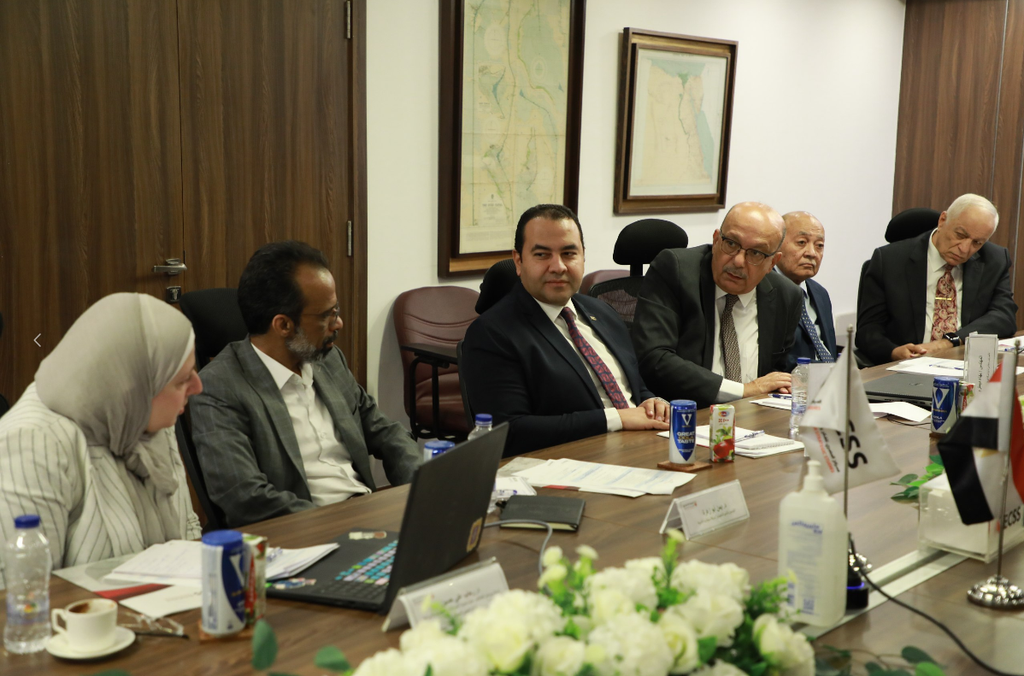
The Egyptian Center for Strategic Studies (ECSS) held a workshop on 21 and 22 September 2026 entitled “Innovation from Within and Egyptian-Branded Manufacturing: Toward a More Competitive Economy in International Markets.” The workshop examined the readiness of Egypt’s innovation ecosystem, the gap between research, knowledge and industrial production, mechanisms for supporting companies, innovation and entrepreneurship, and ways to draw on international experiences in building an innovation-driven economy and national brands capable of competing in global markets.
The discussions concluded that Egypt already possesses a number of components of an innovation ecosystem, but the key challenge lies in its ability to connect these components and transform them into cumulative productive, technological, and commercial capabilities.
The workshop’s key findings and conclusions are summarized as follows:
First: Weak integration within Egypt’s innovation ecosystem
The discussions highlighted the fragmented nature of Egypt’s innovation ecosystem, encompassing scientific research institutions, technological education institutions, industrial companies and entrepreneurship support organizations, as well as the weak institutional links among them. While numerous entities and institutions are already engaged in scientific research, industry, exports, investment and entrepreneurship, the links among these institutions remain weak and are based largely on individual initiatives or separate protocols, rather than on an integrated ecosystem connecting industrial needs with research, research with financing, and financing with production and markets.
An innovation strategy for the Egyptian state has also been developed, but has yet to be approved. The central issue, therefore, is one of governance, coordination and the delineation of roles among the relevant entities.
Second: The need to develop the legislative framework and incentives supporting innovation
The workshop discussions showed that developing the innovation ecosystem depends not only on scientific research capabilities or companies, but also requires a legislative and regulatory framework that enables innovation, facilitates the transformation of research outputs into products with economic value, and protects their intellectual property.
Questions were raised about the legal framework governing patents, including their procedural and time requirements, their impact and economic use, the scope of exclusive rights, protection at the national and international levels, and how Egypt’s patent law could be developed and the legislative framework linked to economic incentives. Innovative products carrying national brands currently enjoy no special advantages, such as tax or investment incentives.
Third: The gap between research and commercial application in the market
The discussions highlighted the wealth of ideas represented by numerous research projects, particularly those developed through the capabilities of the National Research Center. However, these ideas and research projects often remain at the research, prototype or university graduation-project stage without being transformed into products that can be commercially marketed.
Participants stressed that the innovation cycle is not complete until an idea moves from research to a prototype, then to a sample, production, distribution and, ultimately, the market. The transition between these stages remains one of the ecosystem’s key weaknesses.
It is worth noting the institutional gap between researchers, manufacturers and investors. A researcher may possess the necessary knowledge, while a manufacturer needs a solution to a specific production problem and an investor needs a project that can be evaluated and financed.
The workshop concluded that addressing this challenge may require an intermediary mechanism to connect these stakeholders, help develop the idea, conduct a feasibility study, provide legal protection and support its commercialization.
Fourth: Foreign investment and imported experiences should not become substitutes for building local capabilities
One of the clearest themes to emerge from the workshop was the distinction between having productive activity in Egypt and possessing Egyptian industrial and technological capabilities. It was argued that reliance on assembly or technology transfer can represent a step toward industrialization, but is not sufficient on its own to build sustainable productive capacity capable of driving the economic transformation toward knowledge-based and higher-income economies.
The discussions also stressed the need to move gradually from using technology and replicating products to developing technology and generating knowledge locally. This reinforces the concept of “innovation from within” as the essence of this process — not in the sense of rejecting foreign investment or technology, but of ensuring that foreign investment and imported experiences do not become substitutes for building local capabilities.
Foreign investment can serve as a means of attracting technology, expertise and access to markets, but maximizing its impact requires linking it to the development of local companies, increasing local content, building a supplier base, and strengthening research and technological capabilities through Egyptian brands.
Fifth: Exports can evolve from an outcome of innovation into its driver
On the second day, the workshop shifted from examining innovation solely from the supply side to considering the demand and markets that can shape the innovation process. A key idea was that research and development should address not only the needs of domestic markets but also those of foreign markets that Egypt has opportunities to enter.
Manufacturers and researchers can then be guided toward developing products that respond to these needs, rather than producing a product first and subsequently seeking a market for it. Exports, therefore, should not be viewed merely as a stage that follows production, but as a means and tool for identifying the products that need to be developed and determining the specifications, quality, technology and design required to enhance competitiveness.
Sixth: Supporting innovation requires a focus on specific sectors
The discussions highlighted the need to move beyond the question of “How do we support innovation?” toward the more specific question of “Which sectors should receive focused innovation support to generate the greatest added value for Egypt?”
There was considerable variation among government entities in the criteria used to identify priority sectors, underscoring the need to adopt more consistent criteria that take into account innovation capacity, scalability and export potential, and the ability to strengthen the Egyptian brand, alongside the existence of an industrial or knowledge base that can be further developed.
Innovation should also not be confined to emerging technology sectors. Rather, technology should be applied across the value chains of sectors in which Egypt already has an industrial base with potential for development and innovation.
Seventh: Bridging the innovation financing gap
The discussions showed that the innovation financing ecosystem faces a gap between funding an idea in its early stages and its ability to attract sufficient investment to support growth. While grants and programs are available for ideas and early-stage projects, and instruments such as venture capital exist at later stages, the transition from a prototype to a scalable company remains particularly challenging.
This is compounded by the high cost of bank financing, difficulties in securing industrial partners, and limited use of certain long-term financing channels to expand industrial companies.
Bridging this gap requires generating genuine demand for innovation among private-sector companies, increasing their share of research and development financing and linking such financing more closely to clearly defined production needs. The discussions also noted that government procurement could be one of the key tools for creating a market for Egyptian innovation and solutions, helping to stimulate demand and, in turn, supply.
Eighth: Human capital and the challenge of industrial absorption
Although Egypt has a pool of skilled professionals, engineers and researchers, the challenge lies in providing an industrial and applied environment capable of absorbing this talent and harnessing it for innovation. Retaining talent depends not only on wages but also on the availability of employment and practical opportunities in emerging fields.
Technological education represents one model for linking education with industry needs through practical training and partnerships with companies. However, maximizing its impact requires completing the pathway from education to the factory and the market, so that student projects and acquired skills can be transformed into products and ventures with the potential to grow.
Ninth: Building Egyptian brands is the result of accumulated industrial and technological capabilities, not merely a marketing activity
The discussions reframed the concept of an Egyptian brand as a stage beyond simply having the capacity to produce and export. For a product to become a valuable brand, it needs quality, identity, trust and a sustained commitment to development and innovation. This directly links branding to a company’s ability to generate knowledge, manufacture and compete.
Accordingly, the workshop raised ideas concerning confidence in Egyptian products within the domestic market itself, which represents one of the key challenges facing the industrial sector. Brand-building begins domestically before extending to foreign markets. The primary objective, therefore, is not merely to increase the number of Egyptian products in global markets, but to enable a greater share of them to move from being products “Made in Egypt” to becoming Egyptian brands with their own value, identity and standing in the market.
Tenth: Korean and Chinese experiences offer lessons in building capabilities and institutional accumulation
Discussions of the Korean and Chinese experiences showed that industrial transformation was driven by successive plans, the identification of target industries and industrial zones, targeted financing, and the linking of some forms of support to export performance, alongside high-level government mechanisms for monitoring and coordination.
The transition to industrial economies also followed a gradual path, moving from basic industries to heavy industry and then toward an economy increasingly reliant on technology and productivity. The two experiences offered models of how the effective deployment of foreign investment, manufacturing and specialized industrial zones can serve as tools for building a productive base, alongside a gradual shift from labor-intensive manufacturing toward expanding domestic knowledge and innovation capabilities.
The discussions concluded that the common denominator between the two experiences lies not in the specific details of their policies, but in continuity, gradualism, linking manufacturing to the market, coordination among state institutions, and turning external investment and technology into part of a process of building local capabilities capable of innovation and knowledge generation for national brands.
Eleventh: Egypt has an opportunity to turn existing assets into an accumulative productive ecosystem
The workshop showed that Egypt possesses the capabilities, institutions and talent needed to contribute to the desired economic transformation, but these elements need to be connected. Research centers and technological universities should be linked with companies and, in turn, with industry, while placing a strong focus on supporting innovation from within to develop Egyptian brands that offer their products to the domestic market while simultaneously testing their ability to compete in international markets.
This could help move the Egyptian economy toward the ranks of higher-income countries, following the example of successful economies such as South Korea, particularly in light of existing and successful Egyptian brands in international markets. These experiences provide a foundation on which further progress in this direction can be built.


