







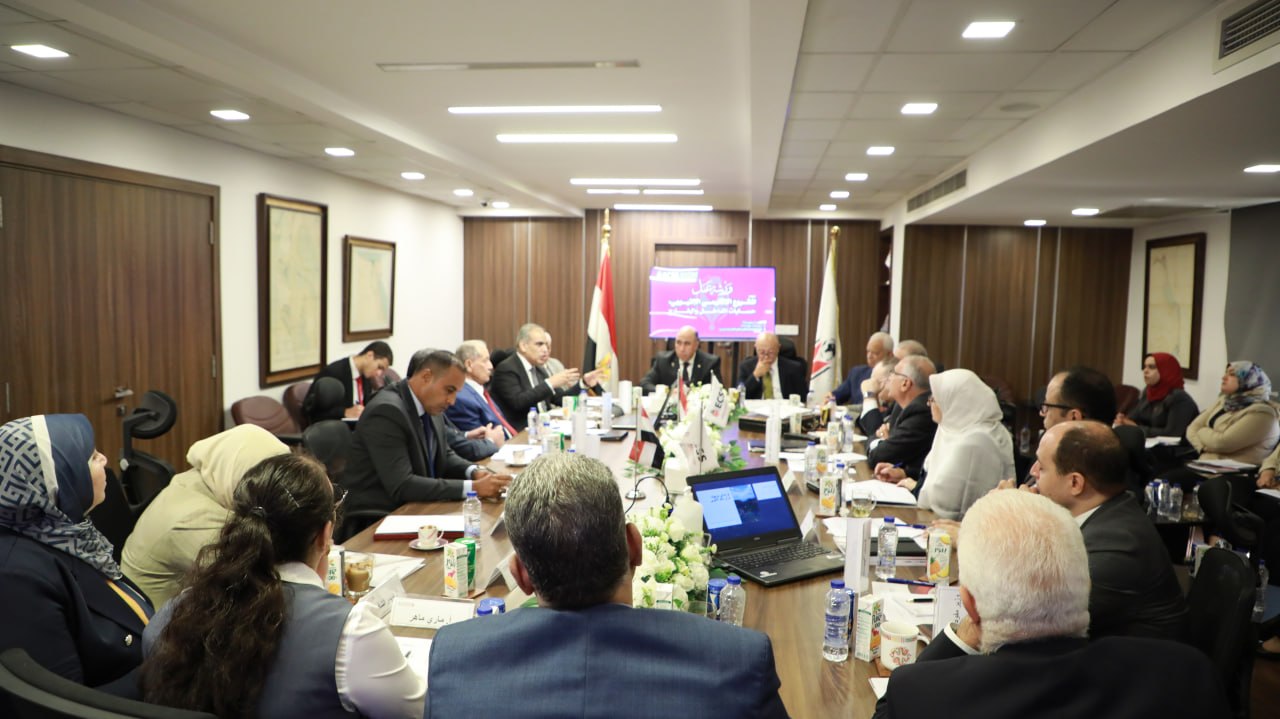
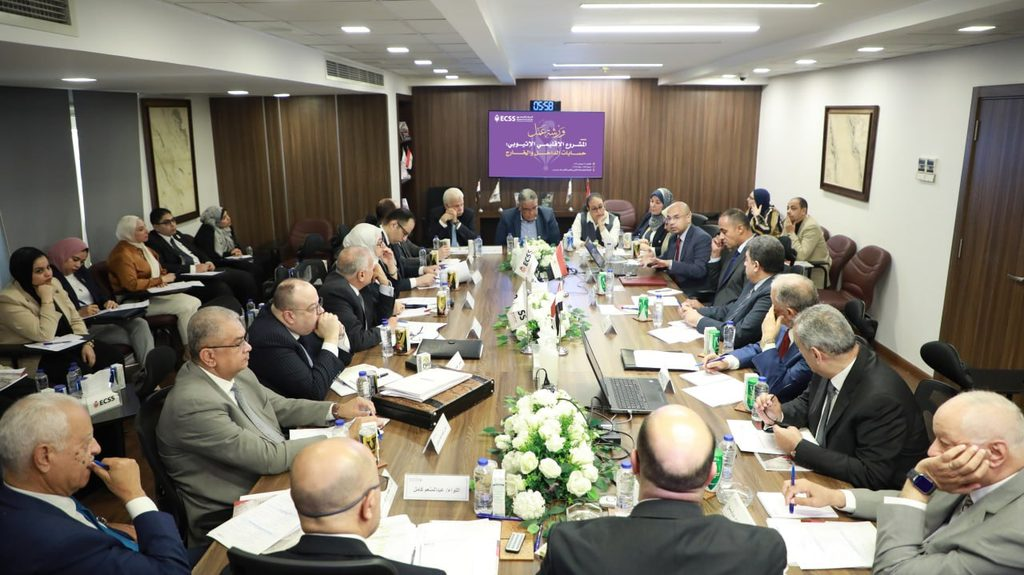
The Egyptian Center for Strategic Studies (ECSS) held a workshop on September 14, 2026, entitled “Ethiopia’s Regional Project: Domestic and External Calculations,” as part of the Center’s 2026-2027 research and academic events program, under its Regional Studies Program.

The workshop brought together a number of experts and specialists in African and strategic affairs, who enriched the discussions with their expertise and insights. The workshop featured 12 research papers examining shifts in Ethiopia’s domestic alignment map and its political future in light of the 2026 elections and the national dialogue; the growing role of diaspora communities and trends in public opinion; and the determinants of Ethiopian foreign policy, foremost among them access to the sea, the Nile water issue, and engagement in conflicts in neighboring countries, particularly Sudan and Somalia. The papers also examined the external roles supporting Ethiopia’s regional project by exploring its relations with the United States, Europe, Russia, China, Israel, Arab countries, and Turkey.
The discussion expanded into a wide-ranging exchange of ideas and knowledge around a number of key questions, foremost among them: How has Ethiopia, despite the deep divisions and intense internal conflicts it faces, managed to pursue an active regional project? To what extent have its relations with international and regional powers contributed to supporting this project? And what are the implications for neighboring countries and regional security?

The research papers and discussions revealed that Ethiopia’s activity in its regional surroundings is one of the major sources of instability and of exporting the repercussions of its internal crises to neighboring countries. This hinders the emergence of an effective regional security system and turns issues of integration and the shared use of resources into arenas of political conflict. At the same time, internal divisions and the challenges facing the stability of the political system have driven Ethiopia to intensify its activities across the Red Sea, Horn of Africa, and Nile Basin spheres, and to leverage water, diplomacy, energy, the economy, and security to strengthen its influence. The pursuit of maritime access is at the forefront of these efforts, generating tensions related to the sovereignty and territorial integrity of neighboring states. Ethiopia’s negative role in drawing external — both international and regional — actors increasingly into the dynamics of the Horn of Africa has also contributed to these tensions.
Against this backdrop, the key findings and conclusions emerging from the workshop can be outlined as follows:
First: Limited political reform and continued domestic polarization
Despite Abiy Ahmed’s attempts to present a reformist image of his government, these efforts have generally met with limited success. The 2026 elections exposed a number of shortcomings, including the inability to hold elections in the Tigray region and in several constituencies in Amhara and Oromia, as well as the widespread boycott by influential political forces. The national dialogue also revealed direct government control through the setting of the agenda and restrictions on participation, with the process concluding without the final outcomes being announced.

Second: Broadening opposition transcending ethnic divisions
Ethiopian diaspora communities, which played a role in supporting Abiy Ahmed’s rise to power in 2018, have become one of the most prominent forces opposing him, particularly those based in the United States. They have emerged as some of his most vocal critics, in a manner that largely transcends the deep ethnic divisions within Ethiopian society — an observation that Abiy Ahmed himself acknowledged in press statements.
Third: Worsening internal crises and growing instability
Ethiopian public opinion reflects sharp, ethnically driven political polarization, leaving the political situation vulnerable to further instability amid increasingly intense armed conflicts, particularly as the government continues to address them through security and military measures without reaching political settlements. This is compounded by widespread dissatisfaction with economic conditions, driven by high levels of poverty, inflation, and unemployment, as well as inadequate basic services, including access to water and electricity, with no realistic solutions in sight in the near term.
Fourth: Leveraging internal crises to advance Ethiopia’s regional project
Despite the highly divided domestic situation and the challenges facing the stability and continuity of the political system, this has not undermined Ethiopia’s ability or willingness to pursue its regional project. Rather, the worsening of domestic challenges is among the key drivers behind its more persistent efforts to achieve its regional objectives across the Red Sea, Horn of Africa, and Nile Basin spheres, through the integrated use of political, security, economic, and diplomatic tools.
Fifth: Diversifying external partnerships to enhance strategic maneuverability
Ethiopia relies heavily on its external relations to address its domestic crises and advance its strategic interests, building functional relationships with the United States, China, and Russia. These relationships have provided it with a degree of external support, although the multiplicity and contradictions of these partnerships have prevented Ethiopia from securing the benefits of a stable and sustainable alliance with any one of them. It has also sought to compensate for what it has not obtained from its international partners by strengthening ties with Middle Eastern powers, foremost among them Israel and Turkey, as well as a number of Arab countries, capitalizing on the growing overlap between the strategic issues of the Middle East and the Horn of Africa.
Sixth: Implications of Ethiopia’s regional project for regional security
External support for Ethiopia is linked to its strategic importance in the projects and strategies of a number of international and regional powers, which has strengthened its ability to pursue its regional initiatives. At the same time, the advancement of Ethiopia’s regional project poses direct threats to its regional surroundings, foremost among them its water policy and the resulting threat to the water security of several neighboring countries, as well as the risk that this model could become a precedent for repetition elsewhere. Ethiopia’s pursuit of maritime access, based on disregard for the international borders and territorial integrity of neighboring states, also represents a serious source of tension in the Red Sea.


