







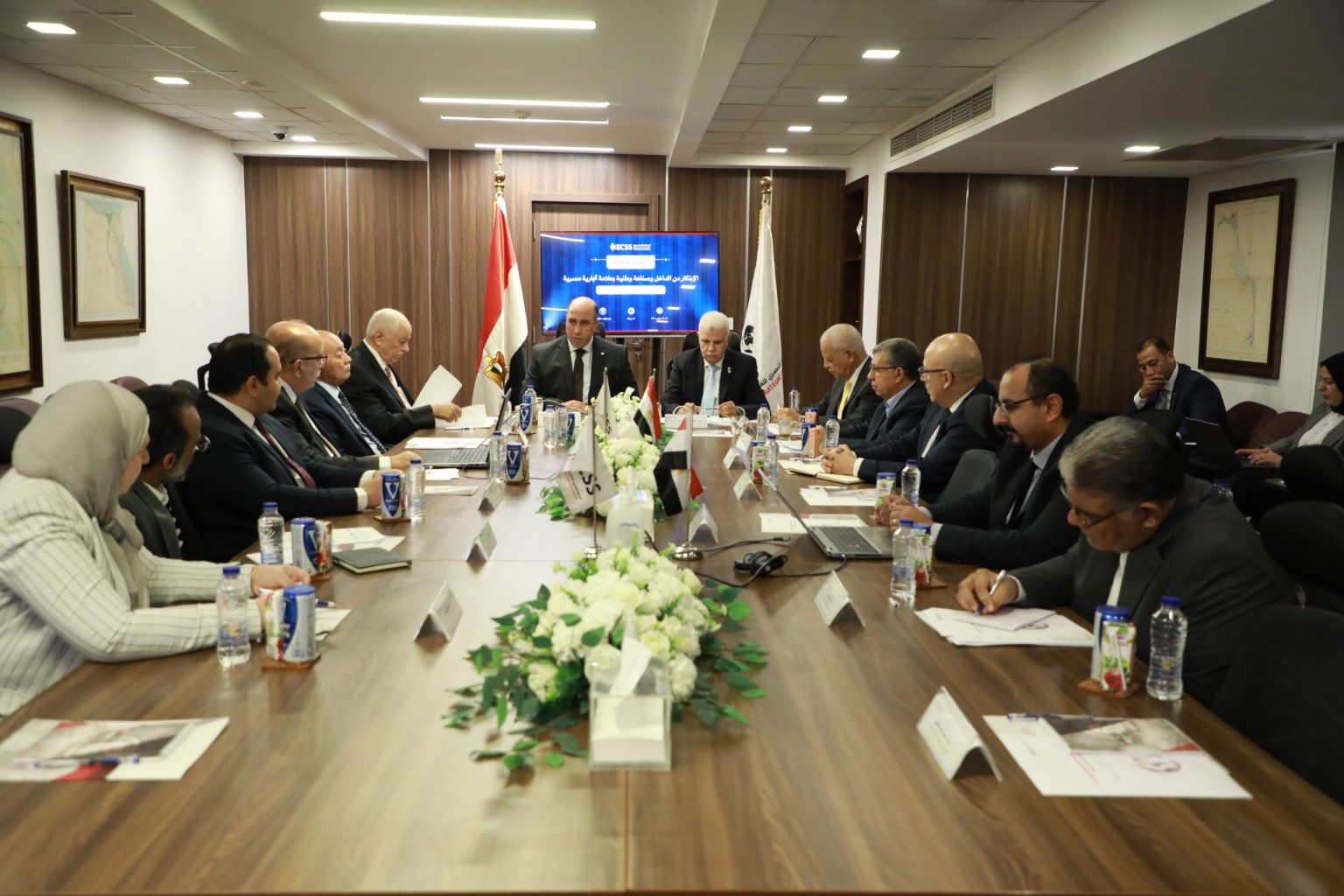
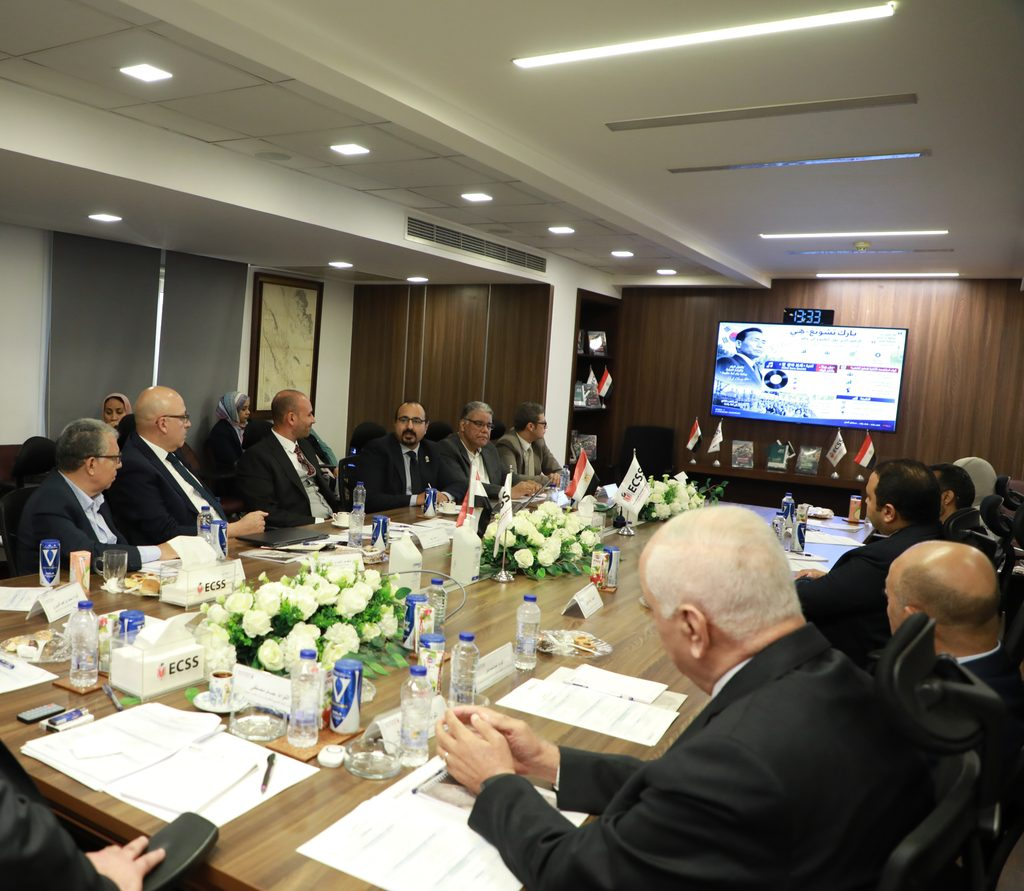
The Egyptian Center for Strategic Studies (ECSS) held an extensive workshop on Monday and Tuesday, September 21-22, 2026, titled “Innovation from Within and Egyptian-Branded Manufacturing: Toward a More Competitive Economy in International Markets.” The workshop was organized as part of the Center’s Economic Studies Program and was held at the ECSS headquarters in Cairo, with the participation of a number of officials, experts, specialists, and representatives of the industrial private sector, scientific research, technological education, and institutions concerned with investment and exports.
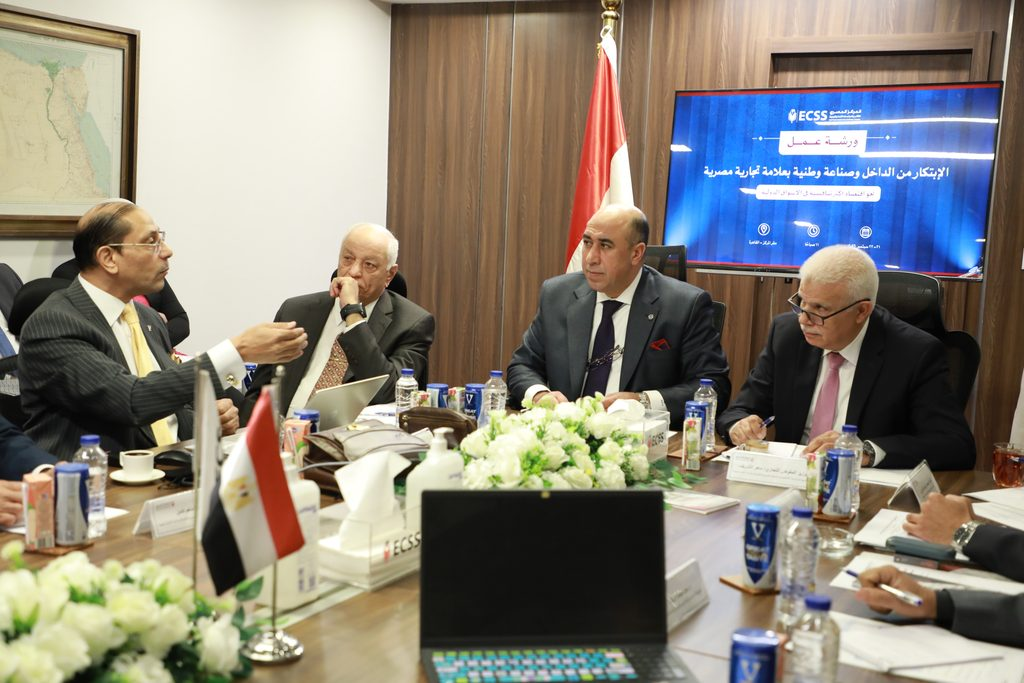
The workshop explored ways to develop the Egyptian economic model and transition from one based on importing and replicating technology to one centered on knowledge production, innovation, increasing added value, and launching national brands, thereby enhancing the competitiveness of Egyptian products.
Discussions focused on building an integrated cycle that begins with scientific research, technological education, and innovation; moves through industry, investment, and product development; and culminates in brand building, exports, and access to international markets.
The workshop also sought to identify legislative, institutional, technological, and financing gaps that could hinder the transfer of knowledge from the research and ideation stages to industrial application and commercial expansion.
The two-day workshop brought together a distinguished group of senior officials and experts from various institutions concerned with innovation and national industry, including academics and research institutions, relevant government bodies, and prominent figures from Egypt’s industrial and business sectors.
Participants included Counselor Dr. Fahr Abdel-Azim Emara, Presiding Judge at the Cairo Court of Appeal and Professor at the Faculty of Law of the British University in Egypt; Hatem El-Nawawy, Chairman of the Export Development Authority and Chairman of the Executive Board of the Export Development Fund; Dr. Tarek Farouk Marek, Deputy Executive Director of the Industrial Modernization Center; Dr. Eng. Ahmed Abdel-Wahab, Chairman of the Board of Directors of the Center of Scientific and Technological Excellence at the Ministry of Military Production; Prof. Dr. Mohamed Watany, an expert at the Supreme Council for Technological Education at the Ministry of Higher Education and Scientific Research; Eng. Mohamed Magdy El-Araby, CEO of Fotonix at the Al-Araby Industrial Group; Eng. Mohamed El-Ayadi, Vice Chairman of the Engineering Export Council; Dr. Tamim El-Dawy, Deputy Executive Director of the Food Export Council; Dr. Ayman Abu Zahra, Founder and CEO of Sovarma Pharmaceuticals; Dr. Rehab Ali Hussein, Assistant Professor of Pharmacognosy at the Institute of Pharmaceutical and Drug Industries Research at the National Research Centre; Eng. Bahaa Dimitri, Vice Chairman of the Board of Directors of Fresh Home Appliances; Commercial Minister Plenipotentiary Walid Wagih El-Zomor, Director of the Department of African Countries and Organizations at the Egyptian Commercial Service; Dr. Ahmed Ragab, Economic Advisor to the African Development Bank; Ahmed Bayoumi, Senior Researcher at the Egyptian Center for Strategic Studies; Commercial Minister Plenipotentiary Maher El-Sharif, Head of the Center’s Economic Studies Program; and Major General Hossam Mostafa, Director of the ECSS.
The workshop’s proceedings were divided into a number of main sessions held over two days.
The first session, titled “The National Innovation Ecosystem and the Readiness of the Egyptian Economy for the Transition to an Innovation Economy,” addressed a number of issues related to creating a supportive legislative and institutional environment for innovation and enhancing the ability of Egyptian companies to develop their products and access international markets.
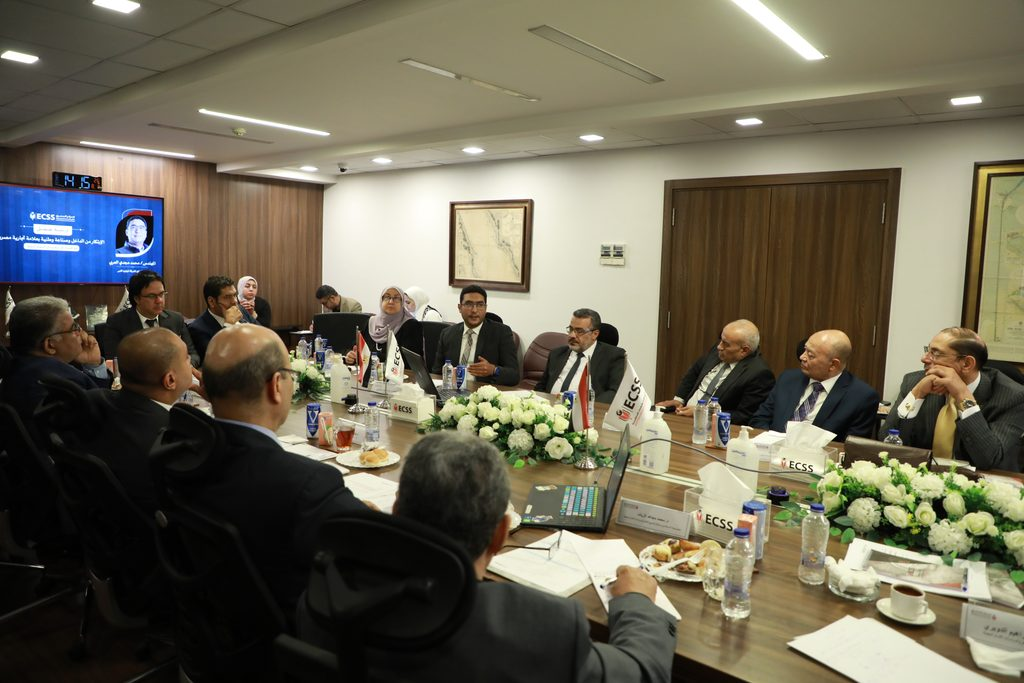
Discussions focused on improving the patent registration system by digitizing application procedures, establishing an expedited registration track, and adhering to specified timelines, thereby safeguarding the rights of Egyptian innovators and strengthening Egypt’s competitiveness in innovation. The session also examined the role of the Industrial Modernization Center in expanding support for companies and innovators by developing models to support startups, connect them with Egyptian industry, and provide the financing needed for expansion.
The second session focused on the needs of technological capabilities, research and development, and human resources, as well as mechanisms for addressing those needs. This included building national capabilities to develop technology and manufacture products locally, and increasing corporate investment in research and development through legislative frameworks and effective incentives that ensure such investment is directed toward projects with an economic impact. The session also stressed the importance of aligning technological education with industry needs through technological universities and sectoral skills councils, and linking graduation projects and applied research to the needs of factories, ultimately transforming knowledge and research into products and commercial-scale manufacturing.
Discussions further emphasized leveraging the needs of export markets as a driver of innovation and establishing platforms that connect innovators, factories, universities, research centers, and export councils as part of a national innovation strategy that promotes institutional integration and links education, scientific research, and technology to the needs of industry and markets. A model of a private-sector research center specializing in technological development and research was also presented.
Supporting innovation, entrepreneurship and investment
On the second day of the workshop, the first session, titled “Supporting Innovation and Entrepreneurship in Industry,” presented a promising and successful model of a research-based product, along with the key stages and obstacles involved in commercializing the product and moving it from the laboratory to commercial manufacturing. The session also presented the experience of one of Egypt’s leading electrical appliance manufacturers in product development and marketing under an Egyptian brand in international markets, which has grown to include exports to 92 countries.
The second session focused on leveraging foreign markets and international experiences to guide the development of Egyptian products, so that the production process begins with an understanding of market needs, demand trends, and global value chains, rather than with producing a product and then searching for a market for it.
It also examined the role of the Commercial Service in conveying this information to industry and promoting Egyptian products, as well as opportunities to build value chains and joint production partnerships that support Egyptian products and brands regionally and internationally. The discussions emphasized that achieving this requires an integrated national system and a long-term strategy linking industry, investment, scientific research, technological education, financing, trade, and intellectual property, while tying incentives to innovation, research and development, added value, and technological sophistication; redefining priority sectors based on their capacity to generate knowledge and technology; building national brands; and opening new export markets.
From a production economy to an innovation economy
The workshop concluded that the challenge facing the Egyptian economy is not limited to increasing production and exports, but also involves changing the nature of production and raising domestic value added by transitioning from a model that relies primarily on resources, cost competitiveness, assembly, and contract manufacturing to one based on knowledge, technology, innovation, and nationally branded products.
This requires building a national industrial ecosystem that connects Egyptian talent with industry, research and development, financing, and markets, while directing investments associated with the restructuring of global value chains toward advanced manufacturing, technology transfer, and the development of local suppliers. This would support Egypt’s positioning as a regional hub for production and innovation as part of a broader transition toward a higher-income, more diversified, resilient, and adaptable economy grounded in increasing the knowledge and technological content of products.
In this context, building an Egyptian brand begins with knowledge, research and development, design, quality, and innovation within the factory and extends to marketing, distribution, exports, and international expansion, as part of an integrated, long-term national strategy that places knowledge, innovation, added value, and national brands at the heart of economic transformation.


