




By using ECSS site, you agree to the Privacy Policy and Terms of Use.
Accept
ECSS - Egyptian Center for Strategic StudiesECSS - Egyptian Center for Strategic Studies
  • Home
  • International Relations
    International Relations
    Show More
    Top News
    Intertwining factors: The Significance of the MoU between the Syrian Democratic Council and the People’s Will Party
    September 18, 2020
    Pre-emptive fallacies Refuting Ethiopia’s claims on the second filling of GERD
    April 26, 2021
    the New Republic: Egypt’s Role in Africa
    October 20, 2021
    Latest News
    Reshaping the US position toward Israel: From the erosion of the old consensus to a new conflict across parties, state, and society
    April 23, 2026
    Israel’s African gambit
    March 6, 2026
    Geopolitical realism: What does Washington’s return to the African Sahel mean?
    March 5, 2026
    Analysis | Manufacturing opposition: How Israel uses digital platforms to shape Iranian public opinion
    February 14, 2026
  • Defense & Security
    Defense & Security
    Show More
    Top News
    Turkey and the Muslim Brotherhood: A temporary refuge and alternative Havens
    October 1, 2020
    Clashes in Tripoli: Do Rapid Developments in Libya Clash with the Road Map?
    August 22, 2023
    Assessing Deterrent Measures and the Prospects of War: US Military Movement in the Gulf to Confront Iran
    June 22, 2020
    Latest News
    Between two camps: Reading into ISIS discourse on the US-Israeli war on Iran
    April 15, 2026
    Encrypted messages “Roaring Lion”: The hidden messages behind the name of the operation against Iran
    March 11, 2026
    Iran war developments
    March 9, 2026
    Manufacturing the enemy : Reframing terrorism in contemporary Western discourse
    March 7, 2026
  • Public Policy
    Public Policy
    Show More
    Top News
    Favorable circumstances: Investing in Egyptian banks
    May 11, 2021
    Real Estate Transaction Tax: Addressing Challenges of Egypt’s Real Estate Sector
    March 24, 2022
    Investment in Egypt amid Covid-19
    July 25, 2021
    Latest News
    Egypt as a balancing power: Why Cairo rejects the logic of wars in the Middle East
    April 30, 2026
    Militarizing water in Middle East wars A strategic analysis of the Iran-US-Israel war
    April 18, 2026
    Reading into attacks on maritime navigation in the Arabian Gulf
    March 17, 2026
    Emerging economies in a world without rules: Between opportunity and predicament
    March 5, 2026
  • Analysis
    • Opinion
    • Analysis
    • Situation Assessment
    • Readings
  • Activities
    • Conferences
    • ECSS Agenda
    • Panel Discussion
    • Seminar
    • Workshops
  • ECSS Shop
  • العربية
  • Defense & Security
  • International Relations
  • Public Policy
All Rights Reserved to ECSS © 2022,
Reading: Indications of Timing: Gaza’s Seventh War
Share
Notification Show More
Latest News
Egypt as a balancing power: Why Cairo rejects the logic of wars in the Middle East
Media Studies
Reshaping the US position toward Israel: From the erosion of the old consensus to a new conflict across parties, state, and society
American Studies
Militarizing water in Middle East wars A strategic analysis of the Iran-US-Israel war
Economic & Energy Studies
The future of US-Iran negotiations
Opinion
Between two camps: Reading into ISIS discourse on the US-Israeli war on Iran
Terrorism & Armed Conflict
Aa
ECSS - Egyptian Center for Strategic StudiesECSS - Egyptian Center for Strategic Studies
Aa
  • اللغة العربية
  • International Relations
  • Defense & Security
  • Special Edition
  • Public Policy
  • Analysis
  • Activities & Events
  • Home
  • اللغة العربية
  • Categories
    • International Relations
    • Defense & Security
    • Public Policy
    • Analysis
    • Special Edition
    • Activities & Events
    • Opinions Articles
  • Bookmarks
Follow US
  • Advertise
All Rights Reserved to ECSS © 2022, Powered by EgyptYo Business Services.
Palestinian & Israeli Studies

Indications of Timing: Gaza’s Seventh War

Shady Mohsen
Last updated: 2023/11/21 at 9:42 PM
Shady Mohsen
Share
7 Min Read
SHARE

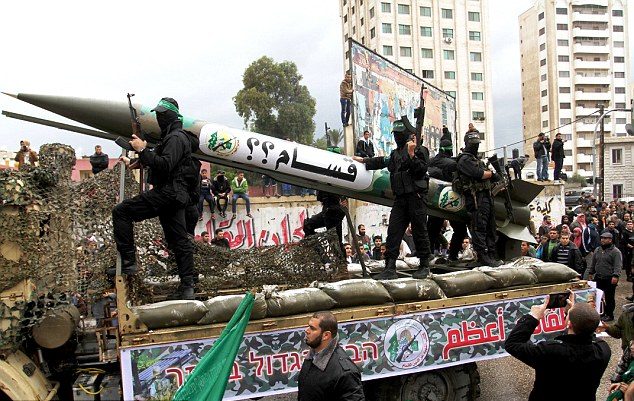
The current war on Gaza is unlike any other in terms of the consequences of its timing and setting, both inside Israel and on a regional and global scale. This analysis considers the factors and circumstances that point to the timing’s significance.

The following describes the conflict’s context in relation to Israel, Hamas, the region, and the international stage:

I. Israel

1. The war coincided with significant Jewish holidays, such as Simchat Torah, prompting a large number of Israeli military commanders to request leave and cease operations.

2. Israeli public demonstrations against the judicial reforms were persistent, with officers and reserve soldiers participating timidly by signing petitions and notices of criticism and threatening to skip training. This raised the prospect of a serious division within the Israeli army.

3. The expansion of the political chasm between the far right and the remainder of the political spectrum in Israel, including at the societal and authoritative levels, as evidenced by the rising number of Israelis who emigrated abroad, at the level of the government and Jewish communities around the world, at the level of the Likud Party and the other religious parties in the government coalition as a result of the ultra-Orthodox Conscription Bill, at the levels of the government and the army (civil-military relations), and at level of Israel and abroad, particularly within the United States, which is fed up with far-right policies that endanger democratic values.

4. The escalating strain on the Israeli economy, which manifested in various ways, such as fluctuations in foreign investment inflows, the exchange rate, and a political-driven imbalance that impacts how budget items are allocated and how much funding is available for government spending as well as the modernization of the Israeli military.

II. Hamas

1. According to Palestinian opinion polls, Hamas’ popularity among Gazans is declining, which has an impact on Hamas’ ability to rule the Gaza Strip, its significance as a resistance movement (particularly now that two full years have passed since the organization’s last direct conflict with Israel), and its likelihood of winning in the event that Palestinian general or presidential elections are held.

2. Since March 2021, Israel has been attempting to destroy Hamas’ infrastructure in the West Bank, specifically in the northern part of the West Bank in Jenin and Nablus and Hamas sensed the danger of the Israeli endeavor being realized. Hamas may therefore have intended to distract Israeli attention away from the northern West Bank with this conflict, which was initiated from Gaza. Yet Israel may be cognizant of this, so it persists with its policy in the West Bank, which entails raiding the camps and killing Hamas members in the West Bank.

3. During the last two years, Iran has been seen to have focused its financial, technical, and political assistance on Islamic Jihad, its closest proxy. As a result, Hamas realized how important it was to mend its relationship with Iran while working with its regional operatives, namely Hezbollah in Lebanon.

III. The Region

1. There were growing chances for Israel to integrate into the region at the expense of resolving the Palestinian-Israeli conflict, which was recently demonstrated by the Israeli Prime Minister’s promotion of the Indo-European Corridor project at the UN General Assembly (September 2023).

2. The likelihood of Saudi Arabia and Israel finalizing the Abrahamic Normalization Agreement through US mediation was growing. It was predicted that the normalization agreement would be signed in November, at the earliest, or in June of 2024, at the latest.

3. The resumption of fighting on the Yemeni front against the Arab coalition and the recurrence of political and security crises between Hezbollah and Israel in what was known as the “tent crisis” were two examples of indicators pointing to the occurrence of a regional crisis on multiple fronts. The situation is analogous on the Syrian front, where Israeli forces engage in combat and the Syrian government retaliates with missile assaults. Hamas might have placed a wager on the current state of regional crisis.

IV. The Global Arena

1. A number of factors have contributed to the escalation of political tension between the Democratic administration of the United States, led by Biden, and the Israeli government, led by Netanyahu. These include the Israeli stance on the Russian-Ukrainian war and the Israeli government’s propensity to adopt an extreme right-wing identity that is incompatible with democratic values in the United States.

2. The United States’ preoccupation with the Russian-Ukrainian front led to internal political squabbles concerning the level of assistance that should be extended to the Ukrainian people and army, as well as spending priorities.

3. It is not implausible that Europe wants to break the Russian monopoly on natural gas exports by looking for a number of regional hubs in the Middle East. This aligns with Iran’s goal of advancing natural gas pipelines through Turkey to Europe. In this context, it is important to note that the Eastern Mediterranean countries suffered greatly from the problem of gas supply to Europe because of safety regulations that forced production and exports to stop because of the war’s aftermath and the potential for it to worsen.

In conclusion, there were circumstances that amounted to wagers on Hamas’ decision to initiate a military operation at that time, calling into question the veracity of Hamas’ political and military calculations against Israel.

Related Posts

Israel’s African gambit

Analysis | Manufacturing opposition: How Israel uses digital platforms to shape Iranian public opinion

Analysis| The Eighth front: Israel strategies for countering erosion of its narrative in western public opinion

2025 Yearender: Flood fallout

Shady Mohsen November 21, 2023
Share this Article
Facebook Twitter Whatsapp Whatsapp LinkedIn Telegram Email Copy Link Print

Stay Connected

Facebook Like
Twitter Follow
Instagram Follow
Youtube Subscribe

Latest Articles

The discourse on Egypt
Analysis June 22, 2020
Expansion of the Protest Movement: Southern Iraq’s Prolonged Crises
International Relations October 17, 2022
Structural Causes of Economic Decline in South Africa
African Studies March 18, 2023
Revealing Motives: Mali's Withdrawal from the G5 Sahel
Revealing Motives: Mali’s Withdrawal from the G5 Sahel
International Relations June 18, 2022

Latest Tweets

//

The Egyptian Center for Strategic Studies is an independent non-profit think tank providing decision-makers by Policy alternatives, the center was established in 2018 and comprises a group of experts and researchers from different generations and scientific disciplines.

International Relations

  • African Studies
  • American Studies
  • Arab & Regional Studies
  • Asian Studies
  • European Studies
  • Palestinian & Israeli Studies

Defence & Security

  • Armament
  • Cyber Security
  • Extremism
  • Terrorism & Armed Conflict

Public Policies

  • Development & Society
  • Economic & Energy Studies
  • Egypt & World Stats
  • Media Studies
  • Public Opinion
  • Women & Family Studies

Who we are

The Egyptian Center for Strategic Studies (ECSS) is an independent Egyptian think tank established in 2018. The Center adopts a national, scientific perspective in examining strategic issues and challenges at the local, regional, and international levels, particularly those related to Egypt’s national security and core national interests.

The Center’s output is geared toward addressing national priorities, offering anticipatory visions for policy and decision alternatives, and enhancing awareness of various transformations through diverse forms of scientific production and research activities.

All Rights Reserved to Egyptian Center for Strategic Studies - ECSS © 2023

Removed from reading list

Undo
Welcome Back!

Sign in to your account

Lost your password?