





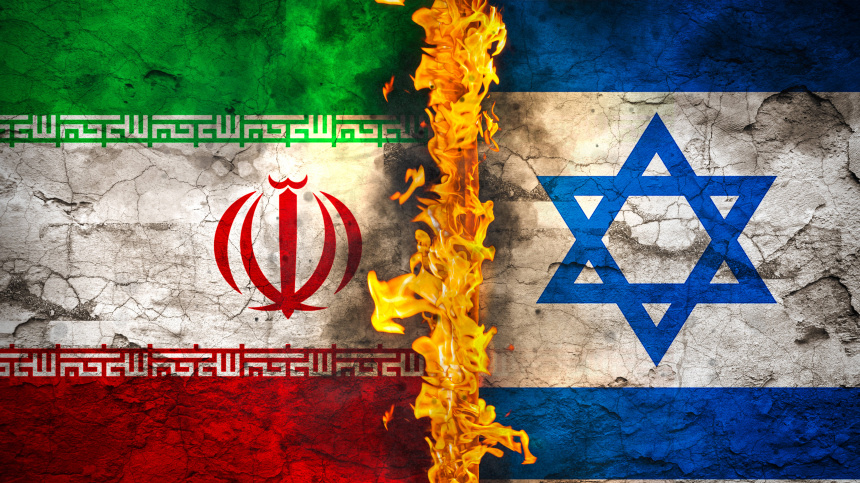
This article analyzes the encrypted messages associated with the joint military operation launched by Israel and the United States against Iran on 28 February 2026, through an examination of the names and designations assigned to such military operations.
At the outset of any military campaign, the Israeli prime minister is keen to deliver a series of statements that carry explicit and direct messages addressed to Israeli society. At the same time, these statements often contain coded messages through which he seeks to mobilize the “Jewish people” and the “Jewish army” to undertake a mission framed as preserving the eternity and continuity of Israel.
The name of the military operation, “Roaring Lion,” appears to align with the symbolic rhetoric frequently employed by Benjamin Netanyahu, in which the lion is presented as a symbol of strength and protection that will safeguard the Jewish presence and ensure its continuity. In this context, Netanyahu links this symbolism to what he describes as the existential threat posed by Iran.
The article therefore seeks to address a number of questions: Where did Netanyahu derive the name of the military operation “Roaring Lion”? Does the symbolism he intends behind this designation correspond to his explicit reference to the “Lion of Trumpeldor,” or is he instead invoking the biblical lion? Why does he consistently invoke the symbolism of the “lion” in operations specifically related to Iran? Why did he emphasize at the end of his speech that Israel is a lion’s cub? If Israel is the cub, then who is the true lion? What hidden message is Netanyahu seeking to convey through the symbolic name assigned to the military operation?
Encrypted messages
“Roaring Lion”: The hidden messages behind the name of the operation against Iran
Israeli Prime Minister Benjamin Netanyahu consistently seeks, at the outset of any military operation, to deliver a series of statements carrying specific messages directed at different audiences. At times, his remarks are aimed at the adversary; at other times, they are addressed to allies; and in certain instances, they are directed inward toward Israeli society itself. Nevertheless, these speeches almost invariably incorporate religious or historical symbolism. Netanyahu frequently invokes a passage from the Old Testament, refers to a distant historical episode, or selects a designation with religious connotations for the military operation undertaken by Israel against its adversaries, in an effort to stir emotions and strengthen morale and mobilization within the Israeli public.
In this context, the Israeli prime minister designated the military operation against Iran conducted between 13 and 24 June 2025 as Am KeLavi, which literally translates as “The people rise like a lion; they rouse themselves like a young lion.” The name is derived from a passage in the Book of Numbers (23:24): “Behold, the people rise up like a lioness; they rouse themselves like a lion,” a description applied to the Israelites in the Old Testament. Netanyahu invoked this passage in his speech, stating:
“Together, in solidarity and with the unique spirit of our people—a people that rises like a lioness and lifts itself up like a lion—we shall prevail.”
On this basis, Netanyahu named the operation “Roaring Lion.”
With the launch of the joint military operation by Israel and the United States against Iran on 28 February 2026, the Israeli prime minister delivered another statement in which he said:
“The national hero Joseph Trumpeldor fell in the Battle of Tel Hai. His legacy and courage are engraved in us. At the memorial on the summit of the Galilee, where he fell together with seven of his comrades, the statue of the ‘Roaring Lion’ stands. I have visited it many times throughout my life. When I looked at the statue, this is how I always saw you—this is how I saw us, the people of Israel. With God’s help, the roar of the lion—from our soldiers, from our pilots, and from our citizens—is now heard across the world. Today more than ever, the entire world knows: the people of Israel live.”[1]
According to Netanyahu’s remarks, the name of the operation, “Roaring Lion,” thus carries a historical symbolic significance inspired by the statue associated with Yosef Trumpeldor, which is regarded as a symbol of heroism and resistance. Trumpeldor’s legacy is closely linked to the Battle of Tel Hai, which took place on 1 March 1920 between Arab armed groups and a Jewish defensive force seeking to protect the agricultural settlement of Tel Hai at the edge of the Galilee. During the battle, Shiite Arab militias, supported by Bedouins from a neighboring village, launched an attack on the Tel Hai site. The clashes resulted in the deaths of eight Jews and five Arabs. Yosef Trumpeldor, the commander of the Jewish defenders, was shot in the hand and abdomen and died later that evening while being transported to the village of Giladi. In the aftermath of the battle, the Tel Hai site was burned and subsequently abandoned by the Jewish defenders.
Top of Form
Bottom of Form
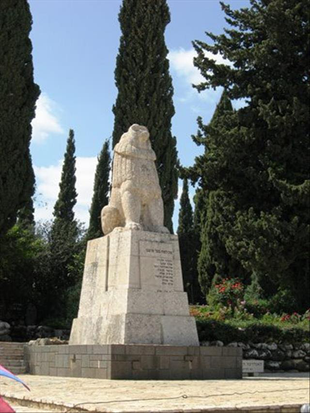
The Roaring Lion statue of Joseph Trumpeldor[2]
Netanyahu may also have sought, through his political rhetoric, to invoke this symbolism by naming the operation “Roaring Lion,” in an effort to raise morale within Israeli society and reinforce internal cohesion around the military campaign.
Social media platforms quickly picked up on this historically charged symbolism, circulating images and video clips linking the operation’s name to the historical event associated with it, while highlighting the spirit of heroism that the episode represents in the Jewish collective memory.[3] This may reflect the extent of the name’s impact in boosting morale within Israeli society and reinforcing the notion of the “people’s army,” which Netanyahu sought to emphasize when he declared:
“The roar of the lion—emanating from our soldiers, our pilots, and our citizens—is now heard across the world.”
This statement appears to aim at merging the military and civilian fronts within a unified mobilizational discourse.
It is also noteworthy that the Israeli prime minister often draws the names of military operations from passages in the Old Testament. Yet this raises an important question: why did Netanyahu turn instead to a historical event dating back to 1920, which may be unfamiliar to the younger generation in Israel? Evidence of this can be seen in the fact that individuals who share images of the Trumpeldor monument—the “Roaring Lion”—typically accompany them with explanatory notes about the monument and the figure it represents. Netanyahu concluded his speech by stating:
“The prophet Amos said (Amos 3:8: ‘The lion has roared—who will not fear?’). In Operation ‘Roaring Lion,’ we roar. Therefore, do not fear, Israel, for you are a lion’s cub. We stand as one man, and with God’s help we will safeguard the eternity of Israel.”
This raises a number of questions: Does the symbolism Netanyahu intended behind naming the military operation “Roaring Lion,” as he explicitly suggested through his reference to the “Lion of Trumpeldor,” refer primarily to that historical symbol, or is he in fact invoking the biblical lion? Why does he consistently draw on the symbolism of the “lion” in operations specifically related to Iran? And why did he emphasize at the conclusion of his speech that Israel is a lion’s cub? If Israel is the cub, then who is the true lion? What hidden message was Netanyahu seeking to convey through the symbolic name he assigned to the military operation?
It is likely, based on the link he established at the end of his speech between the eternity of Israel and the image of the lion’s cub, that Netanyahu was alluding to the “Lion Cub of Judah” (Gur Aryeh Yehudah), which, in Jewish culture, carries profound religious and historical symbolism within Israeli collective consciousness. This image has also become the emblem of the city of Jerusalem and the insignia of the Israeli army’s Central Command.
According to Jewish interpretations, the emblem of the “Lion of Judah” represents the symbol of the ancient Kingdom of Judah.[4] It derives from the title bestowed by the prophet Jacob upon his son Judah in Genesis 49:9: “Judah is a lion’s cub.” The symbol was subsequently associated with the Kingdom of Judah under the rule of King David and later his son Solomon[5], as well as with the lineage of Israelite kings who descended from David.[6] According to biblical text, this lineage ultimately leads to the Messiah—the central figure in Jewish belief—who, according to the Torah and Talmudic texts, will emerge at the end of days to redeem the “people of Israel,” confront the many nations hostile to Israel, and subdue them.
In Jewish religious belief and collective consciousness, this emblem is thus closely linked to the concept of the eternity of the “Jewish people.” This may constitute the coded message through which Netanyahu sought to mobilize both the “Jewish people” and the “Jewish army” to undertake what is framed as a mission to safeguard the permanence of Israel.
In this sense, the name of the military operation, “Roaring Lion,” is consistent with the symbolic discourse frequently employed by Netanyahu, in which the lion is presented as a symbol of strength and protection that will preserve the Jewish presence and ensure its continuity according to the Jewish narrative. Within this framework, Netanyahu links this symbolism to what he describes as the existential threat posed by Iran to Israel. As he stated:
“Israel and the United States have embarked on a joint operation to eliminate the existential threat to Israel posed by the Iranian regime.”
Accordingly, it became incumbent upon the head of government, represented by the prime minister, to convey a symbolic coded message capable of reaching the various segments of Israeli society. Behind the Israeli-US attack on Iran lie deep fissures that have weakened Israel’s internal structure. These fissures are manifested in sharp political polarization and an ongoing struggle between the right and left camps, as well as a societal erosion of trust in state institutions. They are also reflected in social and religious divisions and in persistent tensions between secular currents and the Haredi Jewish community—conditions that illustrate a state of internal fragmentation that the political leadership seeks to contain through mobilizational rhetoric drawing on historical and religious symbolism.
These conflicts and divisions have revealed a clear divergence between the concept of the “democratic Israeli state” and that of the “biblical Jewish state.” In light of this divergence, it has appeared necessary to advance a unifying symbol around which the various segments of society can rally—namely the notion of the “biblical Jewish state,” embodied in the emblem of the “Lion of Judah.” This symbol carries profound religious and historical significance in Jewish consciousness and can serve as a point of convergence capable of unifying what is described as the “Jewish people” in the face of what is portrayed as an existential threat, foremost among them the Iranian nuclear threat, which is depicted as the gravest danger to Israel’s future and continuity.
With the outbreak of the Israeli-Iranian confrontation, the Israeli government sought to address the climate of anxiety and the erosion of confidence within society. It appears to have resorted to formulating a set of undeclared strategies aimed at restoring a sense of security and reinforcing internal cohesion. This issue warrants a dedicated research paper at a later stage, in order to monitor and analyze the range of political, media, and security indicators that accompanied this period.
[1] https://www.google.com/search?q=%D7%90%D7%99%D7%95%D7%9D+%D7%A7%D7%99%D7%95%D7%9E%D7%99+%D7%A0%D7%AA%D7%A0%D7%99%D7%94%D7%95&newwindow=1&sca_esv=998a066a4e114733&rlz=1C1FHFK_iwEG1153EG1153&biw=1280&bih=689&sxsrf=ANbL-n6m_1Gu35KDOi3RlaiJbw16zpRLHg%3A1772633076822&ei=9DuoafX2Mb7o7M8Po8LR2A4&ved=0ahUKEwj1wPHmtIaTAxU-NPsDHSNhFOsQ4dUDCBE&uact=5&oq=%D7%90%D7%99%D7%95%D7%9D+%D7%A7%D7%99%D7%95%D7%9E%D7%99+%D7%A0%D7%AA%D7%A0%D7%99%D7%94%D7%95&gs_lp=Egxnd3Mtd2l6LXNlcnAiINeQ15nXldedINen15nXldee15kg16DXqteg15nXlNeVSNguUPIEWL4mcAF4AJABAJgB_gWgAbAOqgEJMC41LjEuNi0xuAEDyAEA-AEBmAIBoAK5BsICBhAAGBYYHsICBRAAGO8FmAMAiAYBkgcDNi0xoAfSCLIHAzYtMbgHuQbCBwM1LTHIBzaACAA&sclient=gws-wiz-serp#fpstate=ive&vld=cid:ba9dd614,vid:WKW0zBk0EvU,st:0
[2] The memorial bears the inscription meaning “It is better to die for our land.”
[3] https://www.facebook.com/reel/1794544417905479
[4] Interpretation of the Book of Numbers, Part 2, Paragraph 7.
[5] According to the biblical text, Solomon placed the symbol of the lion inside the temple, as mentioned in 1 Kings 7:29 “and on the shields between the brows were lions, bulls, and cherubim.”
[6] Book of Jeremiah 23/5: “The days are coming,” declares the Lord, “when I will raise up for David a righteous Branch, a King who will reign and prosper, and will execute justice and righteousness in the land.” Thus, various Jewish religious sources agree that he comes from the lineage of King David.