






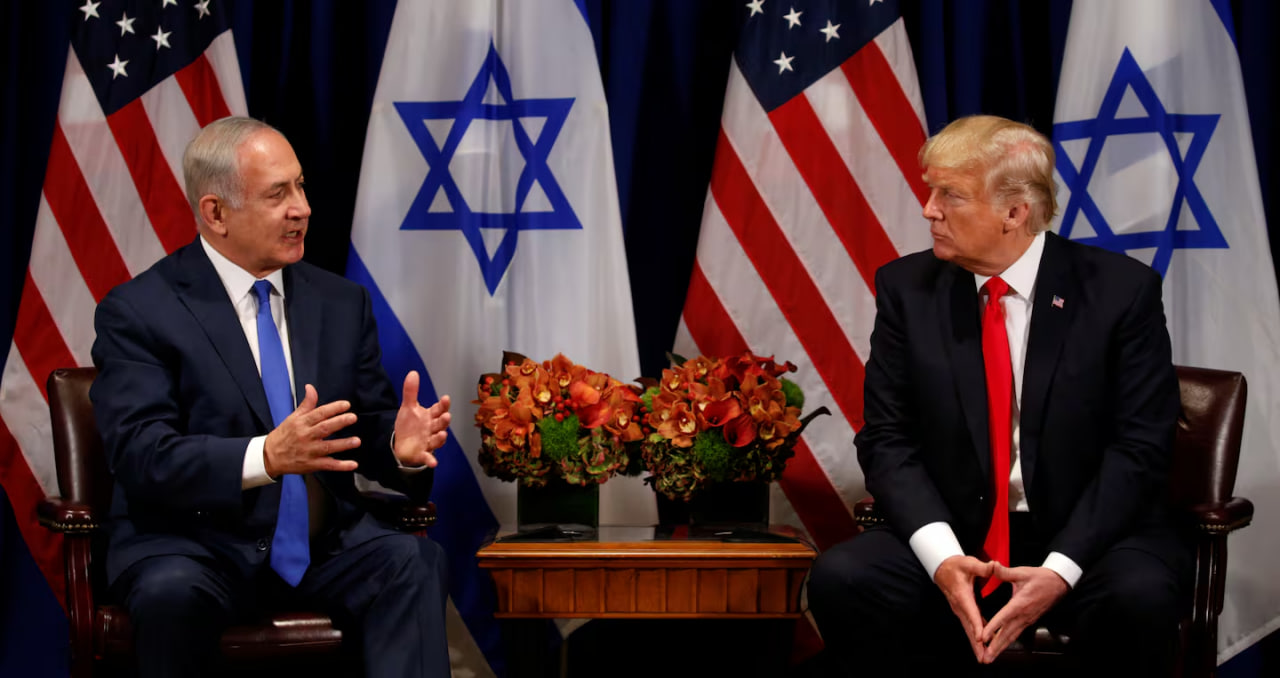
It is no longer tenable to treat the US position toward Israel as the automatic extension of a fixed alliance that has withstood wars, changes of administrations, and shifts in public mood. While the relationship between Washington and Tel Aviv remains strong at the state level, the political and moral insulation that once surrounded it within American society no longer exists to the same degree. The alliance has not collapsed, but it has lost its status as an unquestioned premise that lay beyond sharp domestic debate among the poles of the US political process. This is the most significant shift at the present moment: the issue is no longer whether the relationship exists, but rather its nature, its limits, and the costs it now imposes on American political discourse itself—matters that have become the subject of unprecedented debate. Opinion polls clearly reflect this change. In April 2026, the Pew Research Center found that 60 percent of Americans held unfavorable views of Israel, up from 53 percent in 2025, while 59 percent said they had little or no confidence in Benjamin Netanyahu. More tellingly, majorities under the age of fifty in both parties now view Israel and Netanyahu negatively. In February 2026, Gallup reported that 46 percent of Americans sympathized more with Palestinians, compared to only 28 percent with Israelis—an unmistakable reversal of the general trend that had shaped US public opinion for decades.
This shift did not emerge in a vacuum, nor was it produced by a single war alone; rather, it required a revealing moment to surface with such clarity. For many years, US administrations were able to manage disagreements over Israel within a controlled framework based on limited criticism, calibrated diplomatic tension, and a rapid return to the baseline—namely, that military and political support remained untouched. It can be argued that the war in the Gaza Strip disrupted this longstanding mechanism. This is not only because of the scale of destruction and civilian losses, but also because the war unfolded in a fundamentally different media environment. Images no longer pass first through the filters of major institutions that curate and frame them; instead, they flow directly to the American voter’s phone, to university campuses, to electoral campaigns, and to the broader public sphere. As a result, the debate is no longer confined to “Israel’s right to self-defense,” but has expanded to encompass the limits of force, the nature of the war, proportionality, and the moral implications of US support in light of these realities and the brutal crimes against unarmed civilians. This explains why support for Israeli military operations in Gaza fell to 32 percent in a Gallup poll in July 2025, while opposition reached 60 percent—the lowest level of support recorded by this measure since it began tracking sentiment after the 2023 war.
This shift derives its real weight from its deep grounding in the generational dimension. Younger cohorts no longer view Israel through the political memory that shaped earlier American generations—namely, the Cold War, the image of a “besieged democratic ally,” and the Oslo period and its aftermath. Instead, the new generation engages with the conflict through a different lens that may be described as digital, visual, rapid, and highly sensitive to questions of power and asymmetry between aggressor and victim. It was therefore not surprising that an April 2024 survey by the Pew Research Center found that 60 percent of Americans under the age of thirty held favorable views of Palestinians, compared to only 46 percent for Israelis. In July 2024, the same center reported that 48 percent of Americans aged 18 to 29 believed that support for Israel should not be a priority in US foreign policy. Such figures cannot be read casually; they point to a structural shift in which demographic dynamics no longer favor the traditional formula of the relationship, and suggest that the challenge facing the conventional pro-Israel current lies not only in the present, but also in the near future.
More importantly, this generation is not merely reordering its priorities; it is reshaping the very language through which the conflict is understood. For broad segments of American youth—particularly in universities and major cities—Israel is no longer automatically categorized as an “ally,” but rather situated within a wider debate on power, rights, discrimination, and international justice. This helps explain why US campuses, from Columbia University to Yale University and New York University, have become arenas of political and intellectual confrontation over the war and US support for it. In April 2024, more than 100 demonstrators were arrested at Columbia University following the establishment of a protest encampment; the wave of sit-ins and arrests subsequently spread to other campuses. The debate thus evolved from expressions of solidarity with Gaza into a broader domestic American question encompassing freedom of expression, university authority, the boundaries of antisemitism, and the right to boycott and protest. The repercussions of this crisis persisted in the months that followed, underscoring that US universities have ceased to function merely as sites of solidarity and have instead become laboratories for a wider conflict that extends well beyond the Palestine file alone.
If we move from society to organized politics, a more complex picture emerges. The US state does not move at the same pace as public opinion. Foreign policy, unlike domestic issues, is filtered through institutions designed to slow transformation—most notably Congress, funding networks, the national security bureaucracy, and traditional centers of influence. The result today is a dual landscape: a clear shift in public sentiment and cultural discourse, alongside a significant degree of continuity at the level of official decision-making. Yet continuity no longer implies complete stability; rather, it indicates that change has not yet fully passed through institutional channels. This is evident within both parties, where Israel is no longer a matter of consensus in the traditional sense, but has become a space in which interests, identity, electoral calculations, and moral discourse intersect. More precisely, the relationship has moved from a context in which disagreement revolved around how it should be managed to one in which disagreement touches the very premise itself: why this support exists, under what conditions, and how long it can retain its exceptional character.
Within the Republican Party, support for Israel remains significantly stronger than within the Democratic Party, but this does not mean the Republican camp is homogeneous or as firmly grounded as before. There is, first, the traditional Republican current linked to the national security establishment and classical conservative right, which views Israel as a forward strategic asset for the United States in the Middle East, interpreting the relationship through the lenses of deterrence, intelligence coordination, and regional balance of power. For this current, Israel is not merely an ally but part of the structure through which the United States has maintained its influence in a sensitive region for decades. Alongside it stands the evangelical current, which imbues the relationship with a doctrinal and cultural dimension that goes beyond immediate strategic calculations—making its support more emotionally and symbolically entrenched, yet less adaptable to evolving social and cultural dynamics within the United States.
The most recent and consequential factor, however, is the rise of the populist current associated with the “America First” doctrine. This current has not declared hostility toward Israel, but it has begun to strip away, gradually, the notion of exceptionalism surrounding the relationship—a development of considerable significance. For this strand of thought, the alliance is no longer a value above politics, but rather one foreign policy file among others, assessed in terms of cost and return. This helps explain why segments of populist conservative discourse have begun raising questions that were previously uncommon within the American right: what the United States gains from its sustained entanglement in Middle Eastern conflicts, and why it should bear the political, security, and economic costs of expanding external commitments. While this current has not yet crystallized into official Republican policy, the mere articulation of such questions within conservative circles signals that the Republican consensus itself is no longer as solid as it once was. The significance of this shift is further underscored by findings from the Pew Research Center in 2026 showing that majorities under the age of fifty in both parties now view Israel negatively—indicating that the transformation is no longer confined to the left or to Democrats alone.
Within the Democratic Party, the conflict is both more visible and more profound, as it unfolds at the core of the party’s self-definition. There remains a traditional institutional current that continues to view the preservation of the alliance with Israel as part of the United States’ global role and its system of strategic commitments, even as it has been compelled to adjust its language toward emphasizing restraint, the protection of civilians, and a political solution. This current can no longer defend support with the same certainty as before, yet it still resists a shift toward full conditionality or a fundamental restructuring of the relationship. In contrast, a rising progressive current approaches Israel not only through the lens of foreign policy, but through the prism of the party’s internal moral coherence. For this current, a party that speaks of justice, rights, and opposition to discrimination cannot exempt Israel from that framework; accordingly, the debate is no longer about the tone or degree of criticism, but about the legitimacy of continued unconditional military support itself.
This conflict is no longer theoretical. In March 2024, press reports documented pressure from progressive groups on Joe Biden and other Democrats to reject funding from American Israel Public Affairs Committee (AIPAC) and affiliated entities. Some primary elections have consequently become arenas of direct confrontation between camps that regard support for Israel as a red line and others that argue this very red line must be broken—or at least redrawn. In May 2024, Reuters reported that the district of Jamaal Bowman in New York had become a new battleground for the pro-Israel lobby, with nearly $2 million spent against the progressive Democratic lawmaker. In this context, the picture is clear: the struggle within the Democratic Party is no longer only about Israel, but about who holds the authority to define the party itself—its traditional institutional wing or its ascendant progressive base.
Elections are the mechanism that elevates this transformation beyond the realm of intellectual or moral debate. Once Gaza or US military support for Israel becomes a factor in electoral behavior, it can no longer be treated as a marginal foreign policy issue. This was clearly evident in Michigan. In February 2024, Arab groups and local Democrats called for an “uncommitted” vote in protest of the Biden administration’s position; the results revealed a notable level of protest voting that exceeded expectations. In March, the protest extended to Minnesota and other states, where 19 percent of Democrats in Minnesota voted “uncommitted,” delivering one of the clearest signals of opposition to the administration’s policy. The significance of these cases lies not only in the figures themselves, but in the shift of the Palestinian issue from the realm of general moral discourse into that of electoral cost. This transition is critical, as it directly links foreign policy to the domestic calculations of the party, the candidate, and the state. Once an issue carries electoral costs, its weight within decision-making circles inevitably changes—even if the results do not immediately translate into a fully articulated official policy shift.
Conversely, the pro-Israel camp has not remained static; it has entered a phase of active repositioning. Rather than merely managing consensus, it is now compelled to fight defensive battles across universities, elections, the media, and digital platforms. This is a critical shift, because the very meaning of political strength has changed. In the past, the camp’s strength lay in its ability to make support appear natural and largely uncontested, requiring minimal defensive effort. Today, it remains powerful, but it must expend far greater political, financial, and rhetorical resources to sustain what was once taken for granted. This, in itself, signals a transformed environment. Power that does not require constant defense is fundamentally different from power that must continually fight to assert itself. Notably, a significant portion of this effort is no longer directed solely at traditional adversaries, but increasingly inward—toward the Democratic Party, universities, and the digital sphere, namely the arenas in which new generations and narratives are being shaped.
Outlook: The preceding dynamics should not lead to a hasty conclusion that the alliance is collapsing, nor do they support the assumption that everything will remain unchanged. The more likely trajectory is that the United States is moving toward a new middle formula. Under this framework, support may persist, but it will be less insulated; the alliance will endure, yet it will be subject to greater scrutiny. Israel will remain central to US strategic calculations, but without the level of immunity it has enjoyed for decades within the public sphere. In the near term, the military and security establishment, along with Congress, will continue to act as stabilizing forces against any abrupt policy reversal. Over the medium term, however, if current generational trends persist, partisan divisions deepen, and electoral patterns such as those seen in Michigan recur, the United States is likely to shift gradually from “automatic support” to “politically and rhetorically conditioned support.” This transition may not initially take the form of an immediate reduction in aid, but rather manifest in subtler yet more telling ways: an expanding space for criticism within Congress, growing debate over the conditions attached to military assistance, rising political costs for ignoring youth sentiment within the Democratic Party, and the emergence of a Republican right less committed to open-ended external engagements.
What is changing, therefore, is not only the level of support for Israel, but the American framework that once rendered such support stable and transgenerational. This is the decisive point. The US–Israel relationship has not exited the core of American politics, but it has exited the zone of silence. And what leaves the zone of silence inevitably enters the arena of contestation—and then of negotiation. Over the long term, this may prove to be the most consequential transformation the relationship has undergone in decades.


