






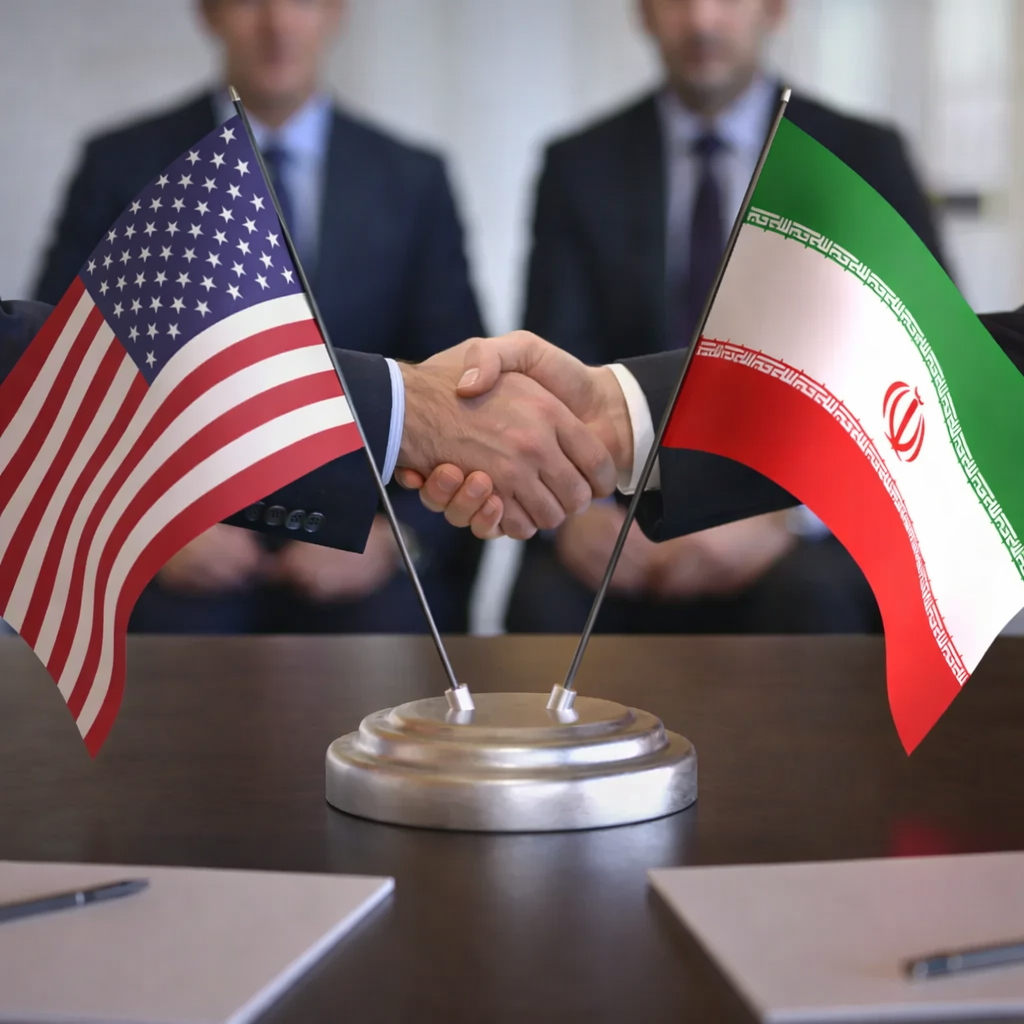
1. Military confrontations between the United States and Israel on one side and Iran on the other have transitioned into a phase of political negotiations. Three rounds of intensive talks were held between the US and Iranian sides in Pakistan on Saturday, 11 April. US Vice President J.D. Vance, who headed his country’s delegation, subsequently announced that no agreement had been reached despite 21 hours of negotiations. Both delegations then returned to their respective capitals, with the US delegation departing for Washington and the Iranian delegation returning to Tehran.
2. In order to assess the current situation objectively, three key observations should be noted:
• First observation: The commencement of negotiations does not, under any circumstances, indicate that a political settlement is imminent. The overall situation has remained tense, particularly on the Lebanese front, despite a gradual easing of tensions and an agreement to begin Israeli-Lebanese negotiations in Washington in the middle of the current week. It was also evident that all parties adopted more rigid and publicly assertive positions prior to the start of negotiations.
• Second observation: The negotiations were highly complex compared to previous rounds, owing to two principal factors. The first is the deep mutual distrust among all negotiating parties, which will continue to cast a shadow over the negotiating environment for a prolonged period, even in the event of an agreement. The second relates to the catastrophic consequences of the war, which have naturally driven the parties toward greater rigidity rather than flexibility, at least during the initial exploratory phase.
• Third observation: The publicly declared positions of the parties were significantly divergent on several issues, particularly with regard to uranium enrichment and the status of the Strait of Hormuz. Consequently, each party sought to leverage the negotiations to its advantage, making it necessary to anticipate negative scenarios before positive ones.
3. Despite the largely negative nature of these observations, the mere agreement of the parties to a ceasefire after 40 days of destructive conflict, followed by their willingness to engage in negotiations, and the actual commencement of the negotiating process—even if only for a limited number of hours—constitutes a positive development. This is particularly significant given that the adverse consequences of the war have not been confined to the direct parties or the region alone, but have affected the entire world, especially in the energy sector. Moreover, the high-level composition and intensity of both the US and Iranian delegations signal a clear intention to advance the negotiating process.
4. Regardless of the format of the negotiations held in Islamabad—whether direct or indirect—or their duration, there is a fundamental principle of considerable importance: the success of the negotiating process must be contingent upon the willingness of all parties, without exception, to demonstrate the degree of flexibility necessary to achieve, to the greatest extent possible, the interests of all sides. Each party must emerge with the sense that it has secured at least some of its demands, if not all. Conversely, if any negotiating party is guided solely by the pursuit of its own interests, then the negotiations will be doomed to failure from the outset.
5. In general, it must be asserted that any future agreement between Washington and Tehran should rest on a set of clear foundations, foremost among them Iran’s commitment to refrain from threatening or attacking its Gulf neighbors under any pretext. Iran should become a state that coexists in peace, security, and stability with its neighbors, like any nation seeking development and progress for its people. Accordingly, the Iranian leadership must abandon all policies that contribute to regional instability, as well as relinquish any hegemonic ambitions it is aware cannot be realized. This, in my view, constitutes the primary condition for closing the chapter on the recurrence of such wars.
6. Despite acknowledging the considerable challenges inherent in the negotiating process—which naturally opened the door to both failure and success—logic dictates that any opportunity to reach an agreement capable of laying the foundation for a new phase of regional stability following this war requires genuine political will from all parties. Negotiations must not serve as a temporary truce or a cover for ulterior motives. All those who have suffered the destructive consequences of the war must revise unrealistic and widely unacceptable positions and demonstrate a stronger commitment to ensuring that this war marks the end of such conflicts, rather than a tactical pause preceding further rounds.
7. There is little doubt that the conclusion of the US-Iran negotiations after only one day in Islamabad underscores the persistence of significant divergences between the two sides on two principal issues: the nuclear file and the status of the Strait of Hormuz. This divergence led the negotiations to reach an impasse, even if only temporarily. Accordingly, in our assessment, the positions of the parties in the coming period are likely to evolve within the following framework:
At the US Level
• The United States is likely to escalate its rhetoric and signal the possibility of a return to war, while refraining from direct military operations during the truce period, pending potential developments in the situation.
• In the coming days, US efforts will focus on seeking a peaceful resolution to the situation in the Strait of Hormuz, whether through mediation efforts or in coordination with the European side. Resolving this issue would likely be sufficient for the US President to extend the ceasefire for at least an additional two weeks.
• Washington will continue to assert that Iran’s commitment to not acquiring nuclear weapons constitutes a red line, one that must be treated with utmost seriousness. The United States is unlikely to accept any compromise on this matter, a position strongly stressed by the US Vice President during the negotiations.
• A return to war, particularly in relation to reopening the Strait of Hormuz, cannot be ruled out; however, this remains a last-resort option for Washington.
At the Iranian Level
• Iran is expected to examine all available options for resolving the Strait of Hormuz issue in a manner that preserves some of the gains it has achieved through its firm positions, particularly in material terms and in connection with reconstruction efforts, given that the Strait represents Tehran’s most significant leverage at present.
• Iran may demonstrate a degree of calculated flexibility on the nuclear file, provided this does not deprive it of the right to enrichment, even for peaceful purposes, and contingent upon a satisfactory resolution of the Strait of Hormuz issue that serves its interests, alongside the lifting of sanctions.
• Tehran is likely to reaffirm its readiness to return to negotiations, on the condition of greater flexibility on the US side, while simultaneously maintaining preparedness for any potential military confrontation, whether with Washington or Tel Aviv.
At the Pakistani Level
• Pakistan will emphasize that the negotiations have neither failed nor collapsed and will continue its efforts with all relevant parties to resume the negotiating process, leveraging its capacity to sustain communication channels.
• It will also assert the importance of maintaining the truce and avoiding a return to war, thereby enabling it to engage with all parties within a more favorable environment.
8. In this context, it is important to point to the US President’s statement that there is an opportunity to achieve lasting peace in the Middle East. Here, I address a message to President Trump, emphasizing that the durable peace he seeks in the region cannot be realized without the establishment of an independent Palestinian state, even if the Iranian issue is resolved. This necessitates the immediate initiation, in parallel with these negotiations, of further efforts to implement the second phase of the 20-point plan for the Gaza Strip, and to move as swiftly as possible toward a political settlement of the Palestinian question.
9. In the same vein, Israel must recognize that its claims of having reshaped the Middle East will not lead it to the peace it seeks. It must also understand that it is not above the law, despite its repeated violations. One must therefore ask Israeli leaders whether this envisioned transformation of the region entails the continued pursuit of policies of occupation, destruction, and targeted killings in the Gaza Strip, the West Bank, Syria, Lebanon, and elsewhere.
10. In my view, this flawed approach pursued by Israel will ultimately exact a heavy price, as it will find Arab doors closed to it in the period ahead, regardless of the level of US support. These doors will only reopen if Israel withdraws from Arab territories, enables the establishment of a Palestinian state, and fully abandons the notion that force can bring about peace. The continued reliance on force will only generate further hostility, instability, recurring conflicts, economic crises, and will ultimately undermine Israel’s stated objective of integration into the regional system. Attention must also be given to the outcomes of the Israeli-Lebanese negotiations and what they may achieve, bearing in mind that these talks are likely to be highly complex and difficult, particularly with regard to the issue of disarming Hezbollah.