






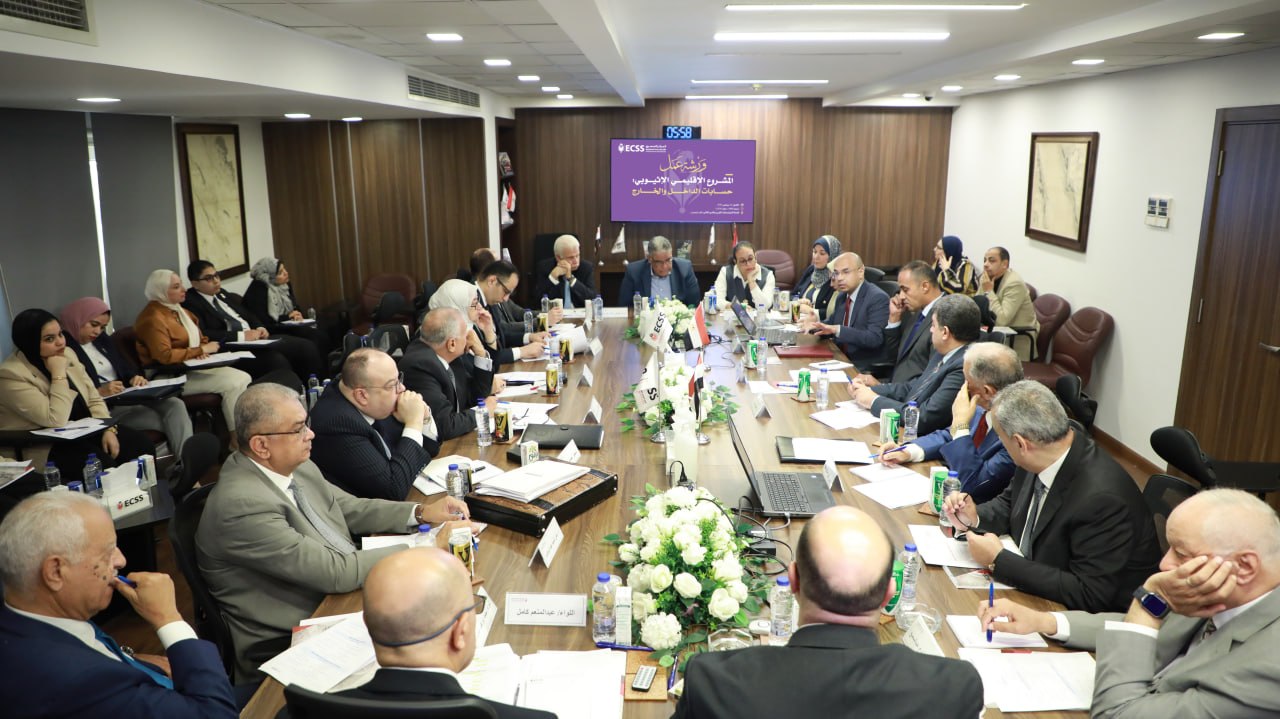
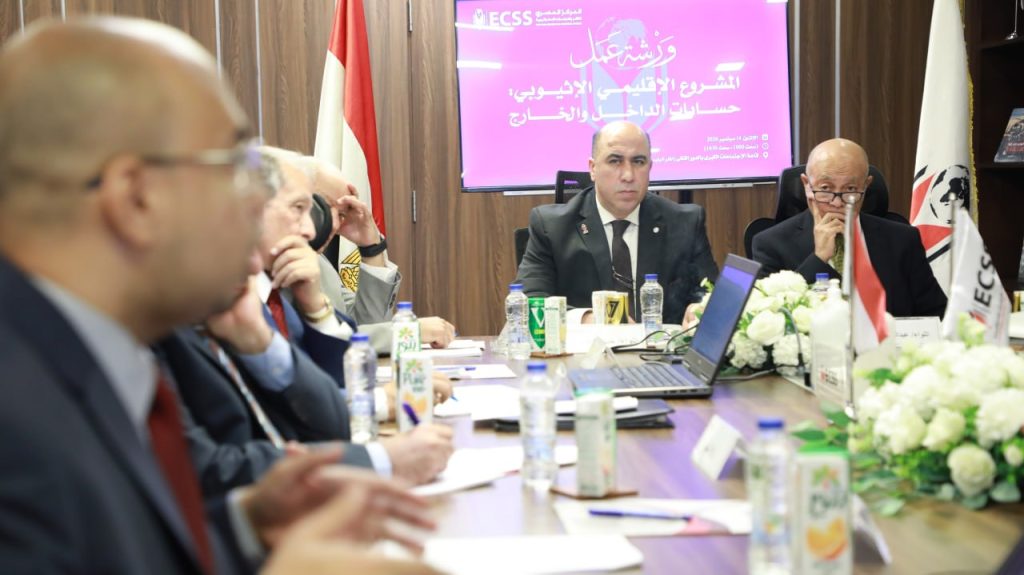
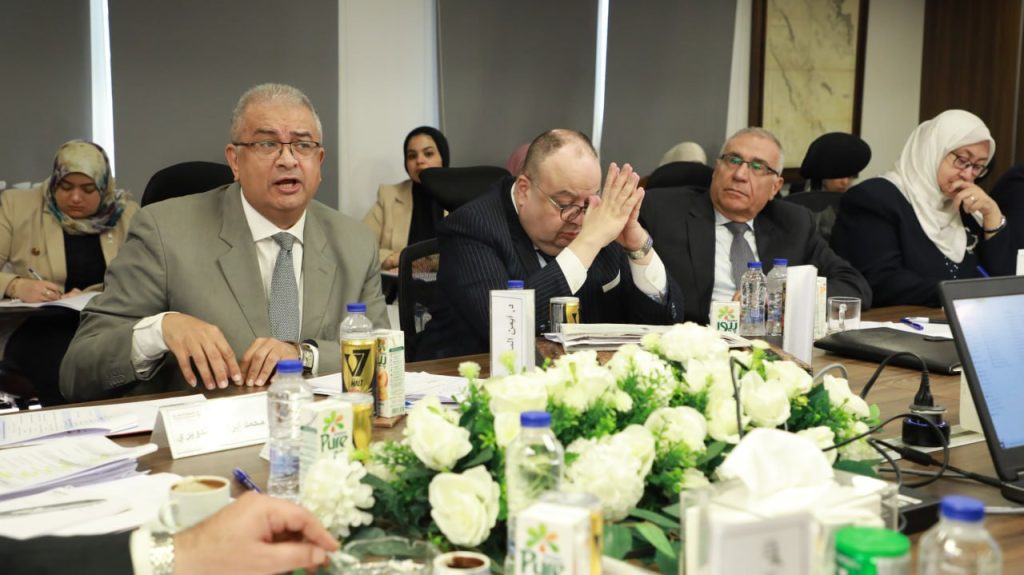
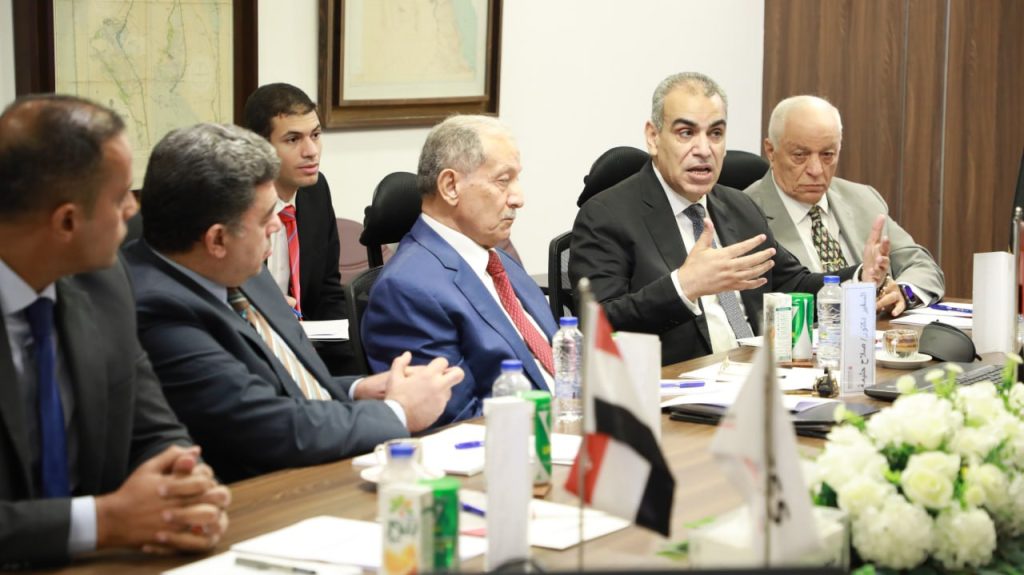
The Egyptian Center for Strategic Studies (ECSS) held an expanded workshop on September 14, 2026, titled “Ethiopia’s Regional Project: Domestic and External Calculations,” as part of the Center’s 2026-2027 program of research and academic events.
The workshop aimed to discuss and analyze the nature of Ethiopia’s domestic situation from political and security perspectives; monitor and assess the directions of Ethiopian activity in the Nile Basin and Red Sea spheres; and examine the implications of these developments for Egyptian national security, in addition to the external roles supporting Ethiopia’s regional project.
The workshop brought together a number of experts, specialists, and researchers on African affairs. Participants included Ambassador Dr. Mohamed Badr El-Din Zayed, former head of the State Information Service and former Assistant Minister of Foreign Affairs for Neighboring Countries; Ambassador Hossam Issa, former Assistant Minister of Foreign Affairs and former Egyptian Ambassador to Sudan; Ambassador Dr. Salah Halima, former Assistant Minister of Foreign Affairs; Dr. Ayman El-Sayed Abdel-Wahab, Director of Al-Ahram Center for Political and Strategic Studies; Major General Dr. Ahmed El-Nahhas, an expert on national security and strategic affairs; Ahmed Embaby, Editor-in-Chief of Rose El-Youssef magazine and portal; and Mostafa Ahmadi, former media adviser at the Egyptian Embassy in Ethiopia.
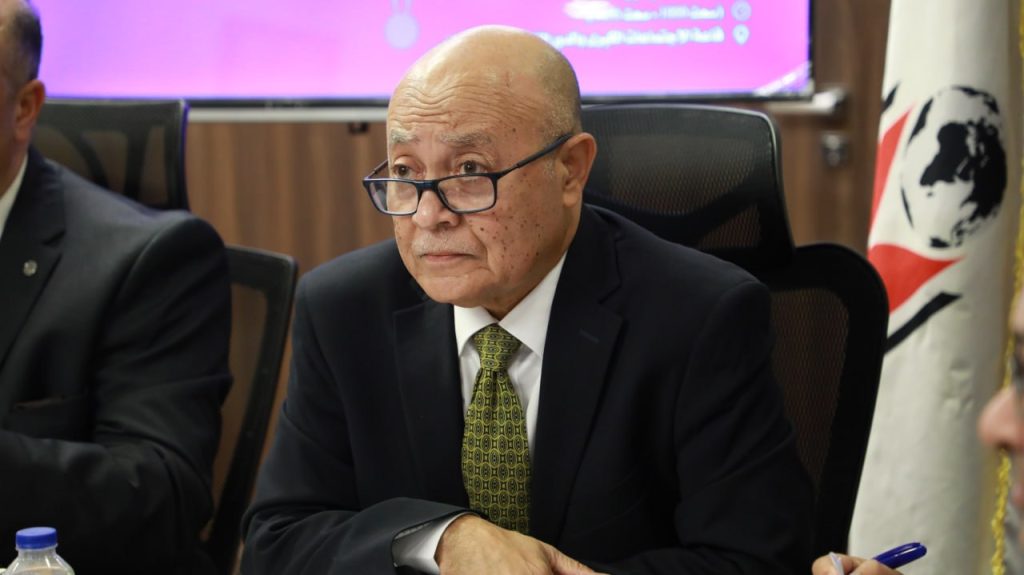
The workshop was conceived around an understanding of the Ethiopian situation as a model that combines internal fragility and divisions with an active regional project. Accordingly, the workshop sought to explain this paradox and examine how Ethiopia, despite its domestic challenges, has managed to advance its regional project, as well as the extent to which the roles of external powers have contributed to supporting its objectives and ambitions, ultimately exploring how this project and its potential implications for Egypt’s interests and national security can be addressed.
Against this backdrop, the workshop focused on the transformations Ethiopia has undergone during the eight years since Abiy Ahmed assumed the premiership in 2018, which have revealed a clear divergence between domestic instability and expanding regional activity. At the domestic level, Ethiopia faces political and security challenges related to managing ethnic diversity and rebuilding its monopoly over armed force amid the persistence of conflict hotspots, while leveraging its demographic and geographic weight to strengthen its position in the Nile Basin and Red Sea.
This paradox points to the simultaneous intensification of domestic pressures and expansion of external activity, which can be interpreted as an attempt to “move forward” by acquiring new sources of power and expanding regional influence in ways that could help strengthen the state’s position domestically. This comes as Abiy Ahmed prepares to assume the premiership for another five-year term following the Prosperity Party’s victory in the parliamentary elections in early June 2026, raising questions about the direction of Ethiopian policy in the next phase and the extent to which its external moves are linked to domestic challenges.
The significance of studying Ethiopia’s activities extends beyond examining its domestic and external dimensions separately to understanding the interconnection between the two, particularly given the links between Ethiopian activity and issues affecting Egypt’s vital interests, foremost among them the Nile River’s water resources, the security of navigation in the Red Sea, and the future of the situation in Sudan. Accordingly, assessing Ethiopia’s domestic situation and its regional linkages, and gauging the potential implications for Egyptian interests and national security, are of particular importance.
The workshop was held as part of the Regional Studies Program at the Egyptian Center for Strategic Studies and was divided into three main sessions. The first, titled “Domestic Developments in Ethiopia,” featured discussions on shifts in the landscape of internal conflicts in Ethiopia; the country’s political future in light of the 2026 elections and the national dialogue; the growing role of Ethiopian diaspora communities; and an assessment of trends in Ethiopian public opinion.
The second session, titled “Ethiopian Foreign Policy in the Regional and International Arenas,” featured discussions on maritime access as a driver of Ethiopian foreign policy; continuity and change in Ethiopian foreign policy toward the Nile water issue; and Ethiopia’s involvement in conflicts in neighboring countries, with a focus on Sudan and Somalia.
The third session, titled “External Roles Supporting Ethiopia’s Regional Project,” featured discussions on Ethiopia’s relations with the United States, Europe, Russia, China, Israel, Arab countries; and Turkey.
Based on the papers presented and the substantive discussions among participants, the workshop reached a number of findings and conclusions. These included the assessment that Ethiopia’s activities in its regional neighborhood constitute one of the most significant sources of regional instability and contribute to the spillover of its domestic crises into neighboring countries, hindering the emergence of an effective regional security system and turning issues of integration and the shared use of resources into arenas for political competition.
Despite internal divisions and challenges to the stability of the political system, these conditions have not constrained Ethiopia’s ability to pursue its regional project. Rather, they have prompted it to intensify its activities across the Red Sea, Horn of Africa, and Nile Basin spheres, and to employ water, diplomacy, energy, economic, and security tools to expand its influence.
The pursuit of maritime access has been at the forefront of these efforts, generating tensions related to the sovereignty and territorial integrity of neighboring states, alongside Ethiopia’s negative role in drawing international and regional external actors into deeper engagement in the affairs of the Horn of Africa.