





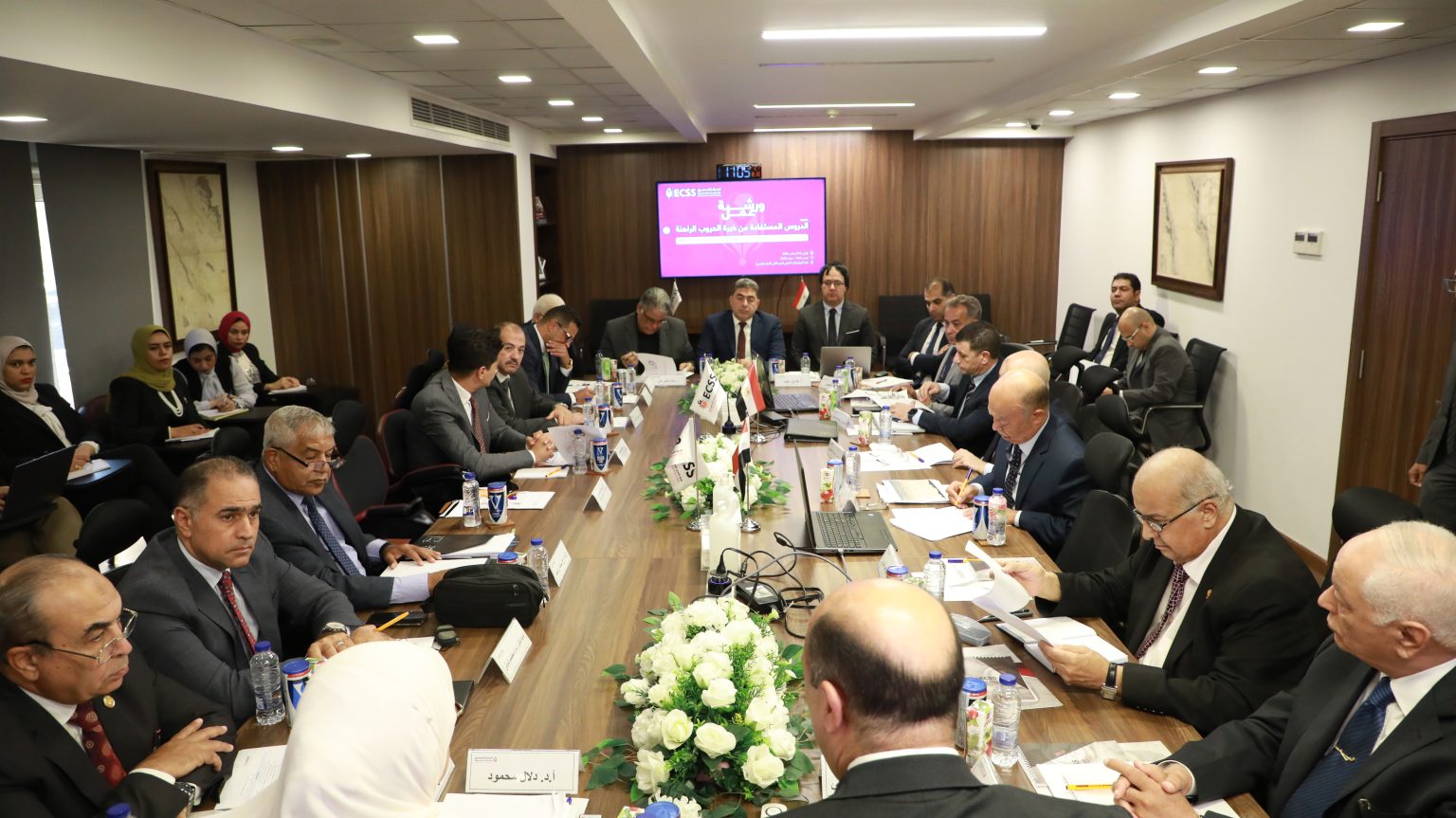
The Egyptian Center for Strategic Studies (ECSS) held an extensive workshop on Monday, August 10, 2026, on “Lessons Learned from Present-Day Wars” (the Russia-Ukraine war since 2022; the war in Gaza since 2023; and the Israeli-American wars with Iran since 2025).
The workshop was held as part of the Center’s 2026–2027 program of research and academic events. It aimed to examine the lessons that can be drawn from current wars, with a primary focus on the military dimension, and to identify the implications revealed by the course of these conflicts thus far.
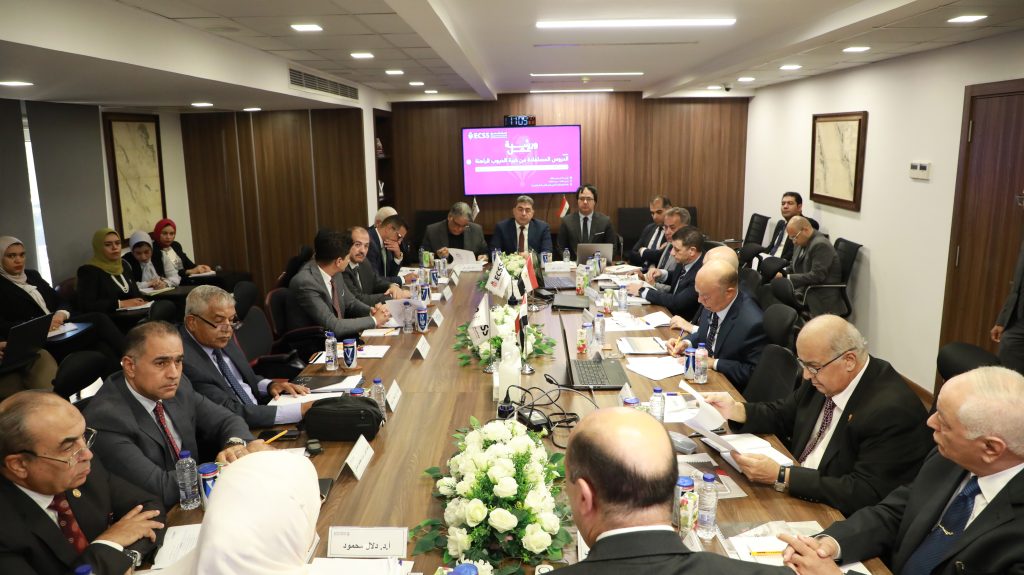
The workshop brought together a group of experts and specialists in military and strategic affairs, along with high-level representation from the Military Academy for Postgraduate and Strategic Studies, including Major General Dr. Mohamed Zaki El-Alfy, Major General Dr. Ashraf Fares, and Brigadier General Dr. Mourad Shawky, Director of the Armed Forces Center for Strategic Studies, as well as a number of representatives from relevant national entities.
The workshop examined the fundamental transformations taking place in the international and regional security environment amid the concurrent emergence of multiple wars and armed conflicts characterized by a high degree of complexity and interdependence, whether in terms of their parties, instruments, theaters, or repercussions extending beyond the immediate military battlefield.
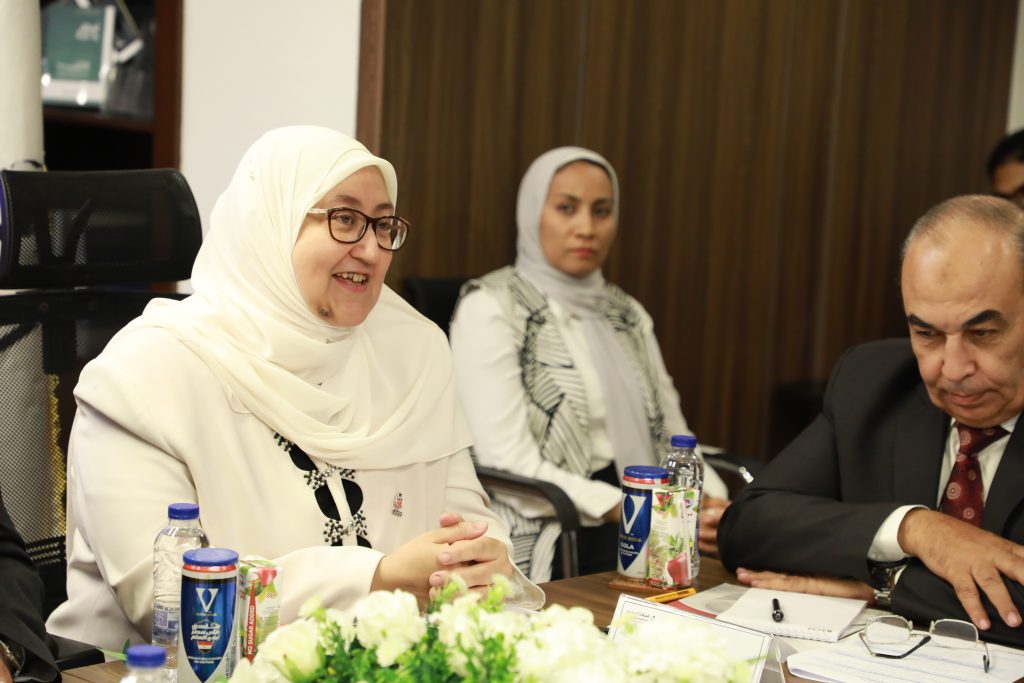
The Russia-Ukraine war, the war in the Gaza Strip, the rounds of war between Israel and the United States and Iran, and the protracted conventional and unconventional armed conflicts across the Middle East have demonstrated that contemporary warfare has entered a phase whose characteristics differ in many respects from traditional patterns of war.
The ongoing wars have also demonstrated that the international security environment is reshaping concepts that had remained established for decades. The boundaries between peace and war have become increasingly blurred, while strategic competition among major powers has become more closely intertwined with regional conflicts. At the same time, cyberspace, outer space, artificial intelligence, and unmanned capabilities have assumed growing importance as key domains of conflict.
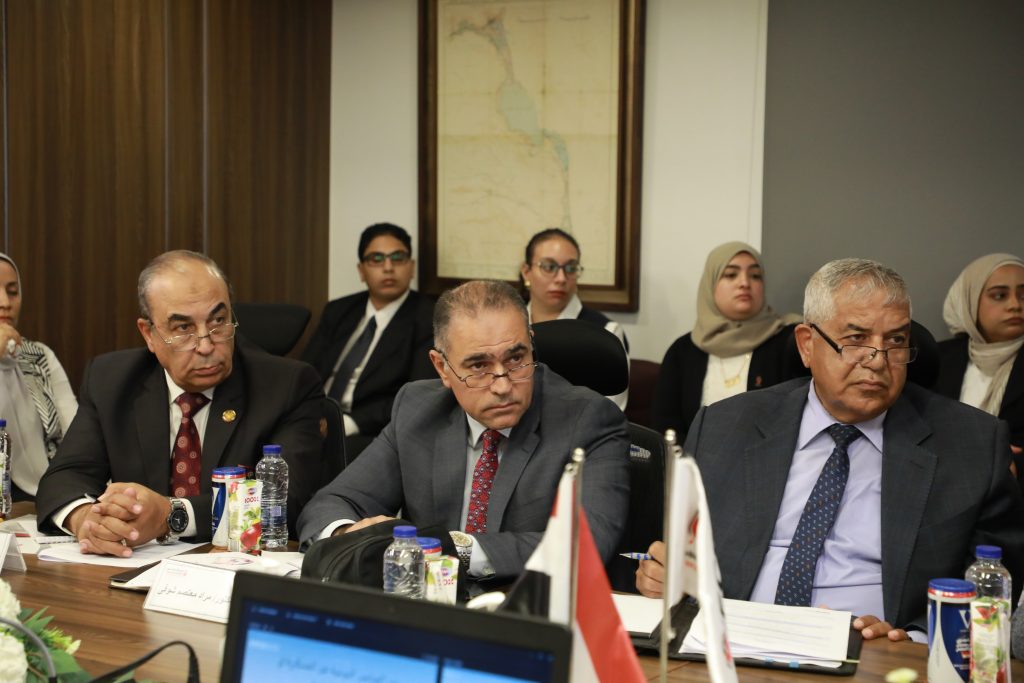
The study of contemporary wars is no longer confined to analyzing their causes or tracking developments on the battlefield. It now extends to drawing strategic, operational, and institutional lessons that can contribute to reassessing a range of concepts related to deterrence, early warning, military readiness, defense planning, building the state’s comprehensive capabilities, developing defense policies, and strengthening national defense preparedness plans to confront emerging patterns of future threats.
Against this backdrop, the workshop was held as part of the Security and Defense Program at the ECSS. It was organized into three main sessions. The first, titled “Transformations in the Nature of Present-Day Wars and the Changing Strategic Landscape,” featured discussions on changes and constants in current wars compared with previous wars, as well as the role of qualitative non-military factors — including geography, digital media, militias, and the civilian component — in present-day wars.
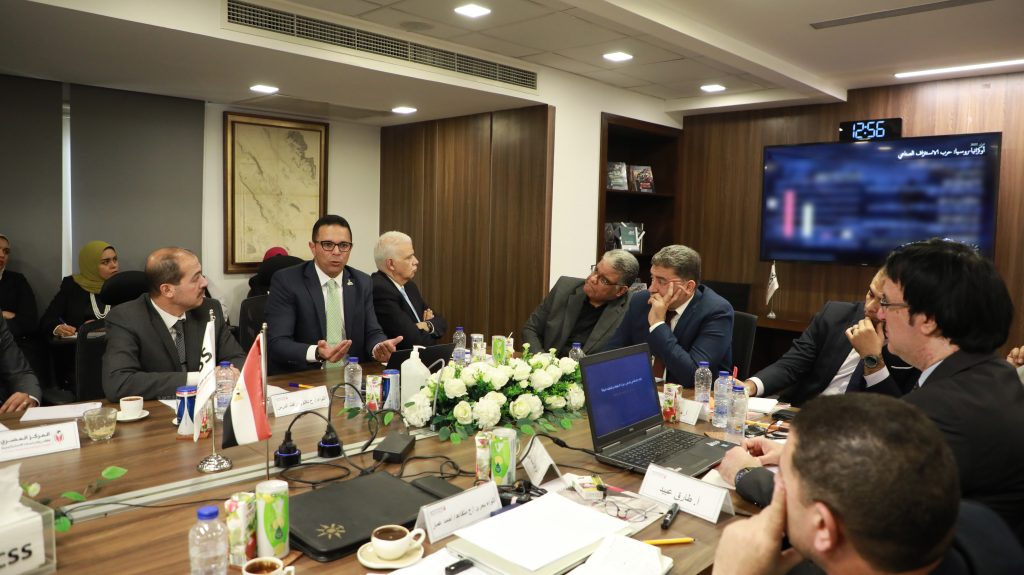
The second session, titled “Lessons Learned from Present-Day Wars in Military Operations,” focused on lessons learned at the level of the ground forces, air forces, drones and missile capabilities, and air defense.
The third session, also titled “Lessons Learned from Present-Day Wars in Military Operations,” addressed lessons learned at the level of naval forces, technological capabilities, and defense industries.
Building on the research papers presented and the substantive discussions among participants, the workshop produced a broad range of findings and conclusions. These included the strategic lessons that should be drawn from the experience of current wars at the military and strategic levels, as well as the extent to which these wars have demonstrated changes in the conduct of military operations compared with previous wartime experience.
The workshop’s findings also underscored that present-day wars — the Russia-Ukraine war since 2022, the war in Gaza since 2023, and the Israeli-American wars with Iran since 2025 — are not isolated events. Rather, they represent indicators of broader shifts in the nature of power and conflict.
The workshop reviewed a number of concepts that warrant reassessment, as well as those that have remained constant, in addition to identifying a range of common lessons emerging from these wars and broader patterns that can inform the development of strategic thinking.
The workshop adopted the concept of “lessons learned” as a systematic process of analyzing practical experience with the aim of translating it into policies, principles, and procedures that can be examined and implemented.


