






How the Egyptian Armed Forces rebuilt themselves after the 1967 defeat.
Introduction
After Egypt took the firm decision to work on all fronts to “eliminate the consequences of Israeli aggression” and liberate all occupied Egyptian territory, its political and military leadership embarked on an arduous effort to re-equip the army’s various units following the 1967 defeat. This work proceeded under difficult domestic, regional and international conditions. It was governed by a fundamental requirement: re-equipping the armed forces had to advance alongside efforts to maintain stability on the home front, particularly in the economy, while simultaneously confronting Israeli violations on the battlefield.
These efforts represented an exemplary application of the concept of “grand strategy” outlined in Strategy by the renowned British military historian B. H. Liddell Hart. Its central premise is that the primary role of grand strategy is to “coordinate and direct all the resources of a nation, or group of nations, towards the attainment of the political object of the war”. This entails developing a nation’s economic resources and manpower to support its fighting forces, while organising the distribution of strength between the different military branches and between the armed services and industry, thereby strengthening morale and popular resolve. In other words, wartime efforts must extend beyond the narrow objectives of military operations to take full account of the conditions and goals sought for the post-war period.
The General Situation Immediately after the Defeat
The appointment of General Mohamed Fawzi as commander-in-chief of the armed forces, succeeding Field Marshal Abdel-Hakim Amer, marked the first step towards rebuilding the Egyptian army’s command structure after the 1967 defeat. The new appointments included Lieutenant General Abdel-Moneim Riad as chief of staff, Air Marshal Madkour Abul-Ezz as commander of the air force, and Lieutenant General Salah Mohsen as assistant for training affairs. At a meeting between Fawzi and President Gamal Abdel-Nasser on 11 June 1967, losses of weapons and equipment in the ground forces, air force and air defence were estimated at approximately 85 per cent, while the navy had emerged relatively unscathed. Replacement efforts began immediately with the arrival of around 200 fighter aircraft, including 40 supplied by Algeria and the remainder by the Soviet Union, in addition to 51 Sukhoi Su-7 bombers.
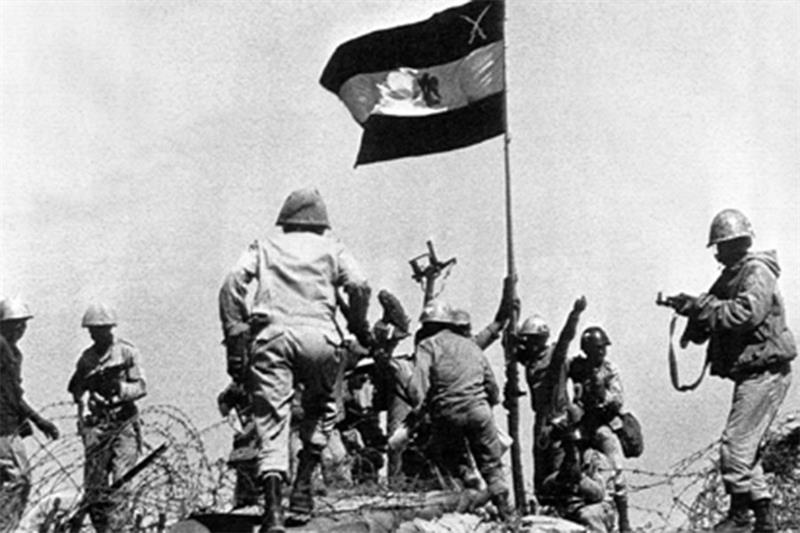
To reconstitute Egyptian formations, Fawzi called on armed forces personnel who had returned from Sinai to regroup at designated locations. The aim was to rebuild the main combat divisions: the 2nd, 3rd and 6th Infantry Divisions and the 4th Armoured Division. The immediate objective was to establish a defensive line west of the Suez Canal. This was the first step in a longer process set out by President Gamal Abdel-Nasser, who stipulated that preparations for the battle to liberate the occupied territories should be completed within no more than three years. The aim was to prevent Israel from taking measures that would alter Sinai’s identity and demographic composition in ways that could affect its future as Egyptian territory.

Laying the Foundations for Arms Cooperation with Moscow
The Soviet Union was Egypt’s principal source of armaments during this period. An airlift and sealift began on 9 June 1967, comprising 550 flights and 150 sea voyages that transported 48,000 tonnes of equipment. Five summit meetings between 1967 and 1970 consolidated this cooperation. They began with a swift response to Egyptian requests, including the provision of 40 MiG-21 aircraft and 1,200 advisers, followed by a $200 million arms agreement and an increase in the number of advisers. Subsequent commitments covered pilot training and the delivery of SA-3 missiles. These were followed by the largest agreement up to that point, which included 32 SA-3 battalions, 85 MiG-21 aircraft and 50 Sukhoi Su-9 bombers. The meetings culminated in an agreement covering electronic warfare equipment, an SA-6 brigade, MiG-25 aircraft, frigates and crossing equipment. Cooperation also extended to Yugoslavia, East Germany and Czechoslovakia. Further agreements concluded during the tenures of Lieutenant General Mohamed Ahmed Sadek and Lieutenant General Ahmed Ismail Ali included T-62 tanks, BMP-1 infantry fighting vehicles, Scud and SA-6 missiles, and Sukhoi and MiG-23 aircraft.

Reorganising the Command and Administrative Structure of the Egyptian Armed Forces
Egypt’s strategy in this area rested on four parallel tasks: regulating relations between the political and military leadership; improving combat capability through periodic assessments; drawing up plans for liberation; and preparing the theatre of operations and the home front. Law No. 4 of 1968 was enacted as the first binding legislation governing defence and command and control. It affirmed the president’s authority as supreme commander, prevented overlapping authority and established the principle of collective decision-making. The top level of the General Command was unified through the abolition of the offices of the Supreme Command and the chief of staff. Large numbers of staff officers were assigned to the various departments, and responsibilities were defined for service commanders and the departments responsible for operations, organization, armament, training, inspection, supply, and technical and financial affairs.
The Military Engineers Department bore the greatest share of the work involved in preparing the theatre of operations. It designed the “Egyptian aircraft shelter” for the air force, capable of withstanding a 500-pound bomb. More than 500 shelters were built, alongside underground fortifications, new runways and fortified storage facilities. Air defence positions were prepared in just one month through a three-shift working system, with the construction of 300 concrete shelters, 150 primary fortified emplacements and an equal number of alternative emplacements, as well as decoy positions. Along the front, new water pipelines were laid, oil pipelines were converted to carry water, railway services were restored, and strategic storage facilities, bridges and a coaxial communications cable were installed. Eighty bridging and ferry units were also provided for the crossing, while high-pressure water pumps were developed to open breaches in the sand embankment.

Developing the Human Element within Egypt’s Military Establishment
By mid-1969, the balance had begun to shift gradually in Egypt’s favour as the Israeli army settled into its positions and began sustaining daily losses, while the revolutions in Sudan and Libya strengthened Egypt’s strategic depth. Training centres and military colleges were relocated to Upper Egypt, Sudan and Libya, and naval vessels not involved in operations were deployed to Libyan and Sudanese ports. A fundamental change was introduced to the conscription system by raising the proportion of university graduates and holders of higher qualifications to between 65 and 70 per cent of conscripts, compared with approximately three per cent previously. This brought a qualitative improvement in the operation of complex systems. Training received the highest priority under direct field supervision, including live firing within the front-line area. Ammunition and fuel consumption increased more than twentyfold, while flying hours and time at sea tripled. Crossing the canal became a compulsory, repeatedly practised exercise that soldiers called “crossing drill”, eventually performing it blindfolded. Field exercises increased to approximately 400 annually at divisional level. Pilot-training capacity was expanded to produce between 300 and 400 graduates a year, additional training centres were established for air defence and the navy, and a People’s Army was formed in mid-1968 from residents to protect approximately 4,000 vital installations.
In training for the October War, Egyptian armoured units avoided concentrating on direct “tank-against-tank” engagements. Instead, preparations focused on employing Egyptian tanks as anti-tank artillery in static positions. Infantry forces were equipped with Malyutka missiles with a range of 4,000 metres, recoilless rifles and RPG-7 launchers. A strategy of “tank-hunting ambushes” was developed by deploying infantry teams armed with these missiles on the flanks of advancing Israeli armour. The Military Research Department also developed indigenous innovations, including modifications to aircraft to increase their range and payload, and improvements to crossing equipment.

Rebuilding Egyptian Air Defence
Approximate deployment locations of Egyptian air defences on 5 October 1973.
The Air Defence Forces were established as an independent fourth service on 23 June 1969 under Major General Mohamed Ali Fahmi. Previously, air defence had been part of the artillery and had suffered losses of 85 per cent. The new strategy set the objective of “denying the enemy air superiority” through a network capable of engaging targets approaching from multiple directions and at low altitude, while adapting to electronic jamming. This required integrated radar coverage, a balance between quantity and quality, fortifications, camouflage and manoeuvre, a continuously functioning command centre, rapid logistical support and high standards of training.
By early 1973, Egypt’s missile wall had reached its final configuration, with 38 battalions deployed in overlapping, integrated lines of standard and modified SA-2 systems and SA-3 systems. These provided coverage for both the Second and Third Armies, from Lake Manzala to Mount Ataka, with shoulder-fired SA-7 systems reinforcing the flanks against low-altitude attacks. The systems included SA-2 missiles for high-altitude targets at between three and 22 kilometres, SA-3 missiles for medium- and low-altitude targets, mobile SA-6 systems to accompany ground forces, shoulder-fired SA-7 missiles, and Shilka anti-aircraft guns. Integrated networks compensated for limitations in engaging more than one target simultaneously.
The construction of this air defence network embodied Egyptian ingenuity, as an effective system was built progressively while fighting continued against the superior Israeli air force. The strategy relied on continuously studying the adversary’s methods and identifying its weaknesses; integrating different systems; combining flexibility and mobility with deception, camouflage and changes of position; adapting to new weapons and electronic jamming; and intensive personnel training. This enabled the Air Defence Forces to thwart every attempt to halt the network’s construction and contribute to victory.


Rebuilding the Egyptian Air Force
The Egyptian Air Force lost approximately 85 per cent of its strike capability on 5 June 1967 and immediately began repairing its airfields. Egypt’s political leadership submitted a direct request to the Soviet Union to replace the lost aircraft. The Soviets agreed and launched Operation Caucasus, mounting a major airlift involving 200 Antonov An-12 transport aircraft to deliver fighters for assembly in Egypt. However, they refused to supply Egypt with any medium- or long-range bombers, limiting their assistance to interceptor aircraft and advisers. They subsequently sent six MiG-21 squadrons with their Russian pilots, alongside various reconnaissance aircraft.
The Egyptian Air Force command set four principal objectives. The first was to restore morale rapidly through early attacks on enemy positions east of the canal, during which three Israeli fighters were shot down. The second was to improve defensive deployment methods through extended operational hours, followed by arrangements under which bases alternated in providing air cover to enable combat training. The third was to revise tactics in favour of swift, low-altitude attacks below 30 metres, approaching from multiple directions and targeting radars. The fourth was to adapt equipment, including fitting more accurate British cameras to Su-7 aircraft and increasing their payload of unguided rockets and aerial bombs.

The Egyptian Navy and the Revision of Its Strategic Approach
The plan to reorganise the armed forces after 1967 included limited but fundamental changes to the navy, which had not suffered losses on the scale experienced by the other services. These changes included transferring the coastal artillery command and units from the Field Artillery Department to the Naval Command. This unified their missions and made coastal artillery an integral branch supporting the navy’s duties. The Naval Command assumed responsibility for drawing up training plans, developing weapons and equipment, and involving these units in joint operations. To address shortages in maritime reconnaissance equipment, radar detection systems and anti-aircraft weapons, earlier Soviet contracts worth approximately EGP 50 million, originally intended for the supply of new vessels, were revised. The funds were redirected towards the equipment and assistance needed to improve the performance of existing vessels without increasing their number.
In terms of armament, the Egyptian Navy before 1967 suffered from an imbalance in its combat capabilities. Destroyers and frigates from various countries of origin predominated, alongside numerous Eastern-bloc submarines with limited capabilities. Fast gunboats were absent, and the fleet relied on a limited number of torpedo boats and minesweepers. Since comprehensive modernisation would have required more time than was available before the battle for liberation, efforts focused on improving personnel’s combat proficiency and maintaining and upgrading existing equipment. These efforts were supported by technical and training assistance from the Soviet Fifth Naval Squadron in the Mediterranean, the construction of a dry dock at Alexandria Port, and the arrival of specialised repair teams. Together, these measures made a decisive contribution to improving the fleet’s readiness.
The period from June 1967 to October 1973 represented one of the most comprehensive efforts to rebuild military power in modern Egyptian military history. Within six years, the armed forces moved from a condition marked by extensive losses, a dysfunctional command structure, equipment shortages and inadequate air defence to a military institution that had rebuilt its command structures, upgraded its weapons systems, improved its training, reorganised its manpower, prepared its theatre of operations and strengthened its capacity for joint action across services and combat arms.
Egypt’s rearmament plan after the 1967 defeat demonstrated that the value of a weapons system is determined not only by its original technical specifications, but also by the user’s ability to understand it and adapt it to the requirements of battle. Modern equipment alone cannot transform combat capability. Egypt’s decision to develop its personnel alongside rearmament was therefore decisive in achieving impressive results in 1973. The experience also showed that rebuilding command and control after military defeat must proceed in parallel with restoring firepower. Eliminating overlapping command authority, defining responsibilities, regulating relations between the political and military leadership, and integrating the services into the General Command’s structures were all measures intended to ensure that new resources reached the units and were used in a coordinated manner. Military power therefore derives not from weapons alone, but from the institution capable of managing them.
The period preceding the October War was also distinguished by a redefinition of the purpose of training. The objective extended beyond teaching individuals how to use their weapons to developing their ability to carry out missions under the conditions in which war was expected to be fought. Canal-crossing drills, joint manoeuvres, live firing, rehearsals of war plans and training on terrain resembling the theatre of operations were therefore repeated extensively. This change helped narrow the gap between training and actual combat. Egypt’s leadership also succeeded in turning the lessons of successive Israeli attacks into a continuous process of improving its air defence system. It moved from linear to overlapping defence, from static deployment to mobility, and from reliance on individual systems to the integration of missiles, artillery, radar, camouflage and deception. Air defence thus became a clear example of the military institution’s ability to learn from its adversary and adjust its doctrine while the conflict was still under way.
More fundamentally, this experience did not rest on the assumption that Israeli superiority could be eliminated simply by acquiring comparable equipment. It rested on redefining the concept of Egyptian military power. The superiority sought became superiority in the ability to employ available resources, absorb and adapt technology, learn from the adversary, and conduct battle within a defined operational framework. The weaknesses exposed by the 1967 war were consequently translated into reconstruction programmes, while the combat experience of the War of Attrition became a continuous source of learning and improvement.
The broader strategic lesson of Egypt’s experience between 1967 and 1973 is that rebuilding military power after defeat cannot be achieved by reproducing the army that lost the war. It requires building an army that learns from the causes of defeat and changes its organization, doctrine, training, armament and methods of employing force. This is precisely what gave Egypt’s reconstruction effort its strategic significance. It was more than the restoration of what the armed forces had lost in June 1967: it was a process of institutional, doctrinal and operational transformation that prepared the military to fight a different war in October 1973.
Finally, the experience of rebuilding the Egyptian Armed Forces demonstrates that time itself can become a strategic resource when used for learning, training and gradual preparation. Those six years were invested in reorganizing the institution, replacing equipment, building air defence, preparing pilots, training ground forces, developing crossing capabilities, improving command and control, and testing tactics under the conditions of the War of Attrition. The October victory was therefore not the product of a single military decision on the eve of war. It was the result of a long, cumulative process of institutional learning, reconstruction and strategic adaptation that began immediately after the June 1967 defeat.
Published in cooperation between the Egyptian Center for Strategic Studies, Al-Ahram Weekly, and the English-language portal Ahram Online