






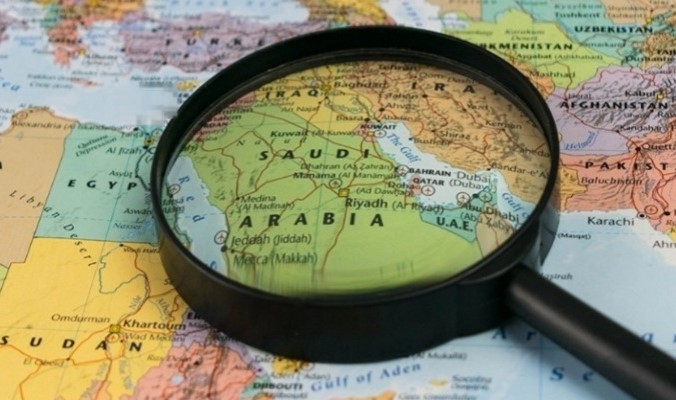
The most pressing question in the Middle East is no longer: What is happening now? Rather, it has become: What is emerging from beneath the ruins of the regional order that has prevailed for decades? The developments unfolding across the region are no longer merely successive episodes of conflict and crisis. At their core, they represent a historic transition that is redefining the region as a whole—geographically, politically, economically, and in terms of security.
The wars that have stretched from Iraq to Syria and from Libya to Yemen, followed by successive confrontations between Israel and Iran, together with the shifts in the positions of major powers, have not merely created new realities on the ground. They have also set in motion a comprehensive reassessment of the assumptions that have governed the Middle East since the end of the Cold War. The region has entered a moment in which the rules of the old order are receding faster than a new order can take shape, accounting for the strategic fluidity that characterizes the Middle East today.
The “day after,” therefore, should not be reduced to the end of a war, the signing of an agreement, or a change in political regime. Rather, it represents a longer and more complex historical phase—one in which balances of power, patterns of alliances, security priorities, and the rules governing influence are being redefined, along with the very concept of the state and its role within the region.
The most consequential feature of this moment is that the old order is no longer capable of explaining the realities on the ground, while the rules of the emerging order have yet to crystallize. Between these two landscapes, regional states are maneuvering not merely to manage their crises, but to reposition themselves before the new map of power takes definitive shape.
From this perspective, the notion of “reinventing the Middle East” does not imply redrawing borders or replacing one alliance with another. Rather, it refers to rebuilding the “strategic environment” that will shape the region for decades to come. Nearly every traditional component of power is being reassessed: from the nature of military deterrence to the role of economics; from the centrality of oil to the importance of technology; from rigid alliances to flexible partnerships; and from the major powers’ monopoly over shaping balances of power to the growing capacity of regional powers to influence the course of events.
Perhaps the most striking paradox is that the Middle East is no longer merely an arena for competition among international powers; it has become one of the arenas through which the international order itself is being reshaped. Maritime corridors, supply chains, energy security, advanced technology, artificial intelligence, semiconductors, and major ports have all become components of the equation of influence. Those who control them possess a greater capacity to shape the balance of power both within the region and across the wider world.
The real question, therefore, is no longer: Who possesses the greatest power? Rather: Who has the capacity to generate power?
Herein lies the “central thesis” of this article. Power in the Middle East is no longer measured solely by the size of armies or military arsenals, nor by the scale of natural resources. Rather, it is measured by the ability of a state or regional actor to convert its military, economic, technological, diplomatic, and societal resources into sustainable political influence—an influence through which it can shape the behavior of others and participate in defining the rules of the emerging regional order. This marks a shift from merely possessing the components of power to being able to generate and deploy power effectively. It is this gap that, in the years ahead, will distinguish the states that lead the region from those that merely adapt to realities shaped by others.
Viewed through this lens, the reinvention of the Middle East is neither an exclusively American project nor a unilateral Israeli, Iranian, or Turkish undertaking. Nor is it the direct product of understandings among the major powers. Rather, it is the outcome of a complex interplay among four interconnected levels: shifts in the structure of the international order; the rise of regional powers exercising greater autonomy in their decision-making; the technological and economic revolution redefining the sources of influence; and, finally, profound transformations in the very concept of security. The region’s future will therefore not be shaped by any single power, but by the ability of different actors to navigate this complex interplay and translate it into new balances of power.
It is precisely from this perspective that current developments can be understood as the beginning of a phase unlike any that preceded it—a phase in which the old order is ending before its alternative has succeeded in establishing its own rules, leaving the entire region engaged in an “open-ended negotiation” over its political, economic, and security future.
First: The Collapse of Long-Held Assumptions: Why Has the Old Middle East Come to an End?
Regional orders do not usually collapse as a result of a political decision or formal declaration. Rather, their decline begins when the rules on which they were founded lose their ability to explain reality or shape its trajectory. This is precisely what is happening in the Middle East today. The region is not merely experiencing a succession of wars and crises; it is undergoing a gradual erosion of the foundations that have governed its balances of power over the past five decades, at a time when the rules of an alternative order capable of commanding a comparable degree of stability or legitimacy have yet to crystallize.
Since the late 1970s, the Middle East has rested on a set of assumptions that, for many years, appeared to be immutable realities: an almost unchallenged US presence as the principal guarantor of the region’s balance of power; the centrality of the Palestinian cause in shaping political alignments; oil as the primary source of the region’s strategic importance; the dominance of conventional military power in deterrence calculations; and the primacy of the nation-state in the security and political spheres.
Over the past two decades, however, most of these assumptions have eroded simultaneously. The protracted wars in Iraq, Syria, Libya, and Yemen have exposed the limits of military power as an instrument for rebuilding states and demonstrated that regime change does not necessarily produce stability. They have also shown that external intervention, regardless of the capabilities brought to bear, cannot by itself re-engineer societies or impose viable political systems.
At the same time, the US presence in the Middle East is no longer governed by the logic of direct hegemony that characterized the post-Cold War era. Instead, Washington has gradually shifted towards managing regional balances and sharing burdens with regional allies, as its attention has increasingly turned to great-power competition in Asia and the Indo-Pacific. Rather than creating a strategic vacuum in the conventional sense, this shift has opened greater room for other regional and international powers to expand their scope for maneuver, each according to its own calculations and priorities.
Against this backdrop, regional powers have emerged with greater ambition and confidence in their ability to shape their surrounding strategic environment. Egypt, Saudi Arabia, Turkey, Iran, the UAE, and Israel no longer approach the region as an arena in which they merely absorb the influence of major powers, but as a space in which they can redefine their own roles and interests, despite differences in their respective instruments and visions of the desired regional order. Consequently, competition is no longer structured around two rigid blocs, but around multiple regional projects that sometimes converge and at other times collide.
Meanwhile, the nature of power itself has changed. Geopolitics is no longer the sole determinant of a state’s standing; geoeconomics has emerged alongside it as one of the most important sources of influence. Ports, maritime corridors, energy routes, supply chains, and land and maritime connectivity projects have become no less significant than military bases or defense alliances. Competition over the Middle East, therefore, is no longer confined to control over territory, but increasingly encompasses control over the flows of global trade, the security of strategic corridors, and the movement of energy, data, and technology.
From this perspective, the region can be said to be transitioning from a geopolitical Middle East to a geoeconomic Middle East, in which cross-border initiatives, regional connectivity projects, and competition over ports and logistics hubs are gaining importance as instruments for generating influence and enhancing strategic standing, rather than merely as development projects.
In the same context, oil has lost its traditional position as the sole factor underpinning the region’s global significance. While it retains its strategic importance, advances in renewable energy, the digital economy, artificial intelligence, and advanced technology have redefined the sources of power, making knowledge and innovation no less important than natural resources. A state capable of developing and localizing technology has become better positioned to exert influence than one that relies solely on exporting raw materials, regardless of their value.
Another of the most profound transformations has been the rise of non-state actors, whether armed groups, transnational economic networks, major technology companies, or media and digital platforms whose influence can at times surpass that of some states. The state no longer enjoys the same monopoly over the instruments of power that it did in previous decades, adding an unprecedented degree of complexity to the regional environment.
Thus, the notion of a “new Middle East” does not imply a complete rupture with the past, but rather a transformation in the rules of the game themselves. The region is moving from an era defined by clear-cut binaries and relatively stable alliances towards one characterized by multiple centers of power, fluid alliances, interconnected interests, and the convergence of economics, technology, and security within a single strategic equation.
The question, therefore, is no longer: Who will fill the vacuum left by the old order? Rather: What kind of order is emerging from these transformations? Answering this question begins with recognizing that power in the Middle East is no longer measured by the possession of resources alone, but by the ability to convert those resources into sustainable political, economic, and strategic influence. This brings us to the concept that is most consequential for understanding the current phase: the capacity to generate power.
Second: The Capacity to Generate Power: The Concept That Will Shape the New Middle East
If the twentieth century was preoccupied with the question, “Who possesses power?”, the Middle East of the twenty-first century poses a different and more complex question: Who can generate power sustainably?
The transformations sweeping the region clearly demonstrate that possessing resources is no longer, in itself, a guarantee of influence or leverage. Modern history is replete with states that possessed immense natural wealth, large armies, or exceptional geographic advantages, yet failed to translate these assets into enduring political standing or a genuine capacity to shape their surrounding environment. Conversely, states with fewer resources have succeeded in asserting their presence because they have effectively harnessed what they possess, integrating economics, technology, diplomacy, and security within a coherent strategy.
It is here that the concept of the “capacity to generate power” emerges as a more precise measure for understanding the balance of power in the new Middle East. It refers to the ability of a state or regional actor to transform its material, human, and institutional resources into effective influence, enabling it to shape the behavior of others, participate in defining the rules of the regional order, and respond rapidly to shifts in the international environment.
The distinction between possessing power and generating it is akin to the distinction between possessing raw materials and having the capacity to transform them into value-added industries. Resources, however abundant, remain merely latent sources of power unless they are managed efficiently and translated into policies, institutions, alliances, and projects capable of advancing long-term strategic objectives.
In this context, military power has become only one component of comprehensive power, after having served for decades as its near-exclusive measure. Military deterrence remains indispensable, but it is no longer sufficient to generate influence or secure regional standing. The experience of recent years has demonstrated that armies may be capable of deciding battles, but cannot, on their own, build stability or secure legitimacy. The ongoing war against Iran has underscored a number of lessons in this regard.
Economic strength, innovative capacity, technological development, control over data, knowledge production, infrastructure development, the security of supply chains, and the management of ports and maritime corridors have therefore become instruments of power no less significant than aircraft and missiles. Active diplomacy, the ability to forge flexible alliances, manage crises, and formulate initiatives have likewise emerged as key sources of influence in the new regional order.
Generating power, therefore, is no longer a military endeavor, but a comprehensive process of national development that begins with the quality of education, the effectiveness of state institutions, the resilience of the economy, and society’s capacity for innovation, and extends well beyond the realm of foreign policy. A state that is unable to generate knowledge, develop its economy, or absorb technological transformations will gradually find itself excluded from the circles of influence, even if it possesses traditional attributes of power.
From this perspective, the real competition in the Middle East over the next two decades appears likely to revolve less around the balance of armaments and more around a race to build capabilities. The decisive measure will not be the number of tanks or the scale of defense spending, but the ability to develop a competitive economy, indigenous technological capabilities, qualified human capital, institutions capable of efficient decision-making, and alliances that afford the state greater room for maneuver in a changing international environment.
The states that lead the emerging regional order will therefore not necessarily be those endowed with the greatest resources, but those that succeed in transforming their resources into comprehensive power, that power into influence, and that influence into the ability to shape the rules of the regional game. It is through this lens that the ongoing shifts in the policies of most regional powers can be understood.
Economic diversification programs, investment in advanced technology, the expansion of defense industries, the development of logistics hubs, investment in artificial intelligence, and the advancement of digital infrastructure are not discrete development projects. Rather, they are components of a broader process aimed at generating power in its new form.
In this sense, the Middle East today is witnessing not merely a competition for influence, but a race to generate influence. This will be the defining distinction between states that participate in shaping the new regional order and those that find themselves compelled to adapt to an order shaped by others.
Third: Geoeconomics: Where the New Maps of Influence Are Being Drawn
If geopolitics provided the dominant framework for interpreting conflict in the twentieth century, the opening decades of the twenty-first century have witnessed the rise of what may be termed “geoeconomics” as a framework increasingly capable of explaining the shifting dynamics of power in the Middle East. Competition is no longer confined to control over territory; it now extends to control over the flows of global trade, the security of supply chains, the management of maritime corridors, and dominance over the infrastructure connecting markets and continents.
This helps explain why strategic waterways and maritime spaces such as the Strait of Hormuz, Bab Al-Mandab, the Suez Canal, the Red Sea, and the Arabian Gulf have become pivotal to the strategic calculations of regional and international powers. Their significance no longer derives solely from their geographic location, but from their role as arteries of the global economy, where any disruption has immediate repercussions for energy markets, trade flows, transportation costs, and global production chains.
In the same vein, ports are no longer merely service facilities; they have become instruments of political and strategic influence. A state that operates an advanced network of ports and logistics zones, while possessing the capacity to connect continents, wields influence extending well beyond its geographic boundaries. Regional and international powers are therefore competing to invest in ports, railway networks, industrial zones, and maritime and land connectivity projects, viewing them as investments in influence before they are investments in economic development.
The same applies to energy, which is undergoing an unprecedented process of redefinition. While oil and gas will remain central to the balance of power for the foreseeable future, the global transition towards clean energy, green hydrogen, and cross-border electricity transmission is opening new arenas of competition. The question is no longer: Who possesses the largest oil reserves? Rather: Who can lead the transformation of global energy markets and command the technologies associated with it?
At the same time, technology has moved to the heart of geopolitical competition. Artificial intelligence, cloud computing, cybersecurity, big data, and semiconductors are no longer merely economic sectors; they have become instruments for generating influence, sources of national power, and decisive factors in determining international standing. The most ambitious states are therefore investing in knowledge and innovation as a direct investment in national security.
The economy, therefore, is no longer a sphere separate from foreign policy; it has become one of its most important instruments. Trade agreements, cross-border investments, sovereign wealth funds, and major regional projects have come to perform roles once largely reserved for military alliances. The ability to attract capital, localize advanced industries, and integrate national economies into global trade networks has become an important measure of regional influence.
This transformation presents most countries in the region with a fundamental challenge: the transition from a rentier state to one that generates added value. Natural wealth, however abundant, is no longer sufficient to guarantee either standing or stability unless it is translated into a diversified economy, a robust industrial base, and competitive human capital. A state that merely consumes technology will remain dependent on those that produce it, while one that exports only raw materials will remain more vulnerable to fluctuations in global markets.
The real race in the Middle East, therefore, is no longer between those possessing the largest reserves of natural resources, but between those capable of building a knowledge economy, producing technology, and becoming regional hubs for trade, services, and innovation. This is the deeper meaning of the transition from an economy dependent on resources to one capable of generating power.
From this perspective, many of the major economic initiatives unfolding across the region can be understood not as discrete development projects, but as attempts at strategic repositioning within the emerging regional order. Competition over ports, economic corridors, industrial zones, data centres, and connectivity networks linking Asia, Europe, and Africa reflects a growing recognition that the maps of influence in the twenty-first century will not be drawn by military power alone, but also by trade flows, investment flows, and control over the critical nodes connecting the global economy.
Thus, the reinvention of the Middle East will not be achieved solely through a redistribution of military power, but also through a redistribution of centers of economic and technological gravity. It is precisely through this transformation that each state’s position within the emerging regional order will be determined, because the future will belong to those states that succeed in transforming geography into economic strength, economic strength into influence, and influence into a sustainable capacity to generate power.
Fourth: The Redistribution of Power: Who Will Lead the New Middle East?
If major transformations are redrawing the maps of influence, they are necessarily redistributing roles among the principal actors. Yet one of the most common errors in interpreting the Middle East is to assume that the decline of one power automatically entails the rise of another to take its place. The reality is more complex. Rather than gravitating towards a new center of hegemony, the region is moving towards multiple centers of influence, where competition coexists with cooperation and alliances shift according to interests more than ideological considerations.
The Middle East of the future, therefore, will not be a region led by a single power, but a network of regional powers with varying capabilities, each seeking to expand its sphere of influence through a range of economic, military, technological, and diplomatic instruments.
Within this context, Saudi Arabia is pursuing an ambitious project to redefine its position, moving from a state whose influence rests on its oil wealth and religious significance towards an economic, investment, and technological power seeking to establish itself as an influential financial and logistics hub in the global economy. This transformation reflects a recognition that future standing will not be built on natural resources alone, but on the ability to translate those resources into a productive and diversified economy.
Turkey, meanwhile, has spent the past two decades developing a model that combines military power, a defense industrial base, economic presence, and diplomatic activism, while capitalizing on its geographic position at the crossroads of Asia and Europe. Despite the domestic and regional challenges it faces, Turkey continues to view itself as a key actor in reshaping the regional balance of power.
Iran, for its part, enters this new phase facing a more complex equation than ever before. While it has, over many years, built a network of regional influence reliant on allies and non-state actors, recent developments, coupled with economic, military, and political pressures, are compelling it to reassess its instruments and priorities. The future of Iran’s regional role will depend on its ability to adapt to a regional environment that is gradually moving towards balances markedly different from those that prevailed over the past two decades.
Israel, despite retaining its military and technological superiority, faces a challenge no less consequential than those confronting its adversaries: translating military superiority into lasting political and regional stability. Recent developments have demonstrated that military power, however formidable, cannot by itself produce a stable environment or bring historical conflicts to an end. The future of Israel’s regional role will therefore depend on its ability to reconcile security imperatives with the requirements of a political settlement.
Within this shifting landscape, Egypt remains one of the principal pillars of regional balance, not only by virtue of its geographic position, demographic weight, and political history, but also because it lies at the intersection of the Middle East, Eastern Mediterranean, Red Sea, and African spheres. Yet preserving this position can no longer rest on historical legacy alone. The emerging regional order does not recognize inherited roles, but rather those that are continually renewed and reinforced.
Egypt’s strategic challenge, therefore, is not to reclaim its role across the region’s various arenas, as that role has persisted despite the circumstances the country has endured, including two revolutions and a war on terrorism. Rather, the challenge lies in developing the instruments of that role to keep pace with the transformations underway. Today, Egyptian power must complement its traditional strengths with new sources of capability: a competitive economy, advanced industry, digital transformation, scientific research, innovation, and the maximization of its geographic position as a global hub for navigation, trade, energy, and logistics.
Egyptian soft power, which for decades constituted one of the foremost sources of influence in the Arab world, likewise requires renewal and modernization to restore its capacity for cultural, media, and intellectual influence in an environment where competition to shape public consciousness has intensified and traditional instruments of influence are no longer sufficient. The future of Egypt’s regional role will therefore be determined not only by the assets at the state’s disposal, but by its ability to translate those assets into effective influence within the emerging regional order. Geographic position, demographic weight, national institutions, and diplomatic experience all represent latent sources of power, but they require policies capable of harnessing them and continually regenerating their value.
The question that will determine the standing of all regional powers, without exception, is therefore no longer: Who possesses the components of power? Rather: Who succeeds in continually regenerating them? Standing in the new Middle East will neither be bestowed upon any state nor permanently secured by any state; it will remain contingent on the capacity to innovate, adapt, build alliances, and translate resources into sustainable influence.
The redistribution of power in the Middle East, therefore, does not signify the transfer of leadership from one capital to another. Rather, it marks the region’s entry into a phase in which multiple centers compete for influence within an order that is more fluid, less susceptible to domination, and increasingly dependent on strategic competence in generating and managing power.
Fifth: The Palestinian Cause and Regional Security: A Test of the New Order’s Legitimacy
Despite the breadth of the transformations sweeping the Middle East, the Palestinian cause remains the most consequential test of the credibility of any new regional order. The region’s modern history demonstrates that attempts to reorder regional balances, however carefully calibrated, have failed to produce lasting stability whenever the Palestinian cause has been treated as an issue that can be deferred or circumvented.
The significance of the Palestinian cause today, however, no longer derives solely from its political or historical symbolism. It has also become a measure of respect for the principles of international law and a test of the emerging regional order’s ability to produce a peace founded on justice and sustainability, rather than merely managing crises or temporarily containing them.
From this perspective, the future of the Palestinian cause will determine not only the nature of Palestinian-Israeli relations, but also the configuration of Arab alliances, the level of trust between the region’s peoples and their governments, and the extent of international engagement in Middle Eastern affairs. An order incapable of providing a just framework for resolving one of the region’s most deeply entrenched conflicts will remain deficient in legitimacy, regardless of how effectively it manages military or economic balances.
At the same time, ongoing transformations reveal that the very concept of regional security is undergoing a comprehensive redefinition. Security is no longer synonymous with protecting borders or maintaining military superiority; it has become increasingly linked to states’ ability to safeguard domestic stability, secure vital resources, ensure the continuity of development, and address transnational threats.
The crises of the past two decades have demonstrated that terrorism, irregular migration, cybersecurity threats, climate change, water and food crises, pandemics, and disruptions to supply chains can, at times, have a greater impact on national security than many conventional military confrontations. The concept of security in the Middle East is therefore evolving towards a multidimensional model in which military, economic, technological, environmental, and societal dimensions converge within a single framework.
This requires the region’s states to move from a logic of conflict management towards one of managing interdependence. The stability of maritime corridors, energy security, the resilience of trade networks, and the protection of digital infrastructure are no longer discrete national interests; they have become shared regional interests that no state, regardless of its power, can safeguard alone.
The Middle East’s successful transition towards a more stable phase will therefore depend not only on balances of deterrence, but also on its ability to build a regional framework for cooperation that approaches security as a collective responsibility rather than merely as a military equation between adversaries.
Sixth: Possible Scenarios: Where Is the Middle East Heading?
In light of these transformations, the region’s future appears open to three principal trajectories.
The first scenario is one of managed rebalancing, in which regional powers, with international support, succeed in forging understandings that reduce the intensity of conflicts and create space for broader economic and security cooperation, without necessarily eliminating all sources of tension.
The second scenario is managed competition, which appears the most likely in the foreseeable future. Under this scenario, competition among regional powers persists but remains constrained by limits that prevent escalation into comprehensive confrontation, amid a shared recognition of the high costs of direct conflict and the growing weight of common economic interests.
The third scenario is one of protracted instability, should international and regional powers fail to establish stable rules for managing competition, allowing conflicts to persist, the role of non-state actors to expand, and economic and security pressures on most countries in the region to intensify.
Yet the realities on the ground suggest that the Middle East is unlikely either to achieve complete stability or to descend into absolute chaos. More likely, it will enter a prolonged transitional phase in which the rules of the regional order are renegotiated and all powers are tested in their ability to adapt to a strategic environment of unprecedented complexity.
Conclusion: Who Will Reinvent the Middle East?
A careful reading of the trajectory of events reveals that the Middle East is not merely on the threshold of a new phase; it is already undergoing a protracted historical process of redefining itself. The order that governed the region for decades is gradually receding, while the emerging alternative has yet to establish stable rules or produce enduring balances.
The reinvention of the Middle East, therefore, is neither a transient political event nor a project imposed by a single power. Rather, it is a complex process in which international transformations intersect with regional ambitions, economics reshapes geography, technology redefines power, and security evolves from a narrow military concept into a comprehensive framework for managing risks and opportunities.
At the heart of this process lies the concept of the “capacity to generate power” as perhaps the most instructive measure for understanding the region’s future. The states that shape the emerging regional order will not necessarily be those possessing the greatest resources or military capabilities, but those best able to transform their resources into knowledge, knowledge into economic strength, economic strength into influence, and influence into a sustainable regional role.
The fundamental question, therefore, is no longer: How will the Middle East change? Rather: Who possesses the capacity to shape that change? At moments of profound transformation, history is not written by those with the greatest military power alone, but also by those best able to discern its direction, prepare for it, and develop the instruments to shape it before it becomes a reality imposed by others.
Thus, the “day after” is not the end of a crisis, but the beginning of a historic race to redefine the region. Success in that race will belong not merely to those who possess power, but to those capable of generating and renewing it in a world whose rules are changing at an unprecedented pace.