







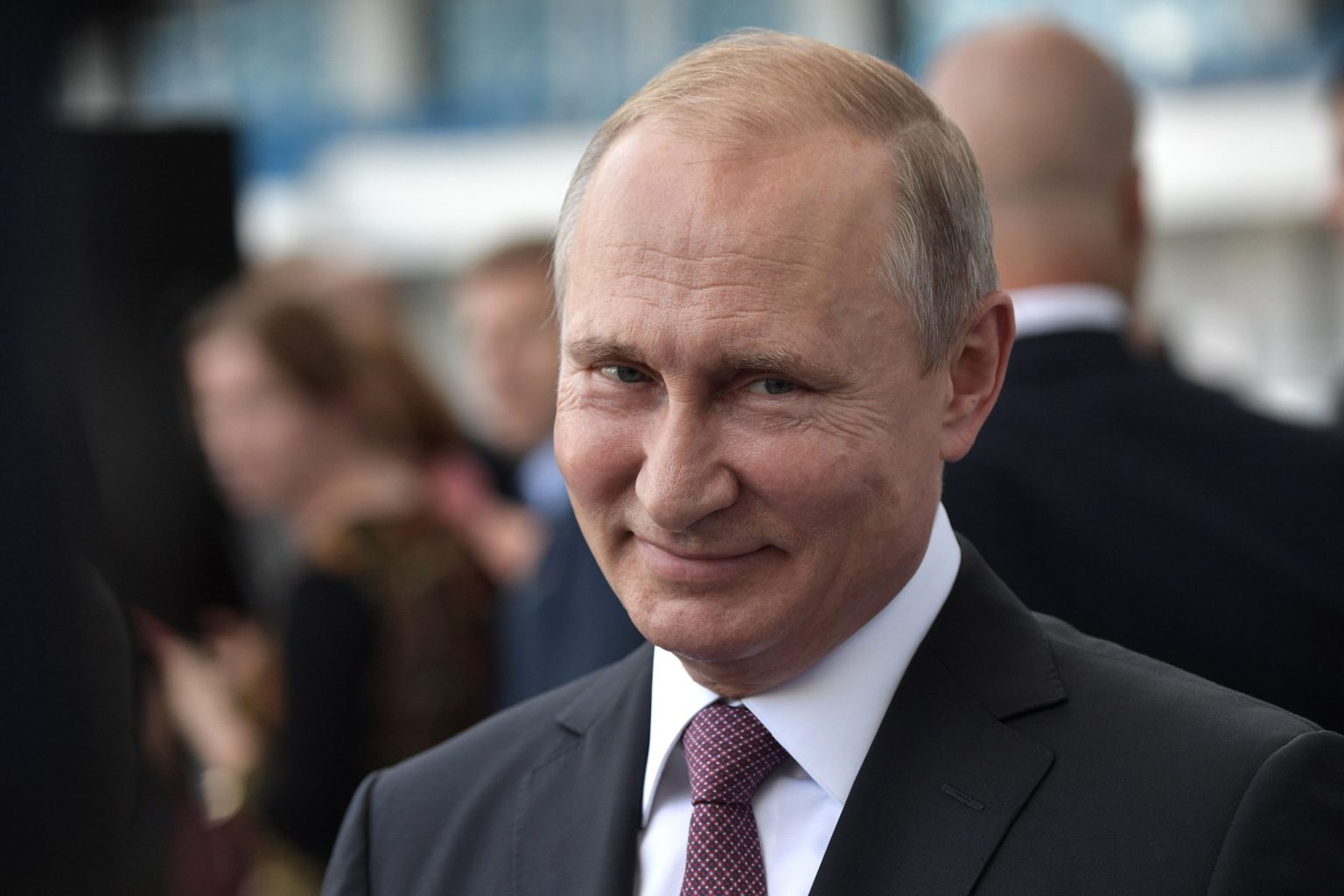
The significant improvement in the morale of Russian President Vladimir Putin, who has reverted to raising the ceiling of his demands, has been noted by all observers: he reiterated the importance of disarming Ukraine and facilitating its liberation from Nazism (which entails the removal of its governing regime and the elimination of its ruling class), as well as Ukraine’s commitment to a neutral stance. Additionally, observers noted Putin’s use of overtly menacing language when he threatened to treat Latvia’s authorities like “pigs” because they treat their citizens of Russian descent like “pigs”. Observers are particularly concerned about Russia’s significant tensions along the shared border with Finland, as well as the take-charge mentality of the Russian army in the ongoing conflict with Ukraine. Notably, Russia has also accomplished a number of diplomatic triumphs in the past few weeks.
Most analysts commonly attribute this abrupt increase in Putin’s self-assurance, or perhaps even elation, to the situation on the Russian-Ukrainian border and the multiple predicaments confronting Ukraine. Militarily, the Ukrainian forces are confined to defensive operations, struggle to maintain their positions, retreat at a glacial pace, are severely short on personnel, equipment, and ammunition, and their average personnel age (43 years) is on the rise, which implies challenges in recruiting younger individuals, let alone limitations in their ability to engage in reciprocal bombing and counter-bombardment activities. Furthermore, a significant cyberattack struck Ukraine last week, resulting in the total disruption of mobile networks and lines. Evidently, Russian capabilities are expanding substantially in the areas of drone technology, electronic warfare, and the deflection of Ukrainian missile trajectories. Moscow is also capable of wreaking havoc on infrastructure, particularly in the energy sector, and it has dreadfully weakened the Ukrainian economy and its meagre resources. Beyond that, there are signs that the relationship between Ukrainian President Volodymyr Zelensky and Army Commander Valery Zaloghny is tense. It has been reported that the Ukrainian president communicates directly with the army leadership, bypassing Zaloghny. In an article that generated considerable controversy, Zaloghny stated that the counterattack was unsuccessful and had reached an impasse.
All of the aforementioned is unquestionable, and there is no need to turn to Russian statements regarding the escalation in the rates of Ukrainian soldiers surrendering or the development of novel advanced weaponry to substantiate the fact that Ukraine is currently undergoing a challenging and pivotal phase.
In effect, the primary cause of Ukraine’s difficulties is the temporary or permanent waning of Western support. The US press published reports that spoke extensively about the mistakes of the Ukrainian leadership and its lack of success in drawing up plans for the counterattack and implementing them. For instance, Kiev rejected a US proposal to concentrate its forces in the south to deal a strong, devastating blow to Russia and did not properly estimate the Russian army’s resistance capabilities or defensive measures, let alone other mistakes. We believe this debate ignores that United States’ preferred option has high human and material cost, that Ukraine lacked the planes, tanks, and artillery required for a successful counterattack, and that a counterattack is impossible without air control or, rather, the enemy’s enjoyment of air superiority. It also disregards the significant role that Russian helicopters played in preventing the attack.
When it comes to Western countries’ backing of Ukraine, we find they have excuses: the catastrophic performance and subsequent rapid collapse of the Ukrainian army in 2014 influenced public opinion; thus, Western capitals were taken aback by the Ukrainian army’s resolute determination this time, which galvanized them to extend their support. They obviously did not expect the war to prolong, especially after Russia suffered significant casualties. Still, their backing is limited to avoid provoking Moscow to the point where it would be forced to use tactical nuclear weapons. Additionally, their assistance has consistently been untimely and only marginally effective in impeding the Russian advance and depleting the Russian army, rather than enabling the regaining of territory that Moscow had captured.
The Ukrainian leadership, too, has its own excuses, including the challenge of officers and soldiers acclimating to novel weapon systems throughout the conflict, the impossibility of formulating strategies due to the persistent reluctance of the West, concerns regarding the cessation of assistance, and the evident Western incapability to supply the required resources. Furthermore, there is a conspicuous disparity in human, military, and economic resources between Ukraine and Russia.
Evidently, Putin has been successful in turning his country’s economy into a war economy, while Western military industries have failed to boost output to the required level and at the required rate. This failure can be attributed to a confluence of political, financial, and economic factors pertaining to human resources and funds, as well as to the management of military factory systems, which was marked by decades of severe negligence. Such negligence resulted in, among other things, the reduction of the factory base, a dearth of qualified personnel, and a weakened competitive environment that hindered the pursuit of excellence.
For the sake of brevity, a single example of waning Western support suffices: the European Union has promised to supply Ukraine with one million missiles by the spring, but analysts believe that Western countries will be unable to deliver more than a third of this quantity. Alongside the transition of the Russian economy into a war economy, it is evident that Russia has effectively mitigated the repercussions of Western sanctions.
Certain circumstances, which may be temporary, are exacerbating the severity of the Ukraine crisis. Among these is the obstruction of US aid to Ukraine by Republican leaders, primarily motivated by internal trade-offs. The Republicans seek substantial financial resources to address porous borders with Mexico, and they demand that aid for Ukraine be reciprocated in exchange for support for their own demands. Concurrent with this scene is the obstruction of European support by Hungarian President Viktor Orban until his conditions are fulfilled. The Hungarian stance can be understood in light of the country’s interests, its history of relations with both Ukraine and Brussels, and concerns that providing support to Ukraine could have an impact on the aid it receives.
Nonetheless, Congress’ stance poses a grave threat to US interests and credibility, both of which will be severely damaged in the event of a Ukrainian defeat. Members of Congress have made statements that are alarming, reflecting their apparent ignorance of the fundamentals of strategy, such as the requirements for a strategic timetable for operations and a long-term outlook on the war. However, the majority of observers believe that Congress, like the European Union, will reach an agreement early next year, but it is clear that the West is squandering valuable time.
Putin’s jubilation cannot, however, be explained or justified in light of the current situation on the Russian-Ukrainian front. According to US reports and the conclusions drawn by observers from the figures cited by President Putin in recent days, the fatality and injury toll among Russians is extremely high, surpassing 300,000. Furthermore, the Russian army had failed to attain a significant breakthrough, a resolute triumph, or any concrete advancements. An abundance of indicators exist that cast doubt on the stability of the domestic front and the cohesion of the elite ranks. There has been a substantial rise in the cost of living and severe shortages of supplies.
Putin’s responses to the questions directed at him in interviews do not indicate that he is addressing them with due seriousness. He appears to be completely oblivious to the expenses and consequences of transitioning to a war economy, both in the short and long term. During an interview with him, he was queried about how he would elucidate the substantial disparity between his sanguine outlook and his perception of events vis-à-vis reality. Analysts are baffled by the formulation of this question: was it a communication from a governmental body or an anomalous mistake? Some analysts link this mistake to the absence of certain senior officials and speculations regarding their discontentment with the war’s continuation. In the same television interview, Putin ruled out a return to Stalinist terrorism, indicating widespread public fear of such a scenario. There are currently protests led by women—wives and mothers of officers and soldiers— in Russia but they do not pose a threat to the regime, albeit they do refute the president’s idyllic portrayal of the situation.
Multiple interpretations are possible regarding the conduct of the Russian president. First, he is likely engaging in the strategic use of psychological tactics to induce fear and indecision among adversaries while simultaneously providing reassurance to allies. Second, he may be duped, and his assistants may not be telling him the truth. Third, he likely believes that he can not lose the war before next autumn, that President Biden will lose the next elections, that US support for Ukraine will end, and that Western military factories can not supply what Ukraine needs.
Although these interpretations cannot be ruled out, they do not adequately explain Putin’s heightened emotional state. There is no evidence to suggest that the president is considering a negotiation process, nor is there any indication that raising the conditions’ ceiling is a preliminary step towards it. Contrarily, it appears from all signs that he sees this war as an existential struggle that will drag on for quite some time—perhaps even until 2028, according to some statements. Furthermore, the enhancement of the Russian stance following the unsuccessful counterattack, although significant, does not sufficiently account for this sense of optimism.
It is implausible that the international landscape is the cause of Putin’s excessive optimism, and it is currently evident that the Russian President is actively engaging in a comprehensive hybrid warfare strategy to exploit international unrest and hasten the destabilisation of Western and global stability. He consistently incites Finland on a daily basis, and his recent warning to Latvia, a NATO member, followed disturbances caused by pro-Russian individuals in the country. Western analysts believe that these pro-Russian groups do not act independently but rather follow instructions or seek consultation from Russian security authorities. Concerns have arisen in certain Western circles regarding the potential for Russia to consider launching a surprise attack on Moldova, Georgia, or a Baltic country. Russia might be betting on the reluctance of NATO members to participate in a worldwide conflict over a comparatively small country, even if it were a NATO member.
Beyond that, there have been announcements of increased Russian military presence in Africa, along with threats of nuclear war. Experts also question whether Russian-Iranian coordination exists, which could account for the targeting of Red Sea navigation. It is known that the leadership of the Islamic Revolutionary Guard Corps has openly embraced this targeting, a scenario that would turn the Red Sea into a new war theatre.
Regardless of the extent of coordination among numerous parties opposing Western hegemony, a multitude of actors aim to take advantage of Western weakness and the concurrent nature of the Israeli and Russian wars in order to further their own agendas and exacerbate the Western crisis. President of Venezuela has incited a crisis in Latin America. Tensions escalated in the Balkans between Serbia and Kosovo, prompting Western countries to issue strong messages to the parties involved. Additionally, the number of disputes between China and the Philippines grew. Experts are skeptical of China’s intentions regarding the Taiwanese issue.
Westerners harbor apprehensions regarding the intentions of Putin: if he demonstrates a willingness to increase the intensity of conflict during the presidential campaign, there is a potential for him to escalate the situation to a hazardous degree following the conclusion of the elections.
All of this has two implications for Egypt: 1) it could mean that food and energy prices may continue to rise globally for an extended period of time; and 2) it could mean that the Red Sea’s turbulence may have an impact on Suez Canal revenues. This situation implies that the United States has a vested interest in ending the Gaza conflict. However, the issue lies in the absence of any indication of Israel’s inclination towards pacification. Additionally, the impact of the US election campaign on President Biden’s administration and his capacity to exert influence on Israel remains uncertain.
Taken together, these factors suggest a significant possibility of a war breaking out between the United States and other parties. While such a war is not presently a probable event, it is no longer completely impossible.