







On November 12, the US State Department disclosed that over 10,000 North Korean troops are actively participating in combat operations alongside Russia in the Kursk Oblast, bordering Ukraine. Earlier, in October, the South Korean National Intelligence Service, alongside US and Western officials and Ukrainian President Volodymyr Zelensky, alleged that North Korea had dispatched thousands of soldiers to bolster Russia’s war effort against Ukraine. While Moscow and Pyongyang have refrained from definitively confirming or denying these claims, and China has remained conspicuously silent, the United States, its Western allies, and NATO have verified the credibility of these reports. This development necessitates a closer analysis of the differing positions adopted by stakeholders in the Ukrainian conflict concerning North Korea’s actions, as well as the possible regional and global repercussions of its involvement.
Diverging Interests
The contrasting positions of regional and global powers underscored the divergence in their approaches to North Korea’s direct engagement in Russia’s war against Ukraine. The underlying motives driving these positions can be outlined as follows:
1. North Korea’s Pursuit of Strategic Benefits: Pyongyang is leveraging its support for Moscow in the war against Ukraine to secure significant financial, technological, and political benefits, particularly amid the severe challenges it faces due to international sanctions over its nuclear program, including shortages of food and funds. As such, North Korea views this alliance as an opportunity to alleviate its struggles. By actively participating in the conflict, it secures Russian food aid and access to advanced military technologies essential for its missile and space programs. Additionally, Pyongyang is likely to gain Russia’s commitment to support its interests in any potential Korean Peninsula conflict. Financially, North Korea has already reaped $2–5 billion from arms sales, including ballistic missiles and ammunition, to Russia. The deployment of 10,000 troops promises an additional $250 million annually. Beyond these gains, the combat experience acquired through this involvement will significantly enhance its military readiness, particularly given its ongoing state of hostility with South Korea.
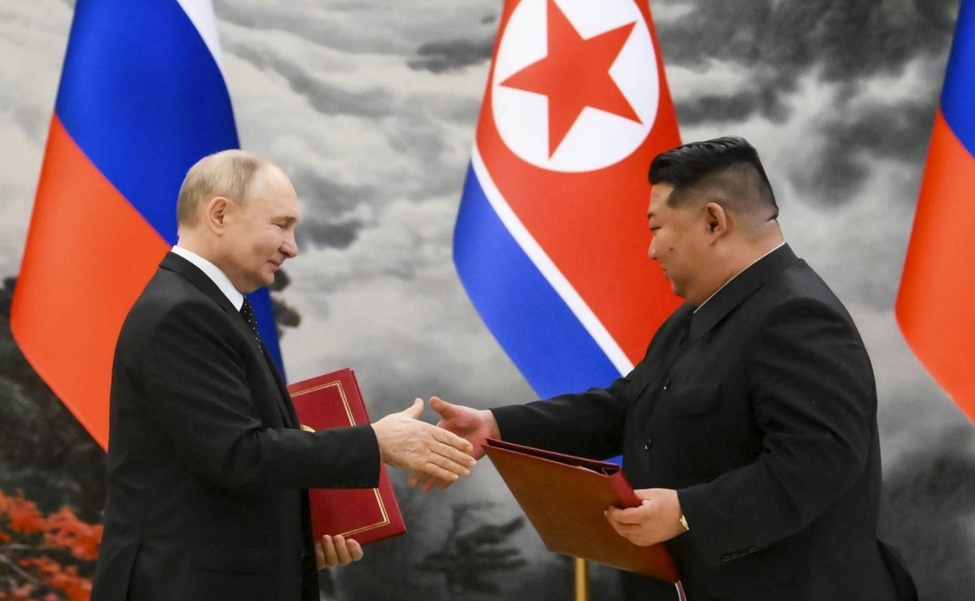
2. Russia’s Strategy to Offset Battlefield Losses: Moscow appears to be hedging against potential challenges on the Ukrainian front, a move underscored by President Vladimir Putin’s rare visit to Pyongyang last June. During the visit, he secured a joint defense treaty with Kim Jong Un, guaranteeing North Korean military support should Russia face external aggression—a scenario applicable to its war in Ukraine. This hedging also reflects Russia’s intent to leverage North Korean assistance to sidestep the politically sensitive measures of conscription and general mobilization, given the declining willingness among Russians to enlist. As a result, reinforcing Russian forces with North Korean troops has become a priority for the Kremlin, particularly to replenish the ranks of offensive units facing significant casualties.
On the other hand, Russia’s reliance on North Korean military forces in its war against Ukraine may signal an attempt by both countries to sideline or distance China from the evolving dynamics of their strategic partnership, particularly in defense and military cooperation. Perhaps this is reinforced by the statement from Chinese Foreign Ministry spokesperson Lin Jian, who, in response to North Korea’s deployment of forces to Russia, remarked that China was unaware of the situation.
3. Ukraine and Its Criticism of Western Allies’ Inaction: North Korea’s direct involvement in the Russian-Ukrainian war represents a troubling escalation for Ukraine, intensifying battlefield pressures on its forces. Kyiv has expressed deep concern over this development, criticizing its Western allies for their perceived inaction in addressing the deployment of North Korean forces. Ukrainian President Volodymyr Zelensky has urged Western allies to move beyond what he described as “watching” and take decisive measures to counter North Korea’s presence in Russia before their troops potentially engage Ukrainian forces directly. Both Ukraine and NATO fear that the deployment of North Korean troops in the Kursk Oblast could pave the way for additional reinforcements from Pyongyang. In light of this, Zelensky has called on his allies to authorize the use of long-range missiles to strike targets deep within Russian territory.
4. Washington and Its Western Allies’ Resistance to Escalation: Washington, its Western allies, and NATO remain central players in the Ukrainian crisis, firmly opposing Russia’s war on Ukraine since its inception. They have consistently supported Kyiv through political, military, and financial aid to counter Russia’s military aggression. However, the United States and NATO, along with other Western allies, have expressed deep concern over the potential for escalation resulting from North Korea’s involvement in the conflict. Western leaders have warned that Pyongyang’s actions could dangerously heighten tensions. The United States, as the first NATO member to present evidence of North Korean forces in Russia, initially urged restraint until further confirmation. On November 13, Secretary of State Antony Blinken confirmed their participation in combat operations against Ukraine and stressed the need for a decisive response.
NATO, for its part, voiced concerns about the security risks posed by the intensifying military cooperation between Russia and North Korea, highlighting its potential impact on the stability of the Indo-Pacific region as well as European security. This concern followed NATO’s confirmation of North Korean forces deployment in Russia’s Kursk Oblast, a territory partially controlled by Ukrainian forces. NATO regarded this involvement as a marked escalation in North Korea’s support for Russia’s illegitimate war and a stark reflection of the setbacks Russia continues to face on the battlefield.
5. China’s Growing Discontent with Pyongyang’s Actions: Despite the long-standing alliance between China and North Korea, forged over more than seventy years, and Beijing’s role as Pyongyang’s closest ally in political, military, security, and economic aspects, recent developments have shown signs of China’s growing frustration with certain actions taken by the North Korean regime. Beijing has expressed dissatisfaction with North Korea’s decision to send military forces to Russia in support of its war against Ukraine. Additionally, it has adopted a cautious approach towards North Korean leader Kim Jong Un’s efforts to strengthen ties with Russian President Putin, especially following the strategic treaty signed between the two countries in June, which includes provisions for mutual defense.
Several key motives and considerations shed light on China’s concerns over North Korea’s deployment of military forces to support Russia in the Ukrainian conflict, including primarily the critical role North Korea plays in China’s strategic interests. China is apprehensive about the broader implications of Pyongyang’s actions, including the potential for increased Western military presence and alliances in the Asia-Pacific region, which could disrupt the regional balance of power. There is also the risk of China becoming embroiled in the war against Ukraine, compounded by the growing arms race in the region. Finally, Moscow and Pyongyang’s collaboration could be seen as an effort to isolate China.
6. Asian Powers’ Concerns over Regional Security Impacts: Several influential Asian powers have taken a firm stance against Russia and in support of Ukraine since the Ukrainian crisis began in 2022, with South Korea and Japan at the forefront. Both countries, as key allies of the United States in the Asia-Pacific, have expressed significant concern over North Korea’s military involvement in Russia’s war against Ukraine. Seoul was the first to bring attention to the presence of North Korean forces in Russia, while Japan described the deepening ties between Moscow and Pyongyang as “profoundly concerning,” warning that such cooperation could worsen the Ukrainian crisis and destabilize regional security. The opposition of both South Korea and Japan to this growing alliance reflects their shared apprehensions over its broader implications, particularly on East Asian security and the delicate balance on the Korean Peninsula.
Potential Consequences
North Korea’s direct military involvement in the Ukrainian crisis has added a new layer of complexity to the conflict, sparking a wide range of regional and international reactions. This development underscores the intricate web of entanglements among the key players, each driven by its own strategic interests and calculations. The ripple effects of this intervention are expected to manifest in significant regional and global repercussions tied to North Korea’s active role in the Russia-Ukraine war.
Regionally, North Korea’s direct military intervention in the Ukrainian crisis is likely to intensify the Western military and security presence in the Asia-Pacific. The United States, along with its Western and Asian allies, may strengthen their alignment and expand their military footprint in the region—a scenario that clashes with China’s core interests in what it considers a vital sphere of influence. This development is also expected to have adverse effects on regional security and stability.
On the other hand, North Korea’s direct involvement in the Russian-Ukrainian war is likely to reinforce military cooperation between NATO and key Asian powers aligned with the West in Asia and the Indo-Pacific, including South Korea, Japan, Australia, and New Zealand. This development is expected to provoke countermeasures from China and further strain its relations with both NATO and the aforementioned countries.
Another critical regional consequence could be the destabilization of the already fragile balance of power on the Korean Peninsula, as this development might prompt the United States, Japan, and South Korea to further strengthen their military alliance in East Asia as a countermeasure to North Korea’s expanding ambitions to assert a military role beyond its geographic borders. Additionally, North Korea’s active participation in combat in Ukraine could provide its forces with valuable combat experience and an opportunity to test its advanced weaponry, which could bring about profound shifts in the security dynamics on the Korean Peninsula and likely escalate an arms race in the region, as evidenced by South Korea’s recent unveiling of the Hyunmoo-5 ballistic missile capable of penetrating underground fortifications.
Besides, Pyongyang’s deployment of troops to Russia without consulting Beijing signals a diminishing Chinese influence over North Korea in favor of Russia. This shift is underscored by the exchange of more than 40 diplomatic, economic, and military delegations between Pyongyang and Moscow in 2024—more than four times the frequency of Pyongyang’s interactions with Beijing. The deepening military ties between North Korea and Russia threaten to undermine China’s efforts to maintain sway over Pyongyang. As a result, the participation of North Korean forces in the conflict consolidates the alliance between Russian President Vladimir Putin and North Korean leader Kim Jong Un, potentially at the expense of Chinese President Xi Jinping’s ties with Pyongyang.
On top of that, the deepening military cooperation between North Korea and Russia is likely to undermine China’s regional influence, both in East Asia and the broader Asia-Pacific region, particularly given the fact that this growing partnership heightens risks and imposes additional constraints on Beijing’s foreign policy maneuvers, thereby reducing its opportunities and prospects for successfully advancing its strategic objectives and safeguarding its interests abroad.
On the international stage, North Korea’s direct involvement in the Russian-Ukrainian conflict is set to intensify the global divisions and polarization that have been mounting since the conflict began in 2022. Amid the ongoing crisis and the failure of diplomatic efforts by key international powers to reach a peaceful resolution, some countries have increasingly resorted to alternative mechanisms to express support for Russia. A key example of this is North Korea’s military intervention, which could provoke further escalation from other regional powers in response to the growing tensions. Notably, South Korea has recently stated that it is considering sending arms to Ukraine, a move that could escalate both regional and international instability.
Similarly, the United States and its Western allies are unlikely to ignore this latest development, which signifies a significant shift in North Korea’s global role. Through its involvement in the Russian-Ukrainian war, Pyongyang may emerge as a key international player shaping major global dynamics. This unfolds as a new US administration under President-elect Donald Trump takes office—a president who, during his first term, sought to ease tensions with North Korea through diplomatic overtures, including direct meetings with its leader, Kim Jong Un.
Recognizing the strategic alliance between China and its key ally North Korea, the United States has sought to leverage this relationship as a means to pressure Beijing into curbing Pyongyang’s active involvement in Russia’s war against Ukraine. Washington urged China to exert its influence over both Russia and North Korea to prevent further escalation, following North Korea’s deployment of thousands of soldiers to support Russian forces in Ukraine. In response, China reiterated its unwavering stance on the Ukrainian crisis, emphasizing its commitment to playing a constructive role in fostering peace talks and advancing a political resolution to the conflict.
On the other hand, North Korea’s direct military involvement in the Russian-Ukrainian war could impact China’s global standing and influence, particularly given the fact that North Korea and Russia are key allies of China, and the three countries share a vision of a multipolar world that opposes the US-led international order. As such, their independent actions—particularly concerning the handling of the Ukrainian crisis—may clash with Beijing’s strategic priorities, thereby undermining China’s efforts to shape a multipolar world order that reduces US dominance over the current international system.
In conclusion, the recent developments in the Ukrainian crisis, particularly North Korea’s direct military intervention, which could potentially widen the scope of the conflict, have introduced further uncertainty regarding the future of the Russian-Ukrainian war. This uncertainty is exacerbated by the complexities of the crisis, including the stalemate in settling the conflict on the ground, the involvement of numerous regional and international players shaping its trajectory, and their diverging positions based on conflicting strategic interests, let alone the arrival of the new US administration under President-elect Donald Trump, which has prioritized ending the war but has yet to disclose how it intends to achieve this objective.


