


By using ECSS site, you agree to the Privacy Policy and Terms of Use.
Accept
ECSS - Egyptian Center for Strategic StudiesECSS - Egyptian Center for Strategic Studies
  • Home
  • International Relations
    International Relations
    Show More
    Top News
    Another obstacle on the Grand Ethiopian Renaissance Dam?
    June 5, 2020
    Varied paths of reform in Africa
    March 22, 2019
    G20 Membership Justified: Africa and the Road to the G20
    June 14, 2020
    Latest News
    2025 Yearender: Flood fallout
    January 20, 2026
    A Strategic reorientation: A critical reading of the 2025 US National Security Strategy
    January 18, 2026
    A diplomatic maneuver: Israel’s recognition of Somaliland
    January 17, 2026
    2025 Yearender: China’s multipolar world
    January 15, 2026
  • Defense & Security
    Defense & Security
    Show More
    Top News
    A Multi-dimensional Affair: Women and Terrorism in Africa
    June 14, 2020
    On deradicalisation: Marc Sageman and the psychology of jihadists
    June 22, 2020
    Assessing Deterrent Measures and the Prospects of War: US Military Movement in the Gulf to Confront Iran
    June 22, 2020
    Latest News
    Israel-Iran War: Does Israel Stand Alone?
    June 18, 2025
    Navigating Security and Diplomacy: What Russia’s Delisting of the Taliban Means for Bilateral Ties
    May 17, 2025
    Lakurawa: Armed Bandit Violence in Nigeria
    May 12, 2025
    Europe amid US–Iran Escalation: Can It Play the Diplomat or Become Entangled in the Crisis?
    April 13, 2025
  • Public Policy
    Public Policy
    Show More
    Top News
    Sinai: A Strategy for Development amid Fighting Terrorism
    June 17, 2020
    Egypt’s Comprehensive Vision for Human Rights
    June 22, 2020
    The Right to Health in Egypt
    June 22, 2020
    Latest News
    Weaponization of Resources: The Role of Rare Earth Metals in the US-China Trade War
    May 25, 2025
    The Carbon Border Adjustment Mechanism: A Catalyst or a Challenge for Egypt’s Export Ambitions?
    May 15, 2025
    The Suez Canal amidst Global Competition (3): National Strides Outpacing Time
    April 29, 2025
    Gaza’s Changing Demographics: The Toll of War and Blockade
    March 9, 2025
  • Analysis
    • Opinion
    • Analysis
    • Situation Assessment
    • Readings
  • Activities
    • Conferences
    • ECSS Agenda
    • Panel Discussion
    • Seminar
    • Workshops
  • ECSS Shop
  • العربية
  • Defense & Security
  • International Relations
  • Public Policy
All Rights Reserved to ECSS © 2022,
Reading: Gaza ceasefire: The day after, what comes next?
Share
Notification Show More
Latest News
Book Review | The struggle for economic sovereignty: Who owns the instruments of power?
Readings
Displacement from Gaza: Deconstructing the idea, doctrine, and plan
Readings
The Egyptian Center for Strategic Studies participates in the 57th Cairo International Book Fair for the sixth year
Readings
2025 Yearender: Flood fallout
Iranian Studies Palestinian & Israeli Studies
A Strategic reorientation: A critical reading of the 2025 US National Security Strategy
Palestinian & Israeli Studies
Aa
ECSS - Egyptian Center for Strategic StudiesECSS - Egyptian Center for Strategic Studies
Aa
  • اللغة العربية
  • International Relations
  • Defense & Security
  • Special Edition
  • Public Policy
  • Analysis
  • Activities & Events
  • Home
  • اللغة العربية
  • Categories
    • International Relations
    • Defense & Security
    • Public Policy
    • Analysis
    • Special Edition
    • Activities & Events
    • Opinions Articles
  • Bookmarks
Follow US
  • Advertise
All Rights Reserved to ECSS © 2022, Powered by EgyptYo Business Services.
Opinions Articles

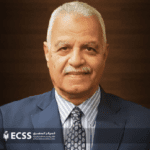
Gaza ceasefire: The day after, what comes next?

Gen. Mohamed Eldewery
Last updated: 2021/05/22 at 6:17 PM
Gen. Mohamed Eldewery
Share
8 Min Read
SHARE

Please allow me to begin my article with asking a general question. A question aimed at the international community with all its different institutions and its big powers that have interests in the Middle East region. My question is as follows: Are the problems, disputes and conflicts witnessed among these countries no longer a threat to this strategic region, hence it’s been treated with such a limited amount of attention that does not commensurate to the danger of these problems? If we don’t find an effective intervention to prevent the entire region from slipping into a state of instability soon then it might be even more difficult containing the situation in the future.

Undoubtedly, what drove me to raise this question is the international handling of Israel’s fourth war on the Gaza Strip, which was, to a great extent, just a routine. It didn’t engage with the required seriousness that was to stop this unprecedented destructive war. This war, that started on 11th May, witnessed forced displacement attempts of Palestinian families who had been living in the Sheikh Jarrah neighbourhood in East Jerusalem for decades. In addition to Israeli troops’ storming into the Al-Aqsa Mosque.

In this article, I won’t tackle the nature of this war, the reasons or the results, for these were quite obvious and the operations were going on-air. As for stopping the war and reaching a ceasefire between the two sides, whether partial or total, is a matter of time no matter how little delayed. Both sides will agree in the end – through Egyptian efforts as well as regional and international help – on stopping the operations and reaching a set of consensual understandings, like in every previous confrontation between Israel and Gaza since 2009.

Thus, to be practical, we must draw lessons not only from this war but from the entire standpoints throughout the past years. Standpoints that had witnessed stalemate in the peace process as well as the results of three previous wars and ceasefires that were so easily violated. Thus, the ceasefire that will be reached should prevent a fifth or a sixth war from breaking out. This requires that we think about how to start bringing in real change in a way that prevents these events from recurring.

We can say that the Israeli war on the Gaza Strip revealed five main points, which are:

-The solution for the Palestinian cause, in a way that fulfils the aspirations of Palestinian people, is considered the foundation for real stability in the region and without this solution the probabilities that the situation might explode is possible at any time.

– Jerusalem is considered a redline within this cause. The Palestinians, Arabs as well as the Islamic world won’t accept absolutely any infringement on Islamic holy sites no matter what the cost of the confrontation might be or even how Israeli measures are incessant in the Judaising, displacing and the imposing of a fait accompli.

– The Palestinian people won’t accept the current situation to continue forever. Israel is mistaken if it thinks that they are safe and secure while Palestinians, whose lands remain under occupation and settlements, won’t make an uprising to extract its legitimate rights in the way it deems appropriate.

– The Israeli security theory is a relative theory for Israel can’t achieve its security through advanced military and security means only. The only way for it to keep its external security and the integrity of its internal composition represents itself in giving the Palestinians an independent state to live in securely and peacefully on the basis of the two-state solution, which is adopted by the entire international community except the Israeli government.

-The Palestinian side is in dire need to unify its standpoint to be able to move strongly on the political path, where the military operations, whatever their results, move the situation but aren’t decisive in any battle.

In the light of the aforementioned, there is a necessity to move from the current events towards crystallising a real action plan that can change the present reality for the better. In this area, after reaching ceasefire, I suggest that the next move should be made in the following quartet frame:

– Holding an international conference in Egypt for the reconstruction of Gaza and trying to raise funds for this purpose. Perhaps the decision made by President Abdel-Fattah El-Sisi, during the trilateral summit, that took place on 18th May in Paris, with the French president and the Jordanian monarch, to allocate $500 million for the reconstruction of the Gaza Strip is a positive beginning for holding this conference.

– Egypt is to lead a regional and an international move aiming at paving the way for Palestinian/Israeli negotiations in order to implement the two-state solution. These negotiations are to start on an agreed upon early date, which I hope won’t be later than next September. I suggest that the opening session of the negotiations be held in Sharm El-Sheikh and be followed by direct negotiation sessions as according to what the two parties agree upon.

– The Palestinian Authorities should take necessary measures in order to end the division with Egyptian assistance; especially that it isn’t just one of the options but it is the only option to return the compass of the Palestinian situation to the right direction.

– Coordinating with the US Administration to practically bring forth its vision for the solution of the Palestinian/Israeli conflict based on its positive stand towards the two-state solution, especially after the collapse of the deal of the century which was refused by Palestinians, Arabs and the international community.

Related Posts

A diplomatic maneuver: Israel’s recognition of Somaliland

The AI Alliance: How Pax Silica Is reshaping the international technological order

The 39th World Zionist Congress: How the right controls the future of global Zionism

Weaponization of Resources: The Role of Rare Earth Metals in the US-China Trade War

TAGGED: Egypt, Gaza ceasefire, Israel, USA
Gen. Mohamed Eldewery May 22, 2021
Share this Article
Facebook Twitter Whatsapp Whatsapp LinkedIn Telegram Email Copy Link Print
Gen. Mohamed Eldewery
By Gen. Mohamed Eldewery
Deputy Manager

Stay Connected

Facebook Like
Twitter Follow
Instagram Follow
Youtube Subscribe

Latest Articles

The Kursk Breach: Will Ukraine’s Incursion into Russia Tip the Scales of War?
European Studies September 7, 2024
Is It Time for the Arab Deal of the Century?
Opinions Articles November 13, 2024
Accumulated Rifts: Souring Algerian-Spanish Relations
International Relations August 21, 2022
Domestic Gains: Iran’s Stance on the Russo-Ukrainian War
International Relations March 21, 2022

Latest Tweets

//

The Egyptian Center for Strategic Studies is an independent non-profit think tank providing decision-makers by Policy alternatives, the center was established in 2018 and comprises a group of experts and researchers from different generations and scientific disciplines.

International Relations

  • African Studies
  • American Studies
  • Arab & Regional Studies
  • Asian Studies
  • European Studies
  • Palestinian & Israeli Studies

Defence & Security

  • Armament
  • Cyber Security
  • Extremism
  • Terrorism & Armed Conflict

Public Policies

  • Development & Society
  • Economic & Energy Studies
  • Egypt & World Stats
  • Media Studies
  • Public Opinion
  • Women & Family Studies

Who we are

The Egyptian Center for Strategic Studies (ECSS) is an independent Egyptian think tank established in 2018. The Center adopts a national, scientific perspective in examining strategic issues and challenges at the local, regional, and international levels, particularly those related to Egypt’s national security and core national interests.

The Center’s output is geared toward addressing national priorities, offering anticipatory visions for policy and decision alternatives, and enhancing awareness of various transformations through diverse forms of scientific production and research activities.

All Rights Reserved to Egyptian Center for Strategic Studies - ECSS © 2023

Removed from reading list

Undo
Welcome Back!

Sign in to your account

Lost your password?