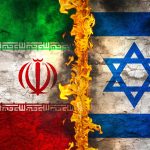






Although the US special envoy to Iran Robert Malley confirmed in a hearing in the Senate on 25 May that “prospects for reaching a deal with Iran are, at best, tenuous”, the United States and the West are still seeing a potential deal coming out of the Vienna negotiations that have stalled since 11 March.
For Washington, this deal, which has low prospects of success, as per Malley’s vision, could spare the world and the Middle East considerable risks. As such, the United States started to pursue two avenues to put more pressure on Iran and push it to reach a deal on less stringent terms that don’t, for example, include removing the Iranian Revolutionary Guard Corps (IRGC) from the list of foreign terrorist organizations.
The first avenue is to impose more sanctions on the oil smuggling networks that enable Iran to obtain the foreign currency on which it depends to fund the activities of Hezbollah and Quds Force affiliated to the IRGC. The United States’ message is clear: either the agreement or more sanctions that will not be only American but will be Western as well after the European countries join them. Undoubtedly, Israel’s success in launching new security strikes against Iran within its territory, e.g. the assassination of Colonel Hassan Sayyad Khodaei, a member of the Quds Force of IRGC, on 22 May, exert, according to the US vision, further pressure on Iran .
The second avenue is to give full play to time. Biden’s administration is trying to send warnings to Iran that wasting more time reduces the chances of reaching a new nuclear deal, which enhances the likelihood of continuing the nuclear deal during the next stage.
Arguably, the US administration believes that time is running against Iran. Iran will not be able to withstand the pressures of sanctions in the medium and long term, as has been evidenced by the mounting protests that are sweeping across Iranian cities as a result of the deteriorating economic conditions that were reflected in the rise in the prices of basic commodities after the decision of the government of President Ibrahim Raisi to unify the exchange rate. These protests began to place pressure on the government, particularly with protesters linking –as usual– between the deteriorating economic conditions and the general directives adopted by the ruling regime, especially the depletion of Iranian resources to support regional allies of armed regimes and militias in crisis countries.
Limited Impact
A closer look at these two avenues reveal that they aren’t likely to have a significant impact on Iran’s position. Any potential European sanctions on Iran will not impose new burdens on the Iranian economy, which is already suffering from the US sanctions. Additionally, the bilateral relations between Iran and those countries are basically limited, given the former’s reliance on bilateral relations with China and Russia as well as neighboring countries, as has been evidenced by the visit of the Emir of Qatar Tamim bin Hamad to Iran on 12 May and the visit of President Iranian Ibrahim Raisi to the Sultanate of Oman, on the 23 May. In parallel, the US administration’s reliance on the time factor as a pressure card on Iran presents –in itself– several complexities. In many respects, it can be argued that time isn’t also in favor of the United States and Western countries, given several considerations, including:
Iran’s Possible Success in Acquiring Nuclear Technology: The passage of time without reaching a new deal means allowing Iran to acquire enough nuclear knowledge that would increase its capacity to produce a nuclear bomb, which represents a great danger. If any potential agreement could make it possible to tackle the escalatory measures taken by Iran, particularly with regard to the quantities of the 20 and 60 percent enriched uranium and advanced centrifuges such as IR4 and IR6, through several mechanisms, e.g. destroying them, shipping them to outside Iran, or storing under the surveillance of the International Atomic Energy Agency (IAEA), this will not be the case if Iran acquired the “know how” [to carry out enrichment at a rapid pace], which is clearly more important than the other technological components of the nuclear program. More precisely, IF Iran acquired the know-how, there would be no way to deny this knowledge from it even if a nuclear agreement is reached, a situation that Iran would capitalize on at a later stage. After all, knowledge remains in the minds and not in the uranium enrichment facilities. Perhaps this explains Israel’s targeting of Iranian nuclear scientists at an earlier stage, the last of whom was the head of the Research and Innovation Organization of the Defense Ministry, Mohsen Fakhrizadeh, who was assassinated on 27 November 2020.
Prolonged Russo-Ukrainian War: The Russia-Ukraine war entered its fourth month on 24 May, with no indications of an imminent end. Neither Russia has achieved its declared goals nor Ukraine has shown willingness to respond to the Russian demands nor has the Western countries retreated from providing military support to Ukraine. Rather, they are constantly scaling up their support, indicating that the war is to continue in the next phase.
On 19 May, the US Congress approved a $40 billion aid package to Ukraine. As such, the longer the war in Ukraine takes, the more this poses a pressing factor to reach a settlement of the Iranian nuclear crisis, otherwise there would be a risk of a new war being ignited in the region, a war that might outbreak in case the nuclear negotiations fail and Iran reactivates its nuclear program and accelerate its enrichment of uranium to reach 90 percent purity, needed to produce a nuclear bomb.
Assuming the failure of the nuclear negotiations in Vienna, this would enhance the prospects of Iran developing its nuclear program and its move towards targeting US and Israeli interests, particularly given Tel Aviv’s ongoing security operations against Tehran, the latest of which was the assassination of Colonel Hassan Sayyad Khadayi on 22 May. Therefore, the direct confrontation, which took place in the Iraqi city of Erbil on 13 March, may not be the last and may happen on a larger scale in another region or country, in a way that threatens igniting a new war in the region, which the United States may indirectly engage in, which will eventually pose serious threats to the security and interests of Western countries in general and force them to involve in two crises, or more precisely, two wars at the same time.
Iran’s Growing Confidence in Adapting to the Crisis: Over time, the Iranian regime –particularly the IRGC and the fundamentalist conservative movement that dominates most decision-making circles– gains confidence that it is possible to cope with the breakdown of negotiations and the failure of the deal. This has been clear, whether in the statements of Iranian officials or the reports of the Iranian media and research centers. For instance, on 4 April, Mohsen Khojasteh-Mehr, the Managing Director of the National Iranian Oil Company (NIOC), declared that, “oil production has been restored to pre-sanctions level of 3.8 million barrels per day, despite the economic sanctions.” Likewise, in a statement to Kayhan newspaper on 6 April, Oil Minister Javad Owji announced that the government has managed over the past seven months to sign contracts in the oil sector worth $16.5 billion with local and foreign companies without the sanctions being lifted and without Iran’s accession to the Financial Action Task Force (FATF) agreement.
Undoubtedly, these gains might not be comparable to the foreign currency revenues that Iran could get if a deal is negotiated and US sanctions on oil exports and banking transactions are lifted. However, there is a trend in Iran that holds the belief that seeking alternative routes for oil exports, circumventing the US sanctions, and upgrading the bilateral relations with different countries, especially neighboring ones, is a better option than reaching a nuclear deal that could force Iran to make major and qualitative concessions. Opponents of this trend underscore that concluding this potential deal without removing the IRGC from the list of foreign terrorist organizations makes it meaningless. Keeping the IRGC on the US terror list will cause foreign companies to refrain from engaging in investments inside Iran for fear of being subjected to US sanctions.
Strengthening Sino-Russo-Iranian Axis: The current Western pressures may push Russia, China, and Iran to strengthen their relations as one way to confront Western and US pressures and contain their impacts. Obviously, this isn’t a new trend adopted by the three countries, as they have already started taking operating measures to achieve this. For instance, a 25-year strategic cooperation agreement was signed between China and Iran, according to which China will invest $400 billion in Iran. This agreement is projected to be of greater importance in the event of the escalation of Western sanctions against Russia and the increasing support provided by the United States and its European allies to Ukraine, simultaneously with another possible crisis outbreak between China and the United States over Taiwan, the signs of which started to unfold lately.
In short, it can be argued that Biden’s administration is facing a critical impasse, as regards its management of the Iranian nuclear crisis. It is caught between two choices: either to insist on concluding a deal with Iran, which would cause it to come under internal and external pressures from representatives of the Republican and Democratic parties and its regional allies in the Middle East, or risk the breakdown of more than one-year negotiations and push Iran to obtain the know-how needed to possess a nuclear bomb at a later stage.