


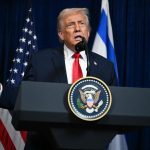


On 14 July, US President Joe Biden, UAE President Mohamed bin Zayed Al Nahyan, Indian Prime Minister Narendra Modi, and Israeli Prime Minister Yair Lapid held the first virtual summit of the I2U2 group, which was first conceptualized during a meeting of the foreign ministers of the four countries in October 2021.
According to some observers, this new entity can be described as being a new “QUAD”. However, unlike QUAD (comprising the United States, Japan, Australia. and India), it doesn’t not focus on traditional military and strategic dimensions, but rather homes in on “unconventional security”, towards increasing joint investment between its members in six main areas, namely water, energy, transport, space, health, and food security.
This raises questions about the significance of the timing of the I2U2’s first summit as well as its goals and motives.
I2U2’s First Summit between Food Security and Energy
I2U2 stands for Iran, Israel (I2), the United States, and United Arab Emirates (U2). The group aims at harnessing efforts to address some of the major challenges facing the world, with a particular focus on joint investments and new initiatives in areas of water, energy, transportation, space, health, and food security.
According to the White House Statement on the 12U2 summit, the bloc supports the Abraham Accords and other peace and normalization arrangements with Israel and welcomes the economic opportunities that such arrangements give rise to, towards promoting economic cooperation in the Middle East and South Asia. The White House statement indicated that the I2U2 bloc welcomes “other new groupings of countries, such as the Negev Forum for regional cooperation, which recognize the unique contributions of each partner country, including Israel’s ability to serve as an innovation hub connecting new partners and hemispheres to strategically address challenges that are too great for any one country to manage alone.”
The I2U2’s first meeting focused primarily on food security and clean energy where the members discussed innovative ways to ensuring longer-term more diversified food production. Leaders of the I2U2 welcomed India’s interest in joining the United States, the United Arab Emirates, and Israel in the Agriculture Innovation Mission for Climate (AIM for Climate) initiative. At large, the meeting highlighted the following two initiatives:
- Food Security: The UAE will invest $2 billion in India to develop a series of integrated food complexes that employ cutting-edge technologies to reduce food waste and spoilage, conserve fresh water, and use renewable energy sources. The private sector in the United States and Israel will be invited to put forward their innovative solutions that contribute to the overall sustainability of the project. This project is aspired to help address food insecurity in South Asia and the Middles East.
- Clean Energy: The bloc will develop a renewable energy project in the Indian state of Gujarat to produce 300 megawatts of wind and solar energy. The US Trade and Development Agency (USTDA) funded a feasibility study for the $300 worth project. The UAE-based companies are also exploring business opportunities as knowledge and investment partners in the project. The four countries comprising the I2U2 intend to work together to highlight the private sector opportunities.
Significance of Timing and Diverse Motives
The I2U2 bloc and its goals can be seen in view of the changes in the concept of “security” since the end of the Cold War, which extended beyond the military threats to include non-military or non-conventional threats, including climate change, food shortages, energy crises, communicable diseases, natural disasters, transnational crime, human and drug trafficking, and mass migration.
This inaugural summit of the I2U2 comes concurrently with the Russo-Ukrainian war approaching its fifth month, with its considerable repercussions, affecting most –if not all– countries of the world, giving rise to global crises related to food, energy, and climate.
On the other hand, the formation of this bloc can be viewed within the framework of the US vision, which regard China as a major threat. Clearly, Biden continues to accentuate the hardline policies of his predecessor Donald Trump towards China, aiming at curbing Beijing’s regional and international influence at the political and economic levels.
Beyond that, developments in the Middle East may serve as a gateway to understanding the reasons for the formation of the I2U2. Iran’s destabilizing behavior in the region and Israel’s massive endeavors to normalize relations with the Arab countries, particularly the Gulf States necessitate forming entities that promote and intensify cooperation between Israel and the Arab countries.
That said, each of the four countries seems to have underlying motivations behind joining the bloc, based on their visons on how to confront threats and achieve their interests. These motivations can be detailed as follows:
The United States: The launch of the I2U2 bloc reflects the US desire to develop its foreign relations with different parts of the world, while building partnerships and alliances that were hurt during President Trump’s tenure. Besides, there is the US desire to improve its image in the Middle East and connect the Middle East with Asia, which ultimately serves the US vision geared towards curtailing the Chinese influence globally.
The United Arab Emirates: Abu Dhabi stands out as the only Arab country in the I2U2 group, which strengthens its regional role as a platform for innovation in the region. In many respects, the inauguration of this entity represents a notable success to the Emirati vision that puts stock in the economy as the best path to achieving peace, security, and progress, which was reiterated by the UAE leadership during the summit.
India: New Delhi has compelling reasons to support the I2U2 bloc. It aspires to play a greater global role without compromising its strategic independence. This can be achieved through broadening cooperation between New Delhi and Washington beyond Asia. Additionally, it is in India’s interest to deepen its cooperation with the Middle East, the region it considers of strategic importance given its energy sources, economy, and the extensive presence of Indians in it.
Israel: Launching the I2U2 bloc will enable further engagement of Israel in the region and whitewash its image through the expertise and innovative solutions it provides to problems of a global character. This, in turn, would mean pushing the Abraham Accords forward.
Concluding Remarks
I2U2 comes as one in a series of blocs that Washington has been forming recently to strengthen its role and reaffirm its continued leadership of the world. While this bloc promotes joint investments in six non-security areas (i.e. energy, food security, health, space, transportation, and water), it maintains silence on the most sensitive issues related to security or strategic goals. However, this does not necessarily mean there are no political goals behind it.
The bloc is touted to be targeting the global food crisis caused by the Russo-Ukrainian war, considering food security a top priority, yet its launch signifies the existence of other goals of a political nature, including primarily:
- Maintaining Washington’s policy of building alliances that enhance its role and image.
- Besieging China through blocs and entities that join Washington and its allies in a way that hinders China’s moves.
- Strengthening cooperation between the I2U2 countries in fields of energy, food security, health, space, transportation, and water may contribute lessening the attractiveness of cooperation with China in these fields.
- Finding collective solutions to the problems caused by the Russ-Ukrainian war would increase Russia’s isolation from the world.
- Promoting Washington’s attempts in connecting Asia with its circles of interest, e.g. the Middle East.
- Pushing normalization with Israel with regional countries forward.
- Focusing on non-traditional security threats that have become pressing, requiring addressing them through collective efforts.
- Paving the way to further political understandings that may later take shape into security and strategic arrangements.


