

By using ECSS site, you agree to the Privacy Policy and Terms of Use.
Accept
ECSS - Egyptian Center for Strategic StudiesECSS - Egyptian Center for Strategic Studies
  • Home
  • International Relations
    International Relations
    Show More
    Top News
    Another obstacle on the Grand Ethiopian Renaissance Dam?
    June 5, 2020
    Varied paths of reform in Africa
    March 22, 2019
    G20 Membership Justified: Africa and the Road to the G20
    June 14, 2020
    Latest News
    2025 Yearender: Flood fallout
    January 20, 2026
    A Strategic reorientation: A critical reading of the 2025 US National Security Strategy
    January 18, 2026
    A diplomatic maneuver: Israel’s recognition of Somaliland
    January 17, 2026
    2025 Yearender: China’s multipolar world
    January 15, 2026
  • Defense & Security
    Defense & Security
    Show More
    Top News
    A Multi-dimensional Affair: Women and Terrorism in Africa
    June 14, 2020
    On deradicalisation: Marc Sageman and the psychology of jihadists
    June 22, 2020
    Assessing Deterrent Measures and the Prospects of War: US Military Movement in the Gulf to Confront Iran
    June 22, 2020
    Latest News
    Israel-Iran War: Does Israel Stand Alone?
    June 18, 2025
    Navigating Security and Diplomacy: What Russia’s Delisting of the Taliban Means for Bilateral Ties
    May 17, 2025
    Lakurawa: Armed Bandit Violence in Nigeria
    May 12, 2025
    Europe amid US–Iran Escalation: Can It Play the Diplomat or Become Entangled in the Crisis?
    April 13, 2025
  • Public Policy
    Public Policy
    Show More
    Top News
    Sinai: A Strategy for Development amid Fighting Terrorism
    June 17, 2020
    Egypt’s Comprehensive Vision for Human Rights
    June 22, 2020
    The Right to Health in Egypt
    June 22, 2020
    Latest News
    Weaponization of Resources: The Role of Rare Earth Metals in the US-China Trade War
    May 25, 2025
    The Carbon Border Adjustment Mechanism: A Catalyst or a Challenge for Egypt’s Export Ambitions?
    May 15, 2025
    The Suez Canal amidst Global Competition (3): National Strides Outpacing Time
    April 29, 2025
    Gaza’s Changing Demographics: The Toll of War and Blockade
    March 9, 2025
  • Analysis
    • Opinion
    • Analysis
    • Situation Assessment
    • Readings
  • Activities
    • Conferences
    • ECSS Agenda
    • Panel Discussion
    • Seminar
    • Workshops
  • ECSS Shop
  • العربية
  • Defense & Security
  • International Relations
  • Public Policy
All Rights Reserved to ECSS © 2022,
Reading: Cairo Hosts “New START” Talks: What it Means
Share
Notification Show More
Latest News
Book Review | The struggle for economic sovereignty: Who owns the instruments of power?
Readings
Displacement from Gaza: Deconstructing the idea, doctrine, and plan
Readings
The Egyptian Center for Strategic Studies participates in the 57th Cairo International Book Fair for the sixth year
Readings
2025 Yearender: Flood fallout
Iranian Studies Palestinian & Israeli Studies
A Strategic reorientation: A critical reading of the 2025 US National Security Strategy
Palestinian & Israeli Studies
Aa
ECSS - Egyptian Center for Strategic StudiesECSS - Egyptian Center for Strategic Studies
Aa
  • اللغة العربية
  • International Relations
  • Defense & Security
  • Special Edition
  • Public Policy
  • Analysis
  • Activities & Events
  • Home
  • اللغة العربية
  • Categories
    • International Relations
    • Defense & Security
    • Public Policy
    • Analysis
    • Special Edition
    • Activities & Events
    • Opinions Articles
  • Bookmarks
Follow US
  • Advertise
All Rights Reserved to ECSS © 2022, Powered by EgyptYo Business Services.
Opinions Articles

Cairo Hosts “New START” Talks: What it Means

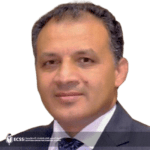
Dr. Muhammad Fayez Farahat
Last updated: 2022/12/04 at 5:30 PM
Dr. Muhammad Fayez Farahat
Share
7 Min Read
SHARE

From 29 November to 6 December, Egypt will host the US-Russian talks on the prospects of the “New START”, one of the primary treaties that safeguard world security and the sole remaining nuclear arms control treaty between the United States and Russia. 

In essence, New START provides for capping the number of nuclear warheads possessed by both countries, exchanging of data on nuclear weapons, and establishing a reciprocal control mechanism. New START is a five-year treaty that became effective in February 2011. In February 2021, it was renewed for another five years in February but is now fraught with a major problem against the background of the Russo-Ukrainian war. The collapse of the New START treaty will open the door for a nuclear race, which becomes more critical in view of the ongoing crisis between Washington and Moscow.

Does Egypt’s hosting of these talks have specific connotations? Some may argue that Egypt’s role does not go beyond being a venue for talks and coordinating the logistical aspects. Even if this is true, it is associated with considerable implications that go beyond the logistical dimension.

The first of these implications stems from the significance of this treaty to global security. Ergo, the involvement of Cairo in renewing the treaty or working towards a new one makes Egypt part of a momentous event or a meaningful interaction coming at a historical moment of the development of the global system, which is dominated by conflicts and tensions that escalated to the point that the nuclear weapons use was re-visited. This isn’t the first time Cairo gets involved in such pivotal events, critical to the development of international relations. For instance, the Cairo Declaration, signed in December 1943, is still being regarded as one of the main stations on the way to ending World War II and restoring the situation in Southeast Asia to the pre-Japanese expansion during the First and Second World Wars. Until today, the Cairo Declaration is still part of the rhetoric of the international powers in this regard.

Second, the United States and Russia agreeing to conduct these talks in Cairo speaks volumes of their recognition of Egypt’s balanced foreign policy on the United States and Russia and the Russo-Ukrainian war (the latter currently represents a central issue in the relations between the two countries). Such balance holds true for other issues, including the Sino-US relations and international peace and security issues. Indeed, “the issue of striking balance has become one of the most important criteria governing the decisions of the United States and Russia at the current stage.

Third, the selection of Cairo as a host country for these talks lends considerable credibility to Egypt’s rhetoric on world peace and security issues, a historic rhetoric that has roots in the geographical and geopolitical reality of the Egyptian state, but has been highlighted during the recent period against the backdrop of the predominance of conflicts within the global system, portending a third world war. Perhaps Egypt’s adherence to the “One China” principle and President Al-Sisi’s calls to end the war in Ukraine (the latest of which was made during COP27) could be understood in view of such rhetoric. Currently, Egypt adopts a global rhetoric that goes beyond issues of international peace and security, to include Egypt’s interaction with the greater part of the agenda of the global system, especially energy issues, climate change, and interests of developing countries, among others. This Egyptian engagement with global issues has gained significant credibility given Egypt’s special expertise and experiences in these fields.

Fourth, holding these talks in Cairo gives Egyptian diplomacy added weight. Such a weight is not new; it has accumulated over successive decades of regional and international engagement, but it has taken on a new dimension following Egypt’s success in hosting COP27, not only in terms of organization and logistical aspects, but in terms of content, particularly with the success of Egyptian diplomacy in facilitating the necessary conditions that allowed COP27 to achieve a historic breakthrough, as countries agreed to establish a special fund to finance climate change-related losses and damages, amid heightened polarization between developed and developing countries. In effect, hosting international conferences and events has become a subject of international competition, revealing the discrepancy in distribution of international capabilities, depending on several criteria, including availability of adequate infrastructure, diplomatic capabilities, and organizational capacities (physical and human factors).

In short, Egypt’s hosting of New START talks is revealing of the standing Egypt is enjoying within the global system, which Cairo shall utilize to consolidate its position, towards affirming its status as a middle power within the global system.

This article was originally published in Al-Ahram newspaper on Wednesday, 23 November 2022.

Related Posts

Gaza Crisis between Israeli and American Perspectives

Sudan Matters, Always

How the Echoes of the Russia-Ukraine War Reshaped the Black Sea Region

The End of Globalization?

TAGGED: Egypt, Russia, START talke
Dr. Muhammad Fayez Farahat December 4, 2022
Share this Article
Facebook Twitter Whatsapp Whatsapp LinkedIn Telegram Email Copy Link Print

Stay Connected

Facebook Like
Twitter Follow
Instagram Follow
Youtube Subscribe

Latest Articles

Netanyahu Opens the Gates of Hell
Opinions Articles May 9, 2024
Growing Rapprochement: NATO, Mauritania, and Regional Security Dynamics
African Studies August 7, 2024
Prioritizing Pragmatism: A New Chapter in Turkey-Gulf Relations
Arab & Regional Studies August 5, 2023
The Power behind the Shift: How Critical Minerals Fuel the Global Energy Transition
Economic & Energy Studies February 18, 2025

Latest Tweets

//

The Egyptian Center for Strategic Studies is an independent non-profit think tank providing decision-makers by Policy alternatives, the center was established in 2018 and comprises a group of experts and researchers from different generations and scientific disciplines.

International Relations

  • African Studies
  • American Studies
  • Arab & Regional Studies
  • Asian Studies
  • European Studies
  • Palestinian & Israeli Studies

Defence & Security

  • Armament
  • Cyber Security
  • Extremism
  • Terrorism & Armed Conflict

Public Policies

  • Development & Society
  • Economic & Energy Studies
  • Egypt & World Stats
  • Media Studies
  • Public Opinion
  • Women & Family Studies

Who we are

The Egyptian Center for Strategic Studies (ECSS) is an independent Egyptian think tank established in 2018. The Center adopts a national, scientific perspective in examining strategic issues and challenges at the local, regional, and international levels, particularly those related to Egypt’s national security and core national interests.

The Center’s output is geared toward addressing national priorities, offering anticipatory visions for policy and decision alternatives, and enhancing awareness of various transformations through diverse forms of scientific production and research activities.

All Rights Reserved to Egyptian Center for Strategic Studies - ECSS © 2023

Removed from reading list

Undo
Welcome Back!

Sign in to your account

Lost your password?