
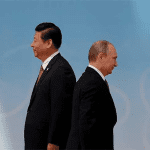




Since the US and Israel launched their war on Iran on 28 February, China and Russia have maintained a discourse that places the blame for the current crisis in the Middle East squarely on the aggressors.
They argue that the unprovoked US-Israeli strikes against Iran have caused tensions to escalate across the region and the violence to spill over into other areas. Beijing and Moscow have also reaffirmed their support for the right of Iran and the Arab Gulf states to protect their sovereignty, security, and territorial integrity, while calling for de-escalation and an immediate ceasefire.
There can be no military solution to this crisis, they stress. Diplomacy, dialogue, and negotiation remain the only way to address the root causes of the conflict.
This Chinese and Russian discourse has been reflected in concrete measures, including intensive communications with all the relevant parties and diplomatic efforts to reduce tensions.
In a statement on 8 March, Chinese Foreign Minister Wang Yi underscored five principles that are essential to reaching appropriate solutions to the issues concerning Iran and the Middle East: respect for the sovereignty, security, and territorial integrity of Iran and all the Gulf states; rejection of the use of the arbitrary use of force; non-interference in the internal affairs of sovereign states; the pursuit of political solutions and a collective security framework to overcome contentious issues; and ensuring that the major powers play a constructive role in promoting peace and development in the Middle East.
These five principles are linked to a five-point peace initiative put forward by China and Pakistan on 31 March. It calls for an immediate cessation of hostilities and concerted efforts to prevent the conflict from spreading; the immediate start of peace talks while safeguarding the sovereignty of Iran and the Gulf states; the immediate halt of attacks on civilians and non-military targets, including critical infrastructure; the protection of sea lanes enabling the safe resumption of civilian and commercial maritime traffic through the Strait of Hormuz as soon as possible; and a genuinely multilateral approach to promoting an agreement to establish a comprehensive framework to achieve a lasting peace based on the aims and principles of the UN Charter and international law.
Russia has drawn attention to the concept of collective and indivisible security in the Gulf. During a virtual meeting with the foreign ministers of the Gulf Cooperation Council (GCC) states on 30 March, Russian Foreign Minister Sergey Lavrov stressed that the Russian concept, which it had long advanced, would serve to maintain peaceful and good neighbourly relations among all the littoral states.
In a phone call with his US counterpart on 9 March, Russian President Vladimir Putin also presented several ideas for ending the war with Iran. According to press reports, one proposal included a plan to transfer Iran’s enriched uranium to Russia. US President Donald Trump later told reporters that “Putin wants to be helpful. I said, ‘You could be even more helpful if you ended the war between Ukraine and Russia.’”
Both China and Russia maintain close and strategic partnerships with Iran. Some observers have even spoken of a trilateral alliance between Beijing, Moscow, and Tehran, while others have gone so far as to suggest a quadrilateral alliance that also includes Pyongyang.
Whether or not such a tri- or quadrilateral formation exists, the four countries are aligned in their opposition to US global unilateralism and their desire to promote a multipolar international order.
FRAMEWORKS: Despite the commonalities, the Iranian-Chinese and Iranian-Russian bilateral frameworks are not identical. While economic cooperation dominates the former, recent years have seen growing military and defence cooperation between Russia and Iran.
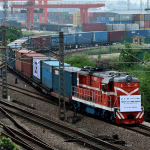
China is Iran’s largest trading partner. Approximately 13 to 14 per cent of China’s oil imports come from Iran, while Beijing purchases around 90 per cent of Iran’s oil exports. China is thus a financial lifeline that has enabled Iran to weather the destruction of its infrastructure during previous confrontations. In addition, as a land bridge between Central Asia and the Middle East, Iran is a key pillar in China’s Belt and Road Initiative (BRI).
Iran occupies a similarly strategic geographic position for Russia. It lies at a key point on the International North-South Transport Corridor (INSTC), which connects Russia to the Indian Ocean. Since mid-2022, Russian-Iranian military cooperation has deepened against the backdrop of the war in Ukraine.
Moscow has received various types of Iranian combat drones, artillery shells, small-arms ammunition, and glide bombs. It has also opened domestic production lines for the Iranian “Shahed” drones. In return, Moscow has supplied Tehran with advanced weaponry, including Su-35 fighter jets and air-defence systems.
As important as these partnerships are to Iran, some analysts maintain that the US-Israeli war against Iran has demonstrated the limits of what Russia and China can do for their Iranian partner. While officially Chinese and Russian support for Tehran is confined to the diplomatic sphere, various reports indicate that this is not the case.
According to a report appearing in the Washington Post, an analysis of ship-tracking data, satellite imagery, and US Treasury Department records concluded that two vessels linked to an Iranian firm that supplies Tehran’s ballistic missile programme departed from the port of Gaolan on China’s southeastern coast during the first week of March.
The report notes that Gaolan is a chemical loading port, including for sodium perchlorate, a key precursor for the solid rocket fuel needed for Iran’s missile programme. China has also reportedly provided Iran with access to its highly accurate BeiDou-3 satellite navigation system, improving the accuracy of Iranian missiles and drones.
According to the Wall Street Journal, citing informed sources, Russia is supplying Iran with satellite imagery and advanced drone technologies to help it target US forces, bases, and radar systems in the region. Some analysts observe that the types of targets struck by Iran suggest it is receiving enhanced intelligence, and that its missile strikes are more precise than those carried out during the 12-day war of June 2025, and more focused on radar sites and communications systems.
The analysts likened Iranian tactics to those that Russia uses in Ukraine, which rely on drones to disrupt and degrade air-defence systems prior to missile strikes.
The Russians have neither explicitly confirmed nor denied these reports. Kremlin Spokesman Dmitry Peskov pointed out that US officials themselves acknowledged that they possessed no concrete information on the matter. Initially, Trump downplayed the significance of the alleged Russian intelligence support, claiming that Iran did not benefit from it significantly.
Later, however, he suggested that Russia might be helping Iran “a little”, adding that Russia probably believes the US is helping Ukraine.
In response to a journalist’s question about the nature of Chinese and Russian military cooperation with Iran, Iranian Foreign Minister Abbas Araghchi said that his government receives political and other forms of assistance from these two countries.
Military cooperation between Iran and Russia “is no secret”, he stressed. But he declined to offer specific information when asked whether his country was receiving Russian and Chinese military assistance in the current war.
DETERMINANTS: Beyond the debate over the extent of support China and Russia can provide to Iran in the current confrontation, a number of key determinants shape Beijing’s and Moscow’s policies and actions.
First, both countries seek to balance their positions and actions in a way that ensures stable bilateral relations with all parties involved in the conflict, including the United States. Despite their explicit opposition to the war, China and Russia are keen to maintain stable relations with Washington and to shield them from renewed disruption. For Russia, stable relations with the United States support its position in negotiations over Ukraine, while China seeks stable trade and economic ties with Washington.
In general, China’s and Russia’s policies and actions at this juncture are shaped by several key considerations.
Both countries want to calibrate their actions so as to maintain stable bilateral ties with all parties involved in the conflict, including the US. For Russia, unruffled relations with Washington work in Moscow’s favour in negotiations over Ukraine. China, for its part, seeks stable trade and economic relations with Washington.
Second, increased military engagement in the Middle East diverts Washington from both Ukraine and the Indo-Pacific. The prolongation of the war against Iran has forced the US to redirect military resources to the Middle East. Even if the war ends soon, Washington’s priority in the aftermath is likely to be replenishing its military stockpiles, instead of assisting Ukraine, which would be to Russia’s advantage in that war theatre.
By the same token, with the US bogged down militarily in the Middle East, Beijing enjoys greater manoeuvrability in advancing its priorities and interests in the Indo-Pacific, better positioning itself in the face of Washington’s strategic competition in that arena.
Third, the economic factor is perhaps the most crucial determinant of China’s and Russia’s positions on the war. Russia is widely viewed as the primary economic beneficiary, as rising oil and gas prices boost its export revenues. After the US Treasury announced a 30-day suspension of sanctions on Russian oil shipments, Russia has presented itself as a “reliable supplier” of energy capable of ensuring global economic stability.
China, meanwhile, had steadily built its crude oil reserves over the past year, which has shielded it from potential supply disruptions. Oil and gas also constitute a relatively small share of China’s energy mix, while electricity accounts for more than a quarter of its final energy consumption and is generated primarily from domestic coal and renewable sources.
Moreover, the current global energy crisis may present an opportunity for China if countries accelerate their transition to clean energy, as China dominates the global production of solar panels, electric vehicles, and wind turbine components. It is therefore well positioned to meet rising global demand for these technologies.
The US-Israeli war against Iran, together with its global economic repercussions, has given new impetus to the Chinese and Russian push for a transition to a multipolar world, especially given the instability increasingly associated with US global leadership. Nevertheless, it remains in the interest of both China and Russia to de-escalate and end the war soon, while ensuring the resilience of the Iranian regime.
This would allow Beijing and Moscow to sustain political, economic, and military cooperation with Iran and to restore stability to regional infrastructure projects linked to the BRI and INSTC.
Published in cooperation between the Egyptian Center for Strategic Studies, Al-Ahram Weekly, and the English-language portal Ahram Online