


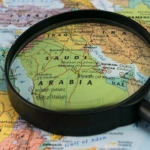


Over the past years, there has been a long-standing controversy in Egypt over the international and regional media’s handling of Egypt’s internal affairs and its foreign policy. Egypt’s criticisms of international media has been driven by a genuine desire that those major media and press organizations see Egypt through a magnifying lens, watching and analyzing the Egyptian case thoroughly rather than using a narrow-angle lens through which they can only see the unfounded claims of human rights abuses promoted by the Brotherhood, a terrorist-designated group in Egypt and other countries.
However, recently, there has been a marked shift in the discourse of media organizations in tandem with Egypt’s growing role and its powerful regional influence in various issues including the dispute over gas in the Middle East, the Libyan crisis, countering terrorism and the armed organizations in Horn of Africa, supporting transition in Sudan, ensuring stability in the Red Sea and Bab Al-Mandab Strait, and most importantly supporting the Palestinian cause, which remains the name of the game in the Middle East and which Egypt had never quit and whose recent role in mediation and offering a truce between Israel and the Palestinian factions has come to be recognized by international organizations, media agencies, and governments worldwide.
Al-Jazeera is a good example of this shift. Any observer of Al-Jazeera program schedule during the past few days and its coverage of the bloody conflict in Jerusalem and the Gaza Strip would notice a significant change in its handling of Egyptian affairs. Besides the extended livestreaming of the military confrontations between Israel and the Palestinian factions over the elven days of the conflict, the channel showed a great deal of professionalism highlighting the Egyptian role in the ceasefire agreement and in offering a truce. Moreover, Al-Jazeera main headlines made reference to the Egyptian efforts to support the Palestinians including opening the Rafah border crossing, providing urgent aid packages to mitigate the devastation the Israeli attacks left behind, and opening the Egyptian hospitals to receive wounded Palestinians.
As far as I see, this change of the Editorial policy of Al-Jazeera turns out to be more of an indicator to build on rather than reflecting a radical change. Indeed, this hasn’t been the first indicator of a change in Al-Jazeera’s approach. On 5 January, after Al-Ula summit which ended the Arab quartet blockage on Qatar and rebuilt ties between Qatar, Egypt, and the Gulf, the messages of Qatar’s media system saw gradual change in their handling of the Egyptian and Arab cases. This has been coupled with a resetting of the diplomatic, political, and security relations between Cairo and Doha, towards fostering bilateral relations and investment to build trust between the two countries, which, in turn, would help bolster the Arab joint work and bridge differences based on the outcomes of Al-Ula summit that laid the basis for a new era of Arab work based on non-interference in the internal affairs of other countries and stopping hostile policies.
Qatar’s foreign media system is undoubtedly one of the tools that shape Doha’s regional and international interactions and reflect its interests and visions on various issues and crises. Qatar’s media tools have been a source of clashes between Qatar and several Arab countries including the Gulf, Egypt, Jordan, and North Africa.
Qatar has invested billions in various media projects, including primarily Al-Jazeera channel established in November 1996, that were expanded in the last quarter of a century to become a network encompassing Al-Jazeera Mubasher, Al-Jazeera Documentary, Al-Jazeera English, and Al Jazeera Plus, among others. Likewise, Qatar has also invested in international media outlets such as Al-Araby Television Network, Al-Araby Al-Jadeed newspaper, and the Middle East Eye, all of which are headquartered in London which has been – and continues to be – a theatre of the media activities of Qatar and other countries.
Given the social, political, cultural constituents of the Egyptian society, it is difficult to get past the fact that Al-Jazeera has served as a tool for marketing the Brotherhood subversive agenda by adopting an “intensive media strategy” conveying the impression that Egypt was on the brink of a socio-political explosion, turning a blind eye to the comprehensive development and the reforms that Egypt has been experiencing as if they were a mirage. However, I think this strategy has been “somewhat” abandoned and it has been evident in the last three months that there are indicators of a “partially” positive shift in the editorial stance and approach toward the Egyptian issues.
Describing this shift as being “partially” positive is prompted by the fact that Qatar’s foreign media system need to undertake a re-evaluation of its media staff, editors, and content producers as a large proportion of them adopt ideologies hostile to the Egyptian State. If this is to happen, Qatar’s media system, primarily Al-Jazeera network, will manage to re-gain full trust of the Arab audience in general and the Egyptian one in particular.
The notable new shift in Al-Jazeera’s approach and messages toward the Egyptian State has been well received by Egypt as has been evidenced by the phone-in participation of two authority figures with Al-Jazeera, namely Eng. Muhammad Ghanem, Ministry of Foreign Affairs Spokesman, and Amb. Ahmed Hafez, to comment on events and clarify Egypt’s stance toward two important issues, i.e. the Ethiopian Dam and the recent war between Israel and the Palestinian factions.
These two appearances were the first of Egyptian officials on the Al-Jazeera since the 30 June Revolution in which the Egyptians overthrew the Brotherhood. These participations are indicative of Egypt’s welcoming the recent change in the editorial policy of Al-Jazeera. Moreover, several specialized analysists made appearances on Al-Jazeera commenting on events in the region – a thing that couldn’t have been expected before.
As stated, the Qatari foreign media system could gain the confidence of the Egyptian people if continued those steps, breaking with its past practices, near and far, which were based on a sole strategic objective, i.e. turning a “media project” into a political platform that serve the subversive agendas of organizations at the expense of professionalism and media standards. The end result was a state of overwhelming chaos in Arab countries for years.
The more media outlets and tools that exist out there, the more beneficial it is to the public as they contribute to building and raising awareness of the audience and provide them with analyses of the motives and implications of the social, political, and economic interactions in their societies. But the point is that the editorial policies of media institutions should be based on the internationally accepted professional standards rather than turning into a tool for stirring up the public opinion and destroying countries, provoking civil wars and internal conflicts, and leaving millions of people displaced or dead, as has been the case in the last 10 years.


