





By using ECSS site, you agree to the Privacy Policy and Terms of Use.
Accept
ECSS - Egyptian Center for Strategic StudiesECSS - Egyptian Center for Strategic Studies
  • Home
  • International Relations
    International Relations
    Show More
    Top News
    Varied paths of reform in Africa
    March 22, 2019
    Two years on Stockholm: Yemen between comprehensive settlement and conflict management
    December 31, 2020
    A Test of Strength: The Relationship between the Iraqi state and the Popular Mobilization Forces Following Qasim Muslih’s Release
    August 26, 2021
    Latest News
    Israel’s African gambit
    March 6, 2026
    Geopolitical realism: What does Washington’s return to the African Sahel mean?
    March 5, 2026
    Analysis | Manufacturing opposition: How Israel uses digital platforms to shape Iranian public opinion
    February 14, 2026
    Analysis| Turkey without terrorism: Assessing the trajectory of Turkish–Kurdish reconciliation
    February 12, 2026
  • Defense & Security
    Defense & Security
    Show More
    Top News
    On deradicalisation: Marc Sageman and the psychology of jihadists
    June 22, 2020
    Israel’s Multiple Objectives to Attack Rafah
    February 19, 2024
    Where Does Daesh Stand in Syria’s Current Escalation?
    December 7, 2024
    Latest News
    Between two camps: Reading into ISIS discourse on the US-Israeli war on Iran
    April 15, 2026
    Encrypted messages “Roaring Lion”: The hidden messages behind the name of the operation against Iran
    March 11, 2026
    Iran war developments
    March 9, 2026
    Manufacturing the enemy : Reframing terrorism in contemporary Western discourse
    March 7, 2026
  • Public Policy
    Public Policy
    Show More
    Top News
    Egypt’s Comprehensive Vision for Human Rights
    June 22, 2020
    Sustaining Momentum: Egypt’s Strategy to Boost Water Security
    September 9, 2021
    The Dark Side: The Impact of Climate Change on Women
    July 7, 2022
    Latest News
    Reading into attacks on maritime navigation in the Arabian Gulf
    March 17, 2026
    Emerging economies in a world without rules: Between opportunity and predicament
    March 5, 2026
    The end of economic globalization: Reading into the 2025 U.S. National Security Strategy
    February 4, 2026
    Weaponization of Resources: The Role of Rare Earth Metals in the US-China Trade War
    May 25, 2025
  • Analysis
    • Opinion
    • Analysis
    • Situation Assessment
    • Readings
  • Activities
    • Conferences
    • ECSS Agenda
    • Panel Discussion
    • Seminar
    • Workshops
  • ECSS Shop
  • العربية
  • Defense & Security
  • International Relations
  • Public Policy
All Rights Reserved to ECSS © 2022,
Reading: The Extent of Influence: Resuming Sudan-Iran Relations
Share
Notification Show More
Latest News
The future of US-Iran negotiations
Opinion
Between two camps: Reading into ISIS discourse on the US-Israeli war on Iran
Terrorism & Armed Conflict
Russia, China, and the war against Iran
Others
Continental drift
Others
Deadlock in the Strait of Hormuz
Others
Aa
ECSS - Egyptian Center for Strategic StudiesECSS - Egyptian Center for Strategic Studies
Aa
  • اللغة العربية
  • International Relations
  • Defense & Security
  • Special Edition
  • Public Policy
  • Analysis
  • Activities & Events
  • Home
  • اللغة العربية
  • Categories
    • International Relations
    • Defense & Security
    • Public Policy
    • Analysis
    • Special Edition
    • Activities & Events
    • Opinions Articles
  • Bookmarks
Follow US
  • Advertise
All Rights Reserved to ECSS © 2022, Powered by EgyptYo Business Services.
African Studies

The Extent of Influence: Resuming Sudan-Iran Relations

Salah Khalil
Last updated: 2023/10/29 at 1:41 PM
Salah Khalil
Share
8 Min Read
SHARE

Contents
Evolution of Iran-Sudan Relations

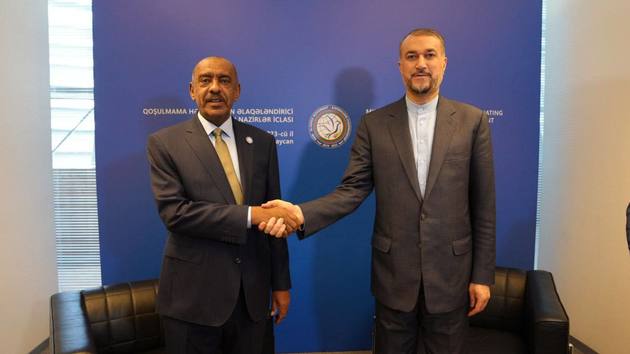
After seven years of severing ties, Sudan and Iran have restored diplomatic relations. In July 2023, the Sudanese Acting Foreign Minister, Ambassador Ali Al-Sadiq, and his Iranian counterpart, Hossein Amir-Abdollahian, issued a joint statement agreeing to resume diplomatic relations. On 9 October 2023, the Sudanese Foreign Ministry announced the return of official diplomatic relations. It is evident that extensive efforts have been made by both Khartoum and Tehran to mend fences in recent months, particularly in light of Saudi Arabia and Iran’s rapprochement in March 2023 following months of talks facilitated by China.

The crisis between the two countries began in 2016, when Sudan decided to cut off ties with Iran due to intense hostilities between Saudi Arabia and Iran following Iranian protesters stormed the Saudi Embassy in Tehran. The Sudanese government made the decision at the time to close all Iranian schools and cultural centers and expel diplomatic officials and the ambassador.

Evolution of Iran-Sudan Relations

Over the course of nearly three decades, relations between Khartoum and Tehran have historically been extremely close. Throughout the 1990s and the first decade of the 21st century’s third millennium, Tehran has been both Khartoum’s ally and a significant source and supplier of weapons. Iran views Sudan as an important hub for Iranian movements in the Horn of Africa region, within the context of its expansive regional project that extended to the African arena during the presidency of President Mahmoud Ahmadinejad, when the two countries were under US pressure and sanctions.

In April 1997, for instance, the two countries inked over thirty agreements covering a wide range of topics, including cooperative projects, training exchanges, and the qualification and training of Sudanese army and Security and Intelligence Service officers in Tehran. In March of 2008, the two countries signed a joint defense agreement that includes advanced defense coordination and joint efforts to promote security and peace in the Horn of Africa. Prior to severing ties, Sudan and Iran had strong ties, particularly in the military realm, as Iranian ships frequently docked in Port Sudan on the Red Sea.

In 2014, however, tensions between the two countries began to rise as Tehran pulled away from Khartoum in the face of Sudan’s worsening economic crisis and its inability to provide meaningful benefits to the country’s economy. The following year, Sudan joined the Saudi military campaign in Yemen, while Iran backed the Houthis there. This placed both Sudan and Iran in a position of indirect confrontation in Yemen, resulting in the escalation of tensions in their bilateral relations, which manifested in 2016 when Sudan severed all diplomatic ties with Iran. This persisted in a heightened regional context, where the intensity of polarization grew and hostile policies became more manifest in the region.

Similar to how regional factors fueled tensions that ultimately led to the two nations’ estrangement, they also played a role in the resumption of bilateral ties in 2023 after the Saudi-Iranian rapprochement created previously unoccupied space for the resumption of Sudanese-Iranian relations. This does not, however, imply that the Sudanese leadership has decided to alter its pattern of regional alignment in a manner that could incur substantial political and economic costs.

The Effect of Rapprochement on Iran and Sudan

Khartoum’s rapprochement with Tehran will have an effect on the positions of regional and international powers regarding the conflict between the Sudanese Armed Forces (SAF) and the Rapid Support Forces (RSF) that is currently taking place in Khartoum. It appears that the SAF wish to send a message to a number of countries in the regional and global arena, demonstrating that it has options in this crisis that allow it to adjust its military operations against the RSF to some degree and make progress in the military operations that are occurring in Khartoum and certain states of Darfur, through its rapprochement with a potent regional ally that has vast experience providing military hardware and expertise to its regional allies, which could play a role in shifting the current balance of power on the battlefields.

In effect, Iran can provide the SAF with effective military equipment, allowing the military institution to withstand a longer period of conflict and exhaust the RSF. Iran may be attempting to reestablish its strong presence in Sudan and the region that stretches along Africa’s eastern coast, as the recent rapprochement with Sudan aids Tehran’s positioning in the East African region, where Iran has a military presence through the Houthis in Yemen, as well as a close history of strong relations with a number of countries in the region, including Eritrea, Kenya, and the Comoros, as well as some active parties in Somalia. Sudan may even become the epicenter of Iranian activity extending from the west to the center of Africa and from the Lakes region to the south of the continent, given Iran’s ongoing efforts to revitalize its approach to Africa in light of the isolationist policies of the West towards the continent.

Put succinctly, the agreement between Saudi Arabia and Iran has allowed the latter to reposition itself in the region in a different way than the tense relations that characterized earlier years. In light of the current complex regional context, Iran will be eager to seize any opportunity it can to reclaim some of the influence it has lost in Africa over the past few years. Sudan appears to be among the most significant nations through which Iran hopes to bolster its standing and regain its waning sway in East Africa, which could potentially have long-term effects on the current equilibrium in the Middle East and Africa.

Related Posts

Geopolitical realism: What does Washington’s return to the African Sahel mean?

Xeer Ciise: Clan Tensions in Western Somaliland | Analysis

A diplomatic maneuver: Israel’s recognition of Somaliland

Gearing up for Somalia’s General Elections 2026: Procedural Complexities and Shifting Alliances

Salah Khalil October 29, 2023
Share this Article
Facebook Twitter Whatsapp Whatsapp LinkedIn Telegram Email Copy Link Print
Salah Khalil
By Salah Khalil
A researcher at Al-Ahram Center for Social and Historical Studies

Stay Connected

Facebook Like
Twitter Follow
Instagram Follow
Youtube Subscribe

Latest Articles

how palestinian liberation theology confrontsthe false political-religious narrative eastern churches in the face of christan zionism
Research Programs February 14, 2026
Ukraine Crisis: Deeper Collision Under Murky Water?
Opinions Articles February 23, 2022
Port Diplomacy: China’s Pursuit of Global Trade Dominance
Economic & Energy Studies March 16, 2024
El-Dabaa: Egypt Close to Fulfilling Its Nuclear Dream
Economic & Energy Studies February 4, 2024

Latest Tweets

//

The Egyptian Center for Strategic Studies is an independent non-profit think tank providing decision-makers by Policy alternatives, the center was established in 2018 and comprises a group of experts and researchers from different generations and scientific disciplines.

International Relations

  • African Studies
  • American Studies
  • Arab & Regional Studies
  • Asian Studies
  • European Studies
  • Palestinian & Israeli Studies

Defence & Security

  • Armament
  • Cyber Security
  • Extremism
  • Terrorism & Armed Conflict

Public Policies

  • Development & Society
  • Economic & Energy Studies
  • Egypt & World Stats
  • Media Studies
  • Public Opinion
  • Women & Family Studies

Who we are

The Egyptian Center for Strategic Studies (ECSS) is an independent Egyptian think tank established in 2018. The Center adopts a national, scientific perspective in examining strategic issues and challenges at the local, regional, and international levels, particularly those related to Egypt’s national security and core national interests.

The Center’s output is geared toward addressing national priorities, offering anticipatory visions for policy and decision alternatives, and enhancing awareness of various transformations through diverse forms of scientific production and research activities.

All Rights Reserved to Egyptian Center for Strategic Studies - ECSS © 2023

Removed from reading list

Undo
Welcome Back!

Sign in to your account

Lost your password?