







In European natural gas futures contracts, gas prices increased by 14 percent, while global oil prices rose by 4 percent. These figures reflect the fear and uncertainty surrounding the conflict’s escalation. Regional issues have merged, and there is growing concern over Israel closing a sizable offshore platform within Gaza’s missile range, as well as Iran potentially entering the war zone and closing the Strait of Hormuz, which is the crossing point for one-third of the world’s seaborne oil.
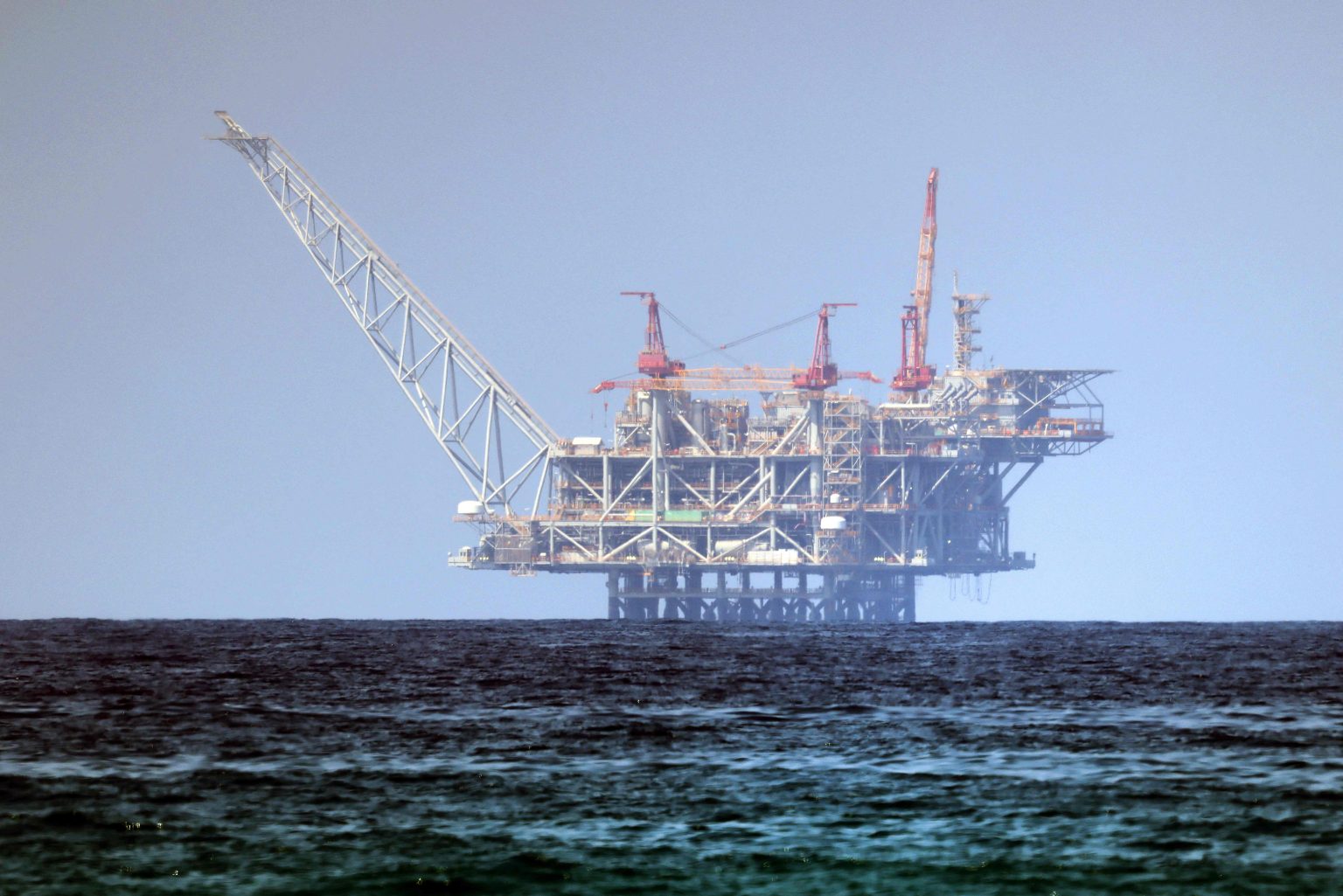
Following its attack on Gaza, the Israeli occupying force demanded that Chevron halt operations in the Tamar offshore field. Israel provided a justification for this request by asserting that it was safeguarding its energy production infrastructure against potential targeted attacks. While there are more substantial gas fields in Israel that have remained unaffected, the ground conflict targeting Gaza is anticipated to have far-reaching consequences.
Major Gas Discovery
In 1999, the Israeli occupation state granted permission to BG Group and three other Israeli companies, namely Mashav (15.6 percent), Dor Chemicals (7.2 percent), and Israel Petrochemical Enterprises (7.2 percent), to conduct initial deep-sea exploration activities. Mashav later left the partnership, and BG brought in STX, Isramco, Clal Industries, and Granit-Sonol, with the latter two leaving in 2004. Exploration studies and geological surveys persisted until 2007, when the Israeli government granted these companies an extension of the time limit for commencing drilling operations. The initial deadline was September 2003; however, it was subsequently postponed to December 2004, June 2005, and December 2008. Each of these extensions is deemed to have contravened the Israeli Petroleum Law, which stipulates that the total term of the license shall not exceed seven years from the date of the grant thereof.
In November of 2008, drilling operations commenced in the Tamar field. At that time, research suggested that gas constituted 35 percent of the composition of the field, and an economically feasible average output of 107 billion cubic meters was estimated. Drilling was done down to 4,900 meters in the Tamar 1 field. Drilling for the field cost roughly $92 million, and in July 2009, Tamar 2 was drilled as an appraisal well. The successful completion of this drilling operation led to an approximate 26 percent augmentation in the estimated reserves of the field. Following the drilling of four additional wells, Noble Energy commenced production development in September 2011, with an initial estimate of $3 billion for field development. However, field production did not commence until the conclusion of March 2013.
Figure 1: Field operations map for Tamar

Production from the field is made via eight wells connected to an offshore gas processing platform in Askalan by a double subsea pipeline that spans 93 miles (150 km). This processing platform was built in Texas and delivered to Israel at the end of 2012. It took about a year and a half to construct, and at first it could deliver about 27.9 million cubic feet per year, or 10 billion cubic meters annually. The daily production capacity was elevated to 31 million cubic meters in 2015 through the installation of compressors at the Ashdod reception terminal, thereby augmenting the production capacities. The Tamar field produced approximately 10.25 billion cubic meters of gas in 2022.
The Tamar field contains approximately 320 billion cubic meters of reserves. Chevron has acquired Noble Energy, which produces gas in the Tamar and Leviathan fields and controls approximately 47 percent of the Tamar field with other partners including Isramco, which owns approximately 28.8 percent, and Tamar Oil, which owns 17.7 percent. Noble Energy still maintains control over approximately 85 percent of the Leviathan gas field.
The entity that holds the rights to utilize the Tamar field declared in May 2014 that it had signed a memorandum of understanding with Gas Natural Fenosa, a Spanish company that jointly owns an 80 percent liquefied gas export plant in Damietta with Eni, an Italian company, while the remaining 20 percent is split between Egyptian General Petroleum Corporation and Egyptian Natural Gas Holding Company. This was the first agreement reached between Egypt and Israel. Israel subsequently reached a similar accord with the Arab Potash Company in Jordan. Based on the terms of this agreement, Egypt was expected to receive an annual gas supply of approximately 4.5 billion cubic meters from the Tamar field for a duration of 15 years. This quantity corresponds to roughly half of the field’s total production, or 10.25 billion cubic meters per year. However, the actual gas supply to Egypt did not surpass 10 percent of the field’s overall output (1 billion cubic meters per year). The contractual agreement was valued at approximately $20 billion, or $1.3 billion per year, assuming Egypt receives a yearly supply of 4.5 billion cubic meters of gas via pipeline from the Tamar field to the Egyptian coast, a distance of 300 kilometers.
Prior to the war, the daily volume of Israeli exports to Egypt was approximately 23 million cubic meters (800 million cubic feet). According to media reports, the Israeli Ministry of Energy intends to augment its exports from the Tamar field to Egypt by 3.5 billion cubic meters per year for a period of eleven years, for a cumulative annual volume of 38.7 billion cubic meters (at present, 1 billion cubic meters are exported to Egypt, and Egypt can procure supplies amounting to approximately 4.5 billion cubic meters per year per the terms of the contract established between the two parties). This implies that Egypt may be able to get supplies at a rate of roughly 44 billion cubic meters per year for the remaining 11 years of the contract. Nevertheless, this remains dormant, as daily supplies have decreased by about 20 percent due to the Israeli invasion of Gaza, amounting to approximately 650 million cubic feet per day.
Economic Drain
Israel’s overall natural gas production amounted to approximately 22 billion cubic meters: the Leviathan field contributed 52 percent of this total with an estimated 11.4 billion cubic meters; the Tamar field contributed 47 percent with a production of approximately 10.2 billion cubic meters; and the Karsh field contributed the remaining 1 percent with an estimated 1 billion cubic meters. With an estimated domestic consumption of 12.7 billion cubic meters, Israel accounts for approximately 58 percent of the total production. The remaining gas, equivalent to 9.2 billion cubic meters, is exported to Egypt and Jordan, constituting an estimated 90 percent of the Tamar field’s output. The total value of gas exports in 2022 was around $2.3 billion. When compared to the total exports of Israel, which totaled 166 billion dollars in 2022, this amount appears to be low, representing approximately 1.4 percent of total exports this year.
Table 1: Israel’s gas fields
| Field | Discovery Date | Status | Production Capacity (Billion cubic meters) |
| Tamar | 2009 | Producing | 10,2 |
| Leviathan | 2016 | Producing | 11,4 |
| Karish | 2013 | Producing | |
| Tanin | 2012 | Production set to begin in 2024 | |
| Shimshon | 2012 | The production commencement date is yet unknown. | |
| Dalit | 2009 | The production commencement date is yet unknown. |
This percentage may appear to be very low given the volume of Israeli exports, which is much higher. But given the 1.3 percent general budget deficit in 2023, or roughly $6 billion; the damage inflicted by the war on the tourism industry, which brings in about $3.1 billion for Israel; the suspension of international flights to Israel; Israel’s declaration of war; and the mobilization of roughly 360,000 reservists, we find that all of these factors paralyzed the joints of the Israeli economy as a whole and had a significant impact on production. This raises the possibility that the Israeli economy will experience an inflationary depression, a situation in which prices rise and supply falls as a result of production ceasing. This forces the state to try to recoup every dollar of its earnings and quickly put an end to the war in order to prevent these bad consequences. Add to this the military expenses of the conflict in Gaza, which the Hapoalim Bank projects will cost Israel roughly $6.8 billion, or 1.5 percent of its GDP.
Considering the aforementioned, as well as the size of the export market and Israel’s overall natural gas production, it seems improbable that the Gaza war will have a significant impact on the world’s oil and gas markets when considering Israel’s production capabilities. For instance, Egypt produces three times as much as Israel, with an annual production of 67 billion cubic meters. Therefore, the effects on Egypt’s capacity to export gas from the Idku and Damietta stations—which rely on Israeli gas that is liquefied and then re-exported to the European market—may be minimal, given the reduction in the estimated one billion cubic meters of supplies to these stations, as Egypt and Israel have signed contracts to export these shipments to Egypt over the next 11 years. Still, if these shipments cannot be imported, then Cypriot gas from the Aphrodite field can fill the limited import space, especially since plans are in motion to build a pipeline that will link Aphrodite to the Egyptian liquefaction stations. As a result, we expect Israeli gas exports to have a limited impact on Egypt.
However, there is a risk that the conflict will escalate and attract more parties, disrupting navigation in the Strait of Hormuz or the Suez Canal or preventing Arab Gulf states, particularly Qatar, from delivering gas shipments to Europe. This would jeopardize the global energy market and raise the price of both oil and gas, especially since the war coincides with European efforts to replace Russian gas that has been cut off with alternatives from the Arabian Gulf and the Eastern Mediterranean.