





On his first tour following his appointment as the UN Under-Secretary-General for Humanitarian Affairs and Emergency Relief Coordinator on 12 May, Martin Griffiths landed in Ethiopia to take stock of the humanitarian situation in the country, with the humanitarian and food situation exacerbating following the outbreak of the conflict in Tigray, which added to the grave humanitarian situation already suffered due to drought, desertification, and locust infestation in East Africa.
Griffiths had started his six-day tour on 29 July with a meeting with officials of the federal government, the Deputy Prime Minister, Minister of Foreign Affairs, Minister of Peace, and Chairperson of the African Union Commission to discuss the humanitarian situation and the challenges facing relief organizations providing humanitarian assistance to Ethiopians.
To familiarize himself with the humanitarian situation in Ethiopia, Griffiths met civilians who suffered from violence and damage of infrastructure, including hospitals, schools, health centers, and banks. The tour reflects the interest of the international community to work with the Ethiopian government and people to respond to the crisis plaguing the lives of millions of people, given the UN Office for the Coordination of Humanitarian Affairs’ desire to scale up the humanitarian work in Ethiopia.
A Complex Humanitarian Crisis
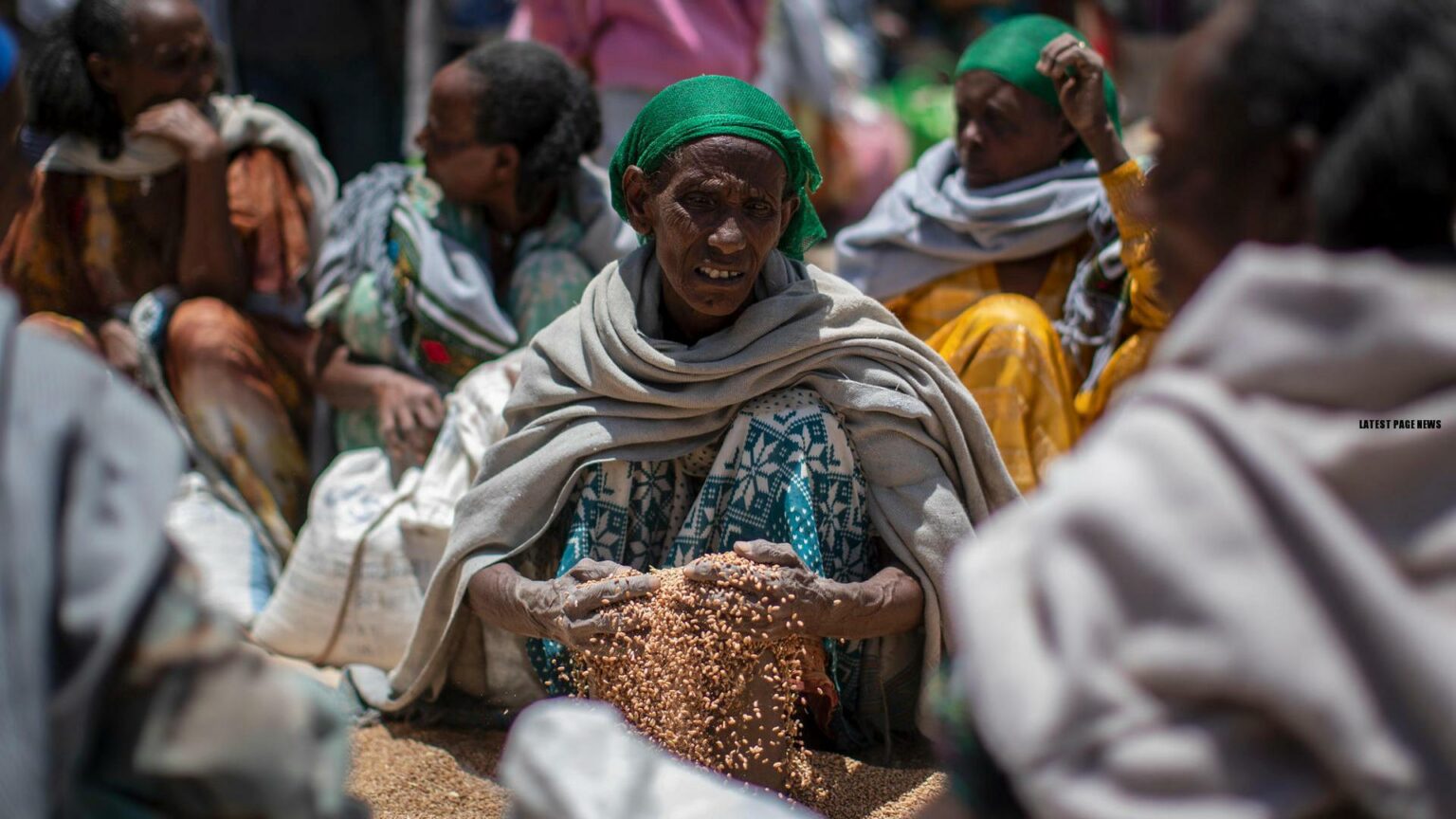
According to the latest UN reports monitoring the humanitarian situation during the course of conflicts, disputes and wars in general and the situation in Ethiopia in particular, the humanitarian crisis in Ethiopia has been on an upward trend, particularly since the start of the open conflict in northern Tigray. Prior to the conflict, Ethiopia has been already suffering humanitarian and food crises due to several factors, including primarily drought, floods, and locust infestation.
At present, an estimated 5.2 million people in Tigray (about 90 percent of the region’s population) are in need of humanitarian assistance. According to the UN, 400,000 people are at acute risk of starvation.
Amid this tragic situation, the destruction of a bridge on the Tekeze River on 1 July complicated the situation, impeding delivery of humanitarian aid to the region, which impelled the international community to intervene for enhancing the worsening humanitarian situation in the country. In the same vein, Security Council members have warned of the conflict impact on about 33,000 malnourished children, noting that the vast majority of children and women have been affected by the conflict, with about 1.8 million people on the brink of starvation, thousands killed, and two millions displaced.
Besides suffering disruption to essential services, farmers and those who were forced to flee their homes are in dire need of emergency humanitarian assistance. This contradicts the federal government’s narrative of withdrawing to enable farmers of the wet season. Further, ten vehicles of the World Food Program convoy carrying aid were attacked near Afar’s capital, which prompted the UN to suspend its convoys along that road.
In her statement on 31 July, the UN Special Adviser on the Prevention of Genocide, expressed her concern over ethnic violence and serious violations of the international humanitarian law (IHL) and the human rights law in Tigray and other regions, including Afar, Somalia, Oromia, and Amhara regions.
Delayed International Response
With the humanitarian situation exacerbating day after day in Ethiopia, the international community developed greater awareness of the necessity to provide humanitarian assistance, just after it had been focusing solely on a peaceful settlement of the conflict or shattering it at the beginning by calling for ceasefire or negotiation.
The UN Under-Secretary-General for Political and Peacebuilding Affairs, Rosemary DiCarlo, called for a ceasefire to facilitate the delivery of humanitarian assistance and push towards a political settlement of the crisis, suggesting capitalizing on the UN expertise for mediation. In the same vein, international actors and humanitarian and UN organizations called for not only ending the conflict and facilitating the delivery of aid but also holding accountable those responsible for violations, including sexual violence against children and mass killing.
Despite all the restrictions imposed by the Ethiopian government on the delivery of humanitarian aid to Tigray, international data indicates that 3.7 million people have received emergency assistance over the past two months, 167,000 internally displaced people have received non-food aid, and 630,000 people received clean water through water trucking. However, an estimated 2.5 million people in rural Tigray hadn’t been able to access to basic services in the past six months.
Former UN Under-Secretary-General for Humanitarian Affairs and Emergency Relief Coordinator, Mark Lowcock, urged the Security Council and world countries to take possible steps to help deliver aid. In his speech before the UN Security Council, Lowcock touched on the circumstances that block the humanitarian aid to Tigray adversely affecting people living in the region. Lowcock warned, then, of the risk of an imminent famine if the pace and magnitude of assistance remained the same.
In his briefing on the situation in Ethiopia early July 2021, Acting Assistant Secretary-General for Humanitarian Affairs and Deputy Emergency Relief Coordinator, Ramesh Rajasingham called on armed and security actors to “provide guarantees for safe road access for humanitarian workers and supplies to and from Tigray, as well as to and from the most remote parts of the region”. Rajasingham noted that humanitarian workers should be able to use the fastest and most effective modality to deliver supplies to people in need and must be able to fly and bring in and use all appropriate communication equipment. Last March, in its emergency session on the situation in Tigray, the UN Security Council condemned the government’s obstruction of humanitarian convoys to the region.
For its part, in 2020, the International Committee of the Red Cross (ICRC) visited nearly 72,000 people deprived of their liberty in more than 50 places of detention across Ethiopia, provided them with a basic material assistance, helped with access to water and sanitation, and facilitated communications between detainees and their families. In addition, the ICRC also provided material to contain the spread of COVID-19 in prisons.
Complementary US Efforts
Coinciding with Martin Griffiths’ visit to Ethiopia, the United States Agency for International Development (USAID) Administrator Samantha Power, made a visit to Ethiopia, and met with Ethiopia’s Minister of Peace Muferiat Kamil and other officials where they held discussions on the necessity of delivering humanitarian aid to Tigray as well as Amhara and Afar regions, the two regions where over 150,000 and 76, 000 were displaced respectively. Power also announced a $45 million worth funding from the United States to support humanitarian efforts in Ethiopia.
Relatedly, early March, the USAID announced it would deploy the Disaster Response Assistance Team to respond to the growing humanitarian needs in Tigray. Under the US commitment to support the humanitarian situation in Tigray, the USAID assistance to Tigray since the outset of the conflict are estimated at $637 million. The USAID funding will address life-threatening hunger by providing more than 172,000 tons of food aid, sufficient enough to feed five million people for approximately two months.
Speaking of the international humanitarian aid should not be in isolation from talks on complete settlement of the ongoing conflict to spare the country a tragic situation. This dovetails with statements of Alice Weirimo Ndereto, the United Nations Special Adviser on the Prevention of Genocide, who expressed alarm at the continued deterioration of ethnic violence in Ethiopia, a clear indication of the international community’s recognition of the direct link between the conflict and the humanitarian crisis in Ethiopia.


