



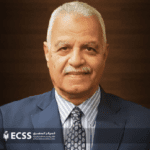
As a former member of the Taba Supreme National Committee (TSNC) who bore witness to the years of negotiations between Cairo and Tel Aviv, I now reflect upon the invaluable lessons learned from this momentous national occasion and how we can leverage them for the present and future. I must acknowledge that this national assignment was a matter of life or death for each member of the TSNC, with only one viable course of action available to us: to bring the negotiation process to a definitive conclusion by returning Taba to the rightful sovereignty of Egypt. Any other alternative was simply not an option.
On 19 March, Egypt marked the 34th anniversary of the restoration of Taba and the hoisting of the national flag over Sinai by late President Hosni Mubarak. The restoration of this land marked the return of the last few hundred meters of our territory to Egypt’s embrace, a moment that will live on as an eternal epic that contemporary Egyptian history will never forget and that will leave a record in the sands of time. Every letter of this epic bore witness to the strength and indomitable will of the Egyptian state, which was able to triumph despite all challenges.
The Taba problem was given serious consideration by Egypt following Israel’s final withdrawal from the Sinai on 25 April 1982, with the exception of the Taba area, which covers an area of about 1,200 square meters. Egypt set the best example when it fully committed to enforcing Article VII of the Egyptian-Israeli Peace Treaty, which was signed on 26 March 1979, and its two paragraphs. The first of these paragraphs stated “Disputes arising out of the application or interpretation of this Treaty shall be resolved by negotiations”, and the second stated that “Any such disputes which cannot be settled by negotiations shall be resolved by conciliation or submitted to arbitration.”
Egypt took a similarly distinguished scientific and practical approach, forming an integrated work system (the TSNC) composed of representatives and experts from all relevant state institutions, including the Ministry of Foreign Affairs and the Armed Forces, as well as legal, scientific, and security institutions with full backing from the political leadership. The TSNC then made concerted efforts, both internally and externally, to acquire all the records, justifications, maps, and witnesses that would support Egypt’s claim to Taba, a goal the TSNC has already accomplished.
While the legal and political negotiating battle with the Israeli side was intense, one of the most significant difficulties the Egyptian negotiating delegation faced, in my opinion, was how to deal with and defeat the Israeli negotiators, who have the superior ability to debate and non-objective dialogue, focus on formalities, and try to drown the Egyptian negotiators in numerous details in an effort to prevent them from achieving the desired result.
The Egyptian negotiators were well-aware of these Israeli strategies, and they ultimately prevailed thanks to their professionalism, credibility, and trust in God and in themselves as they faced off against the Israeli negotiators. This victory stunned Israeli negotiators and the US mediator, who played a crucial role in mediating between the two parties as the peace process’s sponsor until the case was referred to arbitration.
Egypt was also adamant that the arbitration take a certain course that would not cause it to deviate from its ultimate objective. In this regard, the Egyptian state was successful in defining the question that the arbitral tribunal had to answer in the arbitration charter party, represented in determining the locations of the boundary pillars, especially the boundary pillar 91, i.e. the point of Taba, without resorting in any way to the recognized international boundary in maps and international agreements since 1906, which is the boundary pillar that Israel sought to amend in its favor. Egypt’s rejection was unequivocal and categorical; the country would not tolerate any weakening of the international border pillar.
The raising of the Egyptian flag on the land of Taba on 19 March 1989, was a statement of an undeniable truth: the strong, civilized Egyptian state that respects its international obligations has not and will not neglect its rights at any cost, and Egypt is capable of adopting any legal, political, or whatever methods that ultimately achieve the goal of preserving Egyptian national security. This, I believe, sends a loud and clear message to all countries that may have the slightest suspicion that Egypt might be negligent or compromise its rights.
The anniversary of Taba’s restoration comes at a time when the Egyptian state is confronted with a number of significant difficulties related to the swift developments at the regional and global levels, particularly in the economic sphere. This calls for us to reflect on the key elements that enabled Egypt to successfully restore Taba and consider how we can use this success and this singular experience to motivate us as we work to overcome the challenges Egypt is currently facing.
Perhaps, on the anniversary of the restoration of Taba, I feel it is especially important to stress that Egypt can overcome any challenges it faces so long as the following five factors are taken into account.
1. The political will serves as the primary means of resolving any issues the state may encounter.
2- The current economic crisis Egypt is experiencing, which is part of the global economic crisis, is less serious and less complicated than the issue of Israel’s occupation of any portion of Sinai.
3- For the entire country to be united behind one man in addressing the challenges facing the state, the position of the Egyptian people must be integrated with that of the political leadership.
4- Continuous coordination between all state institutions is necessary to respond to any crisis to which the country may be subject in accordance with a comprehensive plan that will be carried out in accordance with the nature of the situation on the ground.
5- The media should be a fundamental component of the state system and should assume responsibility for explaining all the issues and threats the state faces without downplaying or exaggerating them. It should also make it clear what role the state and the people should play during this time and how the people can serve as the first line of defense.
If Egypt was successful in liberating Sinai during the glorious October War and moved with all its might and courage toward peace under the direction of the late President Anwar Al-Sadat, then I must mention the tremendous efforts made by the political establishment, led by President Abdel Fattah El-Sisi, which is keen on incorporating Sinai into the Egyptian state’s development system and connecting it to its national security. Connecting Sinai with the rest of Egypt is a huge step forward, and it comes on the heels of the state’s success in freeing Sinai from terrorism thanks to the efforts of the military and the police.
Finally, we must honor and respect the memory of our righteous martyrs today and always, for it was their pure blood that nourished the holy land of Sinai. We must also keep in mind the TSNC members whose souls went back to their Lord in peace. All of those people contributed their lives to the epic of liberating Sinai and securing Taba.