







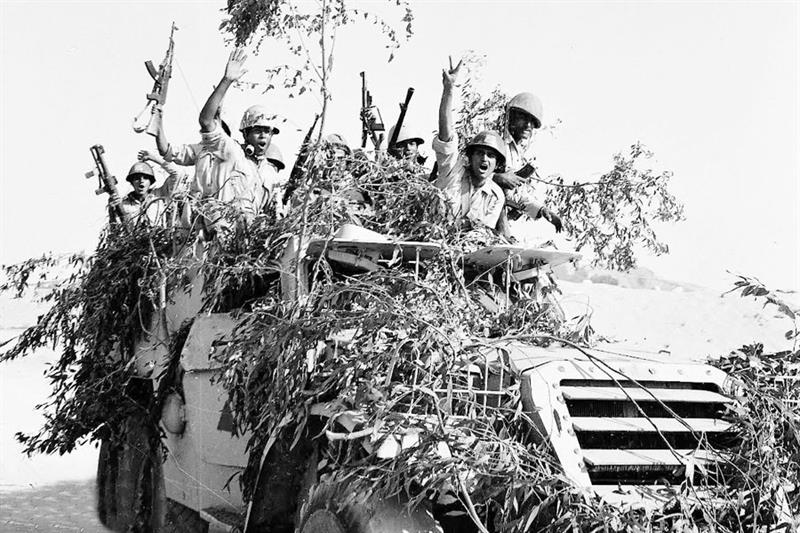
In the realm of military science, “strategic deception plans” are defined as meticulously coordinated sets of actions and activities aimed at concealing the specific details of ongoing preparations for an impending attack. Revealing them to the enemy could potentially impact the course of a war in a general sense.
Such measures encompass a wide array of actions, not limited solely to logistical and tactical aspects, but also encompassing the political, economic, and media dimensions associated with preparations for commencing an anticipated offensive.
The overarching objective of such measures is to prevent the enemy’s intelligence and information agencies from accurately assessing the strategic and tactical landscape and to divert their assessments and efforts in false directions that would lead to field and strategic decisions favouring friendly forces.
It is worth considering the achievement of surprise and the element of unpredictability as being among the fundamental elements that were carefully considered by the Egyptian political and military leadership during the planning and preparation for the Egyptian offensive operations in the October 1973 War.
The realities of the battlefield, along with the state of “confusion” and “tension” that characterised the Israeli military leadership in the initial days of the conflict, demonstrated that this objective was masterfully realised. The strategic deception plan adopted by the Egyptian leadership to safeguard the secrecy of the extensive preparations for the commencement of the battle of liberation of Sinai proved to be a pivotal tipping point in the outcome of the October War.
It represents a shining landmark in military history on all fronts.
Among the fundamental challenges facing the political and military leadership in Cairo in the post-1967 era was the imperative to overcome Israel’s superiority in military hardware and technology. The aim was to ensure that the Egyptian and Syrian forces possessed the capability to execute high-quality and effective military operations against Israeli forces.
Additionally, Tel Aviv’s possession of advanced capabilities in surveillance, reconnaissance, and eavesdropping constituted a significant barrier to both nations’ efforts to intensify their political, economic, and military preparations in the months leading up to the October operations.
The Egyptian front was consistently “exposed” to Israeli surveillance, whether through regular aerial reconnaissance flights, US satellites, or observation points, such as the numerous watchtowers along the Bar Lev Line, each approximately 30 m high. This reality, coupled with the logistical and tactical difficulties related to crossing the water barrier of the Suez Canal and confronting the fortifications of the Bar Lev Line — compared by western military experts to some of the most formidable defensive lines of World War II, among them the German “Siegfried Line” and the French “Maginot Line” — as well as Israel’s superiority in weaponry and equipment, and the international political standoff, all underscored the necessity for a well-devised strategic deception plan to mitigate the negative effects of these factors.
As a result, the core plan for military operations in the October War, “Operation Badr”, included a strategic deception plan that relied on achieving surprise at three levels — strategic, operational, and tactical. Given the earlier-discussed factors, the element of surprise was pivotal in determining the outcome of the offensive military operations. Through this plan, all preparations for the offensive, including training, equipment accumulation, and the preparation of the theatre of operations and the home front, were to be concealed.
The overarching objectives of the strategic deception plan also extended beyond concealing preparations for offensive operations. It also sought to generate a general conviction within the Israeli intelligence and information agencies that there was no Arab inclination towards war, either due to a lack of executive and economic capacity or the absence of political will or an international climate conducive to such action.
Hence, the abundance of both direct and indirect information that Egypt directed towards the Israeli military and political channels, conveying the message that both Egypt and Syria were militarily relaxed, played a crucial role in bolstering Tel Aviv’s conviction that both Cairo and Damascus were seeking a peaceful means to resolve the conflict with Israel.
This was perceived as being the result of the absence of the necessary economic and military capabilities to resolve the situation militarily. Previous statements by the Egyptian leadership in 1971 and 1972 regarding the imminent commencement of military operations were primarily driven by internal considerations, amidst growing popular discontent with the stagnant situation on the frontlines.

STAGES OF PREPARATION: The preparation of the components of the strategic deception plan, which complemented the overall offensive plan, began in mid-May 1971 when the Egyptian political leadership appointed Field Marshal Ahmed Ismail as head of the General Intelligence Service and tasked him with preparing the strategic deception plan, both civilian and military.
Ismail immediately commenced this work in collaboration with the Military Intelligence Directorate and the Operations Authority of the Armed Forces. The planning branch within the Operations Authority coordinated with both General Intelligence and Military Intelligence to finalise the details of the plan.
The initial form of the strategic deception plan was discussed during a meeting on 1 July 1972 at the General Intelligence headquarters attended by top military leaders, the head of Military Intelligence, and key figures within the General Intelligence Directorate. At this meeting, president Anwar Al-Sadat emphasised the significance of the strategic deception plan as a crucial means to overcome the imbalances in military, scientific, and technological power between Egypt and Israel.
It was also essential to ensure the complete secrecy of all the preparations for a potential Egyptian offensive. The president stressed the need to give the impression that Egypt had no intention of waging war in the foreseeable future, despite earlier statements by the Egyptian leadership in 1971 and 1972 indicating otherwise.
The actual implementation of the strategic deception plan commenced on 26 October 1972 with the appointment of Ismail as minister of war. This marked the starting point for executing the various facets of the plan, which included the political, media, and domestic fronts, alongside the military aspects.
Key among these was the critical task of determining the timing of the start of the combat operations, a matter characterised by significant complexity and danger, contrary to common belief. Success in this regard was a crucial determining factor, allowing the Egyptian and Syrian forces to achieve the element of surprise that profoundly impacted the subsequent course and overall results of the military operations.
POLITICAL ASPECTS: One of the key features of the Egyptian strategic deception plan during the October War was the involvement of the highest political levels in Egypt, represented by Sadat, in its execution.
The plan created the deliberately contradictory impression that Egypt was not prepared for war and that all Egyptian military movements were purely defensive.
This was directed towards the Israeli decision-makers through a series of official statements. In June 1971, Sadat, during a meeting with Egyptian Navy officers, emphasised the importance of 1971 as a decisive year. However, later in January 1972, he hinted at abandoning the previous military direction. These statements created the impression that Egypt was seeking a peaceful solution to the crisis rather than war.
Sadat’s support for this approach was also evident when he issued a decision in July 1972 to terminate the presence of the approximately 20,000 Soviet military experts in Egypt. This move signalled escalating disagreements between Egypt and the Soviet Union over armaments. Additionally, Sadat’s foreign tour in August 1973, which included visits to Gulf countries with strong ties to the US, further conveyed the impression that Egypt was seeking mediation with the US to find a political solution.
Sadat also publicly discussed Egypt’s plans to establish an oil pipeline between Suez and the Mediterranean Sea a few weeks before the start of the war. He also chose a US company to undertake this project. These actions and statements created the impression that Egypt did not intend to conduct any military operations in the near future and was seeking to improve its relationship with the US.
Sadat continued to adopt an approach that implied Egypt’s pursuit of indirect negotiations with Israel under US auspices to find a peaceful solution ensuring the recovery of Egyptian territories. He instructed foreign minister Mohamed Hassan Al-Zayat to increase communication with US secretary of state Henry Kissinger, especially in the final stages leading up to the scheduled start of the military operations.
Al-Zayat met with his US counterpart on 19 May 1973, and in contrast to most Arab foreign ministers he accepted an invitation from the US delegation participating in the UN General Assembly meetings in New York to have lunch together. During this meeting, he emphasised the need for the US administration to play an effective role in resolving the crisis diplomatically, giving the impression that Egypt was determined to seek a political solution that only the US could achieve.
The Egyptian camouflage and deception extended to the activities and movements of diplomats, ministers, and senior figures just before the start of the direct military operations. In addition to the Egyptian foreign minister’s visit to the US, the minister of finance and economy, Abdel-Aziz Hegazi, travelled to Britain, and the minister of transportation and communications, Hussein Abdel-Latif, went to Spain.
Egyptian embassies abroad also emphasised Egypt’s lack of readiness for war at that time. Additionally, the wife of the minister of war was announced to be entering one of the hospitals in the British capital for urgent surgery. These actions aimed to divert Israeli attention away from any activities related to the impending war.
Furthermore, on 27 September 1973 the Egyptian political leadership instructed the Egyptian missions in various international bodies, particularly the UN, to adopt a “peaceful” tone in dealing with the issue of the occupation of the Sinai Peninsula. This was to be applied during official meetings and informal communications with opposing missions.
Interestingly, the Egyptian Foreign Ministry also announced in early October 1973 that princess Margaret, the sister of queen Elizabeth II of Britain, would visit Cairo on 7 October on a trip from the Italian capital.
The ministry, in coordination with the Egyptian General Intelligence Service, worked with the British Embassy in Cairo up to the last minute to agree on the details of this visit, despite the fact that the zero hour for the start of military operations was just one day after the British princess’s visit.
This article first appeared on Ahram Online on October 3 and a version of it appears in print in the October 5, 2023 edition of Al-Ahram Weekly.