








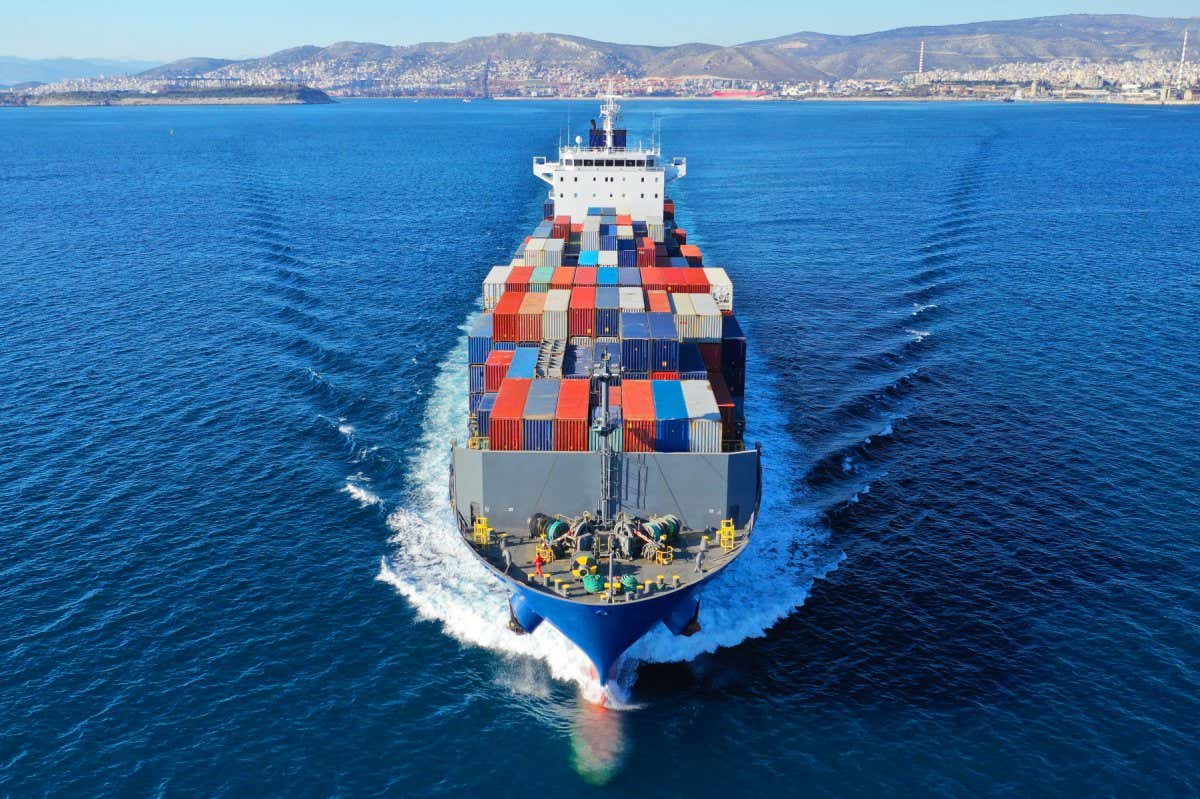
The Red Sea has recently become a focal point for global geopolitical competition due to the increasing challenges and crises that pose a threat to the stability of the global economy, including the shipping sector. This new development adds to the existing factors that have impacted supply chains, such as the declining water levels in the Panama Canal, the worsening extreme weather events, and Ethiopia’s agreement with Somaliland to secure access to the Red Sea. The disruption of the maritime shipping sector would exacerbate the severity of the global economy’s crises as shipping prices will rise and global trade movement will be hindered, resulting in the formation of new inflationary waves and a slowdown in economic activity.
Successive Challenges
The global shipping sector has been facing successive challenges since the spread of the Covid-19 pandemic in 2020 until the Russian-Ukrainian war that broke out in 2022 and caused widespread crises, both at the macro level and the micro level, exacerbating the disruptions to supply chains that were still recovering fragilely from the repercussions of the Corona crisis. As a consequence, worldwide shipping conditions became abysmal as container prices increased, fuel and oil prices rose beyond all estimates, logistics firms ceased operations, trade with Russia and Ukraine—the primary players in the energy and food sectors—was disrupted, and certain ships were bombed in the Black Sea region.
However, the shipping industry has experienced its most challenging period since the conclusion of 2023, particularly due to the exacerbation of worldwide economic crises such as the scarcity of essential commodities, the elevated global inflation rate, and the deceleration of economic activity. The most significant threats to supply chains can be detailed as follows:
Houthi Attacks: On 12 January 2024, in retaliation for the repeated Houthi attacks on ships traversing the Red Sea since the end of December 2023, which were carried out in opposition to the Israeli war in Gaza, the United States and the United Kingdom initiated airstrikes against Houthi objectives in Yemen. In total, they bombed around sixty targets across sixteen Houthi-owned sites, including command and ammunition units as well as bases servicing drones, ballistic missiles, and radars. In this regard, US President Joe Biden declared that Washington will maintain its course of action should the Houthis persist in their assaults on vessels in the Red Sea, which foreshadows a wider circle of conflict in the region. As a result, eight of the ten largest container ship companies, including Maersk, British Petroleum, and Hapag-Lloyd, which control 61% of the total global shipping capacity, halted traffic in the Red Sea.
Ethiopia’s Agreement with Somaliland: As part of its preparations to establish a commercial naval base near the port of Berbera for a duration of 50 years, Ethiopia and Somaliland reached an agreement on January 1, 2024, granting Ethiopia access to the Red Sea in return for a 20% stake in Ethiopian Airlines. The agreement holds significance for Ethiopia due to the critical role that the Red Sea plays in the Ethiopian economy, particularly considering the country’s predicament of being landlocked since the 1990s. The Somali government, for its part, declared that it would pursue this agreement through all legal channels. It also called for meetings on this matter with the UN Security Council and the African Union and called home its ambassador to Ethiopia for talks.
Panama Canal Running Dry: The Panama Canal has encountered a significant obstacle since late 2023 as a result of a drought affecting the Alajuela and Gatun lakes. This has created a fresh crisis for the worldwide shipping industry and poses a risk to the smooth flow of shipping traffic. It is particularly concerning since the Panama Canal handles 3% of global trade volume and facilitates the transportation of 46% of containers from Northeast Asia to the East Coast of the United States.
In May 2023, an average of 37 ships passed through the Panama Canal daily. As a consequence of the decreasing water levels, the Panama Canal Authority (PCA) implemented a phased reduction in the daily average number of vessels traversing the canal from 37 in May 2023 to 22 by the conclusion of December 2023. The PCA did, however, declare that by February 2024, it would only permit roughly 18 ships to pass through each day. In addition, the PCA is contemplating implementing several reforms to combat the severe drought, such as seeding clouds to increase precipitation or constructing an artificial lake to pump water into the canal; however, the implementation of both options, if feasible, would require years.
Severe Weather Events: According to the World Economic Forum’s 2024 Global Risks Report, environmental risks are the most serious threat to the world over the next decade. Ecosystem collapse and depletion of natural resources are two examples of these risks. Naturally, these risks affect global navigation due to the rise in floods and hurricanes, the spread of droughts, and the above-average temperatures. A study published by RTI International estimates that climate change alone could cause the shipping industry to suffer annual losses of $10 billion by 2050. Significantly, the shipping industry is among the most susceptible sectors to the impacts of climate change.
Disastrous Repercussions
Maritime shipping accounts for approximately 90% of global trade, with the volume expected to triple by 2050. Hence, any disturbance that transpires within this industry will engender numerous consequences for the worldwide economy at large and the shipping industry specifically, in adherence to the domino effect principle. The consequences are evident in the following:
Exorbitant Shipping Costs: The aforementioned crises have an impact on ship insurance premiums and worldwide shipping costs, raising the overall cost of transporting goods across international borders. It is anticipated that alternative route redirection could incur an additional fuel expense of one million dollars per round trip spanning from Asia to Northern Europe.
In the initial week of January 2024, the cost of transporting 40-foot containers from Asia to Northern Europe increased by over twofold, surpassing $4,000. In a similar vein, shipping costs for 40-foot containers from Asia to the Mediterranean increased to $5175 and to the East Coast of North America by 55% to $3,900. The Shanghai Containerized Freight Index experienced a rise, as illustrated in Figure 1:
Figure 1: Shanghai Containerized Freight Index (Points)

Source: China-Shanghai Export Containerized Freight Index
The previous figure indicates that the index experienced a weekly increase of over 16% on January 12, 2024, and a yearly increase of approximately 113.8% to reach 2206.03 points, its highest level in a year. This is in comparison to 1031.42 points in the same week of January 2023. Nevertheless, the index has not yet attained the all-time high of 5,097.36 points set in 2020 and 2021.
Global Trade Disruptions: Ships typically avoid traffic in disrupted lanes, which is why hundreds of container ships and other vessels have been rerouted around South Africa’s Cape of Good Hope, adding 7 to 20 days to the duration of normal journeys, increasing fuel consumption and operating costs, as well as causing delays for exporters, importers, and end users. The following illustrative map depicts the route that ships traverse to pass through the Cape of Good Hope.

Disrupting the arrival dates and routes of ships would have a significant impact on global trade. The December 2023 Kiel Trade Index of the Kiel Institute for the World Economy reveals that changes in the shipping industry have led to a 70% decrease in the volume of containers transported in the Red Sea. Additionally, global trade experienced a 1.3% decline from November 2023 to December 2023.
Rising Oil Prices: The increased fuel consumption brought on by ships being redirected to the Cape of Good Hope, along with the growing likelihood of an interruption in oil supplies, led to an increase in the price of both American and Brent crude, as figure 2 illustrates:
Figure 2: The daily price of WTI and Brent crude (dollars per barrel)

Source: Energy Information Administration (EIA), Spot Prices.
According to the previous figure, spot oil prices rose at the end of trading on 12 January 2024, as markets reassessed expected increases in crude demand due to renewed worries about supply shortages. Brent crude increased in price to $78.32 per barrel, whereas WTI crude rose to $72.26 per barrel. Notably, oil prices are influenced by various factors beyond the global shipping sector, including the ongoing conflict in Gaza, demand forecasts from international agencies, US inventory data, and the decisions of OPEC Plus, particularly considering the ongoing commitment of Saudi Arabia and Russia to the strategy of decreasing oil production.
A New Inflation Wave: The previous analysis indicates that supply chain crises affect the availability of goods due to delayed arrivals and accumulation at ports. This, coupled with increasing demand, will result in heightened inflationary pressures on the global economy. For instance, the International Monetary Fund estimated that disruptions to worldwide supply chains during the Corona pandemic contributed approximately 1% to the inflation rate and 25% to the import bills of countries.
As a result, disruptions in global supply chains are likely to result in increased inflation and commodity prices, which could put further strain on developing and emerging countries whose trade deficit depreciates their local currency and whose economies depend on imports for their needs.
Restrictions on the Automotive Industry: The automobile industry was subject to additional limitations due to supply chain crises on a global scale, particularly in Europe, which relies on Asia for the technological components required by the industry. As a consequence of inadequate supplies, Tesla and Volvo have declared a temporary halt to manufacturing at a number of their European facilities. The temporary stoppage from January 29, 2024, to February 11, 2024, could, according to Elon Musk, CEO of Tesla, result in the non-production of 5,000 to 7,000 vehicles.
Higher Carbon Emissions:
The consequences arising from the turbulent crises in the shipping industry are not confined solely to the economic dimension but also encompass the environmental one, given the fact that maritime transport is one of the most polluting industries, accounting for around 3% of all global greenhouse gas emissions. Over the previous ten years, this sector’s greenhouse emissions have increased by 20%. Although the 3% carbon emission contribution may not appear to be a substantial amount, the United Nations Conference on Trade and Development estimates that the increase in freight demand worldwide could cause global emissions to accelerate faster than in the majority of other sectors. By 2050, the International Maritime Organization hopes to cut ship emissions in half so that the shipping industry ceases contributing between 10 and 13% of global emissions, which is equivalent to halving ship emissions. As a result, taking longer routes will increase the sector’s carbon footprint because longer distances require ships to burn more fuel.
In conclusion, geopolitical tensions and climate disturbances have presented an additional obstacle to the global economy, having negatively impacted the global shipping sector which plays a crucial role in connecting countries and facilitating international supply chains. Thus, any crises that befell this sector would have repercussions for the global economy and trade.


