





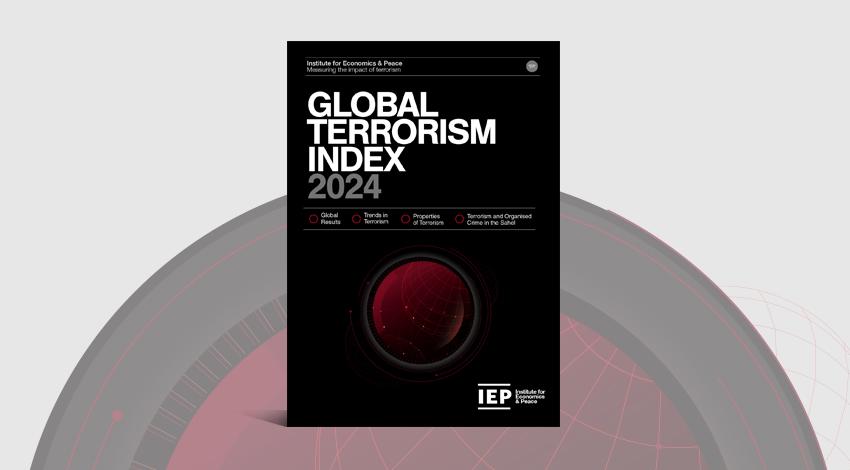
The Institute for Economics and Peace (IEP) has released the eleventh edition of the Global Terrorism Index for 2024, an annual, English-language report published by the institute since 2012. Utilising the Dragonfly’s Terrorism Tracker database along with other sources, it provides a comprehensive overview of the main global trends and patterns of terrorism, analysing several important associated dimensions such as the socio-economic conditions in which it occurs, its dynamic nature that changes over time, and the geopolitical motivations and ideological goals of terrorist groups along with the strategies used by terrorists.
In this regard, we offer a detailed reading of the content of the latest edition of the index, published on February 29, 2024, in a series of four articles that cover the toll of terrorist attacks and deaths resulting from them, and the features and patterns of terrorist activity in 2023 in 163 countries included in the index for study and analysis.
Features of Terrorist Activity in 2023
The index recorded the main features that characterised terrorist activity in 2023, and the varying impacts and consequences associated with this activity from one region to another, as follows:
Decrease in the number of attacks versus an increase in their severity: Many countries around the world witnessed an increase in “highly lethal” terrorist attacks in 2023, despite a decrease in the overall level of terrorist activity; as the deaths resulting from terrorism increased by 22% to reach 8,352 deaths, the highest level since 2017. However, the total number of terrorist attacks decreased by 22% to 3,350, the lowest number of incidents recorded since 2009, and the number of countries that experienced at least one terrorist attack decreased from 60 attacks during 2022 to 50 attacks in 2023.
The index attributed the increase in the lethality of terrorist attacks that occurred in 2023, despite their reduced numbers, to the occurrence of highly complex attacks during the ongoing battles between terrorist organisations themselves, as is the case in the fierce jihadist competition between Boko Haram, ISIS, and JNIM (Jama’at Nusrat al-Islam wal-Muslimin). The index referred the main driver for the increase in the number of deaths resulting from terrorism to what it described as “the terrorist attack by Hamas” on October 7, 2023, on Israel, classifying it as the largest attack since the September 11, 2001 attacks, and noted that this attack and the subsequent Israeli response, had significant repercussions threatening to destabilise the Middle East entirely.
Decreasing impact of terrorism in Afghanistan and Iraq: The index recorded a sharp decrease in the impacts of terrorism in some countries, including Afghanistan; where the deaths resulting from terrorist operations decreased by 81% to reach 119 in 2023, the first time since the start of the index that less than 500 deaths due to terrorism have been recorded in the country. Similarly, Iraq experienced a similar decrease, recording only 69 deaths in 2023 compared to 197 deaths in 2022, which led to its removal from the list of the top ten countries most affected by terrorism for the first time.
Escalating risk of terrorism in African Sahel: The African Sahel region, a part of the Sub-Saharan Africa region, recorded for the seventh consecutive year the highest number of deaths resulting from terrorism worldwide with an increase of 21% compared to 2022. The majority of events and impacts associated with terrorist activity are concentrated in the African Sahel region, where five of the ten countries most affected by terrorism during 2023 are located in this area. There are indications that the threat of terrorism is beginning to spread to neighboring countries, as Benin and Togo – for the first time – recorded more than 40 deaths due to terrorism. The following figure illustrates the five countries that recorded the highest number of deaths resulting from terrorism during 2023:

Burkina Faso, for the second consecutive year, bore the brunt of the number of deaths resulting from terrorism, with the index recording 1,907 deaths during 2023. This number approximates “a quarter of the total” of such deaths worldwide. The severity of the increasing terrorist activity in Burkina Faso is also reflected in the rise in the number of deadly attacks; with more than 7 deaths per attack in 2023, compared to less than 4 deaths per attack in 2022.
Geographic concentration of terrorist activity: Terrorist activity continues to be significantly concentrated in a small number of countries; where only ten countries accounted for 87% of the total deaths resulting from terrorism in 2023. This geographic concentration of terrorist activity has increased in intensity over the past decade, with the number of countries recording at least one death due to terrorism decreasing from 57 in 2015 to 41 in 2023. This is illustrated in the following figure:
The Most Lethal Terrorist Groups
The four terrorist groups responsible for the highest number of deaths during 2023, according to the index, were ISIS, Hamas, JNIM, and Al-Shabaab in Somalia. These groups were responsible for 4,443 deaths, which is more than 75% of the total fatalities attributed to a specific terrorist group, compared to their responsibility for less than 25% of the total terrorism-related deaths in 2014. This highlights significant global shifts in terrorist activity over the past decade.
Identifying the most active terrorist groups responsible for the highest number of deaths faces some challenges: Firstly, many terrorist groups have various regional branches that operate in partnership or partially under the same leadership. Secondly, terrorist groups do not claim responsibility for attacks very often, making it difficult to identify the perpetrating group, especially in active conflict zones; among the 3,350 terrorist attacks recorded in 2023, only 54% were attributed to a specific group, compared to 48% in 2022 and 45% in 2021. The countries with the highest number of unattributed attacks were Myanmar, Burkina Faso, Mali, and Pakistan. Generally, those attacks causing large numbers of casualties in conflict environments, as well as attacks causing very few deaths, remain unclaimed, with no group admitting to carrying them out. This can be explained by some terrorist groups’ reluctance to claim responsibility for minor acts of violence that could be considered failures, or for highly lethal attacks that could provoke severe backlash from the government and local populations, hindering their recruitment efforts and increasing counterinsurgency efforts against them. Below is a list of the four deadliest organisations in 2023:
1. ISIS: ISIS remained the deadliest terrorist group in 2023, causing 1,636 deaths despite a 17% decrease in fatalities attributed to the organisation and its affiliates compared to the previous year, and a 35% decrease in the number of attacks from 717 in 2022 to 470 in 2023, marking the lowest levels of ISIS attacks and resultant deaths since 2018. ISIS attacks in 2023 occurred in Asia and the Pacific, Europe, the Middle East and North Africa, Sub-Saharan Africa, Russia, Eurasia, and South Asia, with Syria being the most affected country, recording 224 attacks in 2023, up from 152 in 2022, and also the highest number of deaths resulting from ISIS attacks, with a quarter of the organisation’s total fatalities occurring in Syria. In Nigeria, ISIS maintained a similar level of terrorist activity in terms of the number of attacks, but these resulted in more deaths, increasing by 27% to 276 compared to 218 in 2022. The deadliest attack attributed to the organisation in 2023 was an ambush on four military convoys in the Sahel region of Burkina Faso in February of the same year, killing 71 soldiers.
October 2023 also saw ISIS’ first claimed attack in Europe in two years, when a gunman killed two Swedish civilians and injured a Belgian car driver in an attack in Brussels. While the organisation claimed responsibility for the attack, some officials stated there were no indications the suspect was a member of a terrorist network. ISIS continues to launch attacks in South Asia, albeit on a smaller scale than in previous years; the organisation was responsible for 39 attacks and 148 deaths in the region in 2023, a significant decrease from 149 attacks and 506 deaths in 2022. ISIS activity in the Middle East and North Africa reached its lowest level since 2013, with a 24% decrease in the number of attacks and a 29% decrease in deaths compared to 2022.
On the tactical aspect, armed attacks remain the preferred tactic for ISIS for the fifth consecutive year, followed by suicide bombings. In 2023, there were 331 armed attacks resulting in the deaths of 1156 people, compared to 431 attacks and 1312 deaths in the previous year. The death rate from attacks carried out by the organisation reached its highest level since 2017, averaging 3.5 deaths per attack in 2023 compared to three deaths in 2022. Military forces continue to be the most common target of ISIS attacks, with half of the organisation’s attacks and 35% of deaths targeting military objectives, while civilians are the next most common target, accounting for 28% of all ISIS victims in 2023.
2. Hamas: The index ranked Hamas as the second deadliest terrorist group in 2023, responsible for 8 attacks, 7 of which resulted in the death of 9 people, while its attack on October 7 killed 1,200 people, injured more than 4,500, and took 250 others hostage. According to the index, this attack required a high level of preparation, sophistication, and secrecy in the months leading up to it, with Hamas leveraging modern technology and choosing its timing strategically to coincide with important dates.
3. JNIM: This group was the third deadliest terrorist organisation in 2023, attributed with 112 attacks (56% of which occurred in Burkina Faso and 24% in Mali), leading to 1,099 deaths, nearly four times the 281 deaths in 2022. The lethality of the group’s attacks reached its highest level, with an average of 9.8 people killed per attack in the past year, up from 3.6 in 2022.
According to the index, JNIM continues to expand its activities outside the Sahel region, conducting attacks in Togo for the second consecutive year and registering three other attacks in Niger, resulting in 208 deaths, the highest number the group has recorded in the country. This includes the deadliest attack carried out in November 2023, when gunmen killed at least 200 soldiers in an ambush on four military columns in Tillabéri. While no group claimed responsibility for the attack, local media reported it was a joint operation between ISIS and JNIM.
On a tactical aspect, armed attacks continue to be the deadliest form of assaults carried out by JNIM, constituting 82% of the total deaths resulting from the group’s activities. These attacks have more than tripled since 2022, increasing from 233 fatalities to 903 in the past year. The majority of the group’s attacks target military forces, with at least half directed towards military objectives. However, despite this, the highest number of deaths occurred among civilians, reaching 416 in 2023, up from 111 in 2022.
4. Al-Shabaab in Somalia: The number of deaths resulting from terrorism attributed to Al-Shabaab decreased by approximately 38% from 800 in 2022 to 499 in 2023. Some 86% of these deaths occurred in Somalia and 14% in Kenya, where the group was responsible for 70 deaths, the highest number since 2019. This is attributed to counterterrorism operations by the Somali government against Al-Shabaab strongholds, leading to an increase in fighters crossing into Kenya, exploiting the lack of law enforcement personnel along the border between the two countries, and a security gap created by changes in Kenya’s security leadership, which militants exploit to launch attacks.
The decrease in death tolls also reflects the trend observed in the number of attacks carried out by the Al-Shabaab movement during the past year; it decreased by about a third to 227 attacks, driven by the successful counterterrorism operations led by the Somali government and its allied forces. This was particularly evident in areas like Banaadir and Middle Shabelle. However, despite the initial progress made by the Somali government in its operations against Al-Shabaab, it faced significant setbacks during the last quarter of 2022, prompting it to request the United Nations to postpone the planned withdrawal of 3,000 troops from the African Union peacekeeping forces for three months. The request came after an attack forced security forces to withdraw from towns recently seized.
On the tactical aspect, Al-Shabaab primarily employed bombings and armed assaults, with nearly 69% of deaths resulting from the movement’s practices attributed to suicide bombings, while armed assaults accounted for 25% of deaths. Furthermore, 41% of these attacks targeted the military, and 22% targeted civilians.


