







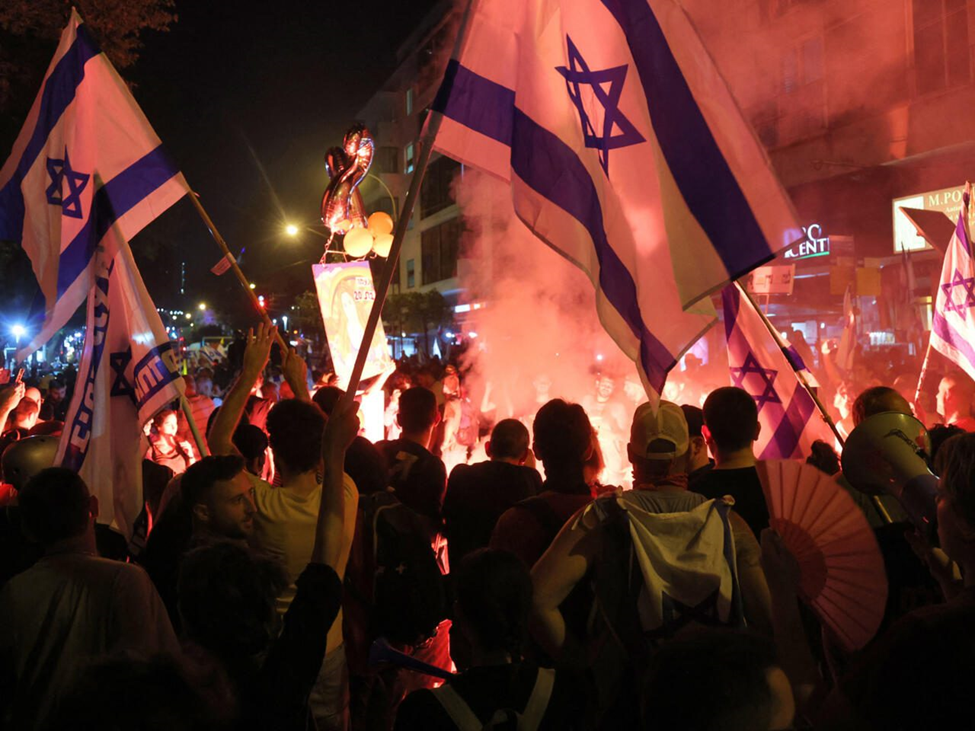
Fury swept through Israel after the Israeli military discovered the bodies of six Israeli captives in a tunnel in Rafah, southern Gaza, on September 1. The following day, Qassam Brigades spokesperson Abu Obaida issued new directives to the prison guards, outlining procedures should the Israeli forces advance on detention sites. He further warned that Netanyahu’s preference for military pressure over negotiations would result in the captives returning in coffins.
In addition to the families of hostages who have been protesting for months over the Israeli government’s handling of the hostage crisis and prisoner swap negotiations, a new player has joined the fray within Israel. The Histadrut, or the General Organization of Workers in Israel staged a general strike on September 2, disrupting business and service sectors across the country. However, the Labour Court intervened and mandated the cessation of the strike, endorsing the government’s plea that it constituted a political strike rather than a labour dispute. The question that arises here is whether the recent internal pressures—following the discovery of the six Israeli captives’ bodies in Rafah and Hamas’s warning that the remaining ones could return in coffins if Israeli military pressure continues—will influence Netanyahu’s approach to the ceasefire agreement and prisoner swap negotiations.
Multiple Implications
The recent developments within Israel, driven by a growing sense of hopelessness in recovering Israeli hostages held by Hamas alive—largely due to the government’s rigid stance in negotiations—highlight a series of significant implications, including the following:
The Shift in Israeli Public Stance: The discovery of the bodies of six Israeli hostages, along with statements from Abu Obaida, the Qassam Brigades’ spokesperson, has underscored the Netanyahu government’s failure to secure a prisoner exchange deal. This has fueled growing anger within Israel, sparking widespread protests. Hamas’s rhetoric, blaming Netanyahu entirely, has further heightened public anxiety, leading to unprecedented demonstrations and strikes across various sectors. This wave of public unrest places Netanyahu in a difficult position, forcing him to address the people’s demands urgently while trying to maintain his fragile political alliances with the far-right parties that are essential to his government’s stability.
It can thus be argued that Israeli public opinion is becoming increasingly convinced that the deaths of the captives are a direct consequence of Netanyahu’s decisions, particularly his halting of proposed prisoner exchange deals and his insistence on maintaining the Israeli army’s presence in the Philadelphi corridor. This has fueled growing suspicion within Israel regarding his political motivations. Meanwhile, the scale and intensity of popular protests have escalated significantly, with large numbers of Israelis taking to the streets to demand an immediate prisoner swap. The participation of the Histadrut in the strike in protest of the captives’ deaths marks an unprecedented development in Israel’s domestic landscape.
The Rising Role of the Histadrut as a Netanyahu Opponent: The involvement of the Histadrut in the protest movement, after a lengthy period of watching from the sidelines, has undeniably bolstered the opposition against Netanyahu. While a brief, one-day strike may not have the same economic impact as a prolonged one, Netanyahu’s unease was evident in both his expressions and speech, as he understands that this strike could signal the onset of rapidly escalating crises. However, while the strike may mark the beginning of growing popular pressure, it alone is insufficient to alter political decisions, especially given Netanyahu’s hardline stance and the rigid ideological views of his far-right allies. For real impact, the strike must be supplemented by additional tactics and sustained pressure to further increase pressure on the government.
Netanyahu’s Persistent Gamble on Military Pressure: Since Operation Al-Aqsa Flood, Netanyahu has been heavily relying on a military approach to address the issue of captives held by Hamas, viewing it as a means to boost deterrence and apply pressure on Hamas despite growing public demand for negotiated resolutions. Indeed, Netanyahu’s reliance on military strategy aligns with his personal political objectives, bolstering his standing among his far-right supporters, including National Security Minister Itamar Ben-Gvir and Finance Minister Bezalel Smotrich, who advocate for military escalation to advance their own political agendas. They view any compromise in negotiations as a sign of weakness or failure to achieve strategic objectives. The recent remarks from the Qassam Brigades’ spokesperson, hinting at revised protocols for dealing with captives during any Israeli army incursion, could imply the risk of repeating the incident involving the six hostages found dead in Rafah.
Possible Consequences
Growing Public Pressure on Netanyahu’s Government: There are a number of potential paths for this public pressure to take; however, how it develops and how Netanyahu will respond to it depends on a number of critical factors. First, there is the toll that the strikes have taken on society and the economy. Even though the last strike lasted less than a day, it is projected to take on multiple forms in the future, bringing about broader economic consequences. Second, the political stance of the opposition, fueled by widespread public discontent, is likely to play a crucial role. Third, there is the international pressure, which may lead Netanyahu to reassess his policies, particularly given the global calls for a peaceful resolution. In general, increasing public pressure has the potential to drive policy changes or escalate into a more significant political crisis if it continues to grow. The extent of any changes will largely depend on Netanyahu’s ability to navigate these internal and external pressures while balancing his political priorities.
Widening Divisions within the Government: Within the Israeli government, a rift is growing between the political and security camps. Led by Prime Minister Netanyahu and certain far-right ministers, the political bloc advocates for a strict military approach and opposes concessions in prisoner exchange talks. Conversely, the security bloc, headed by Defense Minister Yoav Galant, supports negotiated resolutions. Galant has emphasized the urgency of securing a prisoner exchange deal and argues that a purely military solution may not yield long-term benefits. This dispute highlights the contrasting priorities the political and security camps. Galant’s stance following the discovery of the six detainees’ bodies markedly contrasts with the military escalation strategy implemented by Netanyahu, suggesting that recent events may exacerbate and broaden the rift between the two blocs.
Uncertain Future of the Prisoner Swap Deal: Given the current public pressure and rising tensions at both political and security levels, it is unlikely that Netanyahu will pursue a prisoner exchange agreement at this time. As noted, Netanyahu and his administration favor military escalation over negotiating with Hamas. This has been evident from Netanyahu’s positions since the onset of the Gaza conflict and throughout the past eleven months, consistently siding with the hardline stance of his right-wing ministers who oppose negotiating with Hamas. As a result, the deal’s future remains uncertain, given the current context and Netanyahu’s prevailing stance.
In summary, it seems unlikely that the current internal pressures, following the discovery of six bodies of Israeli captives in Rafah, will significantly sway Benjamin Netanyahu’s stance on the prisoner exchange deal and ceasefire. Despite the public outcry and the strike disrupting various sectors, Netanyahu remains steadfast in his military approach rather than pursuing serious negotiations with Hamas. The swift shifts in public sentiment, marked by unprecedented protests and widespread strikes, highlight deep dissatisfaction with Netanyahu’s handling of the hostage crisis since October 7. However, Netanyahu continues to be driven by the backing of right-wing forces that are adamant about pursuing military escalation. While voices within the government, such as Defense Minister Yoav Galant, advocate for a negotiated settlement, the ongoing divide between the political and security blocs highlights the persistent gap in positions. Consequently, despite the strong and unprecedented internal pressures, they have yet to sway Netanyahu’s stance. As a result, the future of the ceasefire agreement remains uncertain.