



By using ECSS site, you agree to the Privacy Policy and Terms of Use.
Accept
ECSS - Egyptian Center for Strategic StudiesECSS - Egyptian Center for Strategic Studies
  • Home
  • International Relations
    International Relations
    Show More
    Top News
    Direct Messages: The Eighth Tripartite Summit of Mediterranean countries and Turkey’s role
    October 30, 2020
    Growing international rejection of the coup in Mali
    July 25, 2021
    Latent Escalation: Will Calm in the Eastern Mediterranean Last in 2022?
    January 20, 2022
    Latest News
    Israel’s African gambit
    March 6, 2026
    Geopolitical realism: What does Washington’s return to the African Sahel mean?
    March 5, 2026
    Analysis | Manufacturing opposition: How Israel uses digital platforms to shape Iranian public opinion
    February 14, 2026
    Analysis| Turkey without terrorism: Assessing the trajectory of Turkish–Kurdish reconciliation
    February 12, 2026
  • Defense & Security
    Defense & Security
    Show More
    Top News
    Reasons and Ramifications of Al-Shabaab’s Retreat from its Positions
    January 30, 2023
    Reading into the Global Terrorism Index 2024: The Toll of Terrorist Activity and Most Lethal Groups (1)
    March 6, 2024
    Afghan Peace Process: Cautious Optimism
    August 17, 2020
    Latest News
    Between two camps: Reading into ISIS discourse on the US-Israeli war on Iran
    April 15, 2026
    Encrypted messages “Roaring Lion”: The hidden messages behind the name of the operation against Iran
    March 11, 2026
    Iran war developments
    March 9, 2026
    Manufacturing the enemy : Reframing terrorism in contemporary Western discourse
    March 7, 2026
  • Public Policy
    Public Policy
    Show More
    Top News
    The Law of General Average: Ever Given Compensation Crisis
    August 19, 2021
    Successive Increases: The Impact of the Russia-Ukraine War on Rebar Prices in Egypt
    May 16, 2022
    Long Shadows: The impact of informality on economic recovery
    August 4, 2021
    Latest News
    Militarizing water in Middle East wars A strategic analysis of the Iran-US-Israel war
    April 18, 2026
    Reading into attacks on maritime navigation in the Arabian Gulf
    March 17, 2026
    Emerging economies in a world without rules: Between opportunity and predicament
    March 5, 2026
    The end of economic globalization: Reading into the 2025 U.S. National Security Strategy
    February 4, 2026
  • Analysis
    • Opinion
    • Analysis
    • Situation Assessment
    • Readings
  • Activities
    • Conferences
    • ECSS Agenda
    • Panel Discussion
    • Seminar
    • Workshops
  • ECSS Shop
  • العربية
  • Defense & Security
  • International Relations
  • Public Policy
All Rights Reserved to ECSS © 2022,
Reading: Egypt, and Why the Gaza Strip Matters
Share
Notification Show More
Latest News
Militarizing water in Middle East wars A strategic analysis of the Iran-US-Israel war
Economic & Energy Studies
The future of US-Iran negotiations
Opinion
Between two camps: Reading into ISIS discourse on the US-Israeli war on Iran
Terrorism & Armed Conflict
Russia, China, and the war against Iran
Others
Continental drift
Others
Aa
ECSS - Egyptian Center for Strategic StudiesECSS - Egyptian Center for Strategic Studies
Aa
  • اللغة العربية
  • International Relations
  • Defense & Security
  • Special Edition
  • Public Policy
  • Analysis
  • Activities & Events
  • Home
  • اللغة العربية
  • Categories
    • International Relations
    • Defense & Security
    • Public Policy
    • Analysis
    • Special Edition
    • Activities & Events
    • Opinions Articles
  • Bookmarks
Follow US
  • Advertise
All Rights Reserved to ECSS © 2022, Powered by EgyptYo Business Services.
Palestinian & Israeli Studies

Egypt, and Why the Gaza Strip Matters

Gen. Mohamed Eldewery
Last updated: 2023/10/17 at 6:06 PM
Gen. Mohamed Eldewery
Share
8 Min Read
SHARE

Despite my attempts to refrain from discussing the specifics of the military operations between Israel and the Gaza Strip during this war, the seventh between Israel and the Gaza Strip since 2008, I feel compelled to shed light on one crucial fact: the Israeli bombing of Gaza is unprecedented and follows a catastrophic military failure suffered by Israel. This altered the course of events from the typical phase of intense bombing to one of maximizing area destruction and casualties while preparing for a ground battle whenever the conditions were favorable.

In this conflict, Israel utilized both internal and external strategies.  Internally, it declared war and formed an emergency government; externally, the United States provided urgent support that forced the evacuation of 400,000 Gazans to makeshift shelters in the center and south of the Gaza Strip.

Egypt is in close proximity to these events, and Cairo has taken action since day one to halt the ongoing escalation. With Israel ramping up its operations and implementing a policy of collective punishment against the Palestinian population, as evidenced by the cutting off of electricity and water, the depletion of food supplies, and the bombing of the Palestinian Rafah crossing, the political leadership has stepped up its regional and international movements in an effort to bring in aid to save the Palestinians from a horrific humanitarian catastrophe.

President Abdel-Fattah Al-Sisi was keen to announce the determinants of Egypt’s response to the events, and I will focus on the three most important messages that he emphasized: 1) the need to watch out for attempts to liquidate the Palestinian cause; 2) the need to get civilians out of the vicious cycle of retaliation and eschew policies of collective punishment, siege, and displacement; and 3) Egypt’s strategic priorities and desire for peace demand that it not abandon the Palestinians.

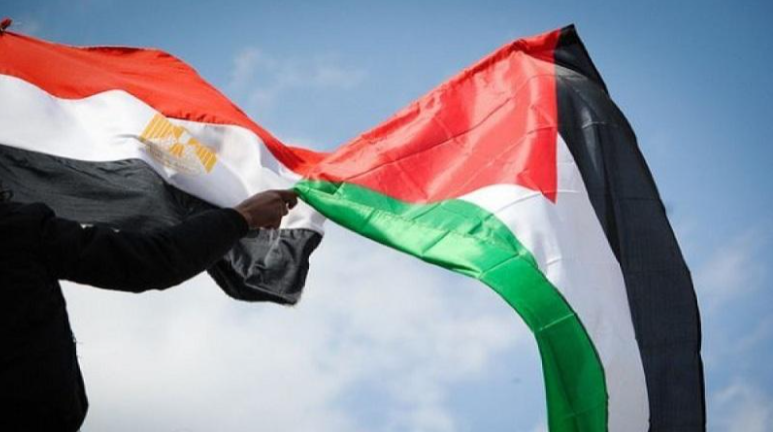
Looking more closely at these statements, I find that they all reiterate Egypt’s firm stance on the Palestinian cause, a stance that has not changed and will not change, especially in terms of Egypt’s refusal to abandon the Palestinians.  The Palestinian cause is indeed Egypt’s foremost foreign policy priority. The ultimate goal of Egypt is the establishment of an independent Palestinian state with East Jerusalem as its capital. In light of this, President Al-Sisi issued a stern appeal to all the involved parties, cautioning them against attempting to liquidate the Palestinian cause.

In this regard, it is crucial for the Egyptian public to comprehend the significance of the Gaza Strip to Egypt, and here I would like to highlight six points:

  1. The Gaza Strip falls within the direct sphere of Egyptian national security. The length of the border between Egypt and the Gaza Strip is only 14 kilometers, so Egypt will not tolerate any security threats emanating from the Gaza Strip.
  1. Egypt acknowledges the West Bank and Gaza Strip as the borders of the Palestinian state, in line with the international community’s position. In addition, one of the Oslo Accords’ clauses stipulated that the West Bank and Gaza constitute a single geographic and political entity.
  1. Egypt categorically rejects all forms of Gaza Strip independence.   To that end, it actively pursued Palestinian reconciliation and, in May 2011, achieved a comprehensive agreement to permanently end the division. Unfortunately, however, it has not yet been put into effect. 
  1. Egypt has suffered greatly as a result of the deteriorating security situation in North Sinai, which served as a terrorist hub, and has made progress in securing the region and sealing tunnels. Therefore, it will under no circumstances permit a resurgence of terrorism or a deterioration of security in Sinai.
  1. The Rafah border crossing, which is the primary point of departure for thousands of Palestinians leaving Gaza, is located on Egyptian territory, and the political leadership has issued orders to permanently open the crossing and use it to deliver aid to Gaza.

Throughout the course of the Palestinian-Israeli conflict, Egypt has never hesitated to provide all possible support for the Palestinian cause and to defend it in every regional and international forum. We should not forget that Egypt played a pivotal role in the truces between Israel and the Gaza Strip during the previous wars, as well as in the completion of the Gilad Shalit prisoner exchange deal, which resulted in the release of over a thousand Palestinian hostages in November 2011. In addition, Egypt has allocated $500 million for the reconstruction of Gaza and has implemented numerous projects within that framework.

As such, Egypt views these escalating events as a perilous shift in the direction of the Palestinian cause and a precursor to the Gaza Strip’s being caught in the collective punishment in all of its guises. Such a circumstance will worsen the plight of the roughly 2.5 million Gazans, who are already living in precarious conditions. Additionally, this might force thousands of them to relocate to the North Sinai, a move that Cairo rejects for the following reasons:

  1. Egypt opposes any Israeli policies that would uproot the Palestinian population, whether in the Gaza Strip or East Jerusalem (the Sheikh Jarrah neighborhood).
  2. Egypt has consistently provided prompt humanitarian assistance to the people of Gaza, most notably by opening its hospitals to treat the injured and ill within agreements with the relevant Palestinian authorities.

Ultimately, I have two messages to convey: the first is to Israel, warning that any attempt to liquidate the Palestinian cause will fail; the second is to the Palestinians in Gaza, the West Bank, and Jerusalem, urging them to hold onto their land as the main step towards establishing a Palestinian state and reassuring them that Egypt will not leave them alone as they work to establish a Palestinian state by retaining control of the occupied territories.

Related Posts

The future of US-Iran negotiations

Between two camps: Reading into ISIS discourse on the US-Israeli war on Iran

Deadlock in the Strait of Hormuz

Reading into attacks on maritime navigation in the Arabian Gulf

TAGGED: Egypt, Israel, Palestine
Gen. Mohamed Eldewery October 17, 2023
Share this Article
Facebook Twitter Whatsapp Whatsapp LinkedIn Telegram Email Copy Link Print
Gen. Mohamed Eldewery
By Gen. Mohamed Eldewery
Deputy Manager

Stay Connected

Facebook Like
Twitter Follow
Instagram Follow
Youtube Subscribe

Latest Articles

Effective protection: Egypt counters coronavirus repercussions on women
Public Policy December 7, 2020
On the Anniversary of 11 September: Terrorism Proliferates
Opinions Articles September 20, 2022
Ukraine’s Special Operation: A Stopgap
Armament August 1, 2023
What’s the Rush?
Opinions Articles April 10, 2020

Latest Tweets

//

The Egyptian Center for Strategic Studies is an independent non-profit think tank providing decision-makers by Policy alternatives, the center was established in 2018 and comprises a group of experts and researchers from different generations and scientific disciplines.

International Relations

  • African Studies
  • American Studies
  • Arab & Regional Studies
  • Asian Studies
  • European Studies
  • Palestinian & Israeli Studies

Defence & Security

  • Armament
  • Cyber Security
  • Extremism
  • Terrorism & Armed Conflict

Public Policies

  • Development & Society
  • Economic & Energy Studies
  • Egypt & World Stats
  • Media Studies
  • Public Opinion
  • Women & Family Studies

Who we are

The Egyptian Center for Strategic Studies (ECSS) is an independent Egyptian think tank established in 2018. The Center adopts a national, scientific perspective in examining strategic issues and challenges at the local, regional, and international levels, particularly those related to Egypt’s national security and core national interests.

The Center’s output is geared toward addressing national priorities, offering anticipatory visions for policy and decision alternatives, and enhancing awareness of various transformations through diverse forms of scientific production and research activities.

All Rights Reserved to Egyptian Center for Strategic Studies - ECSS © 2023

Removed from reading list

Undo
Welcome Back!

Sign in to your account

Lost your password?