








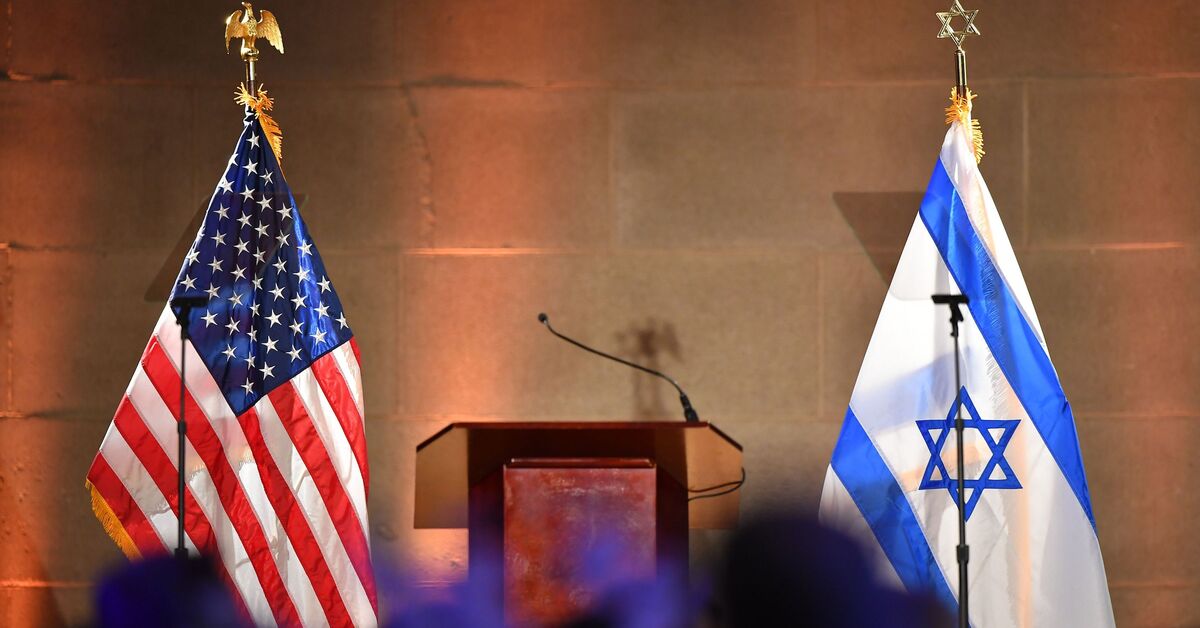
Israeli and American perspectives and insights diverge on several matters pertaining to the unfolding events in Gaza, the most notable of which being “Gaza’s day after”. Here, we assess these perspectives in order to determine the level of agreement or divergence between them.
I. Determinants of the Israeli Position
Two aspects make up Israel’s perception of Gaza’s day after scenario: 1) the military aspect and 2) the political aspect, which can be detailed as follows:
1. Gaza’s Day After: The Military Aspect
- Ending the idea of “unification of the arenas” among regional Iranian proxies, particularly in relation to the Gaza Strip, by cutting off all weapons and military ties between Gaza, Lebanon, Yemen, Syria, and Iraq.
- Dismantling the military structure of the Al-Qassam Brigades, which serves as the armed wing of Hamas. This indicates that Israel is seeking to disband the Al-Qassam Brigades into a dispersed military militia without a unified leadership or central command, which will facilitate internal fighting among these militias and make it easier for Tel Aviv to target them.
- Reoccupying parts of Gaza to allow for the establishment of buffer zones between Gaza and the Israeli border, as well as ensuring Tel Aviv’s future ability to conduct limited military operations within the Strip.
- Creating a security intelligence force in Gaza based on the Israel Security Agency [Shin Bet]. Given the success in creating the Israeli Intelligence Community, which comprises the Shin Bet, Mossad, and Israeli Military Intelligence [Aman], it is plausible that joint forces from these three organizations will be included in this force.
- Relocating Gaza Strip residents –either voluntarily of forcibly– to Arab, European, or African countries in exchange for financial and investment advantages.
- Severing the geographical link between Sinai and the Gaza Strip by seizing control of the Philadelphia Axis.
- Installing electronic security barriers at the crossings between Gaza and Egypt subsequent to capturing the Axis of Philadelphia.
- Israeli control over Gaza Strip ports.
- Creating security forces for the Gaza Strip, either entirely Arab or in consort with international forces.
- Tracking down the key players in the Hamas movement, both inside and outside the Gaza Strip, i.e., employing a broad assassination strategy.
- Coordinating defense and security arrangements with the United States to reestablish the Israeli deterrence system in the region against Iran and its proxies.
2. Gaza’s Day After: The Political Aspect
- Removing Hamas from power in Gaza.
- Dividing the Gaza Strip into distinct districts and redistributing the Palestinian population map after that.
- Ongoing collaboration with the United States, European capitals, and Canada concerning the voluntary relocation of Gaza’s inhabitants and their subsequent resettlement in specific areas.
- Establishing a civilian technocratic Palestinian government, modelled after the Palestinian Authority (PA) in the West Bank, to oversee the reconstruction and management of the Gaza Strip under the supervision of the Israeli military ruler.
- Rejection of the idea of a Palestinian state in the Gaza Strip and West Bank.
- Building Israeli settlements and reoccupying portions of the Gaza Strip from the north.
- With respect to the PA’s return to Gaza, Israel is divided into two camps:
- The first camp consists of the Likud Party and the religious parties, who adamantly oppose granting the PA the responsibility of governing Gaza and propose establishing a civilian government that would be overseen by Israeli authorities and other countries, such as Egypt.
- The second camp consists of the Israeli military and security agencies, which propose establishing a transitional period during which the PA and its security forces will be prepared to assume control of the Gaza Strip.
- Establishing a monitoring mechanism for grants and funding provided to Palestinian entities, including the Hamas movement, in coordination with the United States.
II. Determinants of the US Position
1. The US stance diverges significantly from the Israeli stance regarding the political aspects of the day after scenario, owing to the following reasons:
- The United States opposes the forced or voluntary displacement of Gaza’s inhabitants.
- The United States is against Israel’s reoccupation of the Gaza Strip under any guise.
- The United States recognizes the imperative nature of initiating a preliminary framework for the peace process between Israel and Palestine, guided by the two-state solution principle, despite the apparent absence of a comprehensive vision from its end concerning the peace process. Therefore, it appears that the United States’ stance on the Palestinian cause is not grounded in a serious moral logic but rather in a political rationale to regain its influence in the Arab region.
2. As per the US demand, the concluding phase of the Israeli war in Gaza should involve political discussions between Israel and the PA, potentially taking place in the context of an international conference and under the aegis of regional, Arab, and international entities.
3. The Americans propose the establishment of an international non-US police force in the Gaza Strip.
4. The United States rejects the settlement expansion policy in the West Bank and the ongoing violations by Israel in East Jerusalem.
5. The United States considers the possibility of designating as “terrorists” certain extreme right-wing Israeli entities, particularly those connected to national Zionism, like the Itamar Ben-Gvir-led Otzma Yehudit Party.
6. Washington maintains a firm conviction regarding the significance of instituting a durable system to transport humanitarian assistance to the entirety of the Gaza Strip, provided that this aid does not fall into the hands of Hamas.
7. Coordination with pertinent regional and international entities in pursuit of the formation of security blocs to counter the threat of Iranian regional influence in an effort to reduce risk indicators associated with the emergence of a violent regional crisis.
III. How Compatible Are the US and Israeli Stances?
Given the determinants of the US and Israel positions, it appears that there is not a complete match between them, as regards the following points:
1. Hamas’ Eradication
Although there is consensus between Washington and Tel Aviv regarding the need to eliminate the Hamas movement on both a political and military level, the United States no longer believes that any proposal is feasible on either front. That is to say, the idea of ending Hamas’ military apparatus and control over Gaza will come at a high cost that the United States cannot afford due to the following factors:
- The growing likelihood that a regional crisis will break out, endangering the safety of Israel, the shipping routes, and US military installations in Syria and Iraq –and potentially other countries like Jordan.
- The deterioration of the US weapon stock, particularly the Joint Direct Attack Munition (JDAM) guided missiles, which resulted in a decrease in US support for the Ukrainian army in its war against Russia. As a result, the United States gave in to the notion of giving up Ukraine’s territory and annexing it to Russia.
- The diminishing public support for Israel in the United States.
Nevertheless, Israeli political and military leaders continue to see the need to carry the Gaza war to its conclusion in order to achieve its “stated” strategic goals of removing Hamas rule, eliminating Hamas and Al-Qassam leaders, and releasing Israeli hostages held by Palestinian factions.
2. The New Palestinian Authority
Israel and the United States hold divergent views on the PA’s return to the Gaza Strip, despite the fact that Israel has initiated a new political reform aimed at revitalizing the political blood, as the current Israeli government coalition is adamantly against giving the PA the right to administer the Strip.
It is noteworthy that the Israeli opposition, including the State Camp party led by Benny Gantz, is not particularly fond of the idea of giving the PA control over the Gaza Strip because it opens the door for the beginning of negotiations with the Palestinians under the framework of a two-state solution, which is not something that the center-right wing is particularly in favor of.
On the other hand, the United States, within the determinants of its position, believes that there must be a transitional period in Gaza led by a civil, technocratic Palestinian government that paves the way for the transfer of power to the PA once it has completed the path of political reform. The political reform path entails holding general, presidential, and municipal elections throughout the West Bank and Gaza Strip.
3. Israel’s Identity
The current Israeli government, which is led by religious parties under Benjamin Netanyahu, is taking Israel in a direction that the US finds unacceptable since it does not account for all Israeli social trends, increases violence both inside and outside Israel’s borders, raises the threat level, and pushes Israel towards religious extremism, which transforms Israel from a democratic state to a new theocratic state in the eyes of the United States.
As a result, the United States will commence its search for rational successors to Netanyahu in Israel, and they will almost certainly consist of center-right movement leaders with formidable political, military, and public support, such as Benny Gantz.
However, this trend will have some bearing on how the current Gaza conflict plays out as well as how the day after unfolds. The dominant sentiment among the religious factions is that the United States exhibits a preference for Benny Gantz and perceives him as a viable substitute for Netanyahu, given the following:
- The pressure from religious parties on Netanyahu resulted in the rejection of the day after debate in the War Cabinet, which included Benny Gantz, who threatened to resign from the Cabinet.
- Benny Gantz’s departure from the War Cabinet may widen the gap in positions and viewpoints between the Israeli government and the US administration on the current war and the day after future courses of action.
- The United States has initiated a policy of withholding certain military reinforcements from the Israeli army, including Apaches and certain bombs, in an effort to exert pressure on Israel to commence the third phase of the conflict and cease its targeting of defenseless civilians in Gaza.
In short, Israel’s lack of effort to bridge the divide with the current US administration regarding their stances and perspectives on the ongoing war and the future of Gaza is expected to have adverse effects on the political and military relations between the two countries, which are already showing initial signs of strain. Should this strain increase, it will have an adverse impact on the Israeli deterrence system in the region.


