







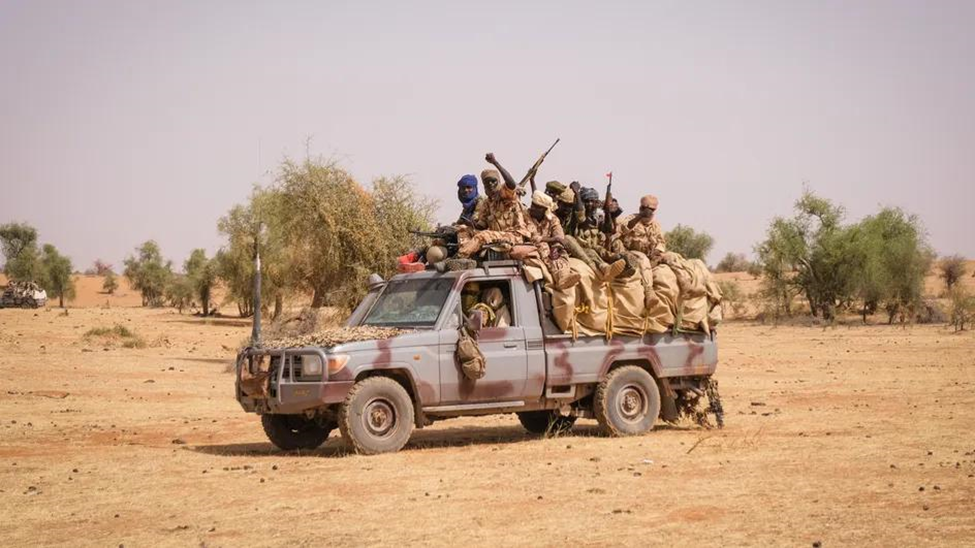
On October 25, Boko Haram orchestrated a well-planned offensive against a Chadian military garrison on Barkaram Island, situated within the Lake Chad basin and just 10 kilometers from Nigeria’s border. The assault claimed the lives of more than forty Chadian troops and injured many others. This situation raises several questions: What factors fuel this conflict, what drives the attack and defines its nature, why have countermeasures been ineffective, how do external powers exploit the situation for their interests, and what steps can be taken to resolve it?
I. Incubating Environment
Lake Chad lies in the north-central region of the African continent, spanning the territories of four neighboring countries: Cameroon, Niger, Nigeria, and Chad, with Chad hosting a substantial portion of the lake. The Lake Chad region encompasses extensive swampy waters interspersed with small islands and valleys, creating a wide expanse of interconnected land and water shared by the four countries.
This environment serves as a haven for terrorist organizations in West Africa, particularly Boko Haram and Daesh-West Africa Province. It provides opportunities for targeting the Chadian military, primarily to secure supplies and capture weapons from government forces in Cameroon, Chad, Niger, and Nigeria. Boko Haram has overrun Chadian military bases, plundered vehicles, and set fire to motorcycles, vehicles, and heavily armed facilities before retreating to the swampy areas of Lake Chad, which act as their fortified shelters, complicating Chad’s efforts to independently tackle the armed Islamist groups operating in this region.
Meanwhile, the conflict in Sudan created another conducive environment for Boko Haram’s operations. Boko Haram capitalized on the deeply polarized and intricate military and tribal tensions stemming from the war in Sudan, as well as the Chadian army’s focus on deploying large numbers of troops along the eastern border to secure the border and prevent security threats from infiltrating from Sudan, especially after Chadian opposition forces fighting alongside the Rapid Support Militia announced a united front to overthrow Chad’s current government.
II. Motives and Dynamics of Boko Haram’s Assault
The attack carried out by Boko Haram against the Chadian army was a direct retaliation to the intensive security and military campaign recently launched by the Chadian forces against Boko Haram in the vicinity of Lake Chad. This attack was therefore a clear act of retaliation and revenge, highlighted by the group’s destruction of the Chadian army’s weapons and ammunition depots after capturing a significant number of military vehicles.
Notably, Boko Haram refrains from targeting civilians in this region, directing its attacks exclusively at the Chadian army. This strategy is rooted in understandings with the tribes inhabiting the area, alongside the marginalization by the government against communities of these areas, which are often accused of cooperating with armed Islamist groups and face abuses as a result, creating an environment conducive to hosting these groups. This marginalization enables extremist groups to recruit more members, as Boko Haram exploits these grievances to draw civilians into its ranks under the guise of protecting the local population and supporting villagers engaged in agriculture and farming.
Through this attack, Boko Haram aims to strengthen its influence and garner greater support from villagers in the Lake Chad Basin. The operation clearly demonstrates the group’s ability to reorganize its ranks and showcases a marked advancement in its tactics, particularly in the strategic timing of its assault on the garrison.
III. External Factors
Chad is grappling with a host of regional crises, including the war in Sudan, persistent instability in the Central African Republic, Libya, and Niger, and the challenges posed by the presence of Wagner Group paramilitary forces in these neighboring countries. These crises are compounded by international pressures, notably France’s mounting unease over Chad’s strengthening relationship with Russia and the supply of sophisticated military equipment to the Rapid Support Militia fighting against the Sudanese army via Chad.
Boko Haram’s significant assault on the Chadian military garrison exposed the role of external forces seeking to exacerbate instability and conflict in the Lake Chad region to expand their influence or solidify their strategic presence. With backing from these external actors, Boko Haram aims to strengthen its military capacity in the basin, intending to use this enhanced power to challenge the political regimes in the region.
These actions highlight the ambitions of external powers to restructure the region to serve their own interests. Non-state actors in the region persist in their strategy of backing extremist or radical groups, particularly in the Lake Chad area, using them as leverage to shape events and dynamics in the countries of the region. This approach intensifies societal polarization, further complicating the role and influence of actors operating in the region.
IV. Obstacles and Prospects for Escalation
The Lake Chad region has seen significant progress in the fight against terrorism. In April and July 2022, the Multinational Joint Task Force (MNJTF) launched two operations against Boko Haram, namely Lake Sanity 1 and Lake Sanity 2, which resulted in the surrender of 176 group members, the arrest of 57 individuals involved in terrorist activities, and the seizure of extensive quantities of weapons, rifles, ammunition, and supply materials. In July 2024, the MNJTF launched an operation against Boko Haram and Daesh-West Africa in the Lake Chad region, eliminating 70 members of these groups. However, the military efforts led by the Sahel countries and France, though crucial, have not succeeded in eliminating the Boko Haram threat entirely. This is largely attributed to the lack of strategies aimed at addressing the underlying environment that fosters the group’s expansion and recruitment of combatants.
Therefore, the four countries of the Lake Chad Basin must adopt unified military measures and operations aimed at separating villagers from Boko Haram and Daesh to restore stability, through implementing a development-oriented policy that fosters cooperation, coordination, and alliance with local communities, while also addressing the root causes that have significantly contributed to Boko Haram’s expansion, particularly in northeastern Nigeria and southern Niger, with lesser but notable impacts in northern Cameroon and the broader Lake Chad region.
Furthermore, an international and regional strategy must be established to support Chad and its neighboring countries in tackling the challenges faced by marginalized communities, which are often exploited by extremist Islamic groups. These issues, whether economic, political, or social, must be addressed, alongside leveraging the influence of local and religious leaders to reduce the recruitment of vulnerable youth into Boko Haram’s ideology.
In conclusion, addressing the rise of extremism in the Lake Chad region requires unified regional and international efforts. The governments of the four Lake Chad countries must work to bolster the joint force’s capabilities, ensuring a robust security presence in the lake’s vicinity, alongside initiatives aimed at fostering trust with the local population. Nonetheless, the MNJTF faces challenges that threaten its unity, stemming from the diverging policies of regional political systems on addressing the issues and combating the extremist ideologies propagated by Boko Haram. To overcome this, an African-centric strategy must be formulated to assist these countries in resolving the economic, political, and social problems afflicting marginalized communities exploited by Boko Haram. Additionally, engaging local and religious leaders is essential to curb the recruitment of vulnerable youth into Boko Haram’s ideologies and programs.


