







Jordan’s geographical position and historic ties to the Palestinian cause make it both a pivotal player and a directly affected stakeholder in the Israeli-Palestinian conflict. With increasing pressure—backed by US support and championed by Israel’s far right—to force the displacement of Palestinians into Jordan, the kingdom faces mounting threats to its national security, internal stability, and foreign relations.
This analysis examines these growing pressures and the security challenges Jordan confronts amid the ongoing issue of forced displacement.
I. Intensifying Pressures
Jordan has long served as a refuge for millions of Palestinian refugees. Following the establishment of Israel in 1948, over 700,000 Palestinians were displaced to Jordan—a number that doubled after the 1967 war when the kingdom took in approximately 300,000 more. Over time, the Palestinian refugee population in Jordan grew to 2.4 million. The Palestine Liberation Organization (PLO) was based in Jordan until the Black September conflict in 1970, when clashes between the organization and the Jordanian army led King Hussein to expel the PLO, which then relocated to Lebanon in 1971. Jordan remained in a state of hostility with Israel until the PLO and Israel signed the Oslo Accords in 1993. Following this, US President Bill Clinton pledged to forgive Jordan’s debts and provide economic and military support, paving the way for King Hussein to sign a peace treaty with Israel in 1994.
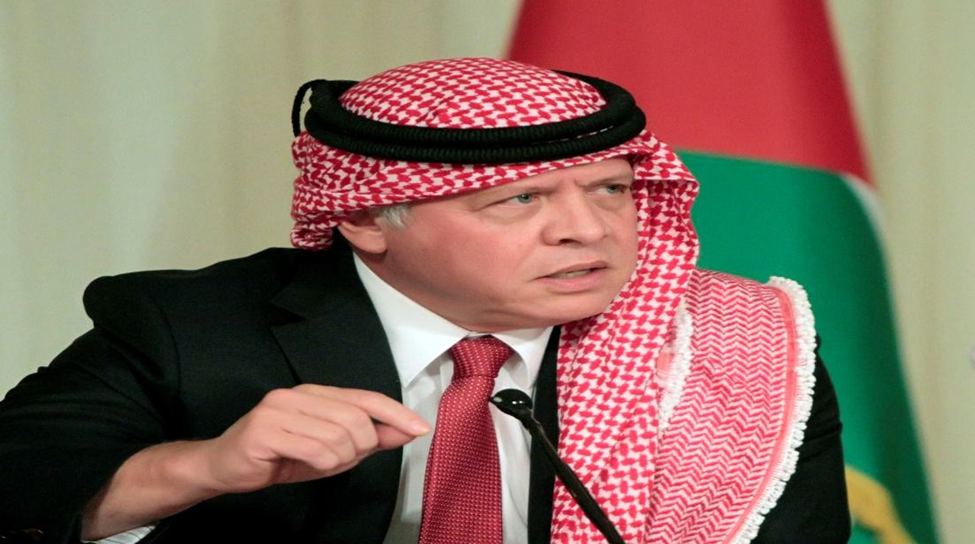
Shaped by its demographic diversity, geopolitical significance, and the Hashemite monarchy’s guardianship of Jerusalem’s holy sites, Amman’s stance on the Palestinian issue remains a defining pillar of its regional policy. Since the outbreak of the Gaza war on October 7, 2023, Jordan’s national security has come under threat due to Israeli proposals to annex the West Bank, displace Palestinians into Jordan, or promote the notion of Jordan as an alternative homeland—a concept that is categorically rejected by both the Jordanian leadership and its people. Such scenarios raise serious concerns about an influx of displaced Palestinians from the West Bank and Gaza, further endangering Jordan’s stability and political system. Addressing the United Nations General Assembly on September 24, 2024, King Abdullah firmly rejected forced displacement, declaring: “These extremists, who continuously promote the idea of Jordan as an alternative homeland… let me be absolutely clear: this will never happen, and we will never accept the forced displacement of Palestinians, which is a war crime.”
Despite this, Jordan continues to face mounting pressure from the United States and Israel over the issue of displacement. In a phone call on January 25, 2025, President Donald Trump pushed King Abdullah to accept the forced displacement of Palestinians and take in more refugees—an agenda that was further emphasized during the king’s visit to Washington and his meeting with Trump on February 11. Meanwhile, key figures of Israel’s far right, such as former National Security Minister Itamar Ben Gvir and Finance Minister Bezalel Smotrich, have voiced strong support for Trump’s proposal, calling on the Israeli government to accelerate the relocation of Gaza’s population to neighboring countries.
Against this backdrop, Amman finds itself navigating a delicate balance between safeguarding its external relations and managing internal pressures that could arise from any stance it takes on the issue. Since the Al-Aqsa Flood events, calls have intensified for the annulment of the 1994 Israel–Jordan peace treaty, alongside growing political and public pressure, particularly from opposition groups like the Muslim Brotherhood, which urged a reassessment of Jordan’s ties with Hamas and emphasized the need for closer relations to protect Jordanian national security from persistent Israeli threats. The Brotherhood argues that Jordan erred in distancing itself from Hamas, noting that relations deteriorated after the organization was expelled from Amman in 1999. Meanwhile, Jordan also faces external pressure, including the threat of frozen US aid, leaving the regime in a challenging position as it seeks to maintain strategic ties with Washington while balancing its broader regional interests.
Jordan is among the largest beneficiaries of US aid, receiving $1.65 billion in economic assistance and approximately $425 million in military aid in 2024 alone, , along with an annual budget support package of approximately $780 million. As a key defense partner of the United States, Jordan has held the status of a major non-NATO ally since 1996 and hosts thousands of US military personnel. It is an active member of the US-led military coalition against al-Qaeda and Daesh. Additionally, under a military agreement signed in February 2021, US forces are granted access to Jordanian facilities for 15 years, including 12 air and naval bases, as well as four training bases for joint military cooperation.
Thus, the forced displacement of Palestinians would have serious repercussions for US interests in Jordan, potentially jeopardizing its role as a strategic defense hub in the region. Any threat to the Jordanian regime—or its collapse—could lead to the rise of a government unfavorable to US interests and military presence. Additionally, instability in Jordan could put American military bases in the south at risk, making them potential targets for Hamas, its supporters among Jordanians and Palestinians, or Iranian-backed factions. As tensions in the Palestinian-Israeli conflict escalate, Jordan itself could be drawn into the battlefield. Moreover, continued displacement or prolonged war in Gaza could turn Jordan’s eastern borders into a flashpoint for clashes between Iraqi Shiite militias loyal to Iran and US forces stationed in Iraq, Syria, and Jordan.
In a related vein, the instability in Jordan also poses a direct threat to Israel’s security, given the 350-kilometer shared border between the two countries. Rising tensions could prompt the Muslim Brotherhood in Jordan to carry out attacks on Israel or facilitate the smuggling of weapons into the West Bank and Israel. A notable incident occurred in September 2024 when Israeli police intercepted a shipment of 74 Glock pistols and 61 magazines at the Yitzhak Rabin Crossing near Eilat, hidden inside a vehicle attempting to enter Israel from Jordan. Meanwhile, Bedouin smugglers operating along Jordan’s northeastern border with Syria exploit covert routes to traffic weapons and drugs into Jordan, with many of these smuggled arms eventually making their way to Israel’s border.
Beyond this, forced displacement would not bring regional peace to Israel but instead fuel further violence and attacks from within Jordan. A stark example occurred on September 8, 2024, when a Jordanian truck driver opened fire near the King Hussein Bridge, a key border crossing between Jordan and the West Bank. Notably, the attacker was not of Palestinian origin but belonged to the Howeitat tribe in southern Jordan, which is traditionally loyal to the monarchy. Similar incidents followed, including an October 18 attack where two Jordanians crossed the border south of the Dead Sea and opened fire on Israeli soldiers, injuring several. On November 24, another gunman targeted police near the Israeli embassy in Amman, wounding three people.
II. Threats to Jordan’s National Security
Forced displacement poses significant risks to Jordan’s national security, which can be outlined as follows:
Social and Economic Threats: The forced displacement of Palestinians poses a direct challenge to Jordan’s national security, particularly as the country already hosts a significant refugee population from various nationalities. Continued pressure to absorb more displaced Palestinians from the West Bank or Gaza exacerbates economic and social strains, threatening Jordan’s stability by altering its demographic balance and societal cohesion. With over 50% of its population holding refugee status, Jordan’s ability to accommodate further waves of displacement is increasingly strained. Since the wars of 1948 and 1967, the kingdom has taken in successive waves of Palestinian refugees, with approximately 2.4 million currently registered with UNRWA and holding Jordanian citizenship. Additionally, Jordan faces severe water scarcity, with per capita water availability below 145 cubic meters annually. Hosting more refugees intensifies pressure on water security, economic resources, and government spending, particularly as Jordan also shelters large numbers of Syrian and Iraqi refugees. This burden is compounded by rising unemployment, which has reached 21.9%, further straining the country’s economic and social fabric.
Internal Unrest: If Jordan accepts the forced displacement of Palestinians, it risks significant public backlash, especially given the large Palestinian community in Amman. This could spark internal unrest and protests, particularly as Hamas’ popularity has surged among Jordanians—especially those of Palestinian origin—since the Al-Aqsa Flood operation. There are also concerns that Hamas leaders could seek to mobilize Jordanian tribes into a confrontation with Israel. Additionally, the Muslim Brotherhood, represented in parliament by the Islamic Action Front (IAF), remains a key political force. In the most recent elections on September 10, 2024, the IAF secured 31 out of 138 seats, demonstrating strong support among youth and Jordanians of Palestinian descent. The issue of forced displacement could foster increased coordination between Hamas and the Muslim Brotherhood in Jordan, posing an ongoing security threat along Jordan’s borders with Israel and the West Bank. Moreover, it could open the door for Hamas to reestablish a foothold in Jordan, further endangering national security.
Tension in Jordan’s Foreign Relations: The forced displacement crisis has heightened tensions in Jordan’s international relations. Since the war in Gaza erupted on October 7, 2023, widespread public outrage has swept across Jordan—not only among citizens of Palestinian descent but also among Jordanians as a whole. Mass protests, led by the National Forum to Support Resistance and Protect the Homeland, have called for the annulment of the Wadi Araba Treaty, the termination of the Jordan-Israel gas deal, the dissolution of defense agreements with the United States, and the removal of US military forces from Jordan. Beyond domestic upheaval, forced displacement could strain Jordan’s ties with Israel and jeopardize major regional projects, including the India–Middle East–Europe Economic Corridor, which relies on Jordan as a key transit point. Additionally, the collapse of the UAE-mediated water-for-energy agreement between Jordan and Israel, triggered by the Gaza conflict, reflects the broader diplomatic fallout.
In short, despite mounting pressures, Jordan remains a cornerstone of regional stability. However, the prospect of West Bank annexation or the forced displacement of Palestinians to Jordan is driving Amman toward a precarious tipping point—whether through an overwhelming refugee crisis, heightened internal unrest, or even a threat to the monarchy itself. This reality necessitates a fundamental reassessment by the United States and Israel, urging them to reconsider their stance on forced displacement, work toward ending the Israeli occupation, and take meaningful steps to secure lasting peace in the region.