




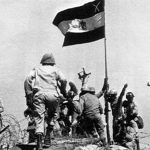




Major wars are more than military confrontations that end with ceasefire lines or battlefield maps. Once the fighting stops, they become parallel arenas of conflict over meaning, interpretation, and memory. Who has the authority to name what happened? Who determines whether the outcome constitutes a “victory” or a “defeat”? And how are official narratives constructed to rearrange events in ways that serve the national identity and political legitimacy of the parties involved? In this context, the October 1973 War stands out as a paradigmatic example of the phenomenon of “narrative conflict” in the contemporary history of the Middle East.
From the earliest hours following the cessation of military operations, the process of reconstructing meaning began. While some narratives focused on the final stages of the war, others sought to recover the full context that preceded, accompanied, and followed the fighting. As a result, the war ceased to be merely a military event measured by the number of tanks destroyed or the kilometers advanced. Instead, it became a political and cultural symbol continually reappropriated in the present. This highlights the importance of distinguishing between the “immediate battlefield outcome” and the “long-term strategic outcome,” as well as between “tactical superiority at a particular stage” and “the ability to impose new political terms.” Ultimately, no war lasts forever.
Constructing a narrative of victory is a complex process. In Israel’s case following 1973, an official narrative emerged that tended to portray the final phase of the war as conclusive evidence of military superiority, while disregarding or downplaying the significance of the initial shock, the scale of attrition, and the decisive role of external factors. It also minimized a fundamental political reality: the war ultimately compelled Israel to enter a negotiating process that culminated in its complete withdrawal from territories it had regarded as permanently and unquestionably its own — so much so that even proposing withdrawal from these territories had been considered taboo. Such selectivity is not exceptional. Israel has consistently sought to vindicate its own position, regardless of the extent of distortion and misrepresentation employed. The danger of this approach lies in its transformation of history into an instrument of mobilization rather than an instrument of understanding.
At the same time, the conflict between competing narratives of the October War cannot be understood in isolation from the broader context of the Arab-Israeli conflict. Previous wars, particularly the 1967 War, had entrenched a sense of near-absolute military superiority in the Israeli consciousness, while fostering a profound sense of weakness and humiliation on the Arab side. Egypt’s victory in October 1973 shattered this perception. The equation was no longer one of decisive Israeli superiority confronting Arab incapacity; instead, the balance had become far more complex.
The picture becomes even more complicated when the analysis shifts from the military to the political level. Modern warfare, particularly in a region such as the Middle East, is rarely decided by battlefield victory alone. The parties’ actual objectives often involve changing the negotiating environment, breaking diplomatic deadlock, or imposing costs that make the continuation of the status quo untenable. Herein lies the fundamental distinction between viewing war as a military contest that ends with a “winner” and a “loser,” and understanding it as an Egyptian art, cultivated over thousands of years, of skillfully transforming warfare into a political instrument in pursuit of a more far-reaching objective: the restoration of Egypt’s full sovereignty over every part of its national territory.
Another dimension is collective memory. Official narratives are written not merely for the archives but also for society itself. They reshape perceptions of both self and other and influence how subsequent generations understand what happened. Historical scholarship, therefore, must not be grounded in emotion; rather, it must rest on the continuous scrutiny of prevailing narratives and the pursuit of evidence that may contradict them, rather than merely confirm them. This underscores the importance of studies that seek to deconstruct Israel’s absolute claims.
In the specific Israeli context, the post-1973 narrative of “victory” was shaped by several domestic factors: the need to restore confidence after the initial shock, the desire to project an image of strength despite the losses, and the attempt to contain domestic criticism that subsequently emerged over preparedness and intelligence failures. These factors gave rise to an inflated Israeli narrative of victory that contradicted both the military realities on the battlefield and the political outcome. Hence the importance of studies that seek to refute simplistic claims of an “Israeli victory” in this war.
It is from this perspective that the present paper proceeds. Its purpose is not to reiterate a ready-made narrative, but to deconstruct prevailing Israeli claims concerning the war’s ultimate outcome, expose the internal contradictions within those claims, and contribute to a more nuanced and sophisticated understanding of the events of October 1973. It draws primarily on official Israeli and American archives and records relating to the war. Herein lies the paradox: the history of our victory can be rewritten through the contradictions in their own archives, which confirm that Egypt has never been a country that appropriates victories that are not its own.
I. The Israeli Narrative of Victory and Its Refutation
Official Israeli sources clearly reflect a narrative that portrays the October 1973 War as having ended in an Israeli victory. The Israeli Ministry of Defense Archives describes the outcome as one in which “Israel had the upper hand” on both fronts, relying in particular on the reversal achieved by the Israeli military in the second half of the war and its success in crossing the Suez Canal and advancing into Egyptian territory.
This perception is echoed in materials published on the Israel Defense Forces (IDF) website, which emphasize the crossing of the Suez Canal and the encirclement of the Egyptian Third Army as among the war’s most significant military achievements. Accordingly, the official Israeli narrative reframes the final outcome as an Israeli military victory, drawing on the battlefield reversals that occurred during the final phase of the fighting.
This Israeli account becomes questionable even when examined against the archives of the United States, which entered the war at a later stage and with a position favoring Israel. The following documents illustrate this point.
Counterargument 1: Withdrawal from Egyptian Territory as Evidence of Israel’s Defeat
Another central pillar of the Egyptian argument against the claim of an Israeli victory concerns Israel’s historical approach to the territories it occupies. Throughout its short and artificial history, there has been no precedent for Tel Aviv withdrawing from or relinquishing occupied territory except under pressure or compulsion. To substantiate this argument, it is important to examine Egypt’s position on Israel’s withdrawal from the territories occupied in June 1967 and during the years preceding the October Victory. This provides the foundation for the most important argument in support of Egypt’s victory: Israel was ultimately compelled to withdraw from the last square kilometer of occupied Sinai in 1982, one of the final consequences of Egypt’s victory in the October 1973 War, followed by the restoration of Taba.
Egypt’s Position on Israel’s Withdrawal from Occupied Territories Before 1973
Beginning in February 1971, Egyptian President Anwar Sadat developed a clear vision of a settlement based on Israel’s withdrawal from the territories it had occupied in the June 1967 War. He proposed to the administration of US President Richard Nixon that the Suez Canal be reopened in exchange for the withdrawal of Israeli forces from its eastern bank. He subsequently expressed his willingness to accept a timetable for further withdrawals, culminating in Israel’s retreat to the international border. Sadat also indicated that Egypt could end its state of hostility with Israel if Israel carried out the required withdrawal. Thus, the core of Egypt’s position before the October 1973 War was the termination of Israel’s occupation of Egyptian territory, rather than merely securing limited ceasefire arrangements or reopening the Suez Canal.
Egyptian initiatives, however, failed to bring about any fundamental change in either the Israeli or American position. Israel opposed the efforts led by US Secretary of State William Rogers to reach an interim settlement, while Nixon and National Security Advisor Henry Kissinger showed little willingness to exert serious pressure on Israel. Kissinger believed that the Egyptian proposals, together with the Soviet initiative put forward in September 1971, would not win Israeli acceptance. He was also keen to prevent disagreements over the Middle East from jeopardizing détente with the Soviet Union ahead of the Moscow Summit in May 1972. Nixon, for his part, had an additional reason to avoid a confrontation with Israel before the 1972 US presidential election.
Following the Moscow Summit, during which the United States and the Soviet Union deliberately refrained from making the Middle East issue a central subject of their discussions, Sadat took further steps to break the diplomatic deadlock. In July 1972, he decided to terminate the presence of Soviet military advisers in Egypt. He then established a secret channel of communication with Kissinger through his national security adviser, Hafez Ismail. In February 1973, Ismail met with Kissinger and conveyed Egypt’s willingness to consider a separate peace agreement with Israel incorporating security arrangements, such as the establishment of demilitarized zones on both sides of the border and the deployment of peacekeeping forces at certain sensitive locations, including Sharm El-Sheikh. These arrangements, however, were not intended to replace Egypt’s fundamental demand: full normalization with Israel remained contingent on Israel’s withdrawal from the territories it had occupied in 1967.
Despite these repeated Egyptian overtures, no fundamental shift occurred in Israel’s position, nor did Nixon and Kissinger initiate any substantive political pressure to compel Israel to withdraw. These developments demonstrate that the October 1973 War was not disconnected from the diplomatic process that preceded it. Rather, it came after more than two years of Egyptian efforts to persuade the United States and Israel to address the question of withdrawal from the occupied territories. Since February 1971, Egypt’s central demand had remained the termination of Israel’s occupation of the Egyptian territories seized in 1967, while diplomatic efforts had failed to achieve this objective before the outbreak of war. The significance of the October War in this context, therefore, lies not only in its immediate battlefield results but also in its transformation of the political balance within the peace process and its restoration of the Israeli withdrawal issue to the forefront of negotiations. Before the war, Israel and the United States had treated this demand as one that did not warrant substantial Israeli concessions.
Accordingly, the war imposed a change in the political and negotiating environment that had previously prevented Egypt’s demand for withdrawal from being fulfilled. The occupied Egyptian territories were recovered in stages through agreements and negotiated arrangements that followed the war, culminating in Israel’s withdrawal from Sinai and its return to Egyptian sovereignty. The October War can therefore be properly assessed only by recognizing it as the turning point that transformed the demand for withdrawal from a diplomatic proposal rejected by Israel before the war into a negotiating process in which Israel was ultimately compelled to withdraw completely from the Egyptian Sinai Peninsula.
From this perspective, the political outcome of the war contradicts the narrative that portrays it as an Israeli victory or suggests that Israel was in a position to reject withdrawal without incurring enormous costs that threatened the very survival of the State of Israel.
Consistency in Egypt’s Position: War as a Means of Imposing a Settlement, Not an End in Itself
Following the outbreak of the war, Hafez Ismail’s letter to Henry Kissinger on October 7, 1973, revealed a clear continuity in Egypt’s position on a political settlement. On the second day of the war, Cairo reaffirmed the principles it had previously advanced in its communications with the US administration before hostilities began. Ismail emphasized that Egypt’s ultimate objective was to achieve peace in the Middle East, but made clear that achieving such peace was contingent on Israel’s withdrawal from all the territories it had occupied. At the same time, he affirmed Egypt’s readiness to participate in an international negotiating process and accept security arrangements guaranteeing freedom of navigation through the Strait of Tiran, including the possible deployment of a temporary international presence.
The significance of this letter lies in the fact that it was sent immediately after military operations began, yet it revealed no departure from the political principles underlying Egypt’s earlier initiatives. Cairo reiterated during the war the same position it had sought to convey to the US administration beforehand: a genuine settlement required ending Israel’s occupation of the Arab territories it had seized. This demonstrates that, according to the position articulated by Ismail, the use of military force was not an end in itself, but rather an attempt to change the status quo that previous diplomatic efforts had failed to alter.
The consistency of Egypt’s position becomes even more significant when compared with the period preceding the war. Even after hostilities began, Cairo did not abandon the substance of its political demands. Instead, it entered negotiations from a different position, shaped by the decisive military developments Egypt had achieved on the ground. The continuation of the prewar status quo, characterized by Israel’s occupation of Egyptian territory, could no longer be treated as a permanent arrangement that Israel could maintain without incurring political or military costs. While Tel Aviv pursued a policy of creating facts on the ground, Egypt made clear on October 6 that the continued occupation of Egyptian territory threatened the very survival of the State of Israel. Egypt’s victory thus succeeded in transforming the demand for withdrawal from Egyptian territory from a diplomatic objective to which Israel had refused to respond before the war into a reality imposed on Israel on the ground, which subsequently became an integral part of the postwar negotiating process.
These developments are also connected to the message Sadat conveyed to the Shah of Iran, who served as an intermediary with President Nixon. This indirect channel reveals that, alongside direct communications between Cairo and Washington, Sadat was determined to convey a clear understanding of Egypt’s actions and objectives to the American president. More importantly, as relayed by the American side, the message combined an account of Egypt’s military achievements with an affirmation of its continued desire for peace, explicitly linking that peace to Israel’s withdrawal from the territories occupied since June 5, 1967. It also expressed Egypt’s willingness to consider international guarantees and arrangements concerning the territories and freedom of navigation. This point is particularly significant when compared with Hafez Ismail’s October 7 letter, as it demonstrates the consistency of Egypt’s fundamental position across different channels of communication: the use of military force did not displace the political objective, nor did military success become an open-ended demand to continue the war. Rather, it remained tied to the demand for Israeli withdrawal and the restoration of a path toward a political settlement.
Counterargument 2: Document No. 131 from the US Department of State Records
The discussions of the Washington Special Action Group on October 14, 1973, reveal that, even at that point, the United States was still attempting to understand the nature and actual scale of Egypt’s military operations in Sinai. The US intelligence briefing indicated that Egyptian forces had launched a general offensive in Sinai, with assessments suggesting that some units might reach the Mitla Pass area. This prompted Kissinger to inquire about the distance between the pass and the Suez Canal. His question reflects the attention and surprise that the extent of the Egyptian advance had generated within the US administration, which was seeking to determine whether the operation marked a transition to a new phase of hostilities or remained within the limited objectives with which Egyptian forces had begun the war.
In this context, US military assessments indicated that Egypt’s objective was not to advance across Sinai and take control of the entire peninsula. Admiral Thomas Moorer believed that Egyptian forces were advancing but did not intend to cross the whole of Sinai. Rather, their aim was to hold the areas they had captured while expanding their presence east of the canal in pursuit of their military and political objectives. Egypt’s advance into Sinai, therefore, did not represent a departure from the war’s original objective. Instead, it was a means of consolidating the achievement of the canal crossing and establishing a new military reality for Israel to confront. This enabled Egypt to move from the position of a party demanding the restoration of its territory to that of a party possessing tangible military leverage on the ground that could be used in political negotiations.
American concern in this regard reflected not merely the monitoring of troop movements, but also the fact that Washington was confronting a military reality that could not easily be interpreted as simply a limited canal-crossing operation. This was particularly significant given that Egyptian forces had managed to maintain their forward positions and continue fighting more than a week after the war began.
From this perspective, it can be argued that Egypt’s objective in advancing into Sinai had been achieved to a considerable extent by October 14. Egyptian forces had successfully crossed the Suez Canal, established bridgeheads, expanded their presence east of the canal, and held the positions they had captured. These achievements compelled Israel to contend with a new military reality rather than simply seek a return to the prewar status quo.
Counterargument 3: Document No. 190 from the US Department of State Records
Further evidence can be drawn from Document No. 190. The secret message sent by US Secretary of State Henry Kissinger to Egyptian National Security Adviser Hafez Ismail in Washington on the morning of October 16, 1973, reveals an important American assessment of the achievements Egypt had made during the October War, as well as the nature of the disagreement between Cairo and Washington over the conditions for a ceasefire. The message did not treat the war as a confrontation in which Egypt had been reduced to a defensive position. Rather, Kissinger explicitly acknowledged that Egyptian forces had “already accomplished a great deal” and that these achievements had fundamentally altered the strategic situation that had prevailed since the 1967 War.
This acknowledgment is particularly significant given Kissinger’s affiliations and background, and the fact that it came at a time when the United States was pressing for a cessation of hostilities. He acknowledged that Egypt had succeeded in overcoming the sense of humiliation that the defeat of 1967 had left among Egyptians and throughout the Arab world, and that the war had created a new strategic situation in which neither side could take permanent military superiority for granted. The American message thus provides an acknowledgment that Egypt’s military operations were not merely a limited undertaking without political consequences. Rather, they had succeeded in breaking the strategic equation established after 1967 and compelled Washington to confront a different strategic reality, making the need for a political settlement more evident to all parties. This meant that Washington recognized that a return to the situation prevailing before October 6 was no longer possible. Kissinger, however, sought to channel Egypt’s achievement into a negotiating process favored by the United States, beginning with a ceasefire and proceeding thereafter to a settlement.
Counterargument 4: Document No. 125 from the US Department of State Records
Document No. 125 from the US Department of State records shows that, on October 8, Washington was treating Cairo as a party whose terms needed to be heard and whose intentions needed to be explored, rather than as a party expected merely to accept a ready-made American formula for a ceasefire. This is evident in Kissinger’s insistence on clarifying what was meant by a complete Israeli withdrawal: was it a prerequisite for convening the peace conference, or a principle to be agreed upon before the conference, with the mechanisms for its implementation to be discussed during the negotiating process? This inquiry reveals that the US administration was attempting to identify the minimum Egyptian position on which diplomatic efforts could be based. It also underscores the negotiating weight Egypt had acquired at this stage through its military achievements, which could not be ignored, and challenges the narrative of Israeli military progress promoted by Tel Aviv.
Second, the American position on the formulation of the initiative at the United Nations carries important implications. Communications associated with the document indicate that Kissinger informed the Egyptian side that the United States had softened the wording of its statement to the greatest extent possible, while recognizing that the formulation would not satisfy Israel. The significance of this episode lies in the fact that, despite its close ties with Israel, Washington was at that moment pursuing a formulation that took the Egyptian position into account above all. This reflected an American attempt to manage the crisis rather than simply endorse the Israeli position unconditionally. Naturally, the United States adopts such positions only when Israel is in a difficult situation on the ground.
Counterargument 5: The US Defense Intelligence Agency’s Final Assessment
A study prepared by the US Defense Intelligence Agency during the October 1973 War offers a long-term American assessment of Israel’s future security, based on the possibility that the war might end without a decisive outcome that fundamentally altered the nature of the conflict. The study posited that if Israel and the Arab states remained in a state of relative military parity, political hostility would persist and armed conflict could recur. In its assessment, Israel relied primarily on maintaining a substantial military advantage to deter any Arab attempt to defeat it. However, the course of the October War demonstrated that this superiority could no longer be taken for granted to the same extent as before the war.
The study argued that the October War had revealed a potential shift in the military balance of power between Israel and the Arab states. Tel Aviv would no longer be able to rely on the assumption that it could achieve swift and decisive victories of the kind secured in previous wars. This development was particularly significant in the view of the study’s authors because Israel, with a population much smaller than that of the surrounding Arab states, required a qualitative military advantage that would enable it to confront adversaries with greater populations and resources. Consequently, Israel’s diminished ability to bring wars to a rapid and decisive conclusion was regarded as a direct challenge to its long-term security.
Accordingly, the Defense Intelligence Agency concluded that reliance on conventional military power alone might not be sufficient to guarantee Israel’s future security. The study proposed three principal options through which Israel might move beyond its traditional dependence on military strength: obtaining an international guarantee of its borders, securing a direct American military guarantee, or adopting an overt policy of nuclear deterrence. The study, however, treated these options as problematic alternatives, noting that each entailed political and strategic constraints that would make it extremely difficult to turn any of them into a stable, long-term solution.
Second: The Contradiction Between Israel’s Victory Narrative and Its Battlefield Losses, and the Overlooking of the Deir Al-Balah Gap and Its Consequences
The Israeli Crossing to the Western Bank “Was No Walk in the Park”
On the night of October 15, 1973, Israeli forces began executing the most sensitive phase of their plan to shift the battle to the western bank of the Suez Canal. The objective of penetrating the Deversoir area was not merely to advance into Egyptian positions, but to open a secure corridor from Israeli positions east of the canal to the crossing site, thereby enabling engineering units to construct bridges and transport tanks, equipment, and personnel to the western bank. The Chinese Farm area thus became a decisive obstacle to the Israeli plan, as continued Egyptian resistance there meant blocking the route to the bridging forces and, consequently, disrupting the entire crossing operation.
By dawn on October 16, the armored division commanded by Ariel Sharon found itself facing a complex network of agricultural installations and Egyptian defensive positions. This exposed the shortcomings of Israeli intelligence regarding the terrain and the deployment of Egyptian forces in the area. During a series of successive attacks, Israeli tanks were forced to engage at extremely close range, and clashes at some points developed into direct combat between tanks and infantry. Logistical constraints thus began to threaten the transformation of a tactical success in establishing the crossing into an operational liability unless a secure and sustainable supply route could be established.
This demonstrates that a comprehensive intelligence picture was lacking and that the advance proceeded before sufficient information had been gathered about the nature of the Egyptian defenses. The operation resulted in Israeli casualties exceeding 40 killed and 100 wounded. Nor was the crossing easy or free of losses: Egyptian artillery continued to bombard the bridge area heavily, inflicting damage on Israeli troops and equipment. Approximately 12 Israeli tanks also fell into the canal during the crossing operation.
It is important to recognize that the Israeli crossing to the western bank was not simply the product of Israeli superiority or an isolated Israeli breakthrough. Rather, it was fundamentally based on the developments surrounding the Deversoir Gap. The intelligence obtained by the Israelis on October 9, in particular, revealed a weakness in the coordination between the Egyptian Second and Third Armies. Instead of seeking to destroy these forces, Israel considered outflanking them and crossing to the western bank of the canal in order to create a new reality on the ground.
The crossing operation also demonstrates that Israeli success was by no means inevitable. In its initial stages, the operation was highly precarious and faced the risk of failure because of Egyptian resistance at the Chinese Farm, delays in constructing the bridges, logistical congestion, Egyptian bombardment, and disagreements between Sharon and the Israeli high command over the pace at which the offensive should be developed. Israeli forces also sustained substantial losses before the crossing had been firmly established. This meant that Israel did not reach the western bank in an ideal position; rather, it was compelled to press ahead despite having already lost part of its armored and human resources.
In his testimony concerning the gap, Ariel Sharon, commander of Armored Division 143 in the central sector of Sinai during the October War, stated that Egypt’s crossing of the Bar-Lev Line constituted the foundation of the disaster that befell Israel in October 1973. According to Sharon, the Israeli leadership had no advance knowledge that such a development was imminent. Although the Bar-Lev Line fortifications had become deadly traps, Israel had no plan for dealing with the possibility that Egyptian forces would overcome them. As a result, the Israeli army lost two-thirds of its tanks during the first 36 hours, leaving only 94 tanks out of a total of 300 that had been completely destroyed.
Sharon added: “I did not head south toward the canal of my own accord; I was ordered to move south. I even opposed the order in an attempt to explain the actual situation on the front to my superiors, but my efforts proved futile. There was no senior commander above the division commander on the battlefield throughout the course of the fighting. The Israeli leadership made its first visit to the front on October 19, on the western bank of the Suez Canal. Despite this, I received orders to withdraw from the front. I am stating the truth here: we were indeed engaged in fierce fighting with the Egyptians. I had retained only one battalion, the reconnaissance battalion, which lost most of its men in this battle. Its commander and deputy commander were both killed. I also had to hold the Akavish axis along the mountain range, which I considered a commanding position that would make it possible to transfer the battle to the western bank of the canal. I had no alternative but to carry out the order.
“Nevertheless, I repeatedly tried to persuade the leadership that we should not cross the canal. We carried out the attack nonetheless and paid a heavy price. This operation was one of the major mistakes made on the front after the beginning of the war: the senior military command failed to appreciate that, after the Egyptians had crossed the canal in such great strength, their morale had risen considerably. Given our own declining morale, it was impossible at that stage to defeat the Egyptians with a single division. The leadership failed to recognize that the battle had to be directed from the perspective of an entire army, not that of a single division.”
According to Sharon’s testimony, after spending 34 hours moving through the Egyptian desert in armored vehicles, he encountered an officer who told him that they would be unable to stop the Egyptians. When Sharon decided to attack the Egyptian forces from the rear and construct a bridge to cross the canal to the western bank, his forces came under heavy Egyptian artillery fire. Sharon described that night as horrific. He said that his division lost approximately 300 soldiers, while as many as 1,000 were wounded, including rank-and-file soldiers and division commanders alike.
Israel Does Not Fight Its Battles “Alone”
The events of the October 1973 War reveal that a narrative reducing the outcome of the conflict to an Israeli victory overlooks the course of developments on the battlefield and the timing of the shift in the balance of power. According to the US Department of State, Henry Kissinger initially expected Israel to achieve a swift victory. These expectations, however, were not borne out during the first phase of the war. Indeed, the Israeli counteroffensive against Egyptian forces failed, prompting Israel to request urgent American assistance by October 9. Accordingly, the shift in Israel’s position cannot be attributed to a decisive military achievement by Israel acting alone before the onset of large-scale American resupply operations.
The most significant change came when Washington made the executive decision to launch the American airlift to supply Israel with weapons on October 13, with the first shipments beginning to arrive in Israel on October 14. Two days later, on October 16, Israeli forces succeeded in crossing the Suez Canal and reaching its western bank. Placing this crossing within its chronological context, however, reveals that it was not a direct continuation of a decisive Israeli success achieved from the outset of the war. Rather, it came after days of intense fighting, the failure of the first Israeli counteroffensive, and amid the influx of American military supplies. Consequently, attributing the Israeli crossing solely to the notion of an “independent Israeli victory” overlooks the decisive external factor that entered the equation midway through the war, particularly the large-scale American military support.
This point can also be substantiated by Document No. 166 in the US Department of State’s documentary records. The document, which contains the minutes of a conversation held in Washington on the night of October 12-13, 1973, between US Secretary of State Henry Kissinger and Israeli Ambassador to the United States Simcha Dinitz, in the presence of National Security Adviser Brent Scowcroft, reveals the extent of the attrition Israel had sustained during the first days of the war, particularly in its air force, as well as its growing dependence on American military supplies to sustain its operations. The document is particularly significant because it dates from a relatively advanced stage of the fighting, more than a week after the outbreak of the war. It therefore provides an opportunity to assess the Egyptian military’s continued ability to maintain a strong presence east of the Suez Canal and demonstrates that the military pressure confronting Israel was not confined to the opening days of the conflict.
At the same time, the document makes clear that Israel required direct American assistance to offset part of these losses. The discussion between Dinitz and Kissinger turned to the urgent provision of aircraft and ammunition, prompting Kissinger to pressure the Department of Defense and the relevant American authorities to accelerate resupply operations. The discussions extended to the use of American C-130 transport aircraft and the possibility of conducting urgent equipment transfers to Israel. The document thus demonstrates that American military assistance was neither a marginal issue nor one detached from the course of military operations. Rather, it had become an integral factor in Israeli calculations concerning the ability to sustain the war.
This point assumes particular significance when the relationship between military assistance and the American diplomatic course is taken into account. The supplies Washington was working to provide Israel were intended not only to compensate for previous losses, but also to preserve Israel’s military capabilities at a stage when the United States was simultaneously moving toward a cease-fire and negotiations over postwar arrangements. Maintaining Israel’s ability to continue fighting was therefore part of Kissinger’s political calculations, as Washington did not want to enter negotiations at a point when Israel felt it had lost the capacity to continue the war or was being compelled to accept a cease-fire under overwhelming military pressure. The historical question, therefore, should not be limited to: “Did Israeli forces cross the canal?” It must also address when the crossing took place, what preceded it, and which factors made it possible.
This interpretation leads to a broader conclusion regarding Israel’s approach to managing wars and crises. Historical experience indicates that Israel has frequently required intensive American support or international intervention to preserve its capacity to sustain military operations and translate battlefield gains into political outcomes. In the October War specifically, American support arrived at a moment when Israel was facing genuine military difficulties.
The Failure to Encircle Ismailia
On the northern axis of the gap, Ariel Sharon’s forces attempted to advance from the Deversoir area toward Ismailia in order to isolate the Egyptian Second Army and cut its supply lines. After crossing the canal, the Israeli 143rd Armored Division pushed northward and managed to advance several kilometers. However, it encountered increasingly strong Egyptian resistance from paratrooper and commando units, which established successive defensive lines and forced the Israeli forces to advance slowly against a series of defensive positions. Gawrych’s study indicates that units from Egypt’s strategic reserve, including the 150th Paratrooper Brigade and Commando Group 139, succeeded in halting Sharon’s attempt to advance northward and capture Ismailia, thereby keeping the Second Army’s supply route open.
By October 22, Israeli forces attempted a maneuver to outflank Ismailia from the rear and encircle the city. However, the Egyptian defenders repelled the attempt and halted the Israeli advance approximately ten kilometers south of the city. As a result, Israel was unable to cut the Second Army’s supply lines or occupy Ismailia before the cease-fire took effect. A study published through the US Marine Corps University confirms that the 143rd Armored Division advanced northward with the objective of isolating the Second Army from its support areas, but halted short of achieving its ultimate objective after costly fighting. Israeli forces remained in their positions without having fully isolated the Second Army when the war ended.
The failure of the attempt to capture Ismailia is particularly significant in assessing the outcome of the gap. Control of Ismailia or the severing of supply routes would have given Israeli forces a greater capacity to turn the crossing into an operational collapse of the Second Army. However, the continued availability of Egyptian supply lines meant that Israeli forces west of the canal could not transform their bridgehead into a decisive operation against the Second Army. Thus, the Israeli crossing to the western bank achieved a significant operational breakthrough, but it did not accomplish all its subsequent objectives, either in the north at Ismailia or in the south at Suez.
The Battle of Suez and the Continued Failure of Israeli Assessments
The narrative of an Israeli military victory also appears to be deeply at odds with the battlefield losses Israel sustained, particularly in one of the war’s most significant engagements: the Battle of Suez. This battle clearly exposed the extent of the errors in Israeli assessments and assumptions regarding the Egyptian forces’ ability to resist and the situation inside the city. The Israeli command committed its forces to an assault on the city based on assessments that did not accurately reflect the scale of Egyptian resistance. The operation ended with heavy Israeli losses and failure to achieve its intended objective, making the Battle of Suez one of the most prominent battlefield episodes that are difficult to reconcile with the propagandistic portrayal of the war as an Israeli victory.
The Israeli failure at Suez was not attributable to a single battlefield factor, but rather to a series of errors. According to a study by the Institute of Modern Warfare, following an Israeli advance toward the city that lasted approximately five days, Israeli forces had only a limited number of hours to prepare a plan and alter the situation on the ground before the cease-fire took effect. Nevertheless, the Israeli command assumed that the Egyptian forces inside the city were on the verge of collapse and would retreat rapidly in the face of a swift armored assault. In reality, the city had been prepared for defense nearly a year earlier. Military forces, police, and local militias had been organized there, while ambushes and antitank missile positions had been established in advance.
The Failure to Achieve the Gap’s Objectives and the Attempt to Encircle Suez
The objective of the Israeli advance west of the canal extended beyond merely establishing a foothold on the western bank. The Israeli leadership sought to exploit the gap to separate the Egyptian Second and Third Armies, cut their supply lines, and tighten the siege of the Third Army, thereby securing a stronger position for Israel in the political negotiations that were looming as the cease-fire approached. In this context, the advance toward Suez was part of an effort to tighten the encirclement of the Third Army, rather than an objective independent of the crossing operation. A study by the Institute of Modern Warfare explains that capturing Suez would have tightened Israel’s siege of the Third Army and strengthened its encirclement.
Accordingly, Israel’s success in opening the gap did not mean that it had achieved all the objectives for which the operation was intended. The attempt to exploit the breakthrough evolved into a series of separate operations: an advance toward Ismailia in the north and an advance toward Suez in the south. In Suez, specifically, the insistence on securing a rapid urban victory before the cease-fire took effect led to the deployment of an armored force into an environment for which it was ill-prepared. Following the failure of the assault, Israel’s priority shifted from capturing the city to rescuing the forces that had entered it. This shift revealed that the operation’s original objective was no longer attainable on the battlefield.
Israeli Losses
A study by the Institute of Modern Warfare estimates Israel’s losses in the Battle of Suez at 88 killed, 120 wounded, and 28 armored vehicles destroyed. The study directly links these losses to the way the forces were employed, particularly their rapid advance without adequate infantry protection and the dispersal of the armored column. The significance of the armored losses, therefore, lies not merely in their number, but also in how they exposed the limitations of relying on armored superiority when operating in an urban environment that had been prepared in advance to counter it.
During the attempt to encircle Ismailia, Israeli losses were estimated at approximately 70 tanks out of the brigade’s total of 97, either destroyed or damaged. Approximately 300 soldiers were also killed or wounded. These losses reveal the difficulty of the mission facing Israel. The Egyptian forces were not simply a retreating force confronted by an Israeli advance; rather, they were able to exploit the terrain and their forward defensive deployments to slow the Israeli advance and impose a heavy cost on the forces attempting to open a route toward the canal.
Third: The Myth of Absolute Israeli Superiority and the Fallacy of Relying on the Gains of 1967
October 6, 1973, marked a turning point in Israeli military thinking, which had been firmly established since the 1967 war, particularly the belief that superiority in tanks and aircraft gave Israel an almost decisive advantage in conducting military operations. The Egyptian crossing of the Suez Canal, however, exceeded the expectations of the Israeli command. Egyptian forces succeeded in crossing the canal and establishing bridgeheads on its eastern bank, capitalizing on the concentration of their forces, engineering equipment and crossing methods, and an integrated system of antitank missiles and air defenses. As a result, Israeli forces could no longer rely on tanks alone to regain the initiative, after Egyptian antitank weapons demonstrated their ability to inflict heavy losses on attacking forces.
The fundamental dilemma was that Israel entered the war carrying the legacy of its military experience in 1967, when its armored and air forces had achieved rapid advances. The Israeli command therefore assumed that tanks would remain the principal means of stopping any Egyptian offensive and that Israeli air superiority would limit the Egyptian forces’ ability to maneuver and receive support. The 1973 war, however, revealed a radically different combat environment. Egyptian forces possessed a dense network of AT-3 Sagger antitank missiles and rocket-propelled grenades (RPGs), alongside a Soviet-made air defense system that restricted the freedom of Israeli aircraft. Consequently, Israeli armored advances into the range of Egyptian defenses proved far less effective than the Israeli command had anticipated. The practical value of Israeli commanders’ previous experience diminished, while their entrenched belief that initiative, speed, and armored thrusts could compensate for deficiencies in intelligence and preparation for confronting a new defensive system persisted.
The Devastating Consequences of the Israeli Counterattack on October 8
Perhaps one of the most significant episodes to disprove the narrative of absolute Israeli superiority was the failure of the Israeli counterattack. Following the confusion surrounding Israel’s initial attempts to halt the Egyptian advance, the Southern Command decided to launch a major counteroffensive on October 8, with the aim of recapturing Israeli positions on the eastern bank of the canal and putting pressure on the Egyptian bridgeheads. Israeli thinking was based primarily on the need to regain the initiative before Egyptian forces could consolidate and reinforce their positions. From the Israeli command’s perspective, the continued presence of Egyptian forces on the eastern bank of the canal constituted a strategic threat that could not be left unanswered.
The decision, however, was made under conditions unfavorable to a large-scale armored offensive. Egyptian forces had established organized bridgeheads, and infantry units armed with antitank missiles had deployed throughout the depth of the battlefield. Egyptian air defenses also provided a protective umbrella that limited the ability of Israeli aircraft to offer direct support to ground forces. Israeli tanks were therefore no longer confronting merely conventional infantry units, but an integrated defensive system combining infantry, antitank missiles, artillery, and air defenses.
The outcome was disastrous for the Israeli armored forces. The 162nd Armored Division, commanded by Major General Avraham Adan, sustained heavy losses during its attack against the Egyptian Second Army. It lost, or had put out of action, approximately 83 of the 183 tanks in its formation. These losses reveal that the problem lay not merely in the number of Israeli tanks, but also in the mistaken assessment of the nature of the battle. The Israeli command had assumed that the experience gained in 1967 could be transferred almost directly to the 1973 war, despite the Egyptians’ having developed, over the preceding years, methods and tactics for countering Israeli armored superiority. Consequently, reliance on speed, maneuver, and armored initiative — which had previously been a source of strength — became a weakness when not supported by adequate reconnaissance, infantry, and air support.
Fourth: Refuting the Israeli Claim of Prior Knowledge of the Egyptian Attack on October 6
US Department of State documents are particularly important in assessing the claim that Israel knew in advance the date of the Egyptian-Syrian attack in October. Their significance lies in the fact that they are based neither on later Israeli testimonies nor on Arab accounts. Rather, they document, at the time, the communications and assessments reaching the US administration from the embassy in Tel Aviv, the Israeli leadership, and US intelligence agencies. They therefore make it possible to reconstruct what the United States knew, when it knew it, and what Israel had communicated to the US administration before the outbreak of hostilities.
Document No. 83 falls within this chronological context. It is the National Intelligence Assessment Memorandum entitled “Syria’s Role in the Middle East” (NIAM 36.7–73), prepared in Washington on August 24, 1973, approximately six weeks before the war. The document indicates that it was not the product of a single intelligence agency. Rather, it was prepared with the participation of the Central Intelligence Agency (CIA), the intelligence agencies of the Departments of State and Defense, and the National Security Agency (NSA). The CIA submitted it with the approval of the members of the US Intelligence Board, while representatives of the Federal Bureau of Investigation (FBI) and the Department of the Treasury abstained from voting because the subject fell outside their areas of responsibility. The document was classified “Secret.”
The US assessment of August 24 indicated that Syria would remain hostile to Israel. At the same time, however, it concluded that, according to the American assessment at the time, Damascus was “unable to pose a serious military challenge” to Israel and was highly cautious about undertaking any action that might provoke an Israeli attack.
In the same context, Document No. 93 from the Foreign Relations of the United States, 1969–1976 series is particularly significant in tracing US intelligence assessments of Syrian movements in the lead-up to the October 1973 War. It was issued on September 30, 1973, just six days before the war began, and was entitled “Syrian Military Intentions.” The briefing memorandum was addressed to US Secretary of State Henry Kissinger by Klein, Acting Director of the Bureau of Intelligence and Research at the US Department of State, and carried the reference number RCI–2997.
The document’s significance stems primarily from its timing. It was issued amid reports of unusual Syrian military movements and preparations near the front with Israel, at a time when the possibility of military escalation was attracting growing attention within the US administration’s intelligence agencies. Nevertheless, the American assessment did not reach a definitive conclusion that Syria was preparing to launch an imminent, large-scale war. Instead, it continued to consider military action as one possibility among several scenarios. This reflects the nature of US intelligence assessments during the final days before the outbreak of the war. Rather than immediately concluding that the Syrian movements constituted preparations for a full-scale war, the memorandum considered whether they might be related to defensive concerns or precautionary measures prompted by military developments along the front.
The US assessment also considered the possibility that Syria was preparing to undertake limited military action, linking this scenario to the possibility that such action might be a response to the Israeli air raid of September 13, 1973. Thus, the assessment did not treat every indication of Syrian military activity as automatic proof of a decision to launch a large-scale war. Instead, it sought to interpret these indications in light of the prevailing military and political circumstances. The memorandum also addressed the increased readiness of Egyptian air force and air defense units beginning on September 26. Nevertheless, US intelligence agencies found no evidence directly linking this heightened Egyptian readiness to the Syrian military movements.
Document No. 97 also contains a letter from Israeli Prime Minister Golda Meir to US Secretary of State Henry Kissinger. Although the original letter is undated, the documents and correspondence associated with it place it in the context of the eve of the war. The letter addresses the growing Egyptian and Syrian military movements and presents the Israeli leadership’s assessment of their nature and the possible explanations for them. Meir begins by outlining two principal possibilities for interpreting the Egyptian and Syrian movements. The first is that Egypt and Syria had come to believe that Israel was preparing to launch a military operation against them, and that their own preparations were therefore defensive and precautionary measures. The second is that the military movements reflected an Egyptian or Syrian intention to undertake military action against Israel.
In the same context, Meir states that Israel was not preparing to attack Egypt or Syria and had no intention of initiating military action against either country. She therefore asked Kissinger to use his contacts with Arab parties and the Soviet Union to convey this message, in the hope of dispelling any belief in Cairo or Damascus that Israel was preparing for military action and thereby reducing existing tensions. The letter coincided with Israeli reports of heightened Egyptian and Syrian military readiness. Information reaching US officials at the time indicated that Egypt had reinforced its forces in the Suez Canal area in the preceding days and that the various branches of the Egyptian armed forces had been placed on heightened alert. Reports also indicated that Syria remained on alert and had moved fighter and bomber aircraft to airfields closer to the front.
Nevertheless, according to the assessment presented in the document, these indications did not establish the nature of Egyptian and Syrian intentions conclusively. The possibility that the movements were associated with defensive measures or military exercises remained open, alongside the possibility that they represented preparations for military action. The military buildup alone was therefore not treated as definitive proof that Egypt and Syria had decided to launch a full-scale war against Israel.
Indeed, Document No. 99 records the Israeli side’s observation that Cairo appeared calm and normal on the morning of October 6, with no clear indications of extraordinary military measures. On the basis of this information, two principal interpretations of the situation were presented. The first was that Egypt and Syria might indeed be preparing for war, despite recognizing the difficulty of achieving a decisive military victory, and that their objective might be to use the war to draw international attention to the Arab cause and create conditions for using oil as a political instrument of pressure against the United States. Under this interpretation, the evacuation of Soviet dependents and advisers could be understood as a precautionary measure by Moscow. The second interpretation was more closely related to Arab-Soviet relations. It posited the possibility of a genuine crisis between Moscow and its Arab allies, with the threat of war serving merely as a pretext to remove Soviet advisers from Egypt and Syria.
This point reveals that intelligence uncertainty and confusion over the possibility of war persisted until the morning of October 6. Rather than treating the military movements as conclusive evidence of a decision to go to war, assessments continued to lean toward an interpretation based on the possibility of a crisis in Arab-Soviet relations.
From this perspective, the documents do more than simply “refute” the Israeli victory narrative; they also prompt a reconsideration of the very nature of victory in a war fought for limited objectives. Israel entered the war with the doctrine of “decisive and rapid superiority” inherited from 1967. It emerged from the conflict after the American documents themselves had demonstrated that this doctrine had been fundamentally shaken: heavy armored losses on October 8, increasing reliance on the American airlift before any genuine shift in the battlefield situation, and failure to turn the Deversoir Gap into an operational collapse of the Egyptian Second and Third Armies.
More importantly, the final political outcome — the complete withdrawal from Sinai — was not a voluntary negotiating concession, but rather a direct consequence of the shift in the balance of power brought about by the war. The American documents confirm that, by mid-October, Washington itself had recognized that the situation prevailing before October 6 could no longer be sustained. In this sense, the very archive on which the Israeli narrative of the “upper hand” rests also provides evidence that the decisive advantage belonged to the side that succeeded in transforming a military achievement into a lasting political reality, because its adversary was compelled — even with the support of the American mediator — to acknowledge that continuing the occupation had become too costly to sustain.
References:
- https://archives.mod.gov.il/sites/English/docs/agranat/Pages/default.aspx?utm
- 8 Miraculous Moments in IDF History https://www.idf.il/en/mini-sites/our-soldiers/8-miraculous-moments-in-idf-history/?utm
- “Editorial Note,” Foreign Relations of the United States, 1969–1976, vol. XXIII, Arab-Israeli Dispute, 1969–1972, February 4, 1971, Office of the Historian, US Department of State. FRUS document on Sadat’s initiative in February 1971.
- “Editorial Note,” Foreign Relations of the United States, 1969–1976, vol. XXIII, Arab-Israeli Dispute, 1969–1972, Office of the Historian, US Department of State. Introduction to the volume and documents on the Egyptian-Israeli settlement.
- Milestones: The Arab-Israeli War of 1973, Office of the Historian, US Department of State, discussing Sadat’s July 1972 decision to expel Soviet military advisers and his subsequent backchannel with Kissinger through Hafiz Isma‘il.
- US Department of State, Office of the Historian, “The 1973 Arab-Israeli War,” Milestones: 1969–1976, accessed August 31, 2026, https://history.state.gov/milestones/1969-1976/arab-israeli-war-1973.
- Message from Egyptian President’s National Security Adviser Hafiz Isma‘il to Secretary of State Kissinger, Cairo, October 7, 1973, in Foreign Relations of the United States, 1969–1976, vol. XXV, Arab-Israeli Crisis and War, 1973, Document 118, Office of the Historian, US Department of State.
- Message from Secretary of State Kissinger to Egyptian President’s National Security Adviser Isma‘il, Washington, October 8, 1973, in Foreign Relations of the United States, 1969–1976, vol. XXV, Arab-Israeli Crisis and War, 1973, Document 125, Office of the Historian, US Department of State.
- Foreign Relations of the United States, 1969–1976, vol. 25, Arab-Israeli Crisis and War, 1973, “Washington Special Actions Group Meeting, October 14, 1973,” Document 131, US Department of State, Office of the Historian.
- “Backchannel Message From Secretary of State Kissinger to the Egyptian Presidential Adviser for National Security Affairs (Ismail),” Washington, October 16, 1973, 9:07 a.m., Foreign Relations of the United States, 1969–1976, vol. XXV, Arab-Israeli Crisis and War, 1973, Document 190, Office of the Historian, US Department of State.
- Message from Egyptian President’s National Security Adviser Hafiz Isma‘il to Secretary of State Kissinger, Cairo, October 7, 1973, in Foreign Relations of the United States, 1969–1976, vol. XXV, Arab-Israeli Crisis and War, 1973, Document 118, Office of the Historian, US Department of State.
- US Department of State, Office of the Historian, Foreign Relations of the United States, 1969–1976, Volume XXV: Arab-Israeli Crisis and War, 1973, Document 265, “Research Paper Prepared in the Defense Intelligence Agency,” Washington, US National Archives, RG 218, Records of Chairman of the Joint Chiefs of Staff Admiral Thomas H. Moorer, FRC 218–92–0029, Box 16, Israel File, Secret. Original Document No. 265 – Office of the Historian, US Department of State.
- Michael Howard and Robert Hunter, “Israel and the Arab World: The Crisis of 1967,” Adelphi Papers, no. 41 (October 1967): 39, https://doi.org/10.1080/05679326708448088.
- Martin van Creveld, The Sword and the Olive: A Critical History of the Israeli Defense Force (New York: Public Affairs, 1998), 241.
- Uri Kaufman, Eighteen Days in October: The Yom Kippur War and How It Created the Modern Middle East (New York: St. Martin’s Press, 2023), 203–4.
- Amiram Ezoz, “The Crossing Challenge: The Suez Canal Crossing by the Israel Defense Forces during the Yom Kippur War of 1973,” Journal of Military History 82, no. 2 (April 2018): 475. https://www.usmcu.edu/Outreach/Marine-Corps-University-Press/Expeditions-with-MCUP-digital-journal/Crossing-under-Fire/
- Ibid.
- Israeli Army Crosses the Suez Canal Westwards https://questdev.palestine-studies.org/en/event/5242/israeli-army-crosses-suez-canal-westwards?utm
- Barriers, Obstacles, and Mine Warfare for Joint Operations, Joint Publication (JP) 3-15 (Washington, DC: Joint Chiefs of Staff, 2016), III-6. George W. Gawrych, The 1973 Arab-Israeli War: The Albatross of Decisive Victory, Leavenworth Papers no. 21 (Fort Leavenworth, KS: Combat Studies Institute, US Army Command and General Staff College, 1996), 60.
- Israel Defense Forces and Security Service Archives, “Agranat Commission Protocol: Testimony of Major General (Reserve) Ariel Sharon, Session M-29.07.1974.” Agranat Commission Files. Accessed October 10, 2026. mod.gov.il.
- Israel Defense Forces and Security Service Archives, “Agranat Commission Protocol: Testimony of Major General (Reserve) Ariel Sharon, Session M-06.08.1974,” Agranat Commission Files. Accessed October 10, 2026. mod.gov.il.
- US Department of State, Office of the Historian, “The 1973 Arab-Israeli War,” Milestones: 1969–1976, accessed August 31, 2026, https://history.state.gov/milestones/1969-1976/arab-israeli-war-1973.
- https://www.amcmuseum.org/history/operation-nickel-grass/
- Henry Kissinger, memorandum of conversation with Israeli Ambassador Simcha Dinitz, October 12–13, 1973, Foreign Relations of the United States, 1969–1976, vol. 25, Arab-Israeli Crisis and War, 1973, doc. 166, Office of the Historian, US Department of State, https://history.state.gov/historicaldocuments/frus1969-76v25/d166.
- Ibid., p. 61.
- Nathan A. Jennings, “Crossing under Fire: The Israeli 143d Armored Division at the Suez Canal, 1973,” Expeditions with MCUP, September 1, 2023, https://www.usmcu.edu/Outreach/Marine-Corps-University-Press/Expeditions-with-MCUP-digital-journal/Crossing-under-Fire/?utm
- Spencer, John, and Jayson Geroux. “Urban Warfare Project Case Study #4: Battle of Suez City.” Modern War Institute. January 13, 2022. https://mwi.westpoint.edu/urban-warfare-project-case-study-4-battle-of-suez-city/
- George W. Gawrych, The 1973 Arab-Israeli War: The Albatross of Decisive Victory, Leavenworth Papers no. 21 (Fort Leavenworth, KS: Combat Studies Institute, US Army Command and General Staff College, 1996), pp. 47–51.
- Martin van Creveld, The Sword and the Olive: A Critical History of the Israeli Defense Force (New York: Public Affairs, 1998), 241.
- George W. Gawrych, The 1973 Arab-Israeli War: The Albatross of Decisive Victory, Leavenworth Papers no. 21 (Fort Leavenworth, KS: Combat Studies Institute, US Army Command and General Staff College, 1996), 12–18.
- Central Intelligence Agency, The 1973 Arab-Israeli War: Overview and Analysis of the Conflict, Intelligence Report SR IR 75-16 (September 1975), 28–30. https://www.cia.gov/readingroom/docs/1975-09-01A.pdf?utm
- Nathan A. Jennings, “Crossing under Fire: The Israeli 143d Armored Division at the Suez Canal, 1973,” Expeditions with MCUP, September 1, 2023.
- Association of the United States Army, “The 1973 Arab-Israeli War: Insights for Multi-Domain Operations,” AUSA, 2022.
- US Department of State, Office of the Historian, Foreign Relations of the United States, 1969–1976, vol. XXV, Arab-Israeli Crisis and War, 1973, Document 83, “National Intelligence Analysis Memorandum: Syria’s Role in the Middle East,” Washington, August 24, 1973. Direct source.
- An aerial incident took place on September 13, 1973, when Israeli and Syrian aircraft clashed over the Mediterranean. The Israeli fighters shot down 13 Syrian MiG aircraft, while Israel lost one Mirage aircraft.
- US Department of State, Office of the Historian, Foreign Relations of the United States, 1969–1976, vol. XXV, Arab-Israeli Crisis and War, 1973, Document 93, “Syrian Military Intentions,” briefing memorandum from Klein, Acting Director of the Bureau of Intelligence and Research, to Secretary of State Henry Kissinger, Washington, September 30, 1973. Nermin October final paper.
- Message from Israeli Prime Minister Meir to Secretary of State Kissinger, undated, 1973, in Foreign Relations of the United States, 1969–1976, vol. XXV, Arab-Israeli Crisis and War, 1973, Document 97, Office of the Historian, US Department of State.
- US Embassy in Tel Aviv, “Telegram No. 7766,” Tel Aviv, October 6, 1973, 10:33 GMT; cited in William B. Quandt to Harold Saunders, “Arab-Israeli Tensions,” Document 99, in Foreign Relations of the United States, 1969–1976, Volume XXV, Document 99, Office of the Historian, US Department of State.


