





Introduction
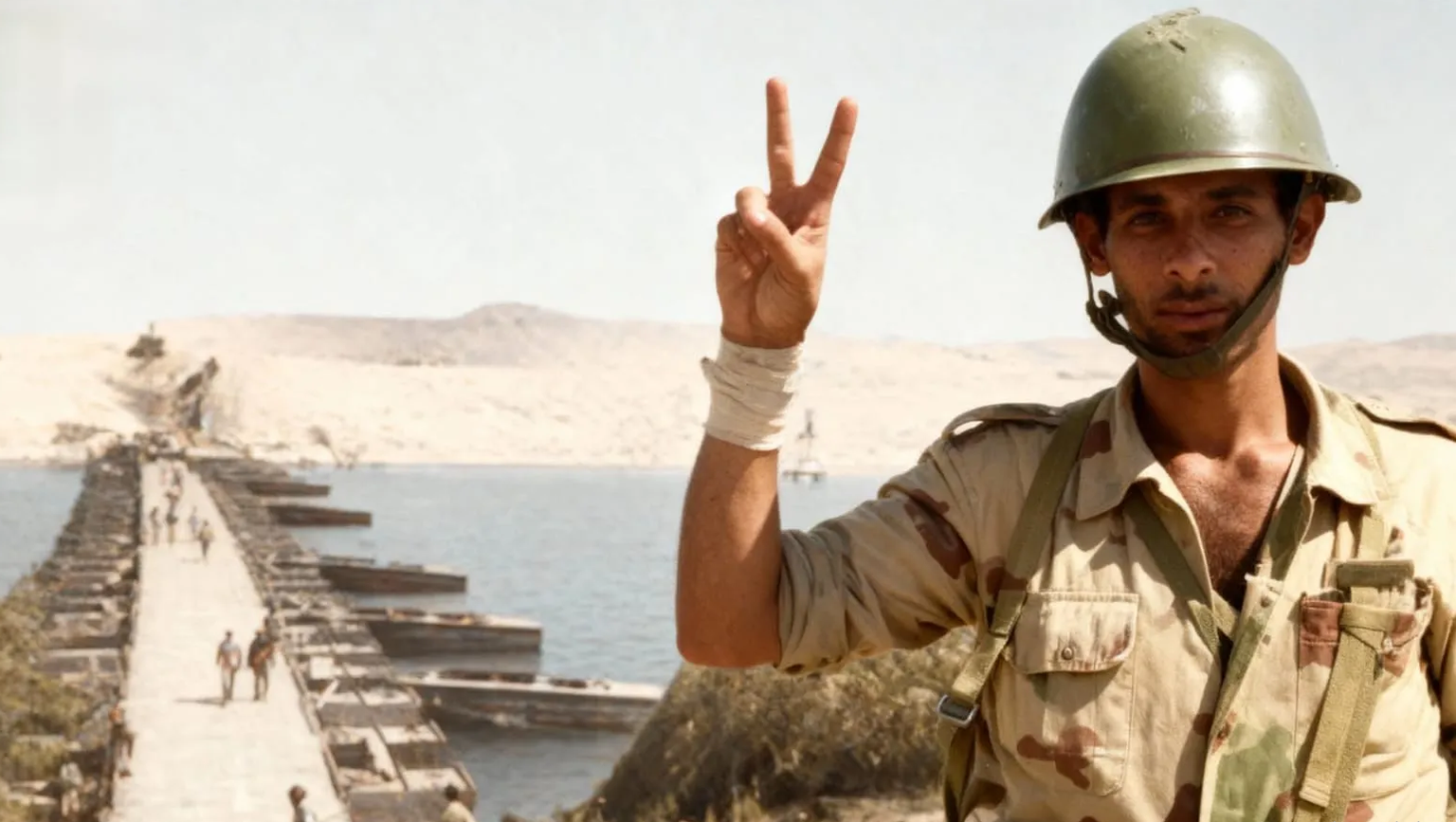
The October 1973 War encompassed a long series of details and developments, ranging from preparations and logistical arrangements for the conflict to the battlefield operations that unfolded with the actual crossing of the Suez Canal and the storming of the Bar Lev Line. Throughout all these stages, however, the human element — the Egyptian combat soldier — remained the decisive factor that helped complete the Egyptian achievement and secure victory in the war.
The memoirs of numerous Egyptian Armed Forces commanders who participated in the October War contain significant references to the role and distinctive qualities of this human element. These accounts reflect not only the commanders’ recognition of the Egyptian soldier’s heroism and pivotal role, but also underscore that the “Spirit of October” could only have been embodied in the physical strength, sweat, exertion, and blood of the Egyptian combat soldier. The war revealed the soldier’s true mettle, enabling him to achieve a victory that most military assessments had deemed impossible given the balance of power prevailing at the time.
General Fawzi: “The Emergence of the Egyptian Fighting Spirit”
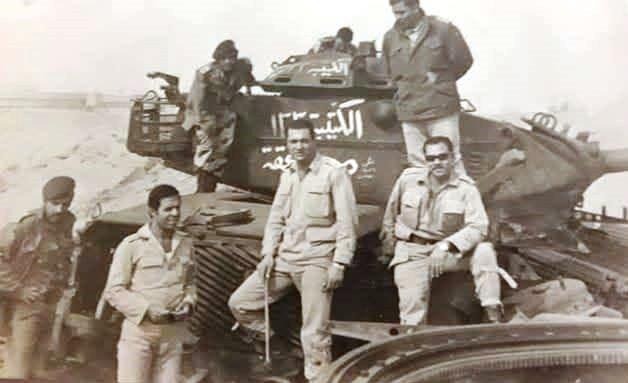
Former Minister of War Lieutenant General Mohamed Fawzi examined the various stages experienced by the Egyptian combat soldier from the early 1960s through the conclusion of military operations associated with the October 1973 War in two of his principal works on the conflict: Preparation for the Battle of Liberation and The Three-Year War. His analysis approached the subject from two fundamental perspectives. First, the Egyptian combat soldier possesses inherent and distinctive qualities, but poor utilization and unsound planning can foster negative traits that adversely affect his combat performance. Second, when given a genuine opportunity to fight — even in a relatively balanced engagement — the Egyptian soldier demonstrates his competence and worthiness. When that opportunity is not fully available, as in 1967, his true capabilities are obscured by other considerations that come to dominate the situation.
In The Three-Year War, Fawzi examined the adverse effects of Egypt’s military involvement in Yemen on the Egyptian combat soldier. He argued that exaggerating the army’s victories and individual acts of heroism during that war produced counterproductive results. Rather than raising morale, as the leadership had intended, such exaggeration fostered fatal arrogance, misplaced confidence, and contempt for the enemy. The armed forces consequently became caught up in misleading media narratives and settled for an appearance of combat effectiveness instead of striving to achieve genuine battlefield proficiency. Fawzi also maintained that the Yemen War had undermined the Egyptian Armed Forces’ combat readiness through widespread indiscipline, favoritism and nepotism, and neglect of weapons and equipment maintenance. As a result, the armed forces entered the 1967 War wholly unprepared, inadequately trained, and with extremely low combat effectiveness.
Fawzi explained the impact of these circumstances on the morale of Egyptian soldiers more broadly by describing the mobilization and troop buildup during the final weeks before the 1967 War. He observed:
“There was an important observation regarding the state of Egyptian forces before mobilization. Although Sinai was considered Egypt’s primary strategic direction at the time, the deployment of ground forces accounted for only one-tenth of the infantry forces and one-tenth of the armored forces stationed in Egypt before 1967. This meant that Egyptian forces had not occupied their positions in accordance with Plan Qahir to prepare their positions, even for limited periods, during the training year. Consequently, the anticipated theater of operations had not been prepared. Moreover, the failure to deploy the forces deprived both the forces themselves and their commanders of the opportunity to practice implementing the plan and identify deficiencies in combat effectiveness, equipment, cooperation procedures, and radio communications. All these matters required practical training, even using only force structures or command elements, so that shortcomings could be addressed before actual combat.”
Fawzi added that, although the forces stationed in Sinai — one infantry division and one armored brigade — had undergone a basic training exercise in February 1967, the exercise had failed to achieve its objective of preparing the entire force assigned to Egypt’s principal strategic direction at the time.
Fawzi went on to describe the difficulties that undermined the mobilization process. He argued that the failure to conduct practical exercises based on the general mobilization plan issued in 1965, combined with sudden changes to military plans during the buildup that began in May 1967, caused the mobilization plan to fail to meet the substantial new requirements for personnel and equipment. The emphasis was placed solely on the improvised mobilization of the largest possible number of personnel, amid unrealistic estimates that two million people could be called up without training or consideration of their military specialties and previous experience. This, in turn, affected the conduct and readiness of the newly mobilized soldiers.
Fawzi illustrated the situation with the following observation:
“It is hardly surprising under such circumstances that, after arriving from their villages and putting on their military uniforms, the men were found carrying their civilian clothes — whether a galabeya or a shirt and trousers — as they made their way to the mobilization areas in Sinai. This clearly indicated the soldiers’ lack of discipline and low morale, while memories of what had happened in 1956 remained vivid in their minds”.
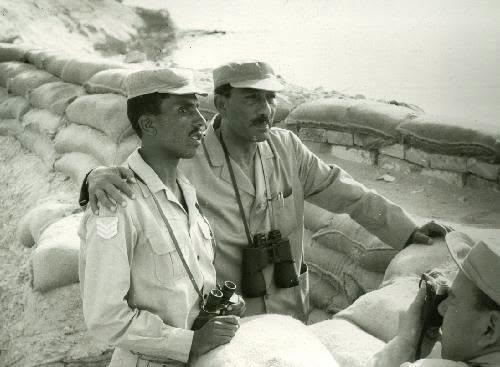
Fawzi then turned to the fundamental changes in the Egyptian combat soldier’s character and performance during the reconstruction of the armed forces following the 1967 defeat. He highlighted a key indicator of progress: the speed with which military units that had withdrawn from Sinai regrouped. Just days after the defeat, these units responded to Fawzi’s call to reassemble in designated areas to reorganize the principal combat formations: the 2nd, 3rd, and 6th Infantry Divisions and the 4th Armored Division. The immediate objective was to establish a defensive line west of the Suez Canal as the first step in a long-term process outlined by the late President Gamal Abdel Nasser. This process required the armed forces to be ready to liberate the occupied territories within no more than three years, thereby preventing Israel from taking measures that might alter Sinai’s identity and demographic composition in ways that would jeopardize its future as Egyptian territory.
Efforts were promptly made to assemble small units equipped with individual weapons and deploy them to the Canal Zone. The regional command distributed these units alongside whatever supporting infantry weapons could be gathered, including mortars and medium and heavy machine guns. These efforts subsequently led to the formation of infantry battalions, each placed under the command of an appointed officer and deployed along the western bank of the canal alongside units that had retained their cohesion and full complement of equipment and supplies. These forces began digging trenches and constructing weapons emplacements. Within just two weeks, this field effort had progressed to the consolidation of the battalions into infantry brigades.
Despite the difficulties involved in securing supporting weapons, including field artillery, heavy mortars, and infantry tanks, fully integrated units were eventually assembled and deployed along the first defensive echelon west of the canal. This resulted in the establishment of the first continuous defensive line, extending approximately 170 kilometers along the canal’s western bank, from Port Said in the north to Adabiya Port in the south. This achievement was significant not only for securing the Egyptian front at a critical juncture, but also as the first indication of the Egyptian combat soldier’s true character.
This reality was demonstrated on the battlefield just weeks after the defeat. In Chapter 17 of The Three-Year War, Fawzi wrote:
“After completing the construction of the first defensive line west of the Suez Canal and ensuring the readiness of the units and the firepower of the artillery and tanks, our forces succeeded in the Battle of Ras El-Esh on July 1, 1967. The position held firm, and the enemy suffered losses despite its numerical superiority and the use of its air force against this small, steadfast force. Our navy subsequently succeeded in destroying the Israeli destroyer on October 21, 1967, while our air force, flying MiG-17 aircraft, challenged enemy aircraft in the southern Canal Zone on July 14, 1967. These engagements boosted the morale of the armed forces in general, particularly the air force, restoring confidence in the pilots and their aircraft.
“Although all three engagements were initiated by an overconfident enemy, their outcomes represented notable successes for our forces. Within days of the defeat, these successes had raised morale across our land, air, and naval forces. The reaction in Israel was fierce, as the country had scarcely had time to savor its victory in the setback before calls for revenge against the Egyptians began to reverberate. Operations then escalated on both sides”.
Fawzi specifically highlighted the Battle of Ras El-Esh in Preparation for the Battle of Liberation as evidence that the Egyptian soldier’s fighting spirit had been decisive in transforming failure into success. He stated:
“The conditions of combat in this battle were no different from those on the battlefield on June 5, 1967. The soldier was the same, the weapons were the same, and the terrain in Sinai was the same. Only one thing had changed: the emergence of the fighting spirit among the soldiers at Ras El-Esh, which led to the battle’s success. For the first time, the characteristics that distinguished this war revealed to the Israeli enemy the true mettle and effectiveness of the Egyptian combat soldier in a prolonged, direct confrontation that lasted more than a thousand days”.
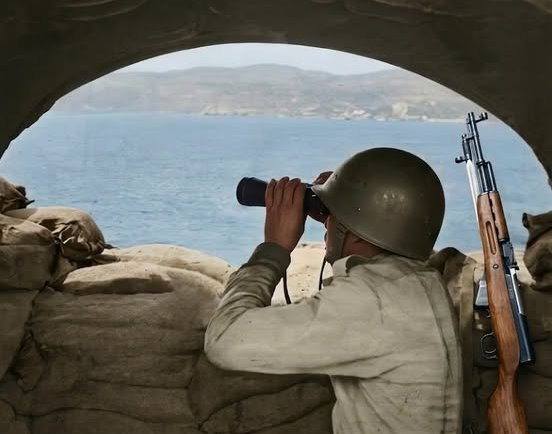
Perhaps one of the most important stages in rebuilding the human resources of the Egyptian Armed Forces during this period was the specialized training and qualification of soldiers and officers. Achieving the desired level of combat effectiveness for a successful offensive operation required precise integration between personnel and equipment across a hierarchical structure extending from the individual soldier to the field armies. This effort focused on three fundamental areas, including rigorous selection criteria.
In Chapter 16 of The Three-Year War 1967–1970, Lieutenant General Mohamed Fawzi identified one of the most significant achievements of the reconstruction phase as “the entry into the ranks of the armed forces, for the first time, of educated soldiers who had graduated from universities and higher institutes.” He explained:
“The university and higher-institute graduate conscript is far better suited than the illiterate conscript to serve in today’s armed forces, an era characterized by the use of sophisticated and complex weapons and equipment. Intellectual ability has become more important than other capabilities. Before 1967, the military leadership showed neither interest in nor willingness to admit highly educated graduates into the ranks of the armed forces. Their rejection was invariably attributed to such reasons as ‘their turn had not come’ or ‘medically unfit.’ The medical regulations applied to them effectively denied them the honor of military service, and the number accepted did not exceed 7 percent of those considered for conscription. Claims of security concerns were consistently invoked to justify the rejection of highly educated graduates.”
Lieutenant General Fawzi added: “After my appointment as Commander-in-Chief of the Armed Forces on June 11, 1967, I immediately announced my desire to accept highly educated graduates for conscription. Through the media, I declared the removal of the restrictions that had prevented them from joining the armed forces as soldiers, and the medical regulations were fundamentally revised. Young people from universities and higher institutes responded with a strong sense of patriotism, and the proportion of conscripts recruited from among them rose to 93 percent. They proved to be capable combatants. I personally monitored, together with the commanders of the armed forces’ branches, heads of departments and agencies, directors of administrations, and other commanders, the beginning of their training in training camps and specialized and vocational schools, as well as their subsequent assignment to field units and formations as a priority in completing the forces deployed on the front. With these soldiers joining field units and receiving careful training, combat effectiveness across the armed forces increased. It became evident that the culturally and intellectually qualified combatant was the backbone of the armed forces’ combat capability.”
In this regard, Lieutenant General Abdel Moneim Wasel, commander of the Third Army during the October 1973 War, described the condition of Egyptian Army units in the days following the 1967 defeat in his book The Arab-Israeli Conflict: From the Memoirs and Memories of Lieutenant General Abdel Moneim Wasel. He noted that, despite the bleak atmosphere prevailing among commanders, officers, and soldiers, the retreating forces had become scattered across locations on the western bank of the Suez Canal, including the Haikstep and Dahshur camps in Cairo and Habib Allah and Shalufa in the Canal Zone. They had received no clear orders or specific assignments.
Nevertheless, efforts to restore cohesion and reorganize the forces began in earnest only a few days after the defeat. Available combat units belonging to the aforementioned divisions were regrouped. Among them was the independent 14th Armored Brigade, whose operations were being commanded by Lieutenant General Wasel at the time.
Notably, a company belonging to this brigade launched a counterattack in the Jilbana area east of the canal to relieve a commando battalion that was still defending El Qantara Sharq against an Israeli attack involving a tank battalion. Operating alongside the commando forces, the company engaged the Israeli force until it was compelled to withdraw to the western bank of the canal. The brigade subsequently took up positions at designated points along the Canal cities, as did the other Egyptian units that had been regrouped.
The Three-Year War 1967–1970 also contains a noteworthy account of the Egyptian combatant’s ability to master modern weapons. In Chapter 15, Lieutenant General Fawzi stated:
“I issued instructions to the soldiers of the armed forces emphasizing the need to care for and maintain their new weapons. I made a point of attending ceremonies at which each new soldier received his individual weapon, reminding him of the weapon’s importance to the individual and of the need to preserve it, care for it, cherish it, and maintain a close bond between the combatant and his weapon. I also designated one full day each week for the maintenance and testing of weapons and equipment, and stressed that unit commanders and officers must remain with the soldiers throughout that day as they carried out their assigned maintenance duties and followed the prescribed instructions for weapons and equipment. The armed forces’ ability to master the use of modern weapons within a short period, as well as to preserve and maintain them, provided a compelling demonstration to the Soviet Union of Egypt’s capacity to make effective use of the extensive additional arms supplies that the Egyptian leadership was urgently requesting.”
The Egyptian Combat Soldier Through the Eyes of Prominent Egyptian Military Leaders
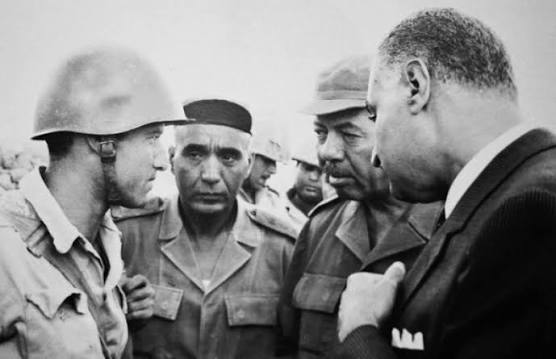
Other leaders of the Egyptian Armed Forces also addressed the character of the Egyptian soldier in their memoirs documenting the events of the October War. Among them was Field Marshal Mohamed Abdel Ghani El-Gamasy, who outlined the Egyptian soldier’s defining characteristics in his well-known memoirs, The October War 1973: Memoirs of a Fighter. He began with the first clear indication of the soldier’s resilience and determination despite the 1967 defeat: the Battle of Ras El-Esh. Field Marshal El-Gamasy described the battle as follows:
“A limited Egyptian force of thirty commandos was defending the Ras El-Esh area, south of Port Fouad. An Israeli force, comprising a tank company supported by mechanized infantry in half-track vehicles, advanced and attacked the commando force, which held firmly to its positions and succeeded in destroying three enemy tanks. The enemy attacked again but failed to overrun the position, either through a direct assault or by outflanking it. As a result, several half-track vehicles were destroyed and personnel losses increased. The Israeli force was compelled to withdraw, and the Port Fouad sector remained the only part of Sinai under Egyptian control until the outbreak of the October 1973 War.”
Field Marshal El-Gamasy added: “This was the first battle of the steadfastness phase. Despite the defeat and the bitterness it had brought, the Egyptian combatant demonstrated that he had not lost the will to fight, setting an example of resilience and determination to hold his ground.”
Elsewhere in his memoirs, Field Marshal El-Gamasy recounted the extraordinary example set by an Egyptian commander who was, above all, a combatant among the hundreds who gave their lives in defense of Egypt during the War of Attrition and the October War: Lieutenant General Abdel Moneim Riad, Chief of Staff of the Egyptian Armed Forces.
Recounting the circumstances of Riad’s death, Field Marshal El-Gamasy wrote:
“The War of Attrition began on March 8, 1969, with concentrated Egyptian artillery fire against the enemy’s fortifications and positions established on the eastern bank of the canal by Israeli Chief of Staff General Haim Bar-Lev. The exchange of fire continued for approximately five hours, during which Egyptian forces destroyed part of the enemy’s positions and silenced several artillery positions. On the morning of the following day, March 9, 1969, Lieutenant General Abdel Moneim Riad, Chief of Staff, went to the front to assess for himself the results of the previous day’s fighting and to be among the troops as they entered a new phase characterized by intense, sustained combat aimed at wearing down the enemy. While visiting troops in the front lines north of Ismailia, accompanied by Major General Adly Hassan Said, commander of the Second Army, Lieutenant General Riad sustained fatal wounds from enemy artillery fire during an exchange of fire. The army commander was also wounded, though less seriously; his condition nevertheless required more than one surgical operation. By the time the two men were being transported to Ismailia Hospital, Lieutenant General Abdel Moneim Riad had succumbed to his injuries. His death was a tremendous loss for the Armed Forces and for Egypt as a whole, as we had lost an outstanding military leader whom we urgently needed.”
Field Marshal El-Gamasy further observed:
“The people turned out to bid him farewell at his funeral, honoring him with profound respect and reverence, mingled with deep sorrow. From that day onward, March 9 became Martyrs’ Day, a sincere expression of the spirit of the Egyptian military — a spirit that requires every commander, regardless of rank, to set an example for his troops, even to the point of sacrificing his life. This principle and spirit were manifested in their fullest and clearest form during the October 1973 War, when commanders led by example, and some fell as martyrs on the front lines among their soldiers.”
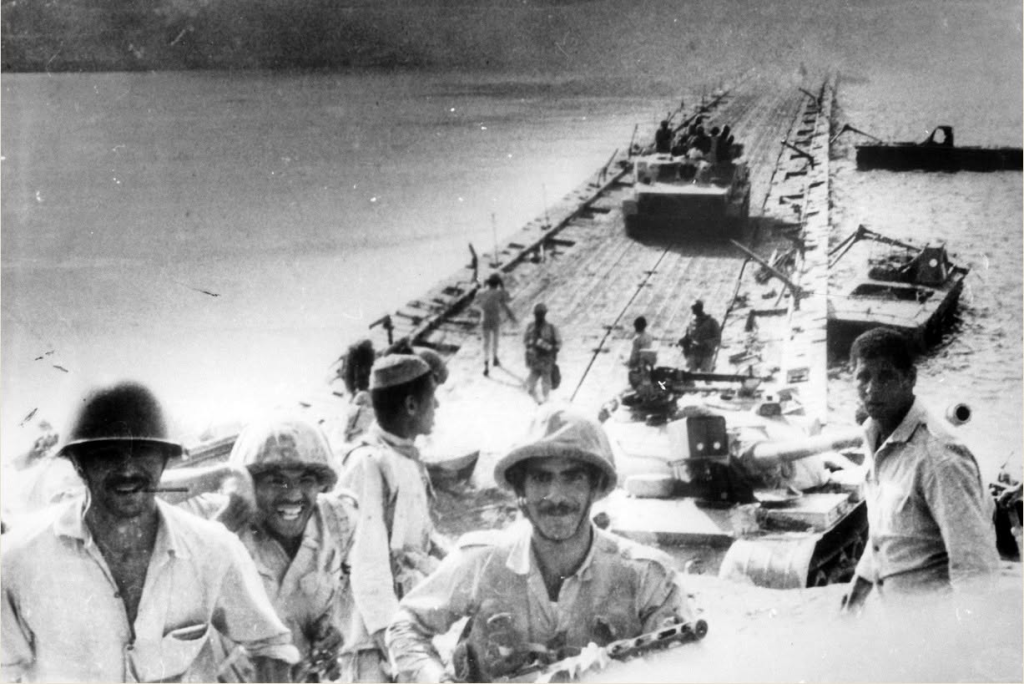
In the memoirs of Lieutenant General Abdel Moneim Khalil, commander of the Second Field Army during the final stages of the October War, entitled Contemporary Wars of Egypt, the Egyptian soldier emerges as a central factor in steadfastness, combat, and victory. Khalil also offers an important perspective on how Soviet experts viewed the Egyptian soldier, his qualities, and his morale during the preparations for the October War. He recounts:
“While making my rounds of the forward units, the new Russian general, ‘Boris Zaitsinov,’ who had been appointed adviser to the commander of the Second Army in early 1971, would see and hear me speaking with the soldiers. He could understand what I was saying only when an interpreter was with us to translate for him. However, we rarely needed an interpreter, as our mutual understanding was clear even without a shared language. On one occasion, he told me that although he did not understand Arabic, he had learned the meaning of my words and what I wanted to convey to the soldiers. He described my soldiers as ‘worth their weight in gold.’ The Russian general told me that they lived in forward trenches, under these conditions and within range of enemy fire, subsisting on dry rations. Yet the expressions of love in their eyes, their looks of faith and conviction, and their love for Egypt were unmistakable. They revealed their eagerness to receive the order to cross the canal — and indeed, they were urging that it be given. How could this be? It was the touch of faith in God, which I could hear in your words and sense in the way you addressed them, together with their love for Egypt. I had learned to recognize the name of your country and that it is mentioned five times in your Quran.”
Elsewhere in his memoirs, Lieutenant General Khalil argues that treating Egyptian combatants fairly unleashes their latent potential at every level. He writes:
“The battles fought over the three years from 1967 to 1970 demonstrated the Egyptian soldier’s capabilities, courage, boldness, and willingness to sacrifice, particularly when he finds compassionate hands that treat him with kindness and dignity, guide him along a path of love and mercy, and make him feel that firmness is exercised with justice.”
In the final section of his book, Lieutenant General Khalil discusses firsthand accounts inadvertently provided by Israeli soldiers through radio communications intercepted by Egyptian forces during the October battles. These accounts revealed the fighting strength and battlefield bravery of Egyptian soldiers. He writes:
“Our forces intercepted a radio transmission from the commander of an Israeli tank battalion during the Israeli counterattack against the bridgehead held by the 2nd Infantry Division toward El Ferdan on October 8, 1973. He was shouting into his radio, calling out to his forces: ‘The Egyptians are throwing themselves beneath our tank tracks to halt our advance. What is this conviction that drives them?’
“History must, in truth, record with pride and admiration the courage and valor of the Egyptian soldier. Egyptian soldiers ran toward Israeli tanks, climbed aboard them, and killed their crews. An Israeli brigade commander described the scene, saying: ‘I saw thousands of Egyptian soldiers around us crawling toward us in what resembled a Chinese human-wave assault.’
“Another Israeli commander, who led a tank battalion during the Israeli counterattack, recounted the following in a book by an Israeli author: ‘When my tanks advanced to confront and crush the Egyptian infantry, as our training had taught us, I was astonished to find Egyptian infantrymen throwing themselves beneath the tank tracks. Suddenly, flames erupted from the rear of most of my tanks, which burned like matchboxes. At that moment, I realized that I was facing a formidable weapon no less dangerous than the Egyptian tanks we had not yet encountered: men driven by a conviction we had never imagined, and about whom we had been led to believe otherwise.’”
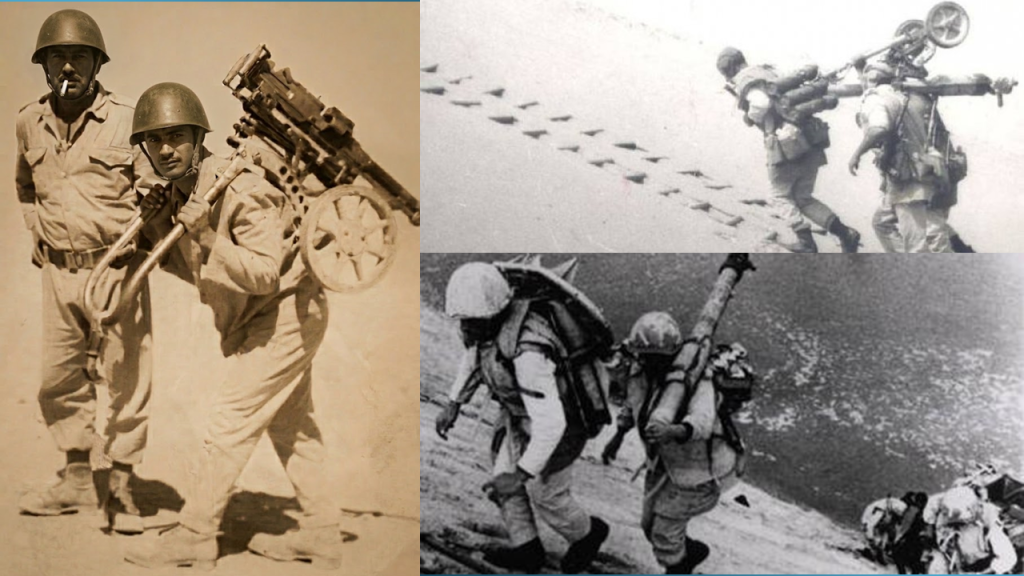
At the operational level, Heroes of the 19th Division: Extraordinary Fighters, by Lieutenant General Youssef Afifi, commander of the 19th Division, which played a prominent role in the battles of the Israeli penetration (the Gap) and contributed significantly to protecting the city of Suez from repeated Israeli attempts to occupy it, provides numerous details about Egyptian combat soldiers’ dedication during training exercises to storm the Bar-Lev Line. In Chapter Three, Afifi writes:
“Realistic training for storming the Bar-Lev Line and breaching the sand embankment took place west of the city of Suez and in the Jebel Ataka area, where the training grounds closely resembled the actual battlefield. The exercises included climbing the sand embankment, which ranged from 22 to 24 meters in height, while carrying weapons and ammunition weighing 80 kilograms. The soldiers competed to climb the embankment, eventually setting a record of just two minutes. We were astonished by this remarkable fighting spirit. The plan called for soldiers to climb the embankment using rope ladders, but some combatants insisted on scaling it without ladders, accomplishing the task even faster than the established standard.”
In Chapter Nine, Lieutenant General Afifi recounts several heroic deeds performed by members of his division. These accounts represent only a fraction of the many acts of valor carried out by Egyptian combatants throughout the various stages of the war. One example is the heroism of Major Mohamed Zard during the battle to capture Strongpoint 149, one of the most heavily fortified positions along the Bar-Lev Line. Despite sustaining a grave injury during the battle, he continued fighting until he was killed in action. In this regard, Afifi writes:
“On October 8, 1973, the late Major Mohamed Zard led a group of eight men who stormed Strongpoint 149 at El Shatt, making effective use of flamethrowers. This enabled them to capture the strongpoint, which had posed a threat to the division’s combat operations. Two soldiers were killed alongside him: Mohamed El-Khubairi and Wardani Abdel-Mawgoud.”
Afifi adds: “Mohamed Zard was one of those brave men who devoted their lives to defending their homeland throughout their military careers. He was calm, courageous, and daring. He had previously served as commander of one of the companies in the 5th Infantry Brigade and had earlier led an assault on an enemy strongpoint east of the Canal before the ceasefire during the War of Attrition. In recognition of his heroism and courage, the command decided to honor him by transferring him to the Infantry School as an instructor. However, he could not settle into the Infantry School, a posting to which infantry officers aspired, and chose instead to return to the front. He submitted a request to his command to be reinstated in his former unit. His request was granted, and he returned to his battalion, where he was appointed head of its administrative affairs.
Then came October 6 and the crossing of the Suez Canal, followed by the assault on the enemy’s strongpoints. When the position resisted the attack, he asked his command for permission to lead an assault with some of his men whom he had previously trained and whose capabilities he knew well. The command allowed him to select the personnel who would accompany him, and he chose only eight men. He led them in an assault on the strongpoint. During the attack, a burst of machine-gun fire struck him in the abdomen, causing his intestines to protrude. He held them in with his hand and continued fighting until the strongpoint fell.”
The Combat Engineer: A Unique Experience in the October War
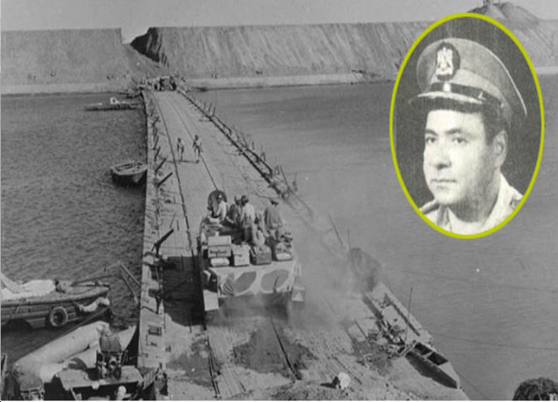
The October 6, 1973, War was not merely a conventional military confrontation between two armies; it was an extraordinary feat of planning and tactical military innovation that astonished the world and challenged the prevailing strategic military doctrines of the time. At the heart of this achievement, Egyptian ingenuity put an end to the myth of the “invincible army” and overcame one of the most formidable defensive and engineering obstacles in modern history: the Bar-Lev Line. Against the immense engineering complexity on which the Israeli occupation relied, a simple yet ingenious solution, inspired by the spirit of national endeavor and development, emerged through the efforts of Brigadier General (Engineer) Baky Zaki Youssef. He transformed the waters of the Suez Canal from a formidable obstacle into a decisive weapon that paved the way for victory and shattered the illusion that the seemingly impossible could not be achieved.
Major General Engineer Baky Zaki Youssef (1931–2018) was one of the most prominent commanders and officers of the Egyptian Armed Forces’ Military Engineering Corps. He graduated from the Faculty of Engineering at Ain Shams University in 1954, then joined the Egyptian Army, dedicating his professional and military career to engineering and the development of practical field solutions.
His field experience took shape during his secondment to the Aswan High Dam construction project between 1964 and 1967. There, he gained firsthand experience with techniques for excavating sand and rock using high-pressure water jets and suction through large pipes, allowing the resulting mixture of water and sand to be reused in constructing the dam embankment. This combination of civil engineering expertise and practical field experience provided the foundation for the historic idea that would change the course of the October War and undermine Israel’s defensive doctrine.
The Engineering Challenge Posed by the Bar-Lev Line
Following the June 1967 War, the Bar-Lev Line became a complex defensive and engineering system extending 170 kilometers along the eastern bank of the Suez Canal. Built at a cost of approximately $500 million, it was designed to prevent any attempt by Egyptian forces to cross the canal and to secure Israel’s control over the Sinai Peninsula.
The line consisted of a water obstacle followed by a massive sand embankment rising between 20 and 22 meters, with a steep slope of 45 degrees. It incorporated natural sand dunes and remnants of earlier dredging and widening operations along the waterway, including excavated material from the De Lesseps works. This earthen barrier was far more than a simple embankment: it formed part of a defensive system comprising 22 defensive positions and 26 fortified strongpoints, reinforced with extensive concrete structures and railway rails designed to withstand the heaviest aerial and artillery bombardment.
Each strongpoint occupied an area of 4,000 square meters and was equipped with 26 machine-gun emplacements, 24 shelters, and wired and wireless communications lines connected to Israel’s civilian communications network. The defenses also included tank positions and napalm pipelines extending into the canal waters, intended to set the shoreline ablaze if an Egyptian crossing were attempted. These formidable defenses led Western military experts to conclude that breaching the line would be impossible without the use of nuclear weapons.
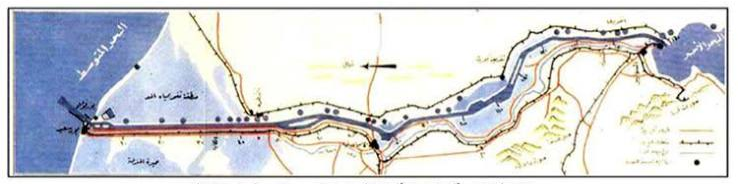
The Bar-Lev Line’s Fortified Strongpoints Along the Canal
In May 1969, the late Major General Saad Zaghloul Abdel Karim, commander of the 19th Infantry Division, convened a meeting in the Agroud area on the western bank of the Suez Canal to define the mission and address the obstacles to crossing. After explaining the mission in detail, he asked each head of a specialized unit to present his views on how the crossing could be accomplished. The participants then outlined the composition and height of the sand embankment, as well as its technical features and defensive installations. Their proposals for overcoming the barrier included the use of bombs, rockets, and explosives. Reports indicated that breaching the embankment would take between 12 and 15 hours. These options were extremely challenging because they would entail substantial material losses and require considerable time.
Major General Baky Zaki Youssef gave the following account of this decisive moment:
“This was when I proposed the idea of using water, drawing on my experience at the High Dam project between 1964 and 1967, where we used pressurized water to excavate massive sand formations and suctioned the material through pipes, allowing the resulting mixture of water and sand to be used in constructing the dam embankment. To open breaches in the eastern bank of the canal, all that was needed was to direct high-pressure water jets at the sand embankment, washing the sand down into the canal bed. These breaches would then allow vehicles and armored units to cross.
“At the time, I told my commander: ‘God has placed the problem alongside its solution, sir. The sand embankment consists of natural sand dunes and remnants of the canal excavations carried out by de Lesseps, in addition to the material produced by subsequent widening and dredging operations. The Israelis exploited this material, extending and raising the embankment and bringing it closer to the canal bank, with a slope of 80 degrees, before fortifying it with every available defensive installation. You have seen how the crossing has been deemed impossible — but the solution lies in the canal itself.’”
Four years later, in January 1972, a final rehearsal was conducted, and the results were impressive. The division commander informed Youssef, “Today, I obtained Nasser’s approval of your idea, with his signature” — a signature representing the highest level of military authorization. Lieutenant Colonel Baky replied, “The credit goes to you, sir.” The commander responded, “You don’t realize what you’ve done. You’ve given us the tool that will open the door for Egypt.”
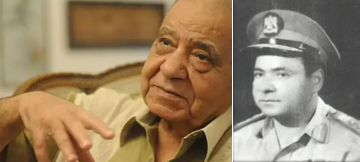
Major General Engineer Baky Zaki Youssef: The Man Behind the Idea of Breaching the Bar-Lev Line with Water
President Gamal Abdel Nasser subsequently approved the project’s engineering concept and ordered that the idea be immediately developed into a well-defined operational and tactical system through two main lines of action:
- Design and Discreet Procurement: Major General Engineer Baky Zaki designed a high-powered water cannon. Arrangements were made to import the pumps from a German company under the pretext that they would be used for civilian firefighting purposes, thereby avoiding intelligence suspicion and maintaining absolute secrecy.
- Field Trials and Practical Validation: The Military Engineering Department conducted more than 300 progressively scaled field trials between September 1969 and 1972. These tests culminated in a decisive practical demonstration on El Ballah Island in Ismailia, using a sand embankment that precisely replicated the field specifications of the Bar-Lev Line. The high-pressure water jets successfully eroded the sand, washed it into the canal bed, and opened a breach in record time.
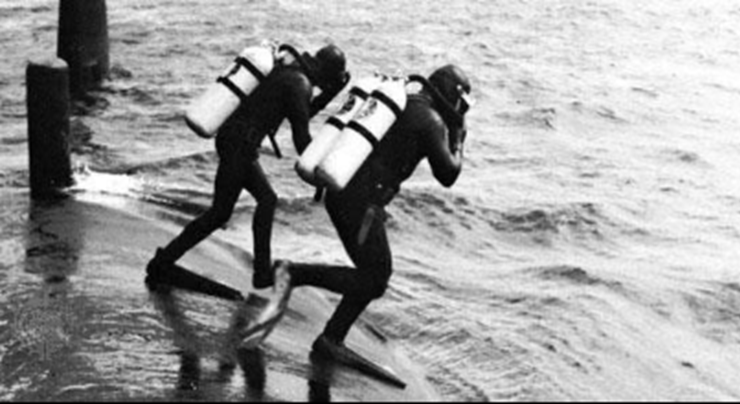
October 5, 1973: “The Crossing Begins with the Sealing of the Napalm Outlets”
This field concept was put into practice during the major crossing operation. First, Egyptian commando and special forces units successfully sealed the outlets of the napalm pipelines in a swift, covert operation. Lightweight boats then transported the water pumps, which were used to erode the sand embankment. Within a matter of hours, more than 30,000 Egyptian soldiers had crossed the canal, and breaches had been opened to facilitate the passage of armored vehicles and tracked carriers. Fifteen fortified positions fell in the opening hours, shattering the Israeli defensive concept. The engineering collapse of the Bar-Lev Line triggered widespread international shock and disbelief, as few had anticipated that these fortifications could be breached so rapidly. This shock was reflected in a number of revealing Israeli and international reactions, including the following:
- The United Press news agency described Israel’s withdrawal from the Bar-Lev Line as the worst military setback in its history, noting that the stronghold beneath which Israeli soldiers had felt completely secure had come under Egyptian control.
- On November 22, 1973, the West German magazine Der Spiegel wrote that the Egyptian assault on the Bar-Lev Line had enabled the Arab nation to shake off the humiliation it had endured since 1967.
- Israeli leaders watched the crossing in astonishment. Israeli Defense Minister Moshe Dayan distanced himself from the formidable defensive line, describing it as “like a fragile piece of cheese.” His remark underscored the success of the Egyptian engineering concept in transforming one of the most formidable defensive barriers into an open passage for advancing forces.
The story of Major General Engineer Baky Zaki Youssef remains an inspiring example of Egyptian ingenuity in transforming complex engineering challenges into decisive opportunities for victory. The idea of breaching the Bar-Lev Line with high-pressure water jets demonstrated that major battles are not won through firepower or advanced weaponry alone. They also require scientifically grounded, nationally driven thinking and the effective application of accumulated expertise and field experience to develop unconventional solutions. Baky Zaki Youssef has passed away, but his name continues to shine in the annals of military honor as a symbol of Egyptian engineering that overcame seemingly insurmountable obstacles and forever shattered the myth of the Bar-Lev Line.
The Citizen and the Combat Soldier
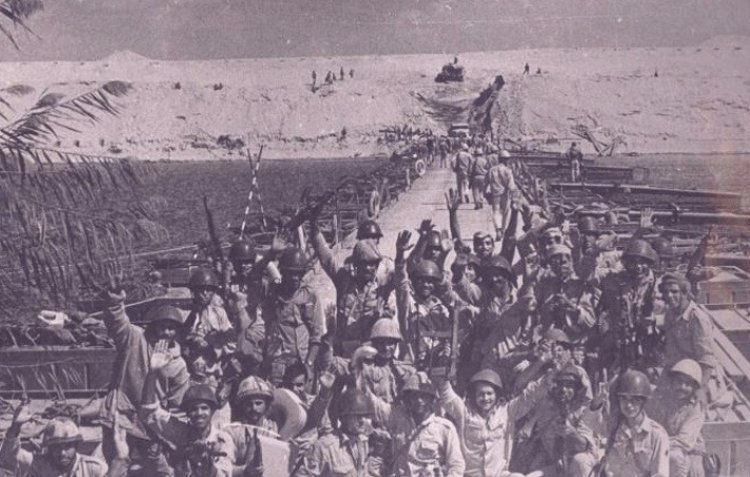
Perhaps one of the most important stages in rebuilding the human resources of the Egyptian Armed Forces in preparation for the October War was the specialized training and qualification of personnel and officers. Achieving the desired level of combat effectiveness required for a successful offensive operation depended on precise integration between personnel and equipment, within a hierarchical structure extending from the individual soldier to the field armies.
In this context, the People’s Army was one of the key components of the Egyptian Armed Forces’ manpower system during the October War. Established in mid-1968, it consisted of mobilized reserve forces tasked with local defense and the protection of approximately 4,000 vital facilities distributed across the country’s governorates and located beyond the reach of fixed defensive positions. Since reserve personnel were needed to staff units under the Armed Forces’ reconstruction plan, the People’s Army relied on residents of the areas concerned, including workers, farmers, and professionals living near these vital facilities. Major General Ahmed Fathy Abdel Ghany was appointed commander of the People’s Defense Forces and implemented organizational measures that included appointing a reserve officer to command the forces in each governorate and assigning groups to defend vital facilities there. Each group consisted of a reserve noncommissioned officer assisted by 30 local residents, who were called up only for night duty to protect vital facilities in their areas before returning to their regular jobs in the morning.
Training for People’s Army personnel was limited to the fundamentals of weapon assembly and disassembly, firing small arms without requiring sophisticated aiming techniques, and carrying out early-warning duties. These personnel demonstrated their effectiveness on several occasions, including in repelling an attempt by Israeli helicopters to land a special forces unit tasked with sabotaging a fuel pumping station at kilometer 35 on the Cairo-Suez Desert Road.
At the operational level, drawing on lessons learned from World War II and recognizing the decisive role played by tanks, the Egyptian Armed Forces’ General Command understood the dangers of engaging directly in a “tank-versus-tank” battle against Israel’s superior armored forces. Consequently, Egyptian tank units were reorganized to function as self-propelled, ground-based anti-tank artillery. One tank battalion was assigned to each infantry brigade, while one armored brigade was assigned to each infantry division, operating according to battlefield conditions and under the command of infantry units.
The engineering and military complexity of the Bar-Lev Line — with its massive earthen embankment and fortified positions supported by three Israeli armored brigades — posed a strategic challenge: the crossing infantry would remain exposed to enemy armor for between 10 and 12 hours, without tank fire support, until they had crossed the canal and consolidated their bridgeheads. To address this critical vulnerability and protect the advancing troops, the infantry was equipped with a comprehensive arsenal of anti-armor weapons. These included Malyutka missiles, with a range of up to 4,000 meters; B-10 and B-11 recoilless rifles, with ranges of 600 to 800 meters, to cover the missile’s dead zone; and RPG-7 launchers, with a range of 300 meters.
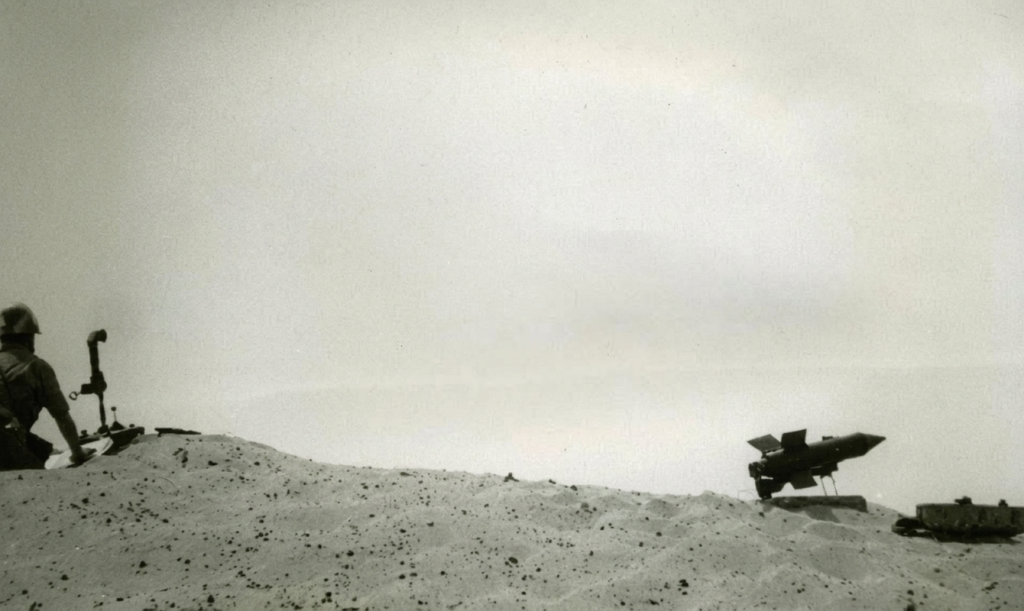
Although Soviet military doctrine had designed the Malyutka missile as a static defensive weapon to be fired from trenches, this concept did not fully align with the nature of Egypt’s offensive plan to liberate Sinai. The Egyptian military command therefore adapted its tactics for employing the weapon, incorporating it into a strategy of “tank-hunting ambushes.” This approach involved deploying independent teams of infantrymen armed with these missiles along the flanks and axes of advance of Israeli armored forces, away from the forward line, to engage and disable enemy tanks while awaiting the opening of breaches in the Bar-Lev Line for the advance of Egyptian armored forces.
This tactic proved highly effective even during the later stages of the October War, after the Israeli breakthrough. Egypt deployed dozens of tank-hunting teams around the breakthrough area to restrict the movement of Israeli armor and pose a deadly threat to it. This experience produced numerous acts of heroism among Egyptian officers and soldiers, who made the most of the Malyutka and other anti-tank weapons. Among them was First Lieutenant Mohamed al-Masri, who destroyed more than 27 Israeli tanks, including the tank of Assaf Yaguri, commander of the 190th Armored Brigade. Another was conscript Abdel Aaty Mohamed Hassan, the renowned tank hunter who set a record for destroying Israeli tanks with shoulder-fired missiles, single-handedly destroying 23 tanks and three armored vehicles.
The foregoing demonstrates that the Egyptian Armed Forces displayed exceptional proficiency in mastering, operating, and maintaining modern weapons within a remarkably short period. This prompted the Egyptian leadership to submit further large-scale arms requests, to which the Soviet Union responded. The achievement went beyond the effective use of existing equipment: the Military Research and Development Department also played an innovative role in modifying Soviet weapons and submitting designs and technical drawings, informed by field experience, to the Soviet defense minister. Moscow responded by adopting and implementing these modifications in the field across its forces.
This creative thinking was clearly reflected in practical battlefield applications. In one instance, a soldier with a university degree serving in a first-echelon tank battalion protected his tank by erecting a simple barrier of barbed wire in front of it. The fins of an incoming guided anti-tank missile struck the wire and became entangled in it, preventing the missile from hitting its target. The idea was subsequently adopted throughout the Egyptian Armed Forces and, decades later, was — ironically — also employed by contemporary armies to address the threat posed by drones.
Similarly, the Military Engineers Department demonstrated exceptional skill in developing crossing equipment and floating platforms. Meanwhile, engineers and technicians in the Air Force and Air Defense introduced major modifications to Soviet aircraft that impressed their Soviet counterparts. These modifications extended the aircraft’s combat range and increased their missile and bomb payloads, thereby enhancing the offensive and defensive capabilities of fighter and bomber aircraft.
References
- Mohamed Fawzi, Al-I’dād li-Ma‘rakat al-Taḥrīr: 1967–1970 [Preparation for the Battle of Liberation: 1967–1970] (Cairo: Dar al-Karma, 2015), https://archive.org/details/AAlexandrina-054442
- Lieutenant General Mohamed Fawzi, The Three Years War 1967–1970, Al-Karma Publishing House, Cairo, 2016. (Memoirs of the former Commander-in-Chief of the Egyptian Armed Forces and Minister of War on the rebuilding of the military and the War of Attrition following the June 1967 defeat), https://archive.org/details/hamlaenglish_gmail_20180319_1336
- Mohamed Fawzi, The Three-Year War 1967–1970 (Cairo: Dar al-Mustaqbal al-Arabi, 1984), 27–28, https://archive.org/details/hamlaenglish_gmail_20180319_1336
- Mohamed Fawzi, The Three-Year War 1967–1970 (Cairo: Dar al-Mustaqbal al-Arabi, 1984), 72, https://archive.org/details/hamlaenglish_gmail_20180319_1336
- Mohamed Fawzi, The Three-Year War 1967–1970 (Cairo: Dar al-Mustaqbal al-Arabi, 1984), 50–51, https://archive.org/details/hamlaenglish_gmail_20180319_1336
- Mohamed Fawzi, The Three-Year War 1967–1970 (Cairo: Dar al-Mustaqbal al-Arabi, 1984), 267, https://archive.org/details/hamlaenglish_gmail_20180319_1336
- Mohamed Fawzi, The Three-Year War 1967–1970 (Cairo: Dar al-Mustaqbal al-Arabi, 1984), 268, https://archive.org/details/hamlaenglish_gmail_20180319_1336
- Mohamed Fawzi, Al-I’dād li-Ma‘rakat al-Taḥrīr: 1967–1970 [Preparation for the Battle of Liberation: 1967–1970] (Cairo: Dar al-Karma, 2015), 39, https://archive.org/details/AAlexandrina-054442
- Mohamed Fawzi, The Three-Year War 1967–1970 (Cairo: Dar al-Mustaqbal al-Arabi, 1984), 247, https://archive.org/details/hamlaenglish_gmail_20180319_1336
- Mohamed Fawzi, The Three-Year War 1967–1970 (Cairo: Dar al-Mustaqbal al-Arabi, 1984), 248, https://archive.org/details/hamlaenglish_gmail_20180319_1336
- Abdel Moneim Wasel, Al-Ṣirāʿ al-ʿArabī al-Isrāʾīlī: Min Mudhakkirāt wa-Dhikrayāt al-Farīq ʿAbd al-Munʿim Wāṣil [The Arab-Israeli Conflict: From the Memoirs and Memories of Lieutenant General Abdel Moneim Wasel] (Cairo: Maktabat al-Shurūq al-Duwaliyya, n.d.), https://archive.org/details/hamlaenglish_gmail_20180319_1529
- Mohamed Fawzi, The Three-Year War 1967–1970 (Cairo: Dar al-Mustaqbal al-Arabi, 1984), 236, https://archive.org/details/hamlaenglish_gmail_20180319_1336
- Mohamed Abdel Ghani El-Gamasy, Mudhakkirāt al-Jamāsī: Ḥarb Uktūbir 1973 [Memoirs of El-Gamasy: The October War 1973] (Cairo: al-Hayʾah al-Miṣrīyah al-ʿĀmmah lil-Kitāb, 1989), 152, https://archive.org/details/1973_20240807
- Mohamed Abdel Ghani el-Gamasy, Mudhakkirāt al-Jamāsī: Ḥarb Uktūbir 1973 [Memoirs of al-Gamasy: The October War 1973] (Cairo: al-Hayʾah al-Miṣrīyah al-ʿĀmmah lil-Kitāb, 1989), 164, https://archive.org/details/1973_20240807
- Abdel Moneim Khalil, Ḥurūb Miṣr al-Muʿāṣirah: Mudhakkirāt al-Farīq ʿAbd al-Munʿim Khalīl [Contemporary Wars of Egypt: Memoirs of Lieutenant General Abdel Moneim Khalil] (Cairo: Dār al-Karma, 2016), 405, https://archive.org/details/20251013_20251013_0603
- Abdel Moneim Khalil, Ḥurūb Miṣr al-Muʿāṣirah: Mudhakkirāt al-Farīq ʿAbd al-Munʿim Khalīl [Contemporary Wars of Egypt: Memoirs of Lieutenant General Abdel Moneim Khalil] (Cairo: Dār al-Karma, 2016), 194, https://archive.org/details/20251013_20251013_0603
- Abdel Moneim Khalil, Ḥurūb Miṣr al-Muʿāṣirah: Mudhakkirāt al-Farīq ʿAbd al-Munʿim Khalīl [Contemporary Wars of Egypt: Memoirs of Lieutenant General Abdel Moneim Khalil] (Cairo: Dār al-Karma, 2016), 439, https://archive.org/details/20251013_20251013_0603
- Yusuf Afifi, Heroes of the 19th Division: Extraordinary Fighters (Hurghada: Dar al-Safwah, 1990), 96–97, https://dn710701.ca.archive.org/0/items/AAlexandrina-116516/116516_%D8%A3%D8%A8%D8%B7%D8%A7%D9%84_%D8%A7%D9%84%D9%81%D8%B1%D9%82%D8%A9_19_%D9%85%D9%82%D8%A7%D8%AA%D9%84%D9%88%D9%86_%D9%81%D9%88%D9%82_%D8%A7%D9%84%D8%B9%D8%A7%D8%AF%D8%A9.pdf
- Yusuf Afifi, Heroes of the 19th Division: Extraordinary Fighters (Hurghada: Dar al-Safwah, 1990), 261–262, https://dn710701.ca.archive.org/0/items/AAlexandrina-116516/116516_%D8%A3%D8%A8%D8%B7%D8%A7%D9%84_%D8%A7%D9%84%D9%81%D8%B1%D9%82%D8%A9_19_%D9%85%D9%82%D8%A7%D8%AA%D9%84%D9%88%D9%86_%D9%81%D9%88%D9%82_%D8%A7%D9%84%D8%B9%D8%A7%D8%AF%D8%A9.pdf
- Maspero, “The Miracle of the Crossing – And the Shattering of the Bar-Lev Line Myth,” October 6, 2023, https://www.maspero.eg/reports-egypt/2023/10/06/723561/
- The Coptic Orthodox Church, “Baky Zaki Youssef (1931–2018)” https://copticorthodox.church/famous-copts/باقي-زكي-يوسف-1931-2018م/
- Egyptian Ministry of Defense, “Film about Major General Engineer Baky Zaki Youssef,” YouTube, October 11, 2018, https://www.youtube.com/watch?v=SIkv02ovy5k
- Mohamed Fawzi, October 1973 War: Study and Lessons (Cairo: Dar al-Karma, 2014), available at https://archive.org/details/harb-october-1973
- Saad al-Shazly, Harb Uktubar: Mudhakkirat Saad al-Din al-Shazly [October War: Memoirs of Saad al-Din al-Shazly] (Internet Archive, 2011), Internet Archive