


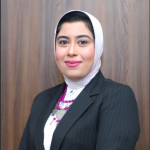

Volker Perthes was appointed Special Representative for Sudan and Head of the United Nations Integrated Transition Assistance Mission in Sudan (UNITAMS) on 7 January 2021. Between 2015 and 2018, he was the Senior Advisor to the Secretary-General Special Envoy for Syria, and Director of the German Institute for International and Security Affairs in Berlin (Stiftung Wissenschaft und Politik SWP) from 2005 to 2020. He was also an Assistant Professor of International Relations at the Humboldt University in Berlin from 2007 to 2019.
Background of UNITAMS Formation
The formation of the UN mission was upon the request of the transitional Prime Minister, Abdallah Hamdok, to support democratic transition. Its arrival started controversy between those who deemed it necessary to support the requirements of democratic transition, those who rejected its presence as it is an expression of continued international hegemony, and a third group favouring its conditional presence in a manner that would serve the interest of supporting democratic transition and strengthening Sudan’s involvement in the international community.
The formation of this mission came after the end of the mandate of the United Nations–African Union Mission in Darfur (UNAMID) from 2007 to 2020. It began to gradually reduce its structure starting in 2017 until the beginning of the political transition period, with which the issue of UN engagement in Sudan was reconsidered and the transition from peacekeeping to peacebuilding.
In February 2020, the Sudanese government asked the UN to form the new mission (UNATIMS) in accordance with Chapter VI of the UN Charter, to support peacebuilding and democratic transition instead of the one that was based on Chapter VII for peacekeeping in Darfur. The mission’s priorities were: supporting the ongoing peace negotiations, development, mobilizing international support for the Sudanese economy, contributing to the transition from humanitarian aid to support sustainable development programs, the return of refugees, democratic transition in the country, moving the mission’s tasks from peacekeeping to peace support, helping to enhance the gains made in Darfur in the past years, and providing support for population census and preparations for elections. The mission of a security nature in Darfur continued until the end of 2020, along with the new mission of a political nature, which scheduled the beginning of January 2021 as the start of its work.
Legal Mandate and Role Determinants
On 3 June 2020, the UN Security Council adopted Resolution 2524, establishing the United Nations Integrated Transition Assistance Mission in Sudan (UNITAMS), a political mission to provide support to Sudan during its political transition to democratic rule, initially for a period of 12 months. On 3 June 2021, the Security Council adopted Resolution 2579, extending UNITAMS’ mandate for an additional 12 months, until 3 June 2022. A year later, the Security Council renewed the mandate of the mission once again for another year until 3 June 2023 in accordance with Resolution 2636 of 2022. According to the legal mandate, the mission provides support to Sudan through development and political initiatives aimed at peacebuilding, implementing a national plan for the protection of civilians, and helping to achieve the objectives of the constitutional document signed in August 2019. The strategic objectives of the mission, in line with the principles of the constitutional document, were as follows:
- Supporting political stability.
- Supporting drafting the constitution, holding elections and conducting population census.
- Supporting institutional reforms and promoting and protecting human rights.
- Supporting a comprehensive peace process.
- Supporting the implementation of the peace agreement.
- Supporting strengthening the protective environment, particularly in conflict zones and those that have experienced previous conflicts.
- Supporting in achieving peaceful coexistence and reconciliation among communities.
- Supporting the provision of international aid and in national economic and social reforms.
- Supporting the establishment of a national structure for development planning and aid effectiveness.
- Supporting the realization of a comprehensive peace process.
The mission was also assigned a number of procedural tasks, namely:
- Assisting in political transition, progress towards democratic governance, promoting and protecting human rights and sustainable peace.
- Supporting the peace processes and implementing future peace agreements.
- Assisting in peacebuilding, protection of civilians and the rule of law, particularly in Darfur and in the two regions of Southern Kordofan and the Blue Nile.
- Supporting access to economic and development aid, and coordinating humanitarian aid by ensuring an integrated approach to UN agencies and funding programs, as well as through cooperation with international funding institutions, in response to all Sustainable Development Goals.
The Sudanese Parties’ Positions towards UNITAMS
The positions of the parties differed on UNITAMS formation and reception, and opinions varied between acceptance, rejection and conditional approval as follows:
Support
Opinions in this direction stemmed from the need for a UN mission to provide technical support in light of the weak state of all Sudanese institutions. The tribal clashes in Darfur and other parts of Sudan have provided a strong argument for proponents of this trend, arguing for the mission’s necessity, given Sudan’s need for security units capable of establishing control in areas of conflict and tension. Experts supporting this view suggested that police units formed by peacekeepers and rapid support forces continue in the hot spots of Darfur, even within a broader mission to support the political transition.
Objection
Many Sudanese opinions categorically rejecting the recruitment or renewal of a UN mission stemmed from the premise that the presence of UN forces transfers to them decision-making powers, whether political or security, which is a flagrant violation of Sudanese sovereignty. Proponents of this view argue that the armed forces should reject the presence of a UN mission, and that the transitional government should assume its own responsibility and meet the aspirations of the Sudanese people in accordance with the revolution principles. This trend criticizes Sudan’s voluntary renunciation of part of its sovereignty, as they believe that although the new resolution was issued in accordance with Chapter VI and not VII, it included many decisions which restrict Sudan in sensitive internal issues such as the constitution, the peace process and elections.
Conditional Approval
A third trend met the two opinions halfway. It saw the need to set boundaries for the expected political mission, and have it subject to monitoring and evaluation, so that renewal depends on its performance. Proponents of this trend also believe that there should be agreement between the Sovereign Council and the Ministers Council on the terms and conditions of the mission’s work in order to preserve peace and security as well as the sovereignty of the Sudan. Advocates of this trend argue that perceptions remain unclear on dealing with security issues following UNAMID’s withdrawal, creating a security gap. Therefore, they think it is urgent to extend Chapter VII resolutions considering the situation in Darfur, as it relates to citizens protection at a time when millions in refugee and displacement camps are still unable to return to their areas due to insecurity and continued attacks.
UNTIMAS Positions on Political Transition in Sudan
In accordance with its mandate, UNTIMAS had a number of roles including providing support to the political process through its office, as well as roles related to supporting peace, supporting civilians’ protection and development coordination, in addition to providing advisory support to the police and supporting the electoral process. However, the mission’s role has been limited to providing support to the political process through formulating its positions on the nature of the political settlement and the future of the political system. Its performance was not fully materialized until the dissolution of the partnership between the civilian and military components in accordance with the procedures of 25 October 2021, after which the mission’s efforts to mediate between the two parties to resume dialogue and reformulate a consensus formula for co-governance crystallized again.
In the aftermath of that crisis, the relationship between UNITAMS and the military component soured, which led to demonstrations in support of the military component, denouncing the role of the UN envoy, and popular campaigns calling for the expulsion of Perthes under the pretext of his interference in internal affairs. The angry mobs reached the mission’s premises without objection from the security forces.
After that, the President of the Sovereignty Council, Abdel-Fattah Al-Burhan, began to publicly state that the Secretary-General’s envoy does not show neutrality and leans towards one of the parties- referring to the Forces of Freedom and Change. He also talked about Perthes’ preoccupation with the political initiative, while he was supposed to follow-up the implementation of the peace agreement, prepare for elections and similar tasks.
In April 2022, Burhan said that he would not hesitate to expel the UN envoy from the country. During his meeting with Perthes, he expressed his discontent with the report submitted to the Security Council because it did not mention the positive indicators on the ground, according to a statement from the Sovereign Council at the time. During this period of tension, the UN envoy avoided engaging in verbal battles with the Sudanese government and resorted to silence. He adhered to the technical aspects during his presentation of the Sudan report to the Security Council without referring to political disagreements.
With the worsening political situation in Sudan, the UNITAMS led mediation efforts with the aim of restoring the political track. Solely, it launched an initiative to mediate between the civilian and military components in January 2022; however, these efforts were hindered, leading to engaging the African Union and Intergovernmental Authority on Development (IGAD) in co-leading which is known as the Tripartite Mechanism and formed in March 2022.
The Tripartite Mechanism’s attempts to mediate between the various parties failed, including efforts towards bringing together civilians and the military in June 2020 under the auspices of the Saudi ambassador to Sudan. Yet, the political mechanism continued to be present in the Sudanese scene through Perthes’ meetings with most of the political forces. Eventually, the Tripartite Mechanism supported the Lawyers Syndicate initiative, which proposed a draft transitional constitution among several initiatives launched by various political forces over the past year in an effort to resolve the crisis and resume the democratic process. This initiative was finally established thanks to the Tripartite Mechanism’s efforts to call on the military component to sign the Framework Agreement, along with the Forces of Freedom and Change, on 5 December 2022, excluding the Democratic Bloc from the agreement.
With the launch of the final political process in January 2023 through holding a number of workshops to discuss pending and controversial issues between the parties to the Framework Agreement, and under the auspices of the Tripartite and Quartet Mechanism, disagreements erupted between the Armed Forces and the Rapid Support Forces, eventually leading to armed confrontation.


