





The United Kingdom Maritime Trade Operations[1] (UKMTO) announced on 11 March that two oil tankers off the coast of Basra in Iraq had been struck by large fires that almost completely engulfed them. This forced the evacuation of the crews of both vessels, including sailors and technical personnel. There are also growing concerns that oil cargoes may leak from the tankers’ storage tanks into the waters of the Arabian Gulf, potentially triggering a major environmental disaster that would affect the marine ecosystem of this semi-enclosed body of water and impact all countries bordering the Gulf.
The attack comes as part of a series of repeated assaults carried out by Iran against commercial maritime traffic in the waters of the Arabian Gulf. By the morning of 12 March 2026, the number of such attacks had exceeded 20. These actions appear to be part of an effort by the Iranian regime to disrupt international trade routes passing through the Gulf and leading to the Arab states along its western shores, as a means of pressuring the US-Israeli alliance to halt its attacks on Iranian territory, the first wave of which began on the morning of 28 February 2026.
An escalating crisis
On the morning of 1 March 2026, 24 hours after the US-Israeli attack against it began, Iran launched an attack on an oil tanker flying the flag of Palau[2] as it was passing the entrance to the Strait of Hormuz, approximately two nautical miles north of the Omani Musandam Peninsula[3]. The strike set the vessel ablaze and resulted in casualties among its crew[4], with one member killed and another reported missing[5]. Later the same day, three additional attacks targeted vessels attempting to cross or approach the Strait of Hormuz. Two of the ships experienced limited onboard fires[6] that were subsequently brought under control[7], while the third vessel escaped the bombardment without damage.[8]
Table 1: Attempted attacks on maritime vessels in the Arabian Gulf on 1 March 2026
| Name of Vessel | International Registration Number | Flag State | Type of Vessel | Date of Attack | Nature of Damage | Casualties and Loss of Life |
| SKYLIGHT | 9330020 | Palau | Oil tanker | 1/3/2026 | Fire broke out at the stern of the vessel. | 4 injuries, 1 fatality, and 1 missing person |
| MKD VYOM | 9284386 | Marshall Islands | Oil tanker | 1/3/2026 | Direct hit in the engine room. | No casualties |
| HERCULES STAR | 9916135 | Gibraltar | Oil tanker | 1/3/2026 | Limited fire. | No casualties |
| OCEAN ELECTRA | 9402782 | Liberia | Oil tanker | 1/3/2026 | No damage reported. | No casualties |
Source: UKMTO daily reports in addition to other sources.
Many believed that the attacks of 1 March had clearly conveyed Iran’s message and would not be repeated, given Tehran’s apparent reluctance to expand the circle of its international adversaries. However, the opposite proved true. Reported attacks against commercial vessels have scarcely ceased since that date. Over the course of 11 days, from 2 March to 12 March, reports documented sixteen maritime incidents (see Table 2 below). Ten of these incidents caused varying degrees of damage—ranging from minor to moderate and severe—to ten transiting vessels without resulting in casualties among their crews. Three incidents, however, caused significant material damage and led to injuries and loss of life on two vessels and one tugboat. Only three ships escaped the wave of attacks, as the Iranian projectiles missed their targets.
Table 2: Maritime vessels subjected to attempted attacks in the Arabian Gulf between 2 and 12 March 2026
| Name of Vessel | International Registration Number | Flag State | Type of Vessel | Date of Attack | Nature of Damage | Casualties and Loss of Life |
| Stena Imperative | 9666077 | Bermuda | Oil tanker | 2/3/2026 | Fire broke out at an unspecified location. | 1 fatality and 2 injuries |
| Unknown | Unknown | Unknown | Unknown | 3/3/2026 | No damage reported | No casualties |
| GOLD OAK | 9806342 | Panama | Bulk carrier | 3/3/2026 | Explosion in the vessel’s hull | No casualties |
| LIBRA TRADER | 9562673 | India | Oil tanker | 3/3/2026 | Minor damage to the stern of the vessel | No casualties |
| SAFEEN PRESTIGE | 9593517 | Malta | Container ship | 4/3/2026 | Direct hit in the engine room | No casualties |
| MSC GRACE | 9987366 | Liberia | Container ship | 4/3/2026 | No damage reported | No casualties |
| Sonangol Namibe | 9325049 | Bahamas | Oil tanker | 4/3/2026 | Damage to the ballast water tanks | No casualties |
| Mussafah 2 | 9522051 | United Arab Emirates | Tugboat | 6/3/2026 | Direct hit at an unspecified location | 4 fatalities and 3 critical injuries |
| LOUIS P | 9749336 | Marshall Islands | Oil tanker | 7/3/2026 | Direct hit at an unspecified location | No casualties |
| Unknown | Unknown | Unknown | Unknown | 10/3/2026 | No damage reported | No casualties |
| One Majesty | 9424912 | Japan | Container ship | 11/3/2026 | Minor damage to the stern of the vessel | No casualties |
| Mayuree Naree | 9323649 | Thailand | Bulk carrier | 11/3/2026 | Direct hit in the engine room | 3 sailors missing inside the vessel |
| Star Gwyneth | 9301031 | Marshall Islands | Bulk carrier | 11/3/2026 | Minor damage to one of the cargo holds | No casualties |
| Safesea Vishnu | 9327009 | Marshall Islands | Oil tanker | 11/3/2026 | Explosion caused a massive fire that engulfed the vessel | 1 fatality |
| Zefyros | 9515917 | Malta | Oil tanker | 11/3/2026 | Explosion caused a massive fire that engulfed the vessel | No casualties |
| Source Blessing | 9243198 | Liberia | Container ship | 12/3/2026 | Limited fire | No casualties |
Source: UKMTO daily reports in addition to other sources.
A noticeable improvement in the accuracy of vessel targeting by Iran’s Islamic Revolutionary Guard Corps (IRGC) was observed on Wednesday, 11 March 2026. Relevant authorities reported that five vessels were successfully struck that day (see Table 2 above), although the severity of the strikes varied, ranging from minor impacts to attacks that caused extensive destruction. This Wednesday therefore recorded the highest daily rate of successful vessel strikes since the outbreak of the current conflict.
The most serious and dangerous attacks that day involved the targeting of the vessels Safesea Vishnu and Zefyros in Iraqi waters. Speculation arose that Iran may have used explosive maritime drones to carry out this dual sabotage operation[9], which turned the two tankers into blazing masses of fire[10] before Iraqi authorities managed to contain the situation and extinguish the flames.[11]
The incident revived regional memories of video footage released by the Islamic Revolutionary Guard Corps in early 2025[12], showing underground facilities reportedly stocked with dozens of unmanned explosive boats and naval mines.[13] The IRGC has continued to claim that these assets are ready for deployment in the waters of the Gulf. Meanwhile, the United States has not confirmed its ability to neutralize them, a factor that could further deepen the current crisis affecting maritime navigation through the Strait of Hormuz.
A clear paralysis
Once Iranian forces began imposing control over international maritime traffic in the Strait of Hormuz on 1 March 2026[14], most global commercial vessels complied with Iranian movements out of concern over possible military attacks. This became evident in the sharp decline in the number of vessels transiting the strait (see Figure 3 below). From 141 vessels passing through on 27 February 2026, the number fell to only 20 vessels on 1 March 2026, then to 10 vessels on 2 March, and continued to decline thereafter.
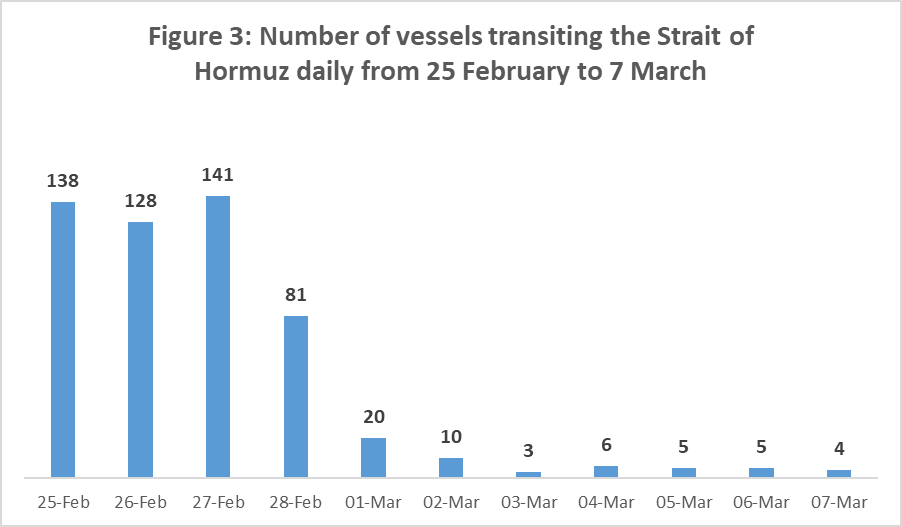
Figure 3: Number of vessels transiting the Strait of Hormuz daily from 25 February to 7 March
| Date | Number of Vessels |
| 25 February | 138 |
| 26 February | 128 |
| 27 February | 141 |
| 28 February | 81 |
| 1 March | 20 |
| 2 March | 10 |
| 3 March | 3 |
| 4 March | 6 |
| 5 March | 5 |
| 6 March | 5 |
| 7 March | 4 |
Source: Statistics from the United Nations Conference on Trade and Development.
Only a limited number of vessels managed to evade the Iranian restrictions imposed on maritime traffic during the following days. Some of these ships were owned by countries allied with Iran, such as China[15]. Over the past days, several oil tankers linked to China were allowed to transit, including the tanker RUN CHEN 2 (International Maritime Organization number: 9611618) and the tanker JIN HAI WO (International Maritime Organization number: 1043839). In this regard, Iran stated that it permits navigation for all vessels, provided they do not belong to countries engaged in hostilities against it. However, the movement of any vessel through the Strait of Hormuz must take place in prior coordination with the Iranian navy.[16]
These Iranian measures have led to the accumulation of commercial vessels on both sides of the strait[17]. Some reports indicate that more than 200 vessels are currently positioned east and west of the Strait of Hormuz. This can be verified by consulting any online vessel-tracking platform (see Figure 4 below). Meanwhile, dozens of additional tankers remain anchored off the ports of Gulf states—whether loaded or unloaded with cargo and oil—unable to depart for the Arabian Sea due to the ongoing military strikes and the intense electronic jamming.
Table 4: The beginning of the increase in the number of vessels waiting on both sides of the Strait of Hormuz on 1 March 2026:
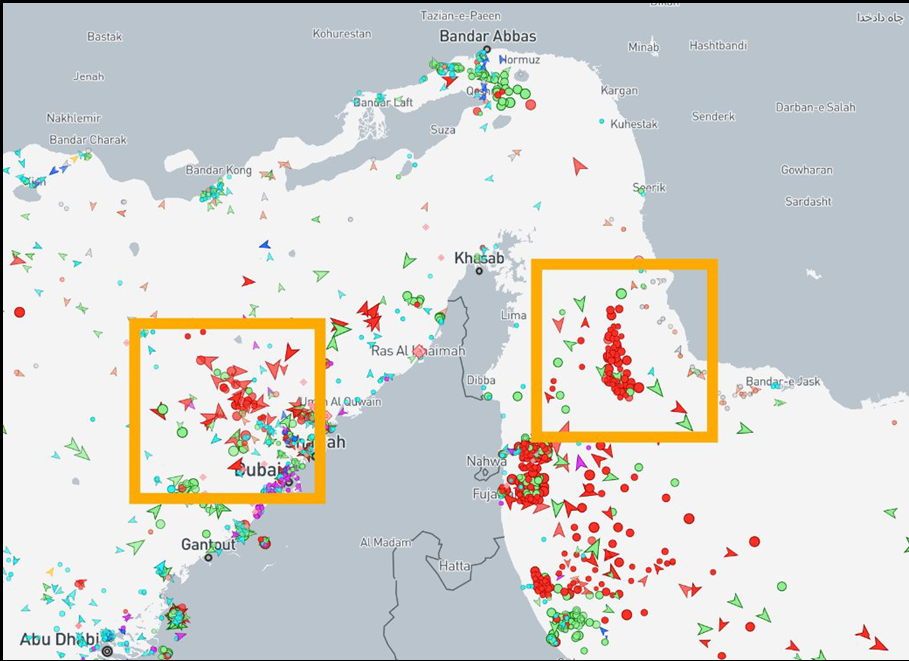
Source: Marine Traffic platform
Regional to global
As soon as military operations and confrontations began to have a tangible impact on maritime navigation in the Arabian Gulf, international insurance companies raised their coverage premiums for commercial vessels operating in the area by exceptionally high percentages. In some cases, premiums increased by as much as 1000 percent above their normal levels under ordinary conditions,[18] reflecting the sharp rise in current and anticipated security risks, particularly in the absence of a clear prospect for a swift political or peaceful resolution to the ongoing crisis.
Ship-owning and operating companies—especially those managing oil and gas tankers—have begun diverting their vessels away from the Arabian Gulf to other regions outside the conflict zone. This shift has placed the global economy in a new predicament. Each year, approximately 38 percent of the world’s seaborne crude oil trade passes through the Strait of Hormuz, along with 29 percent of liquefied petroleum gas (LPG) and 19 percent of liquefied natural gas (LNG) shipments (see Figure 5 below).
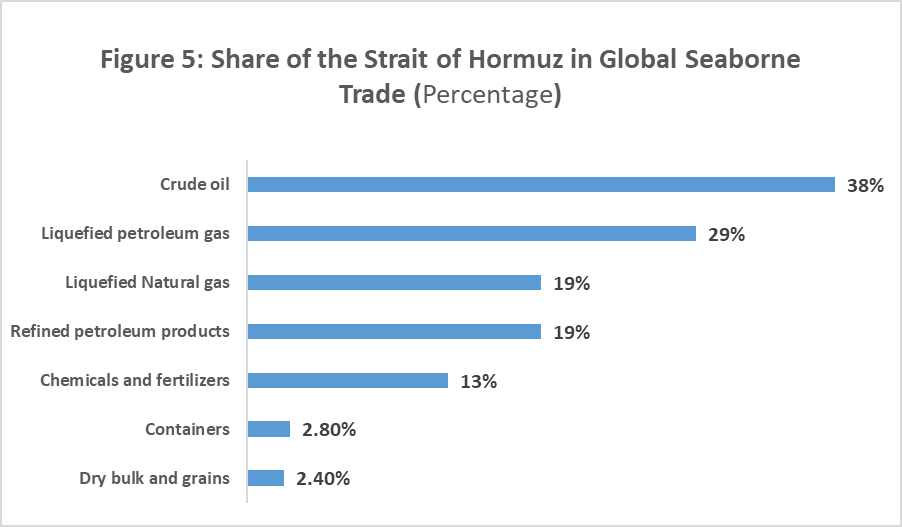
Figure 5: Share of the Strait of Hormuz in Global Seaborne Trade (Percentage)
| Commodity | Share |
| Crude oil | 38% |
| Liquefied petroleum gas | 29% |
| Liquefied Natural gas | 19% |
| Refined petroleum products | 19% |
| Chemicals and fertilizers | 13% |
| Containers | 2.80% |
| Dry bulk and grains | 2.40% |
Source: Statistics from the United Nations Conference on Trade and Development.
These developments have led global markets to experience successive surges in energy prices. For example, the price of Brent crude reached the $100 per barrel threshold on 12 March, after standing at approximately $72 per barrel on 27 February[19]. Oil and gas futures prices are expected to register further increases as the crisis persists, amid concerns about unforeseen disruptions in global energy markets.[20]
This challenge has prompted Saudi Arabia to seek alternative routes for Gulf trade, which has been obstructed by the sudden disruption of the Strait of Hormuz. One option involves utilizing the East–West oil pipeline, which extends approximately 1,200 kilometers, in addition to the Kingdom’s road network—estimated at more than 54,000 kilometers[21]—linking it with all the Gulf states. Saudi commercial ports on the Red Sea, including Jeddah Islamic Port, Yanbu, and Neom, could also serve as alternative outlets.
These Saudi infrastructure networks could play an effective role in delivering essential commercial goods—such as food, grains, and medicine—across the Kingdom and to the rest of the Gulf states. However, they are unlikely to fully compensate for the massive quantities of Arab oil and gas required internationally. Before the crisis, the Gulf states exported approximately 12 million barrels of crude oil per day and around 180 billion cubic meters of gas[22]. By comparison, the East–West oil pipeline can transport no more than seven million barrels of oil per day[23], while trucks operating along the Kingdom’s extensive road network lack the capacity to move commercially significant quantities of oil and gas.
In conclusion, attacks on maritime navigation in the Arabian Gulf can no longer be viewed as a passing military development confined to a limited regional context. Rather, they have evolved into a complex crisis affecting the stability of international trade, global energy markets, and the security of worldwide supply chains. The repeated attacks on commercial vessels—accompanied by the sharp decline in transit through the Strait of Hormuz and the unprecedented rise in insurance and shipping costs—demonstrate that the cost of this escalation extends far beyond the immediate conflict between its parties. Instead, it strikes at the core of the global economy and places the entire region under a highly dangerous test.
Accordingly, the continuation of this trajectory does not merely threaten the Gulf states or harm international maritime navigation; it also reflects a broader transformation in which vital maritime corridors are increasingly used as instruments of pressure in geopolitical conflicts. Should these attacks persist without effective political and security measures to address them, their repercussions will not remain confined to the Gulf. Rather, they are likely to extend further, directly affecting the stability of global energy markets and international trade in the period ahead.
[1] The United Kingdom Maritime Trade Operations (UKMTO) is an organization affiliated with the British Royal Navy. Established in the early 2000s, its primary role is to provide reliable security information to commercial vessels and their operators. Geographically, its area of focus includes the Red Sea, the Arabian Gulf, the Arabian Sea, and parts of the Indian Ocean. https://www.ukmto.org/about-us
[2] UKMTO daily summary, from 28 February to 1 March 2026.
https://twitter.com/UK_MTO/status/2028158850327523518/photo/1
[3] Information report on the Strait of Hormuz, Oman News Agency.
https://omannews.gov.om/mainsections/132/show/112
[4] “US-sanctioned oil tanker hit off Oman coast” news report, Reuters, 1 March 2026.
[5] “US-sanctioned oil tanker hit off Oman coast” news report, Reuters, 1 March 2026.
[6] UKMTO warning attack, No. 005-26, 1 March 2026
[7] UKMTO warning attack, No. 006-26, 1 March 2026.
[8] UKMTO daily summary, from 1 to 2 March 2026.
https://twitter.com/UK_MTO/status/2028523204646416827/photo/1
[9] “A ship burns, after Iranian explosive-laden boats appear to have attacked two fuel tankers in Iraqi waters setting them ablaze” news report, Reuters, 12 March 2026. https://shorturl.at/N4tal
[10] “Iran strikes an oil tanker near southern port in Basra, Iraq” video report, Associated Press channel on YouTube.
[11] Press release titled “International Maritime Organization (IMO) Commends Iraq’s Efforts in Rescuing Sailors from Two Oil Tankers,” Iraqi Ministry of Oil’s official Facebook page, 13 March 2026. https://shorturl.at/AXzB2
[12] “Iran Guards unveil underground naval base” news report.
[13] “Iran unveils new underground naval base amid tension with US and Israel”, news report, Reuters, 18January 2026.
[14] A news report titled “Iran announces sinking of oil tanker in the Strait of Hormuz,” published on the Shafaq News website on 1 March 2026. https://shorturl.at/qiM2L
[15] “HORMUZ TRACKER: Iranian VLCCs, China-linked Ships Transit Gulf” news report, Bloomberg news website, 11 March 2026.
[16] “Ships must coordinate with Iran’s navy to pass through Strait of Hormuz, foreign ministry says” news report, Reuters, 12 March 2026. https://shorturl.at/Sruyl
[17] “Ship Clusters and Speeding Tankers Point to Hormuz Jamming” report, Bloomberg news website, 10 March 2026.
[18] “Maritime insurance premiums surge as Iran conflict widens” news report, Reuters, 6 March 2026.
[19] “The Iran war is pushing up European energy prices” news report, CNBC website, 12 March
[20] “US intervention in oil futures would be ‘biblical disaster’, CME warns” news reports, The Financial Times, 12 March 2026.
https://www.ft.com/content/823657f2-4f8b-4325-88db-fbbdba6c9e17
[21] A report titled “The Road Network in the Kingdom,” Saudi Press Agency, 2008.
[22] News report titled “Producing 17 Million Barrels Per Day… Gulf States Lead the World in Oil Production, Reserves, and Exports,” Emirates News Agency, 15 February 2025. https://shorturl.at/A8Wpb
[23] News report titled “Saudi oil exports via the Red Sea are heading towards record levels in March,” Al Arabiya website, 11 March 2026.