





A prominent feature of the contemporary international landscape is that the overwhelming majority of non-Western countries are endeavoring to curtail and potentially eradicate the hegemony of “the West” —consisting of the United States, Canada, Europe, Australia, New Zealand, Japan, and possibly South Korea— over the new global order. This means that the West is suddenly and dramatically facing an increase in the number of domains, theaters, and fronts where it is vulnerable to attacks or hostile actions.
The West is currently confronting these challenges while not fully prepared, notwithstanding the hard and soft power components at its disposal. Its contribution to global GDP and population is dwindling; its population is ageing; the global economic center is gradually moving to Asia or the Indo-Pacific; its grand narratives are widely rejected albeit multiple and varied; its policies, recommendations, and dictates are met with widespread criticism even when they are well-founded; its central role in establishing the regulations that govern international law is frequently contested; and its allies and partners not only disobey it but also reject its dictates and recommendations and they frequently adopt a course of action that undermines its interests and demand ever-increasing compensation in return for their assistance.
Beyond that, Western societies are witnessing internal division, violent polarization, and an increase in violent protests. While there may be historical parallels to these instances, the latest developments are unsettling and frightening. To be more precise, we do not think things have gotten as bad as they were in the 1930s, but weathering much worse crises and wars in the past does not guarantee the ability to weather milder ones currently.
Developments: A Cause for Concern
Some of the concerning developments are external, including the escalating demand for raw materials held by adversaries of the West, who readily exploit this demand and vie with the West for the resources of other countries; the possession of nuclear weapons and other weapons of mass destruction by several of these adversaries, which complicates efforts to deal with them; and the rise of major or great powers across all theaters and regions. Other developments are internal, including the shifting age composition of most Western countries, the intensity of identity crises brought on by immigration waves, the new difficulties in navigating human and cultural diversity, and the deterioration of the institutions that generate consensus (political elites, political parties, trade union groups, religious institutions, and the media).
Developments also include the widening chasm between elites and large segments of society, the ease of infiltration into these segments and elites, the devastating consequences that arose when a significant number of large European countries lost their industrial base and how this affected the working classes, the recent farmers’ crises that have brought to light immense pressures on the middle classes in various domains, the exorbitant expenses associated with upholding internal security and social justice, the deterioration of educational systems and elite performance due to factors such as their poor grasp of military and strategic affairs, their poor handling of the intricate relationships between the economy and security, and the challenges brought on by the need for speed, or even haste, in decision-making, which is made worse by public pressure.
The psychological and moral dimensions of the crisis should not be overlooked: most Western public opinion is pessimistic, even defeatist, about the present and future. The elites’ post-communist policies were founded upon illusory beliefs that have since disintegrated. These illusions included the universality of Western values, the universality of its political and economic systems’ guiding principles, the capability to reformulate and restructure the majority of societies, and the ability to manage and control conflicts and disseminate all of its values. Other illusions include the end of the era of great wars and humanity’s transition into a new phase under the West’s leadership, or rather, pioneership. These elites followed approaches and policies, many of which created dead ends or bottlenecks that are hard to get out of. Illusions have disintegrated, policies have proven ineffective, and elites are encountering significant challenges in deriving lessons and developing alternative doctrines and policies, possibly due to the current impossibility of such endeavors.
Still, the West has a lot of leverage: its financial might remains preeminent; its adversaries aspire to attract its investments; collaboration with it has contributed to the liberation of numerous countries from the cycle of poverty and disease; the US army remains the most formidable in the world; scientific and technological advancements that are revolutionizing global lifestyles originate in the West; the West’s cultural, media, and entertainment rhetoric, notwithstanding its numerous and escalating drawbacks, continues to be the most effective and influential on a global scale; its middle classes continue to make significant contributions to social, scientific, political, and cultural life; it has an unparalleled stock of expertise, competencies, and collective and individual connections; and all of its enemies and allies interact with it as if it were still the center, and their perceptions of its situation, as well as their opposition to it, contribute to its centrality.
It is important to note that many of the issues and disadvantages listed above are simply the result of incredible, astounding successes although there are of course some big failures that are the result of errors, even astounding sins. For instance, the welfare state’s predicament, the shifting age composition, and the decline in fertility are all products of the medical system’s and welfare state’s success in extending life expectancy and enhancing health conditions for all social classes. These challenges are also influenced by the progress made in women’s liberation, their pursuit of independence, and their active participation in the economy. Likewise, the diversity and conflicting interests, combined with the impressive abundance of media sources and intellectual schools of thought, make it difficult to identify a shared cause or a precise definition of the common good. Similarly, the decline in the quality of education can be partially attributed to educational policy decisions influenced by naïve ideologies and poor judgments about private and foreign funding, as well as the implementation of universal education to encompass and serve students from all socioeconomic backgrounds. The decline in public trust in elites can be attributed, in part, to increased transparency and judicial oversight mechanisms that have exposed long-standing corrupt practices, as well as errors made by elites and their inability to understand the concerns and issues of marginalized groups disadvantaged by globalization and their struggle to adjust to social, cultural, and economic transformations.
Western Performance in International Relations
Assessing the West’s performance in international relations and understanding the reasons behind the hostility it faces from numerous countries and groups is a challenging task but there is no harm in attempting. Arguably, pleasing everyone is a nearly impossible task, and while searching for or imposing compromise solutions can sometimes result in problem resolution, it can also provoke the ire of all parties involved. Perhaps the Western camp worsened this issue by displaying disdain and neglect towards its allies, frequently reprimanding them. Conversely, it treated its adversaries with respect, seriousness, and leniency yet failed to gain their support as they perceived this behavior as a sign of weakness and fear. It should also be noted that, in terms of alliances and partnerships, the West has formed alliances with countries or parties whose interests are diametrically opposed or even hostile, placing it in a number of difficult situations. Reference can here be made to the West’s contribution to the rise of some of those who are hostile to it (China) or oppose it (Turkey).
Put another way, in numerous instances the West’s collaboration has resulted in increased empowerment and capacity for the partner or other party rather than promoting its ability to assert its own interests, to negotiate, and to reject dictates. In other words, the proliferation of partnerships and alliances has bolstered the economic and military prowess of the West while also imposing burdens and intensifying the expectations of allies and increasing conflicting partnerships. On top of that, every Western country has at least two political parties, and each one has its own unique set of alliances, preferences, and choices, which causes huge shifts in policy whenever a new government takes office. This scenario results in diminished trust in the commitments and policies of the parties involved. All of this, in my opinion, is unchangeable.
Evading a problem as complex and multifaceted as conflicts between present and future necessities and the conflicting demands of the economy and security is challenging. The annals of international relations are replete with decisions that appeared, at the time of their implementation, to be imperative and beneficial for addressing or resolving a given situation, problem, or contemporary concern but as time elapsed, it became evident that these decisions engendered adverse consequences and unforeseen predicaments that were arduous to foresee or were not factored into the initial deliberations. Instances of this include the reorganization of the military-industrial complex in the United States during the 1990s, cessation of military conscription in various countries, coercion of Ukraine to surrender its nuclear arsenal to Russia, and dependence on jihadi groups and their assistance during the Soviet incursion into Afghanistan.
Furthermore, prioritizing economic considerations over security ones in the context of achieving a balance between the two has resulted in catastrophic outcomes. This encompasses the choice made by various European countries, particularly Germany, to simultaneously decrease reliance on nuclear power and dependence on Russian gas; a joint decision by the United States and Europe to assist China in advancing its economy, a collaboration that proved and continues to be economically advantageous for the Western countries but also led to the emergence of a formidable “rival” power; the impact of globalization on the working classes, its contribution to internal division; and the repercussions of Western countries relinquishing expertise and industries that were relocated to other countries.
An additional inevitable challenge is the abundance of maps, which introduces complexity to political relations and strategic planning. There are dictates for the army map and additional dictates for the terrorist map. The same holds true for maps of energy, rare metals, strategic industries (Taiwan is a major player in the semiconductor industry), technology, religion, and so forth.
Overall, the glaring oversights include the West’s failure to acknowledge the repercussions of its colonial history, the significance of considering the deeply hurtful memories of numerous countries, and the parallels between its previous malevolent and forceful actions and its present endeavors to reshape other countries and their political and social structures following the downfall of communism, without adequate recognition of the unique characteristics of each country, circumstance, and phase. Mistakes are still mistakes, regardless of how different or better the intentions are. The West also failed to realize that its rhetoric was biting off more than it could chew, leading to the inevitable and justifiable charges of deceit, hypocrisy, and double standards. The problem was exacerbated by its tendency to set loftier objectives while cutting funding for related policies. It also relied too heavily on sanctions without considering their symbolic significance — it is as though the wise teacher is punishing the bad student to serve as an example to others, which occasionally inspires solidarity with the one shunned by the West. Add to this the strategic errors committed by the west, chief among them being the invasion of Iraq; the startling lack of attention given to Russia’s aggressive course; the mishandling of the Iranian situation; the bet on the Brotherhood in the Arab Spring; and the failure to recognize the threat posed by the Israeli right’s attempts to eliminate the Palestinian cause.
The State of Europe versus the United States
Notably, we will be restricted to broad strokes. In other words, we will not touch her on the diversity of the West, the strength of solidarity among the Western countries, the variety of their strategic cultures, or the impact of the relationships, interpretations, and self-delusions of leaders and cadres (e.g., how President Clinton’s fondness for the Russian president influenced US policy decisions).
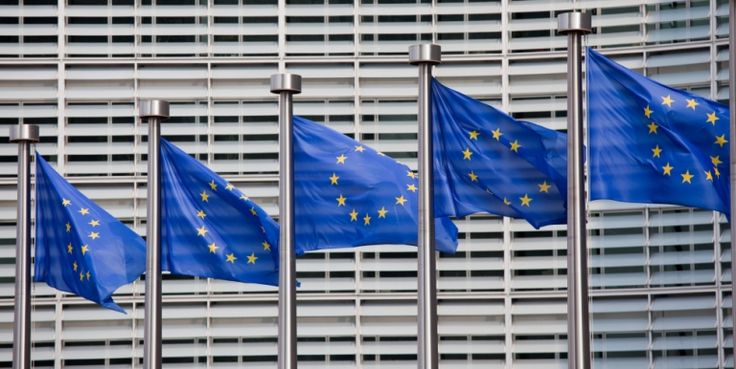
Evidently, the United States is in a more advantageous position compared to Europe. Europe is currently experiencing a series of consecutive shocks on various fronts, both internally and externally. It is grappling with significant economic, social, security, and military challenges; has heavily relied on Russian gas within its economic system; has suffered substantial losses in terms of its knowledge, military capabilities, and operational effectiveness; has relinquished its dominance in various sectors, including the automotive industry and machinery manufacturing; and disregarded its arsenal of weapons to only recently become aware of the resurgence of conventional warfare (i.e., a conflict with a country possessing a formidable army).
The adoption of a single currency, the euro, was deemed a political and social imperative, yet it proved to be highly detrimental from an economic perspective. Countries vary greatly in terms of their monetary and tax systems, economic structures, and levels of foreign dependency. Therefore, finding a currency and figuring out its value in a way that works for everyone is not possible. Historically, the primary foundation of the worldwide economy was oil and gas, with four European companies among the seven leading entities in this sector. Currently, information and data have superseded oil and energy as valuable resources. However, there are no European companies among the prominent players in this industry. They are all American or Chinese.
Europe has not, however, completely lost all of its cards. It remains a substantial market. It continues to be the leader in establishing regulations and standards that impose obligations on all parties wishing to engage in trade and exchange with it. The efficiency and skills of Europe’s middle class continue to be widely admired. In addition, Europe continues to attract tourists, maintains its leadership in various industries, and occasionally demonstrates an unforeseen capacity for efficient collective action. We argue that it faces enormous challenges, and that the political and economic elites do not yet possess the abilities and foresight needed to address them.
After briefly differentiating between the United States and Europe, let’s touch on the distinctions among European countries. Some European countries are burdened with debt, while others have relatively stable finances. The performance of state agencies in European countries exhibits significant variation, with certain agencies demonstrating higher levels of efficiency compared to others. Significant variations exist among strategic cultures with regard to methodologies, presumptions, and priorities; among these, the German strategic culture poses a particularly formidable problem.
Criticizing Western mistakes does not imply that other parties are exempt from mistakes. Many leaders across the globe’s northern, southern, eastern, and western regions blame nonexistent Western conspiracies for the problems they created. In the South, there is a prevalent inclination to impose numerous demands without providing –or adequately providing–compensation, under the pretext of the necessity to make amends for past wrongdoings. Numerous countries, whether in the east, west, south, or north, act like a non-paying passenger.
That being said, it is impossible to discuss we can’t talk about the formation of an international anti-Western alliance, let alone coordination amongst all the countries that find fault with Western behavior. Different types of countries and strategies require distinct differentiation. Some countries have an imperialist agenda, seeking absolute dominance over their neighboring regions. Others seek to revise the laws and regulations that govern the global system, while still acknowledging the concept of an international system and law whereas others advocate for a broader implementation of existing international law with the aim of eliminating or minimizing any instances of double standards. Some countries concentrate on land, while others are more concerned with the ocean and some also do not hold a particular stance regarding the organization of the international community but, instead, adopt a pragmatic stance, capitalizing on favorable circumstances while mitigating potential hazards.
To be continued…