




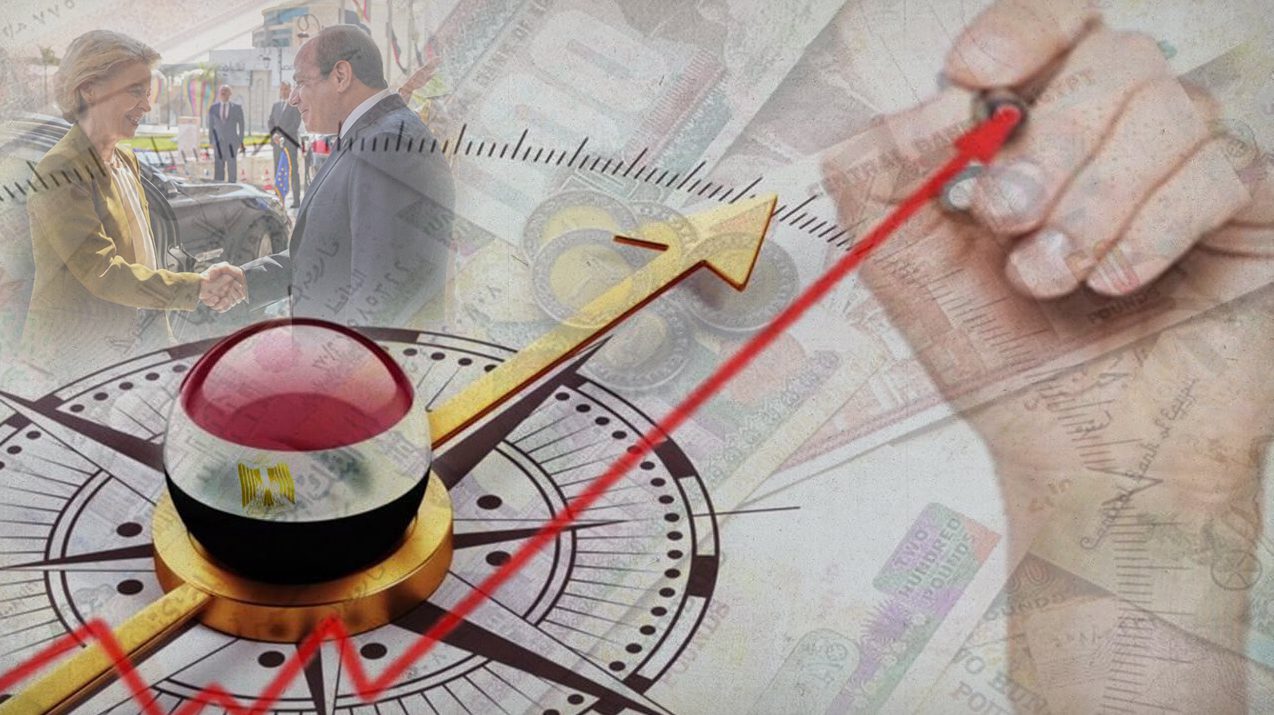
Convened under the auspices of President Abdel Fattah El-Sisi, Egypt played host to the first edition of the Egypt-EU Investment Conference on June 29–30. The event saw the participation of over 1,000 participants, including key Egyptian ministers and European Union (EU) leaders, with the President of the European Commission, Ursula von der Leyen, leading the delegation, as well as representatives from the private sector and investors from both Egypt and Europe.
Advantageous Deal
The first edition of the conference proved to be mutually beneficial for both the Egyptian and European parties, resulting in a win-win outcome. On the one hand, the event provided a dynamic platform for the European business community to explore numerous investment opportunities within Egypt, a strategic gateway to global markets. This came at a pivotal time as Egypt embarks on the second wave of economic and structural reforms, backed by the International Monetary Fund (IMF), which emphasizes an enhanced role for the private sector in driving economic growth and job creation. On the other hand, Egypt seeks to attract foreign direct investment (FDI) as a means to achieve sustainable economic growth and secure consistent dollar resources, which have been scarce for over two years, leading to widespread economic challenges.
In essence, the conference complements the ongoing efforts by the Egyptian government to secure promising investment deals, such as the agreements forged with the United Arab Emirates in February for the development of the Ras al-Hekma area.
According to statements by Prime Minister Mostafa Madbouly, agreements, memoranda of understanding, and letters of intent worth over $67 billion were signed with both EU and non-EU entities, including a significant number of European companies. A key highlight was the agreement to release the first tranche (€1 billion) of the €7.4 billion ($8 billion) financing package approved by the EU for Egypt, aimed at bolstering the Egyptian economy amidst global and regional geopolitical challenges.
The EU financing package is of equivalent value to the package approved by the IMF following the increase in the loan granted to Egypt under the Extended Fund Facility agreement extended last March from $3 billion to $8 billion.
In response to the economic impact of Israeli aggression against Gaza, Egypt and the EU elevated their relationship to a strategic and comprehensive partnership during the Egypt-EU Summit held in Cairo last March. The partnership documents were signed by President Abdel Fattah El-Sisi and President of the European Commission Ursula von der Leyen, alongside a high-level European delegation.
Aligned with the strategic partnership, the EU has approved a €7.4 billion (approximately $8 billion) investment financing package for Egypt until 2027. This commitment is accompanied by a collaborative effort to strengthen democracy, human rights, and equal opportunities in the country. Notably, the value of this package is equal to the package announced to Egypt by the IMF under the Extended Fund Facility Programme, which is anticipated to undergo its third review in the coming days.
The package comprises the following:
- €5 billion in financial assistance through soft loans with low interest rates and a grace period of at least 20 years. During the conference, €1 billion of this financing was approved.
- €1.8 billion in additional investments under the EU’s Southern Neighbourhood Economic and Investment Plan.
- €600 million in non-refundable grants, including $200 million dedicated to managing immigration issues.
The partnership’s strategic framework encompasses six main pillars, namely political relations, economic stability, trade and investment, curbing illegal immigration, achieving security, and promoting skills development and training.
Additionally, the package aims to encourage major European companies to invest in Egypt, particularly in sectors such as clean and renewable energy, agriculture, pharmaceutical and automotive industries, digitization, and artificial intelligence.
What Does the Conference Mean for the Egyptian Economy?
During the closing day of the conference, the Egyptian Prime Minister announced that Egypt looks forward to the next edition of the conference in 2025. This statement underscores the conference’s significance as a platform for promoting investment opportunities in Egypt, particularly in key economic sectors such as new and renewable energy, including green hydrogen production, the transportation sector, the communications and information technology sector, and projects related to climate action, all of which necessitate private sector cooperation with the government for timely financing and completion and are seen as solutions to several economic challenges, including electricity outages, limited dollar liquidity in the market, and issues within the transportation system and technological infrastructure.
President El-Sisi also remarked during the conference that the Egyptian market offers skilled labour for these projects, which significantly influences employment rates.
Furthermore, attracting more European investments to the Egyptian market and encouraging existing ones to expand locally supports the state’s goal of increasing the private sector’s share in the economy. This also brings in expertise that can enhance the private sector’s performance in Egypt, improve management policies, and develop infrastructure for various sectors in general and projects in particular.
This strategy is expected to increase the presence of Egyptian products in the European market, Egypt’s largest trading partner in recent years. According to the latest data from the Egyptian Ministry of Trade and Industry, the EU is Egypt’s leading trading partner, accounting for about 27% of Egypt’s foreign trade. The volume of bilateral trade between Egypt and Europe in 2023 reached approximately €32.6 billion.
Egyptian exports to EU countries amounted to about €11.5 billion, including €8.6 billion in non-oil exports, while imports reached around €21.1 billion. Italy was the top destination for Egyptian exports, accounting for 22.8% of the total, followed by Spain (12.9%), Greece (12.3%), Germany (9.7%), the Netherlands (9.6%), France (8.3%), Romania (4.2%), and Belgium (3.8%). Together, these countries accounted for roughly 84% of Egypt’s exports to the EU.
It is anticipated that European investments will significantly improve project performance and infrastructure, potentially transforming the perception of the Egyptian economy among international institutions from a borrower to an attractive investment hub. These investments will spotlight opportunities under the State Ownership Policy Document, aiming to capture the interest of European investors. Egypt plans to use 50% of the proceeds from these opportunities to control its high debt rate, which the IMF estimated at 98% of GDP for the fiscal year ending 2022-2023.
The Egyptian Minister of International Cooperation, Rania Al-Mashat, stated that the available investment financing from the EU, amounting to €1.8 billion, is expected to generate €11 billion in FDI for Egypt over the financing availability period until 2027.
Egypt: A Promising Market and Regional Hub for Green Hydrogen Production
Egypt recently signed $33 billion worth of agreements with European partners to produce green hydrogen and its derivatives, such as green ammonia. This represents almost half of the total agreements made during the conference, in line with Egypt’s Green Hydrogen strategy aimed at reducing the country’s carbon footprint.
Egypt has a vision for transforming itself into a regional hub for the production and export of green hydrogen and its derivatives by boosting private sector investments in renewable energy.
According to Hala El-Said, former Minister of Planning and Economic Development, green investments as a share of total public investments have grown from 15% in the fiscal year 2020-2021 to 40% in the fiscal year 2022-2023. The target for the current fiscal year 2024-2025 is 50%, with plans to increase electricity generation from renewable sources to 42% by 2035 and to produce 1.5 million tonnes of green hydrogen and its derivatives annually by 2030.