






Despite the significant differences between states as international actors and individuals, there remain certain similarities. This has led many political scientists and international relations theorists to turn to theories from the natural and social sciences that are concerned with understanding and explaining individual behaviors to interpret certain international phenomena and state behavior.
One foundation for these similarities is the fact that the political leader (the foreign policy decision-maker) is ultimately human, which opens the door to the influence of subjective factors and variables. This, in turn, explains the differences between the behaviors of one state and another, based on the degree of awareness and commitment of the political leadership to objective variables and inputs in the decision-making process, and its ability to act impartially, free from the influence of subjective variables, and to ensure the institutional nature of that process.
“Troublemakers” are individuals who, according to one definition, deliberately or unconsciously create problems. This behavior becomes closer to “instinctual behavior,” which opens the door to research into the set of motives behind this nature. Nevertheless, long experience in international relations allows for the inference of such classifications, and may even necessitate it.
The importance of the concept of “troublemaker states” lies in its ability to predict and explain the behaviors of these states over a relatively long period, independent of the objective contexts governing their behavior. There have been some attempts to link the behavior of specific international groups to their objective characteristics, for example, identifying common characteristics of the foreign policies of small states located in a geographic environment of large states, or “island states,” which tend to adopt foreign policies that are predominantly peaceful and cooperative. They also tend to adopt neutral foreign policies or to associate with a large state that guarantees their protection.
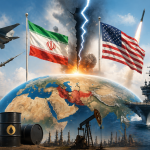
However, this does not mean that the concept of “troublemaker states” is not used. There are some limited uses, for example, the sharp criticism directed by the Permanent Representative of China to the United Nations, Fu Kong, at NATO during the session dedicated to discussing the international system and multilateral cooperation last July, and his description of the alliance as a “troublemaker.” Similarly, there have been attempts to label one or more states with specific moral descriptions, such as the concept of the “Axis of Evil” used by former US President George Bush in January 2002 to refer to Iraq, Iran, and North Korea.
However, these uses — regardless of our agreement with them — were either linked to specific and temporary political positions or goals or remained limited in use, without being based on a broad international consensus that ensures their stability and transformation into an indicator based on a methodologically disciplined concept and quantitatively measurable indicators.
Political scientists and international relations theorists have been prolific in coining many concepts to classify states based on several criteria. However, there will still be a need for more concepts, not only to describe new international phenomena that still need to be uncovered but also because of the importance of such concepts for the political functions they perform in determining the relative positions of each state compared to specific international standards.
This does not mean that all political concepts are based on objective methodological concepts and criteria, but the more there are international concepts that encourage and enhance the values of stability, positive interaction, and the protection of economic resources, etc., the more it will be in the interest of the international community and human societies.
The existence of a concept such as “troublemaker states” undoubtedly contributes to determining the relative weight and extent of the responsibility of each state in creating instability and reveals the nature of the relations of these states with their region and with the international community and the extent of their negative impact on regional and global security.
Other concepts have attempted to create a relationship between the state of the state and regional and global security, such as the concepts of “failed states” and “fragile states,” which have attempted to measure the state of the state based on a set of composite indicators, which have established an implicit assumption that the greater the number of fragile states in a region, the greater the state of instability and the greater the chances of the spread of terrorist organizations, etc.
However, despite the importance of these concepts, they do not provide an accurate description of the state of states that play a conscious role in undermining regional and global security, and in some cases, this role enjoys overt international cover and support. In addition, the phenomenon of the “fragile state” is linked to internal objective factors, unlike the concept of “troublemaker states,” which is not necessarily linked to these factors. Also, the “fragile state” cannot act internally or externally due to the weakness or collapse of internal authority.
The same applies to a concept such as a “state sponsoring terrorism” or the nature of the external behavior of non-democratic regimes based on the “democratic peace theory” which tries to link the nature of the political system to the state’s external behavior. The first concept was either heavily politicized or only reflected one of the tools used by the “troublemaker state.” The second lacks objective evidence of its constant truth.
The previous distinctions provide a basis for the need for a concept such as “troublemaker states.” But this does not deny that a state’s resort to creating problems and external crises, especially with its regional environment, is linked in some cases to internal factors, such as the existence of political crises, where the political leadership in this case — according to some interpretations — tends to create an external crisis to alleviate the pressures on it or to export the crisis abroad. But these interpretations do not provide an accurate description of the state of the “troublemaker state,” as its creation of regional and international problems is not necessarily linked to the existence of internal political crises, nor does the political leadership necessarily resort to exporting its internal crises to its regional environment, without denying the existence of this relationship in some cases.
Thus, none of the previous concepts provides an accurate or sufficient description of troublemaker states, which have become one of the important international phenomena that the Middle East and the Horn of Africa have been suffering from for decades. Creating external problems and a state of regional turmoil has become one of the structural features of these states and their foreign policies, which now also requires a precise understanding of the sources of this feature.
These factors are distributed among internal sources, including the nature of the political system and political forces, the circumstances and methods of the state’s emergence, and the religious and national composition, etc. However, all this is not enough to understand this type of state, as it is necessary to understand how all these structural features interact with the subjective variables related to the nature of the political leadership and the political elite and the nature of the prevailing cultural system.
*The existence of a concept such as “troublemaker states” undoubtedly contributes to determining the relative weight and extent of the responsibility of each state in creating instability and reveals the nature of the relations of these states with their region and with the international community and the extent of their negative impact on regional and global security.
This article was originally published on Ahram Online on September 18, 2024.