






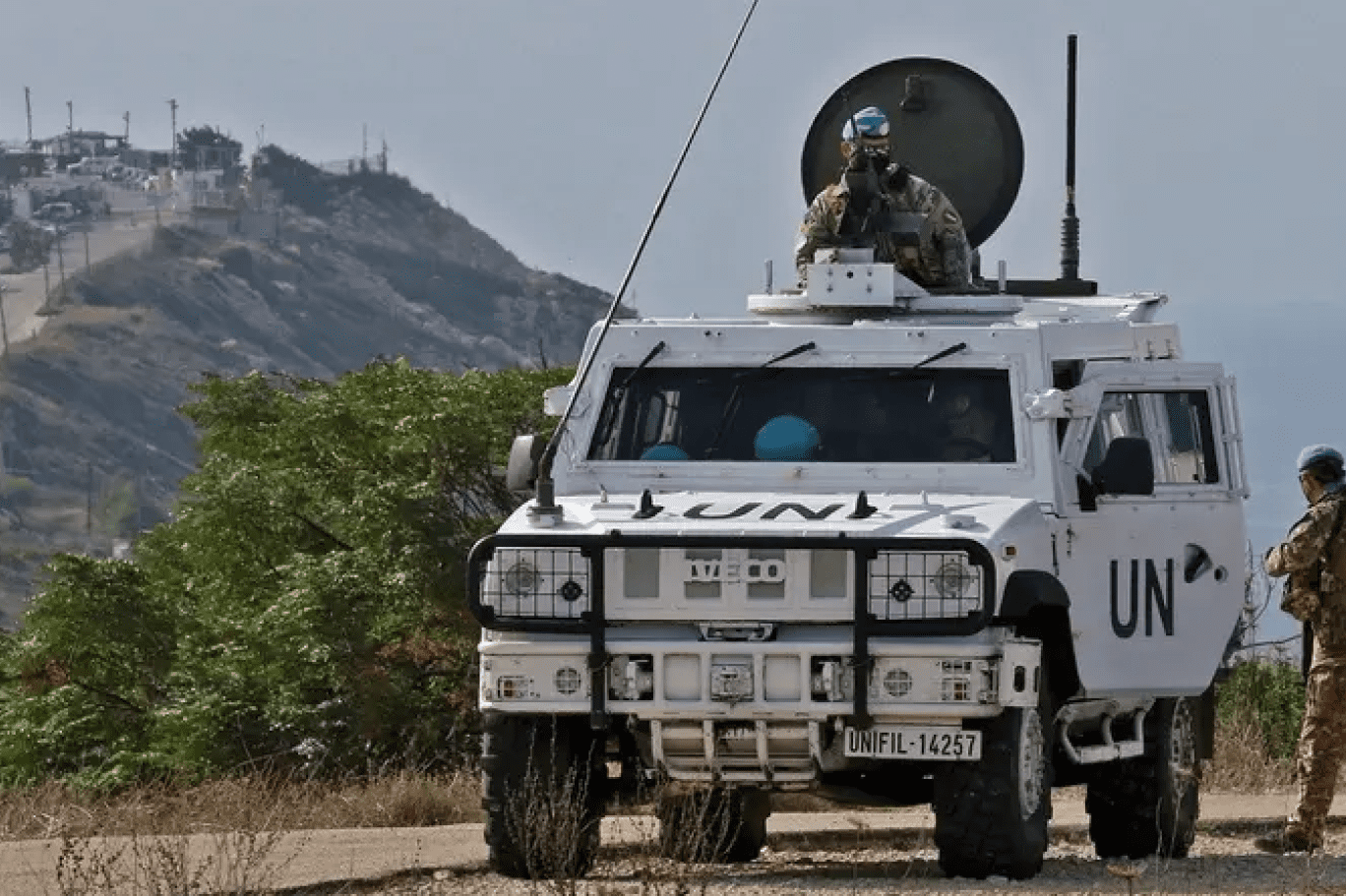
The United Nations (UN) peacekeeping operations represent one of the UN’s vital mechanisms for promoting peace and security in conflict-affected areas. These operations consist of a diverse range of personnel, including military forces, police, and civilian staff, along with various material resources like equipment and facilities owned by the peacekeeping mission.
This paper focuses on the UN Interim Force in Lebanon (UNIFIL), which has accused the Israeli army of deliberately firing upon its headquarters and personnel, who have been subjected to gunfire in the Lebanese town of Naqoura, where its command is located, and at other sites. This situation signifies a grave escalation, as any deliberate attack on peacekeepers constitutes a serious violation of international humanitarian law.
UNIFIL: A Closer Look
Following Israel’s military operation against the Palestine Liberation Organization in Lebanon in 1978, the UN established a temporary peacekeeping force known as UNIFIL. The primary goal of deploying this force was to restore international peace and security while assisting the Lebanese government and army in regaining control over their border with Israel. According to the UNIFIL’s website, the structure, organization, operational scope, tasks, and funding of UNIFIL is as follows:
- Participating Countries and Force Size: UNIFIL comprises 50 contributing countries, with notable contributions from France, Italy, Spain, South Korea, Bangladesh, Ghana, Indonesia, Tanzania, and Malaysia. The force consists of around 10,000 troops, including a naval component deployed in October 2006 at the request of the Lebanese government to assist its navy in securing territorial waters and preventing the entry of unauthorized weapons or related materials into Lebanon by sea.
- Deployment Areas: UNIFIL operates in southern Lebanon, with its operational area defined between the Litani River to the north and the Blue Line to the south. The Blue Line is a withdrawal line established in 2000 by the UN, in coordination with Lebanese and Israeli officials, to confirm Israel’s withdrawal from Lebanese territory in accordance with UN Security Council Resolution 425 of 1978. It is essential to note that the Blue Line is not a political border between Lebanon and Israel but a security line agreed upon by the conflict parties, extending 120 kilometers along southern Lebanon’s borders. UNIFIL’s headquarters is located in the town of Naqoura, and its naval forces are deployed along the entire Lebanese coast.

UNIFIL Map (Source: UNIFIL Website)
- UNIFIL’s Tasks: UNIFIL operates under UN Security Council Resolutions 425 (1978) and 426 (1978), issued on March 19, 1978. Its mission includes ensuring the withdrawal of Israeli forces from southern Lebanon, restoring international peace and security, and assisting the Lebanese government in exercising its authority in the region. Additional tasks were assigned to UNIFIL as per Security Council Resolution 1701 (2006) issued on August 11, 2006, including monitoring the cessation of hostilities, accompanying and supporting the Lebanese Armed Forces during their deployment throughout southern Lebanon, including along the Blue Line, while Israel withdraws its armed forces from Lebanon, coordinating these activities with both the Lebanese and Israeli governments, ensuring humanitarian assistance reaches civilian populations, facilitating the voluntary and safe return of displaced persons, and assisting the Lebanese Armed Forces, upon request, in securing their borders and other entry points to prevent unauthorized weapons or related materials from entering Lebanon without consent.
Relatedly, UNIFIL’s mandate falls under Chapter VI of the UN Charter, which restricts the use of force to self-defense and limits its operations to monitoring and reporting violations. Should UNIFIL’s mandate be classified under Chapter VII, peacekeepers would be authorized to use force to confront violations and effectively enforce the provisions of Resolution 1701.
- Funding: UNIFIL is financed from the UN’s peacekeeping budget, determined based on contributions from member states, covering operational costs, salaries, logistics, and maintenance, thereby enabling it to fulfill its assigned tasks within southern Lebanon.
Signs of Israeli Escalation against UNIFIL
The Israeli army has targeted the UNIFIL mission operating in southern Lebanon, putting it at significant risk. This escalation can be observed through official statements released by UNIFIL during the first weeks of October 2024, as follows:
- Attacks on UNIFIL Headquarters: The Israeli army has aimed at UNIFIL headquarters and attempted to destroy them. The main UNIFIL office in Naqoura and nearby sites were subjected to Israeli shelling on October 10. Additionally, Israeli soldiers opened fire on UN position 1-31 near the Blue Line in the Labouna area of southern Lebanon, resulting in damage to the fortifications protecting peacekeepers. On October 11, the UNIFIL headquarters in Naqoura experienced a second explosion, collapsing several walls of UN position 1-31 near the Blue Line in Labbouneh, triggered by an Israeli bulldozer colliding with the site and Israeli tanks moving nearby.
- Targeting UNIFIL Personnel: The Israeli army has also targeted UNIFIL forces. On October 10, Israeli attacks injured two peacekeepers when an Israeli Merkava tank fired at a watchtower at the UNIFIL base in Naqoura. Furthermore, two peacekeepers were injured on October 11, following two explosions near the watchtower. A soldier at the UNIFIL headquarters in Naqoura was shot due to Israeli military activity and underwent surgery at the mission’s hospital to remove a bullet.
- Damage to UNIFIL Property: The Israeli army has inflicted damage on UNIFIL property. On October 10, Israeli forces damaged UNIFIL vehicles and communication systems. On October 8, 2024, Israeli soldiers deliberately fired at surveillance cameras surrounding the mission’s site, disabling them.
These Israeli attacks against UNIFIL have sparked international condemnation, as evidenced by US President Joe Biden’s statement urging Israel not to target UN peacekeeping forces amid the conflict with Lebanese Hezbollah. Additionally, over forty countries participating in UNIFIL issued a statement on October 12, condemning the attacks against UNIFIL and expressing full support for the mission while calling for the protection of its personnel. Several European countries, including Spain and France, have also called for a halt to arms sales to Israel, viewing this as the only means to end the ongoing conflict in the Middle East, thereby placing the Israeli government, led by Benjamin Netanyahu, in conflict with European powers.
Goals Behind Israeli Strikes on UNIFIL Forces
The context in which UNIFIL operates is marked by tension, with the Israeli army launching deliberate and direct attacks on UNIFIL sites and personnel in southern Lebanon, impacting their morale and ability to carry out their duties. Consequently, UNIFIL’s capacity to monitor the border between Israel and Lebanon may diminish, along with its operational mobility, due to fears of military bombardment from the Israeli side, weakening its effectiveness—a goal Israel pursues for various reasons:
- Israel’s Desire to Evacuate UNIFIL Troops: There is a prevailing trend within Israel criticizing UNIFIL as ineffective, asserting that Hezbollah exploits UNIFIL bases to launch attacks against Israel. This trend is supported by an incident in December 2023 when one of Hezbollah’s missiles launched at Israel originated near a UNIFIL compound. Consequently, the Israeli army seeks to push UNIFIL away from the border areas, granting it more freedom of movement to counter Hezbollah and dismantle its infrastructure. This objective was explicitly articulated by Israel’s Permanent Representative to the UN, Danny Danon, who expressed bewilderment at the UN’s insistence on keeping UNIFIL troops in southern Lebanon, deeming this decision “incomprehensible” from Tel Aviv’s perspective, as Hezbollah members reportedly utilize UNIFIL sites as shelters and ambushes. Furthermore, Israeli Prime Minister Benjamin Netanyahu has called for the immediate evacuation of UNIFIL from its positions in southern Lebanon, arguing that their continued presence renders them “hostages to Hezbollah.”
- Establishing a Buffer Zone: Should Israel succeed in evacuating UNIFIL forces, it would allow them to establish a buffer zone along its northern border, mitigating the attacks launched by Hezbollah, which have intensified since October 2023 in support of Operation Al-Aqsa Flood. Thus, Israel’s ongoing ground military operation against Lebanon aims to dismantle Hezbollah’s military infrastructure and fully depopulate the southern region, pushing residents north of the Litani River. This shift would mean moving the Lebanese-Israeli confrontations from the Blue Line to the Litani River borders.
- Returning Residents to Northern Israel: The Israeli Prime Minister is also inclined towards facilitating the return of northern Israeli residents to their homes, with approximately 60,000 Israelis having evacuated due to Hezbollah’s shelling of the northern border area in October 2023. This goal could be realized if Israel can neutralize Hezbollah’s arsenal.
In conclusion, despite the Israeli violations against the UNIFIL mission in southern Lebanon and calls for the evacuation of its positions, the UN remains resolute in maintaining the mission and its operations, underscoring the international community’s commitment to preserving peace and security in the region.