






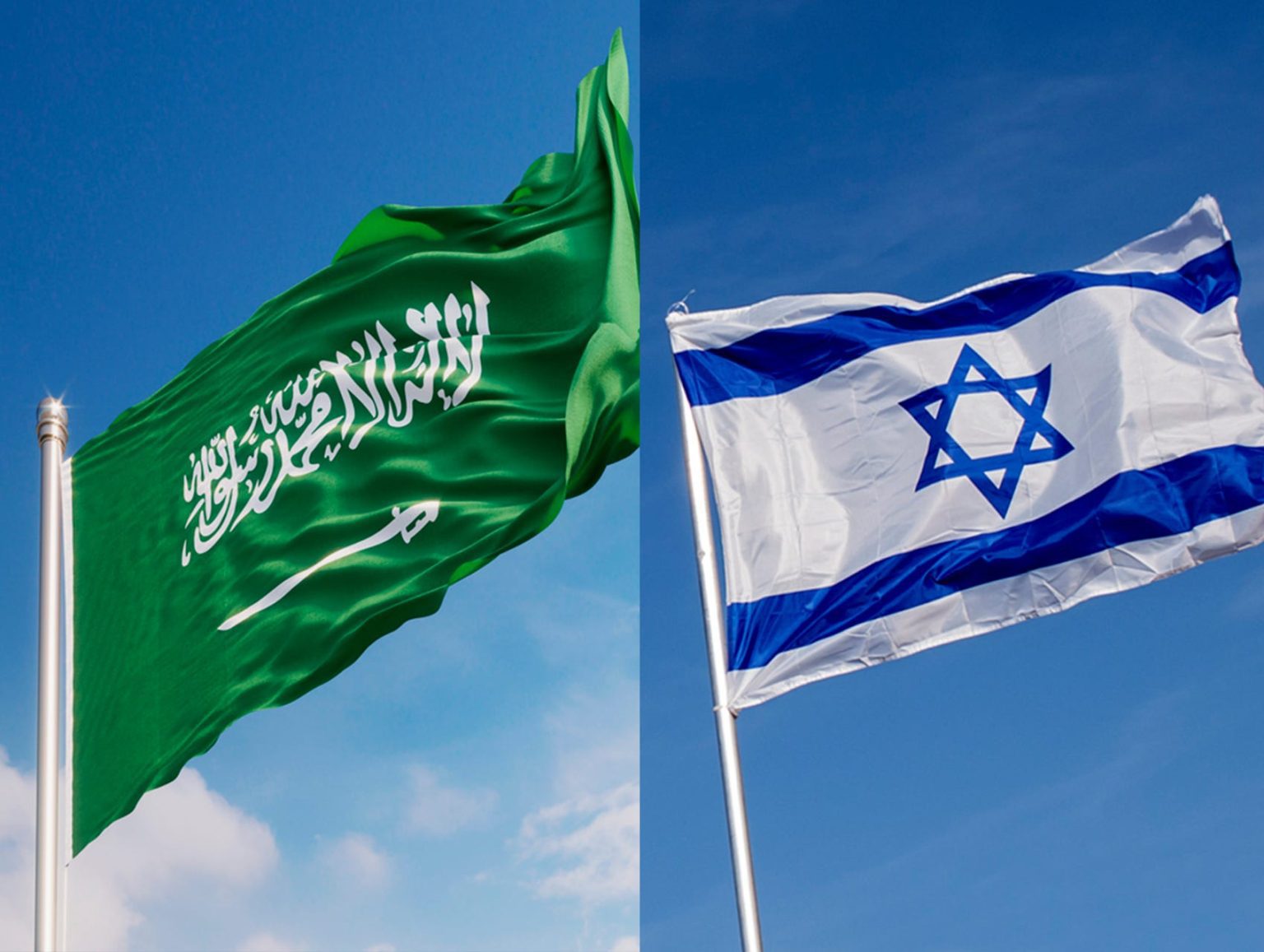
On 19 January, Israeli Prime Minister Benjamin Netanyahu met with Jacob Sullivan, the Biden administration’s National Security Advisor, as part of a series of meetings aimed at preparing for the normalization of relations between Saudi Arabia and Israel under US sponsorship. Additionally, Secretary of State Anthony Blinken and Jacob Sullivan traveled to Saudi Arabia to confer on normalization.
In an interview with Fox News, Saudi Crown Prince Mohammed bin Salman stated that the two countries are still negotiating, that normalization is approaching, and that it is now being taken seriously for the first time.
On the other side, during an interview with CNN’s Kaitlan Collins, Netanyahu expressed his conviction that the prospective agreement would signify a seismic foreign policy shift for both countries as it would establish a corridor of energy pipelines, railways, and fiber optic cables connecting Asia through Saudi Arabia, Jordan, Israel, and the Emirates.
Along with the benefits that each party stands to gain individually if a normalization agreement is reached, such normalization represents a framework for Washington to return to its strategic partnership with Saudi Arabia in the face of the latter’s rapprochement with China, as well as a strategic step in confronting Iran, which is causing tension in the region and a threat to both countries. Nevertheless, the ongoing developments in Gaza since 7 October may result in an interim suspension of the normalization negotiations. This analysis examines the parties’ calculations and motivations, as well as the prospects for normalization in the future.
I. Parties’ Calculations and Motives
The United States: The normalization of relations between Saudi Arabia and Israel would be a foreign policy victory for the Biden administration before the 2024 US presidential elections. This is particularly true considering the potential consequences of the normalization agreement’s attainment on the balance of power in the Middle East and the regional alliance map. In effect, the United States is discontent with China’s sway in the region, its efforts to reconcile with its countries, and its role in mediating the agreement that was signed between Saudi Arabia and Iran on 10 March. Washington is also concerned about Saudi Arabia’s rapprochement with China and its declaration during the World Economic Forum in Davos that it is contemplating trading in currencies other than the US dollar.
However, the United States encounters resistance from Democrats who condemn Saudi Arabia’s human rights policy and the conflict in Yemen. Furthermore, the assurances that Saudi Arabia seeks in return for normalization regarding the presence of a civilian nuclear program are difficult to obtain, which could pose a dilemma for regional equilibrium. Mohammed bin Salman, in an interview with Fox News, articulated Saudi Arabia’s strong desire to develop a nuclear program, stating, “If Iran acquires a nuclear weapon, the Kingdom will pursue a similar course of action.” Saudi Arabia is also prepared to sign Section 123 of the US Atomic Energy Act, which provides a framework for peaceful nuclear cooperation between the United States and Saudi Arabia. Riyadh had previously declined to do so.
Saudi Arabia: Saudi Arabia is acting in its national interest and attempting to achieve its goals in light of the competition for Iranian influence in the region. As a result, it is attempting to get assurances from Washington, given the apprehension surrounding the latter’s recent moves to withdraw from the region. In this regard, Saudi Arabia has established certain prerequisites for normalization, namely the ability to autonomously enrich uranium and approval from the United States to support a peaceful nuclear energy program in Saudi Arabia. To achieve energy diversification and acquire cutting-edge US weapons, Saudi Arabia intends to construct seventeen civilian nuclear reactors.
Riyadh is worried about new dangers and threats that extend beyond Iran’s growing arsenal of drones and cruise missiles. There is a possibility that these potent weapons could end up in the hands of unruly militias in Yemen and Iraq, particularly given the Houthi attacks on the Abqaiq oil facilities in 2019. Concerns grew more intense subsequent to the United States’ decision to withdraw from the region, thereby ceasing its role in guaranteeing security (the US military continues to maintain military bases and approximately 30,000 soldiers in the area despite the reduction in presence). In light of this, Riyadh desires either legally binding assurances from Washington regarding its security protection or the designation of Saudi Arabia as a non-NATO ally.
Riyadh sees normalization as necessary in order to confront Iran’s rising nuclear and geostrategic ambitions in the region. After all, the agreement between Saudi Arabia and Iran, mediated by China and signed on 10 March, remains a tactical move and a test of both countries’ ability to overcome internal conflicts and economic roadblocks. The Gulf States are possibly adopting a more pragmatic stance by attempting to strike a balance between their respective interests and those of Iran and Israel. One potential advantage of the normalization agreement for Saudi Arabia is economic growth. Mutual investment facilitates progress towards the Vision 2030 objectives established by Mohammed bin Salman by increasing economic access to the Israeli economy via trade, transit, and tourism in the Mediterranean and the Red Sea. On the other hand, it would strengthen military and security cooperation, allowing Riyadh and Tel Aviv to begin exchanging intelligence data.
Israel: Normalization with Saudi Arabia would constitute a significant milestone for Israel in its quest to increase regional acceptance, considering Saudi Arabia’s religious significance and economic sway in the Arab world. Establishing formal diplomatic ties with Riyadh would therefore be a significant victory for Israeli foreign policy and the accomplishment of the desired objectives. When Benjamin Netanyahu, the Israeli prime minister, took back office in early 2023, he pledged to focus on two foreign policy goals: preventing Iran from obtaining nuclear weapons and normalizing relations with Saudi Arabia. Since protests against Netanyahu’s proposed legal system reform have persisted for nine months, he therefore aims to achieve normalization in order to gain more confidence in a way that strengthens his political position in light of corruption, the current precarious situation, and the current unrest. Nevertheless, the agreement’s fulfillment is contingent upon institutional consensus in Israel concerning Saudi Arabia’s nuclear program. Furthermore, the agreement with Saudi Arabia has generated ongoing controversy regarding the benefits it may yield, the potential security repercussions that could result in Israel relinquishing its qualitative military superiority in the region, and the threat posed by other countries’ (e.g., Turkey or Egypt) endeavors to emulate Saudi Arabia’s nuclear program.
II. Prospects for Normalization
The recent flare-up between Israel and Hamas over the events of the Al-Aqsa Flood on 7 October may, in the short term, prevent the path of normalization from moving forward, or at the very least, it will prompt a reconsideration of normalization conditions, given that developments in the Saudi Arabian normalization talks coincided with the current events in Gaza, and the Palestinians refuse to allow their issue to be a secondary track in normalization agreements. The 2023 Arab Youth Survey revealed that only 2 percent of the population supports full normalization with Israel. A separate survey conducted within Saudi Arabia revealed that only 20 percent of the populace supports full normalization with Israel, whereas 40 percent of Saudis support official contacts between the two governments.
Consequently, the normalization agreement engenders adverse sentiments of animosity towards Israel, potentially leading to a surge in acts of terrorism against Saudi Arabia. Terrorist organizations might capitalize on the Palestinian cause to entice and recruit certain individuals; thus, a return to violence and targeting Saudi Arabia by these former insurgents would be encouraged under the proposed normalization scenario between Saudi Arabia and Israel, particularly considering the former’s repressive policy towards them that has persisted since 2003.
As a result, Saudi Arabia maintains a cautious stance in advancing normalization, particularly given the potential for increased opposition to Mohammed bin Salman’s policy and Saudi Arabia’s reputation in the Arab world in the short term should an agreement be reached. Notably, normalization efforts run counter to the historical principles that Riyadh established twenty years ago with the Arab peace initiative in 2002.
The appointment of Nayef Al-Sudairi, a Saudi diplomat, as an ambassador to the Palestinian Authority and Consul General in Jerusalem, albeit without his permanent residency, can be seen as a symbolic gesture by Riyadh. This step demonstrated Riyadh’s reluctance to affix its signature to the normalization agreement during the current Israeli government’s tenure, given its refusal to establish a consulate in Jerusalem.
Consequently, a series of factors continue to influence the Saudi-Israeli normalization agreement, such as the rights of the Palestinian people and the Israeli government’s challenging concessions during its far-right tenure. Another factor to take into account is the degree of mistrust that still exists between the US and Saudi Arabia, which makes quick normalization progress challenging. There is a great deal of uncertainty and instability surrounding the US administration’s relationship with the current Israeli government. Given the prevailing political instability in Israel, the forthcoming elections in the United States, and the prospective Democratic or Republican administration, it is plausible that the Republican administration will endeavor to accomplish this objective at an accelerated pace relative to the Democratic administration. The aforementioned factors will persistently dictate the trajectory of normalization.
In short, both Israel and Saudi Arabia want to reap as many benefits as possible from normalization, and both are hedging against a reduction in the US military presence in the region. Washington has a strategic interest in being a part of the US-Saudi normalization agreement and is eager to see it through. However, efforts to normalize relations in light of recent tensions caused by Al-Aqsa Flood events in Gaza are likely to be put on hold, and the limits of what is feasible need to be explored in light of the new circumstances.